
The smell of Thai basil hitting hot oil is something that stops you in your tracks, and Thai eggplant is the dish that captures that magic in a single bite. This isn’t your grandmother’s eggplant casserole; it’s a quick, fiery stir-fry that tastes like you’ve ordered takeout from your favorite Thai restaurant.
What makes this recipe special is how the eggplant soaks up the savory, spicy sauce while staying tender and silky on the inside. You’ll have a restaurant-quality dish on the table in under 20 minutes, and it pairs beautifully with jasmine rice or noodles.
Why You’ll Love This Recipe
This dish delivers bold flavors without requiring any fancy techniques or hard-to-find ingredients. It’s vegetarian-friendly, naturally lower in calories, and comes together faster than you’d expect.
- Lightning-fast cooking time with maximum flavor impact
- Tender eggplant that absorbs the savory, spicy sauce perfectly
- Uses pantry staples like soy sauce, garlic, and chili for authentic taste
- Works as a main dish or a side alongside curry or rice
- Easily doubles for entertaining without extra effort
My Experience Making This Recipe
The first time I made this, I underestimated how quickly the eggplant would cook and ended up with a perfect textured dish by pure luck. My kitchen filled with that intoxicating aroma of basil and chili, and I knew immediately this would become a regular rotation.
My partner, who normally picks around vegetables, asked for seconds and wanted to know if we could make it again the next week. That’s when I realized this recipe had real staying power, not just as a novelty but as something people genuinely crave.
Now I make it at least twice a month, sometimes with a fried egg on top for extra richness. The eggplant gets gloriously caramelized at the edges while staying silky in the middle, and the sauce clings to every piece.
Recipe Overview
- Recipe Name: Thai Eggplant with Basil and Chili
- Servings: 4 as a side, 2 as a main
- Prep Time: 10 minutes
- Cook Time: 12 minutes
- Total Time: 22 minutes
- Course: Side Dish or Main Course
- Cuisine: Thai
- Calories per Serving: 140 calories
Equipment You Will Need
- Large wok or wide skillet
- Cutting board
- Sharp knife
- Measuring spoons and cups
- Small bowl for sauce ingredients
- Wooden spoon or spatula for stirring
- Paper towels
Ingredients for Thai Eggplant
- 1.5 pounds eggplant (about 2 medium eggplants, cut into 1-inch cubes)
- 3 tablespoons vegetable oil
- 4 cloves garlic, minced
- 2 to 3 Thai red chilies, thinly sliced (or 1/2 teaspoon red pepper flakes for less heat)
- 3 tablespoons soy sauce
- 1 tablespoon oyster sauce
- 1 teaspoon sugar
- 1/4 cup water
- 1 cup fresh Thai basil (or regular basil if Thai basil is unavailable)
- 2 green onions, cut into 1-inch pieces
- Salt to taste
Ingredient Notes and Substitutions
- Eggplant: Cubing the eggplant creates surface area for caramelization and sauce absorption. If you prefer, substitute zucchini for a lighter dish, though it won’t have quite the same silky texture.
- Thai chilies: These deliver authentic heat and fruity flavor to the dish. Red pepper flakes work in a pinch but lack the complexity; use half the amount since they’re more concentrated.
- Thai basil: Its anise-like flavor is signature to this dish and can’t be fully replicated. Regular Italian basil works but tastes milder; add it at the very end to avoid wilting.
- Oyster sauce: This adds umami depth and a subtle sweet undertone. Fish sauce (1 teaspoon) creates a more authentic flavor but smells pungent during cooking.
- Soy sauce: Use low-sodium soy sauce if you prefer to control the saltiness yourself. Tamari works as a gluten-free swap with no difference in flavor.
How to Make Thai Eggplant
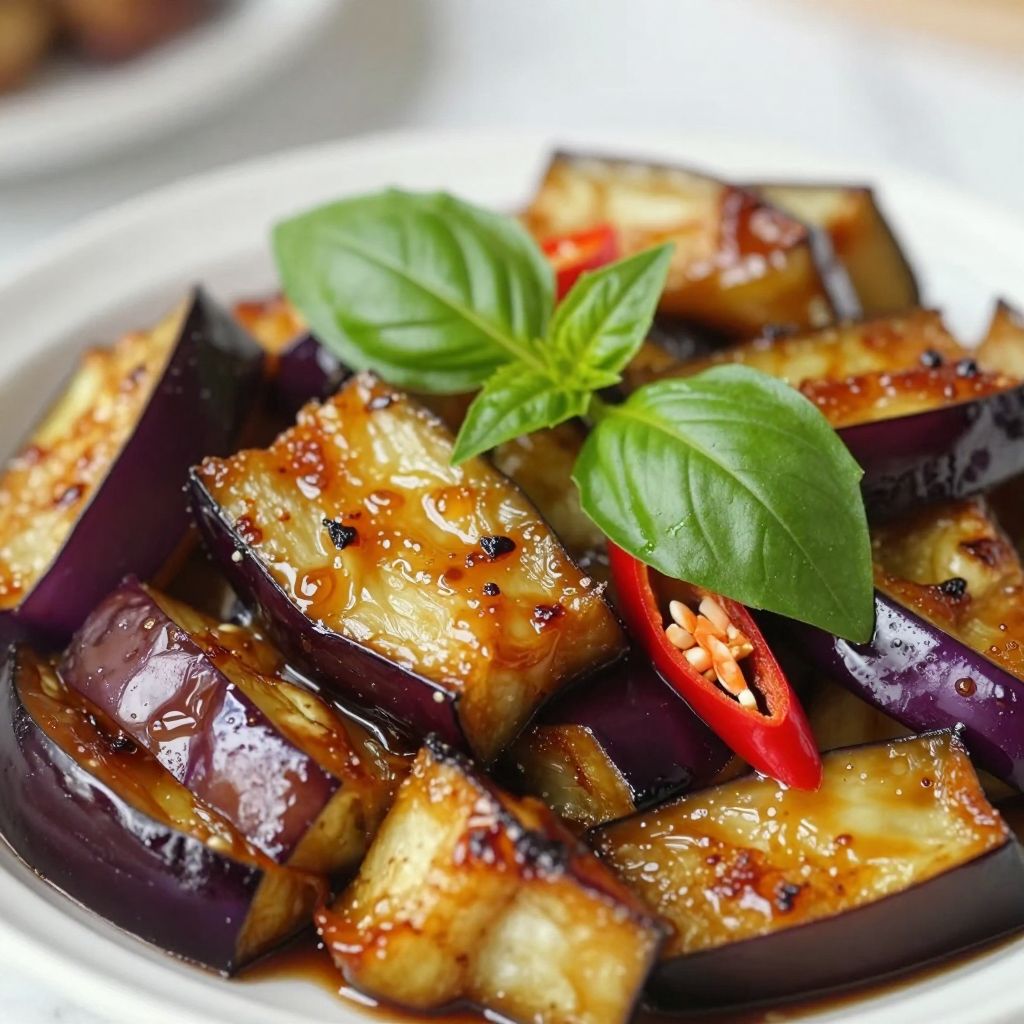
Step 1: Prep Your Eggplant
Cut your eggplants into 1-inch cubes, leaving the skin on for texture and nutrients. Pat them dry with paper towels; this removes excess moisture so they’ll fry rather than steam.
Step 2: Prepare the Sauce Ingredients
In a small bowl, whisk together soy sauce, oyster sauce, sugar, and water until the sugar dissolves completely. Having this ready before you start cooking means you can move quickly once the heat is on.
Step 3: Heat Your Wok or Skillet
Place your wok or large skillet over high heat and let it get smoking hot for about 1 minute. A very hot pan is essential because it creates that characteristic caramelization on the eggplant instead of steaming it.
Step 4: Add Oil and Eggplant
Pour in the vegetable oil and swirl to coat the pan, then add the eggplant cubes in a single layer. Don’t stir for the first 2 to 3 minutes; this allows the eggplant to develop golden, caramelized edges.
Step 5: Cook Until Golden
After 3 minutes, stir the eggplant and continue cooking for another 3 to 4 minutes until most pieces are golden brown on multiple sides. The eggplant should look slightly wrinkled; this is when it’s perfectly cooked and will be tender inside.
Step 6: Add Aromatics
Push the eggplant to the sides of the pan and add minced garlic and sliced chilies to the center. Cook for 30 seconds to 1 minute, stirring constantly, until fragrant; this blooms the flavors without burning them.
Step 7: Pour in the Sauce
Add your prepared sauce to the pan and toss everything together, coating all the eggplant pieces evenly. The sauce should bubble gently; lower the heat slightly if it’s boiling too aggressively.
Step 8: Finish with Basil
Cook for 1 to 2 minutes more until the sauce reduces slightly and clings to the eggplant, then remove from heat. Add fresh Thai basil and green onions, tossing gently so the herbs stay bright and aromatic; their heat from the pan is enough to slightly wilt them without losing their fresh flavor.
Pro Tip: Don’t overcrowd the pan in step 4; if your pieces aren’t in a single layer, the eggplant will steam instead of caramelize, and you’ll miss that essential golden texture.
Tips for the Best Thai Eggplant
- Choose eggplants that are firm and have thin, glossy skin; older eggplants with thick skin tend to be seedy and bitter.
- Salt the eggplant cubes lightly and let them sit for 5 minutes before cooking if you want to draw out excess moisture and prevent sogginess.
- Don’t skip the high heat; a moderately hot pan produces steamed eggplant instead of the caramelized texture this dish needs.
- Add the basil at the very end off the heat so it stays bright green and fragrant rather than turning dark and mushy.
- Taste before serving and adjust soy sauce or chili to your preference; some eggplants absorb more salt than others.
- If the sauce seems too thin after cooking, simmer it another minute; if it’s too thick, add a splash of water.
Common Mistakes to Avoid
- Cutting eggplant too small or too large: Small pieces get mushy, large pieces don’t cook through evenly. One-inch cubes are the sweet spot.
- Not drying the eggplant: Wet eggplant releases steam and won’t brown properly; patting it dry is a quick step with big results.
- Stirring constantly: Eggplant needs time on the hot pan to caramelize; constant stirring prevents browning and creates a greyish texture.
- Adding basil too early: Fresh basil added during cooking turns dark and loses its aromatic quality; save it for the very end.
- Using low or medium heat: This recipe depends on high heat to cook the eggplant quickly and create caramelization; anything less and it stews instead of fries.
Serving Suggestions
Serve this Thai eggplant over jasmine rice or alongside coconut curry for a complete meal that feels restaurant-quality. It also works brilliantly as a side to grilled fish or chicken.
- Over jasmine or Thai fragrant rice for absorption of the sauce
- Alongside green curry or panang curry for a multi-component meal
- With a fried egg on top for added richness and protein
- Stuffed in lettuce cups as a lighter, gluten-free option
- Served at room temperature as part of a Thai mezze-style spread
Variations to Try
- Eggplant with Chicken: Cut 12 ounces boneless chicken thigh into bite-sized pieces and cook it first, then add the eggplant; this transforms it into a complete protein-forward main.
- Spicy Version: Add 1 to 2 teaspoons of sriracha to the sauce and increase the fresh chilies; this brings serious heat for those who love intense spice.
- With Cashews: Toast 1/2 cup cashews separately and scatter them on top; they add crunch and richness that balances the soft eggplant.
- Eggplant and Mushroom: Add 8 ounces sliced mushrooms to the pan after the eggplant browns; they cook quickly and add earthy umami depth.
- Coconut Version: Swap 2 tablespoons of the water for coconut milk for a creamier sauce that lightly sweetens the dish.
Dietary Adaptations
- Gluten-Free: Use tamari or gluten-free soy sauce instead of regular soy sauce; oyster sauce is naturally gluten-free, but check your specific brand.
- Dairy-Free: This recipe is already dairy-free; no changes needed.
- Vegan: Substitute oyster sauce with 1 teaspoon of miso paste or additional soy sauce; the dish remains fully plant-based and delicious.
- Low-Carb or Keto: This dish is naturally low-carb; serve over cauliflower rice or zucchini noodles instead of jasmine rice to keep carbs minimal.
Storage and Reheating
Refrigerator
Store leftover Thai eggplant in an airtight container for up to 3 days. The eggplant softens slightly but the flavors deepen, making it taste even better the next day.
- Keep the basil separate if possible; add it fresh when reheating for the best texture and aroma.
- Let it come to room temperature before reheating for gentler warming.
Freezer
This dish freezes well for up to 1 month if you skip the fresh basil and green onions before freezing. Add these garnishes after reheating for the freshest taste.
- Use a freezer-safe container with an inch of headspace for expansion.
- Label with the date so you know when you made it.
Reheating
Reheat gently in a skillet over medium heat for 3 to 5 minutes, stirring occasionally, until warmed through. Avoid the microwave, which can make the eggplant mushy; stovetop reheating preserves texture.
- Add a splash of water if the sauce has reduced too much during storage.
- Top with fresh basil and green onions after reheating for brightness.
Nutrition Information
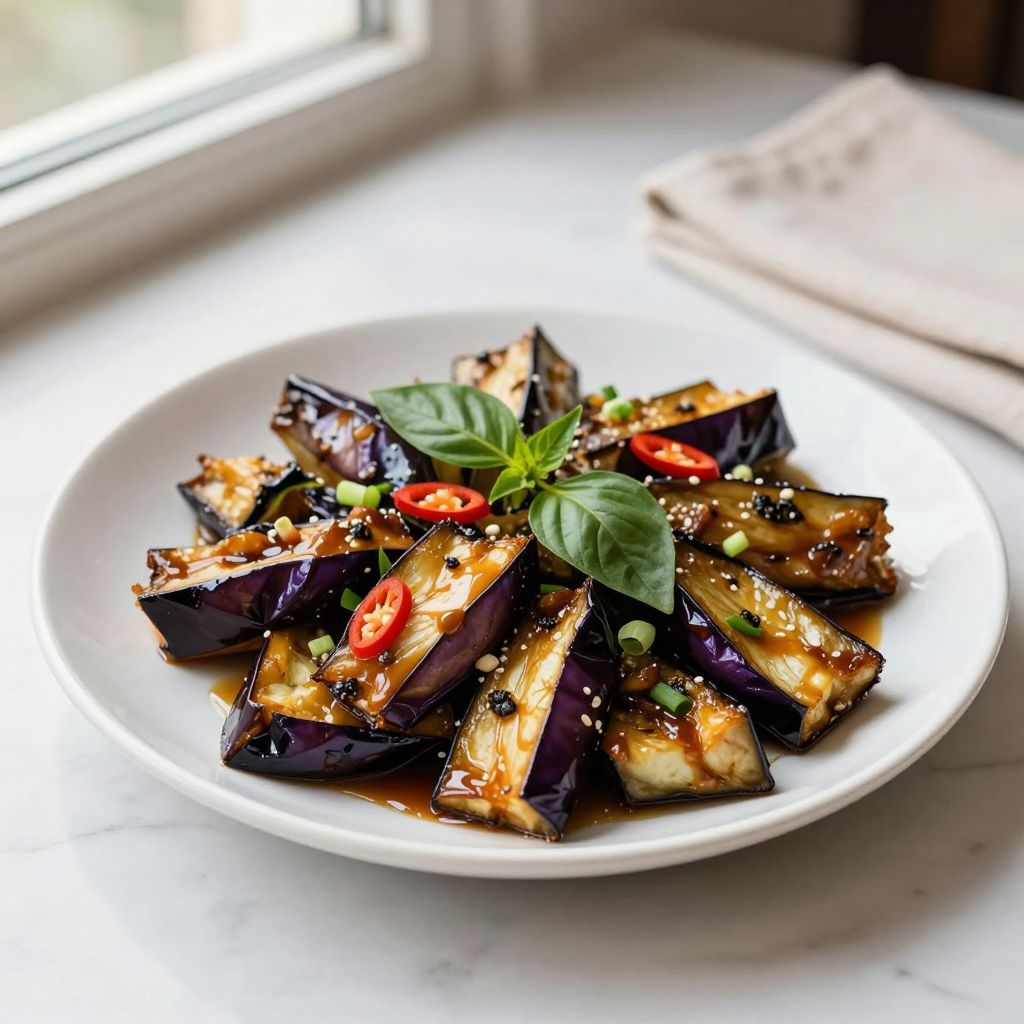
| Nutrient | Amount |
|---|---|
| Calories | 140 |
| Total Fat | 11 g |
| Saturated Fat | 1.5 g |
| Carbohydrates | 8 g |
| Fiber | 4 g |
| Sugar | 4 g |
| Protein | 2 g |
| Sodium | 580 mg |
| Cholesterol | 0 mg |
These values are approximate and based on standard ingredient measurements. If you’re managing sodium intake, reduce soy sauce or use low-sodium versions.
Frequently Asked Questions
Can I use a regular skillet instead of a wok?
Absolutely; a large skillet works just as well and gives you the same high-heat cooking surface. The key is high heat and enough surface area for the eggplant to brown rather than crowd the pan.
What’s the difference between Thai basil and regular basil?
Thai basil has a subtle licorice or anise flavor that’s signature to Thai cooking, while Italian basil tastes more peppery and mild. If you use regular basil, add slightly more since it’s less aromatic, and always add it at the very end.
Can I make this ahead?
You can prepare everything up to 2 hours in advance: cube the eggplant, mince the garlic, and make the sauce. Cook it fresh when you’re ready to serve for the best texture, or reheat gently if you’ve already cooked it.
How do I know when the eggplant is done?
The eggplant is done when it’s golden brown on the outside and tender when pierced with a fork; it should feel silky, not mushy or raw. Cooking time depends on eggplant size and your pan temperature, so start checking around 6 to 7 minutes.
What if I can’t find Thai chilies?
Red pepper flakes work in a pinch, but use half the amount since they’re more concentrated; serrano peppers or jalapeños also work for a slightly different heat profile. Add them to your taste preference.
Is this recipe naturally vegan?
With one swap it is: oyster sauce contains no animal products, but some brands may use fish sauce. Use miso paste instead, or check that your oyster sauce is vegan-certified; all other ingredients are plant-based.
Final Thoughts
Thai eggplant is the kind of recipe that tastes like you’ve spent hours cooking but comes together in under 20 minutes. Once you nail the technique of high-heat caramelization and finishing with fresh herbs, you’ll find yourself making this constantly for weeknight dinners and easy entertaining.
The beauty of this dish is how forgiving it becomes once you understand the basic formula. Trust your instincts on heat and timing, taste as you go, and don’t be afraid to adjust the spice and sauce to your preference; cooking is personal, and this recipe rewards your tweaks.
If you loved this recipe, explore more of our Thai and Asian-inspired dishes. Try our Asian green bean recipe for another quick vegetable side, or check out our Thai cucumber salad recipe for a fresh, cooling complement to spicy mains.
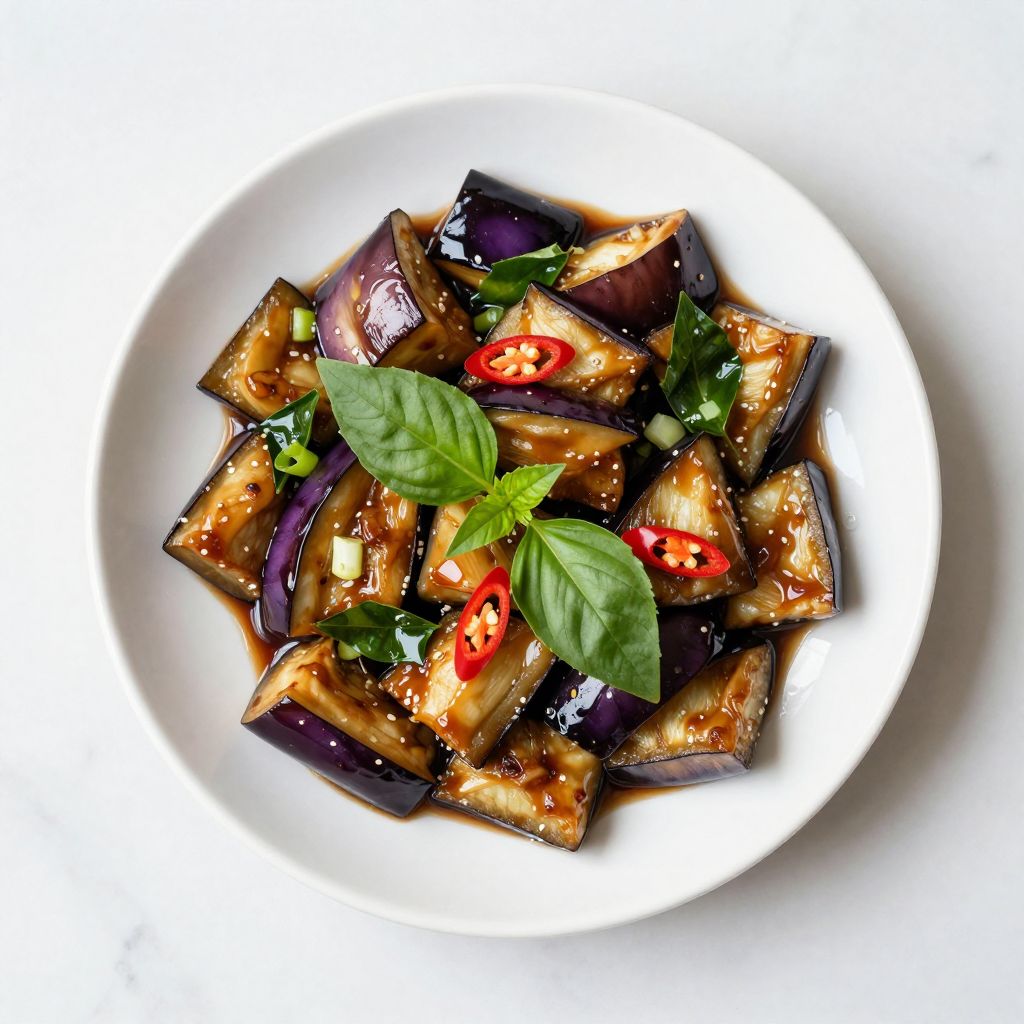
Thai Eggplant with Basil and Chili
Ingredients
Equipment
Method
- Cut the eggplants into 1-inch cubes, leaving the skin on, and pat dry with paper towels to remove excess moisture.
- In a small bowl, whisk together 3 tablespoons soy sauce, 1 tablespoon oyster sauce, 1 teaspoon sugar, and 1/4 cup water until the sugar dissolves completely.
- Heat a large wok or wide skillet over high heat until smoking hot, about 1 minute.
- Add 3 tablespoons vegetable oil and swirl to coat the pan. Add the eggplant cubes in a single layer and cook without stirring for 2 to 3 minutes until golden on one side.
- Stir the eggplant and continue cooking for another 3 to 4 minutes until most pieces are golden brown and slightly wrinkled.
- Push the eggplant to the sides of the pan and add the minced garlic and sliced chilies to the center. Cook, stirring constantly, for 30 seconds to 1 minute until fragrant.
- Pour the prepared sauce into the pan and toss to coat the eggplant evenly. Reduce the heat if the sauce is bubbling too vigorously.
- Cook for 1 to 2 minutes more until the sauce reduces slightly and clings to the eggplant, then remove from heat.
- Add 1 cup fresh Thai basil and 2 green onions, tossing gently off the heat so the herbs wilt lightly but remain bright and aromatic.