
There’s something magical about the aroma of fresh basil wafting through your kitchen, isn’t there? This Pesto Basil Recipe captures that essence perfectly, bringing vibrant flavor and a burst of color to your dishes.
Pesto is not just versatile; it’s a quick way to elevate any meal, whether you’re tossing it with pasta, spreading it on sandwiches, or drizzling it over grilled vegetables. It has a rich, nutty flavor with a hint of garlic, and the best part? You can whip it up in minutes.
Why You’ll Love This Recipe
This pesto recipe is a must-try for every home cook.
- Quick and easy to prepare in under 10 minutes.
- Customizable with various herbs and nuts.
- Perfect for meal prep—store it for later use.
- Bright, fresh flavor that enhances any dish.
- Made with wholesome ingredients, so you know what’s in it.
My Experience Making This Recipe
Making pesto always feels like a mini celebration for me. The moment I blend the fresh basil with garlic and nuts, it’s like a burst of summer in my kitchen.
My friends rave about this pesto, and I often find myself doubling the batch because it disappears so quickly. Whether it’s a casual weeknight dinner or a gathering, this pesto never fails to impress.
Recipe Overview
- Recipe Name: Pesto Basil
- Servings: 4
- Prep Time: 10 minutes
- Cook Time: 0 minutes
- Total Time: 10 minutes
- Course: Condiment
- Cuisine: Italian
- Calories per Serving: 200
Equipment You Will Need
- Food processor or blender
- Spatula
- Measuring cups and spoons
- Storage container
Ingredients for Pesto Basil
- 2 cups fresh basil leaves, packed
- 1/2 cup grated Parmesan cheese
- 1/2 cup extra virgin olive oil
- 1/3 cup pine nuts (or walnuts)
- 2 cloves garlic, minced
- 1/2 teaspoon salt
- 1/4 teaspoon black pepper
Ingredient Notes and Substitutions
- Basil: This is the star ingredient, offering a fresh flavor. You can substitute it with spinach or arugula for a different taste.
- Parmesan Cheese: Adds a creamy texture and savory depth. Nutritional yeast works well for a vegan option.
- Olive Oil: Provides richness and helps blend everything smoothly. Avocado oil can also be used for a lighter flavor.
- Pine Nuts: These lend a buttery flavor. Feel free to use sunflower seeds or almonds if you’re nut-free.
- Garlic: Gives a punch of flavor. For a milder taste, roast the garlic before adding.
How to Make Pesto Basil
Step 1: Gather Your Ingredients
Start by measuring out all your ingredients. This makes the process smoother and ensures you have everything ready to go.
Step 2: Add Basil and Garlic
In your food processor, combine the fresh basil and minced garlic. This way, the garlic gets evenly distributed throughout the pesto.
Step 3: Pulse the Mixture
Pulse the basil and garlic a few times until roughly chopped. This helps to break down the leaves without turning them into a puree just yet.
Step 4: Add the Nuts
Add the pine nuts (or your choice of nuts) to the mixture. Pulsing them in at this stage allows them to blend well with the other ingredients.
Step 5: Incorporate Cheese
Add the grated Parmesan cheese, stirring it into the mixture. This adds creaminess and a savory flavor that balances the freshness of the basil.
Step 6: Slowly Add Olive Oil
With the food processor running, slowly drizzle in the olive oil. This creates a smooth emulsion, resulting in a creamy pesto.
Step 7: Season to Taste
Add salt and pepper to the mixture, then pulse a few more times. Taste and adjust the seasoning as needed for your preference.
Step 8: Store the Pesto
Transfer the pesto to a storage container. It can be kept in the refrigerator for up to a week, or freeze it for later use.
Pro Tip: To prevent browning, drizzle a thin layer of olive oil on top before sealing your container.
Tips for the Best Pesto Basil
- Use fresh basil for the best flavor; wilted leaves will dull the taste.
- Toast the nuts lightly before adding for an extra depth of flavor.
- For a creamier texture, add more cheese or olive oil as desired.
- Experiment with different herbs like parsley or cilantro for unique twists.
- Blend just until combined to keep some texture instead of a puree.
Common Mistakes to Avoid
- Using wilted basil can lead to a bland pesto; always choose fresh leaves.
- Over-blending makes the pesto too smooth; you want a bit of texture.
- Forgetting to season can leave your pesto tasting flat; salt and pepper are key.
- Not using enough garlic can make the flavor weak; don’t skimp on it!
Serving Suggestions
Pair your pesto basil with a variety of dishes for a delightful experience.
- Toss it with warm pasta for a classic dish.
- Spread on toasted baguette for a simple appetizer.
- Drizzle over grilled chicken or fish for added flavor.
- Mix into roasted vegetables for a fresh twist.
- Use in sandwiches or wraps for an extra kick.
Variations to Try
- Substitute arugula for a peppery twist.
- Try sun-dried tomatoes for a rich, tangy flavor.
- Swap walnuts for pine nuts to cut costs without sacrificing taste.
- Add lemon juice for brightness and acidity.
- Incorporate spinach for a milder, creamier pesto.
Dietary Adaptations
- Gluten-Free: This pesto is naturally gluten-free and safe for those with gluten sensitivity.
- Dairy-Free: Substitute nutritional yeast for the Parmesan cheese.
- Vegan: Use the nutritional yeast and ensure your nuts are fresh.
- Low-Carb/Keto: This recipe is low in carbs, making it suitable for keto diets.
Storage and Reheating
Refrigerator
Store the pesto in an airtight container in the fridge. It will last about a week.
- Cover with a thin layer of olive oil to prevent browning.
Freezer
Pesto freezes well, making it perfect for meal prep. Use ice cube trays for easy portioning.
- Transfer to freezer bags or containers once frozen.
Reheating
To use frozen pesto, thaw it in the fridge overnight or warm it gently on the stovetop. Avoid boiling to preserve flavor.
- Mix with a bit of olive oil to help restore creaminess.
Nutrition Information
| Nutrient | Amount |
|---|---|
| Calories | 200 |
| Total Fat | 20g |
| Saturated Fat | 3g |
| Carbohydrates | 4g |
| Fiber | 1g |
| Sugar | 1g |
| Protein | 5g |
| Sodium | 150mg |
| Cholesterol | 10mg |
This nutrition information is an estimate and will vary based on specific ingredients used.
Frequently Asked Questions
Can I substitute the nuts in this recipe?
Absolutely! You can use seeds like sunflower seeds or other nuts like almonds or cashews.
How long can I store pesto?
Pesto can last up to a week in the fridge and several months in the freezer.
Can I make pesto ahead of time?
Yes, it’s a great make-ahead option. Just store it properly to maintain freshness.
Why is my pesto too thick?
If your pesto is too thick, try adding a bit more olive oil to reach your desired consistency.
Can I use this pesto for pizza?
Definitely! It makes a fantastic base sauce for pizza or drizzled on top.
Final Thoughts
There’s something so satisfying about making your own pesto. It’s fresh, flavorful, and adds a touch of culinary magic to any meal.
I encourage you to give this Pesto Basil Recipe a try. Your taste buds will thank you, and you just might find yourself making it on repeat!
For more delicious variations, check out this pesto recipe without pine nuts or try a unique twist with this pistachio pesto recipe.
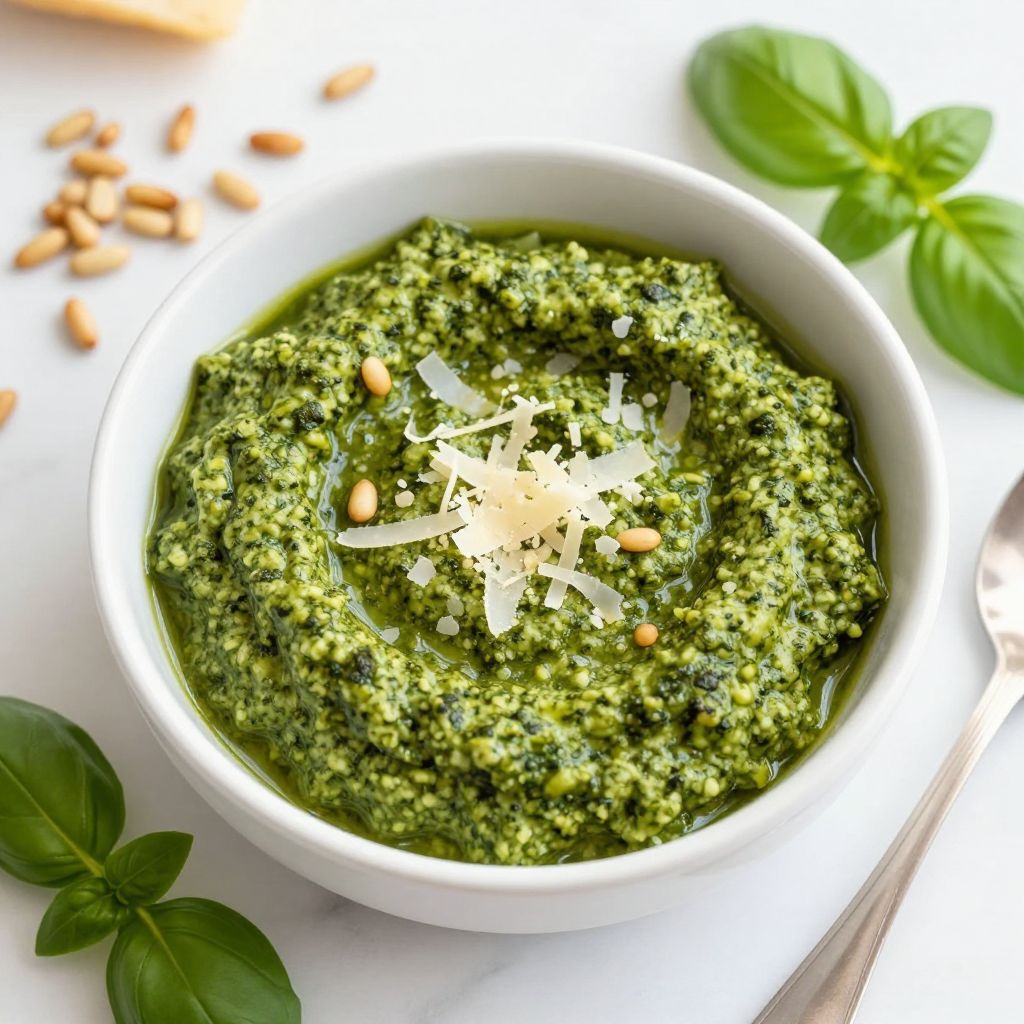
Pesto Basil
Ingredients
Equipment
Method
- Start by measuring out all your ingredients.
- In your food processor, combine the fresh basil and minced garlic.
- Pulse the basil and garlic a few times until roughly chopped.
- Add the pine nuts (or your choice of nuts) to the mixture.
- Add the grated Parmesan cheese, stirring it into the mixture.
- With the food processor running, slowly drizzle in the olive oil.
- Add salt and pepper to the mixture, then pulse a few more times.
- Transfer the pesto to a storage container.