
There’s something magical about the smell of fresh bread baking in the oven, and that’s exactly what you’ll experience with this Tuscan Bread Recipe. This rustic bread boasts a chewy crust and a soft, airy interior, making it perfect for dipping in olive oil or pairing with your favorite cheese.
What makes this recipe truly special is its simplicity; it requires just a few ingredients and minimal hands-on time. The flavor is enhanced by the slow fermentation process, resulting in a bread that’s not just easy to make but also incredibly satisfying to enjoy.
Why You’ll Love This Recipe
This Tuscan bread is a delightful addition to any meal. It’s versatile and pairs beautifully with many dishes.
- Rustic flavor that transports you to Italy.
- Perfect for sandwiches or simply enjoyed with olive oil.
- Requires minimal ingredients and effort.
- Great for sharing with family and friends.
- Freezes well, so you can enjoy it later.
My Experience Making This Recipe
When I first tried making this Tuscan bread, I was amazed at how easy it was. The dough came together effortlessly, and the aroma wafting through my kitchen was incredible.
As I sliced into the warm loaf, the crust crackled beautifully, revealing the soft, airy crumb inside. My family couldn’t resist tearing off pieces while it was still hot.
Recipe Overview
- Recipe Name: Tuscan Bread
- Servings: 8
- Prep Time: 20 minutes
- Cook Time: 30 minutes
- Total Time: 50 minutes
- Course: Bread
- Cuisine: Italian
- Calories per Serving: 150
Equipment You Will Need
- Large mixing bowl
- Wooden spoon or dough scraper
- Plastic wrap or a damp cloth
- Baking sheet
- Parchment paper
- Oven
Ingredients for Tuscan Bread
- 4 cups all-purpose flour
- 1 ½ cups warm water
- 1 teaspoon active dry yeast
- 2 teaspoons salt
Ingredient Notes and Substitutions
- All-purpose flour: This provides a great structure for the bread. You can substitute with bread flour for a chewier texture.
- Warm water: Activates the yeast for better rising. Avoid using hot water, which can kill the yeast.
- Active dry yeast: Essential for leavening. You can use instant yeast, reducing the amount slightly.
- Salt: Enhances flavor and strengthens the dough. Sea salt can be used as a substitute.
How to Make Tuscan Bread
Step 1: Combine the Yeast and Water
In a large bowl, mix the warm water with the active dry yeast. Let it sit for about 5 minutes until it becomes frothy, indicating the yeast is active.
Step 2: Mix in the Flour and Salt
Add the all-purpose flour and salt to the yeast mixture. Stir with a wooden spoon until the dough starts to come together.
Step 3: Knead the Dough
Transfer the dough onto a floured surface and knead for about 10 minutes. This develops gluten, giving the bread its chewy texture.
Step 4: First Rise
Place the kneaded dough in a lightly greased bowl, covering it with plastic wrap or a damp cloth. Let it rise in a warm place for about 1 to 2 hours or until it doubles in size.
Step 5: Shape the Dough
Once risen, punch the dough down to release air. Shape it into a round loaf, tucking the edges underneath for a smooth top.
Step 6: Second Rise
Place the shaped dough on a baking sheet lined with parchment paper. Cover it with a cloth and let it rise for another 30 minutes.
Step 7: Preheat the Oven
While the dough is rising, preheat your oven to 450°F (230°C). This high temperature will create a beautiful crust.
Step 8: Bake the Bread
Once the dough has risen again, place it in the preheated oven. Bake for 30 minutes or until the bread is golden brown and sounds hollow when tapped.
Pro Tip: For a crustier loaf, place a pan of water in the bottom of the oven while baking to create steam.
Tips for the Best Tuscan Bread
- Use a kitchen scale for accurate measurements for best results.
- A longer fermentation time enhances the flavor; consider refrigerating overnight.
- Experiment with adding herbs for a twist on the classic flavor.
- Let the bread cool completely before slicing to maintain its texture.
- For a decorative finish, score the top of the dough before baking.
Common Mistakes to Avoid
- Not letting the dough rise long enough results in dense bread.
- Using cold water will not activate the yeast properly.
- Over-kneading can create a tough texture, so stop when it’s elastic.
- Skipping the second rise can lead to a flat loaf.
Serving Suggestions
This Tuscan bread is delightful on its own or as part of a meal. It pairs wonderfully with soups, salads, and cheese.
- Serve with extra virgin olive oil for dipping.
- Use it as a base for bruschetta.
- Pair with a hearty stew or pasta dish.
- Enjoy with a selection of cheeses and meats.
Variations to Try
- For a whole wheat version, substitute half the flour with whole wheat flour.
- Add olives or sun-dried tomatoes for a Mediterranean twist.
- Incorporate herbs like rosemary or thyme for added flavor.
- Experiment with different flours like spelt for unique taste profiles.
Dietary Adaptations
- Gluten-free: Use a gluten-free flour blend for an alternative version.
- Dairy-free: This recipe is naturally dairy-free.
- Vegan: No animal products are used, making it vegan-friendly.
- Low-carb/Keto: This recipe is not suitable for low-carb diets, but you can try almond flour alternatives.
Storage and Reheating
Refrigerator
Store bread in an airtight container at room temperature for up to three days.
- Wrap it in a kitchen towel to keep it fresh.
- To maintain crustiness, avoid plastic wrap.
Freezer
Freeze slices of bread in a freezer bag for up to three months.
- Layer parchment paper between slices to prevent sticking.
- Seal the bag tightly to avoid freezer burn.
Reheating
Reheat bread in the oven at 350°F (175°C) for about 10 minutes.
- Wrap in foil to retain moisture while reheating.
- For extra crispiness, remove the foil for the last few minutes.
Nutrition Information
| Nutrient | Amount |
|---|---|
| Calories | 150 |
| Total Fat | 0.5g |
| Saturated Fat | 0g |
| Carbohydrates | 32g |
| Fiber | 1g |
| Sugar | 0g |
| Protein | 5g |
| Sodium | 200mg |
| Cholesterol | 0mg |
This information is approximate and may vary based on specific ingredients and serving sizes.
Frequently Asked Questions
Can I use instant yeast instead of active dry yeast?
Yes, you can use instant yeast; just reduce the amount slightly and mix it directly with the flour.
Can I make this bread ahead of time?
Absolutely! You can prepare the dough and refrigerate it overnight for the first rise.
How should I store leftover bread?
Wrap it in a kitchen towel and store in an airtight container at room temperature for up to three days.
Why is my bread dense?
Dense bread can result from not allowing enough rising time or using cold water.
Can I add herbs or spices to the dough?
Yes! Adding herbs like rosemary or spices can enhance the flavor of the bread significantly.
Final Thoughts
Making your own Tuscan bread can be a rewarding experience that fills your home with the wonderful scent of baking. This recipe is not just about the bread itself but the joy of creating something delicious to share.
So, roll up your sleeves and give this a try; you may never want store-bought bread again. And if you’re looking for more delightful recipes, check out this Einkorn Bread Recipe or try this amazing Sourdough Baguette Recipe.
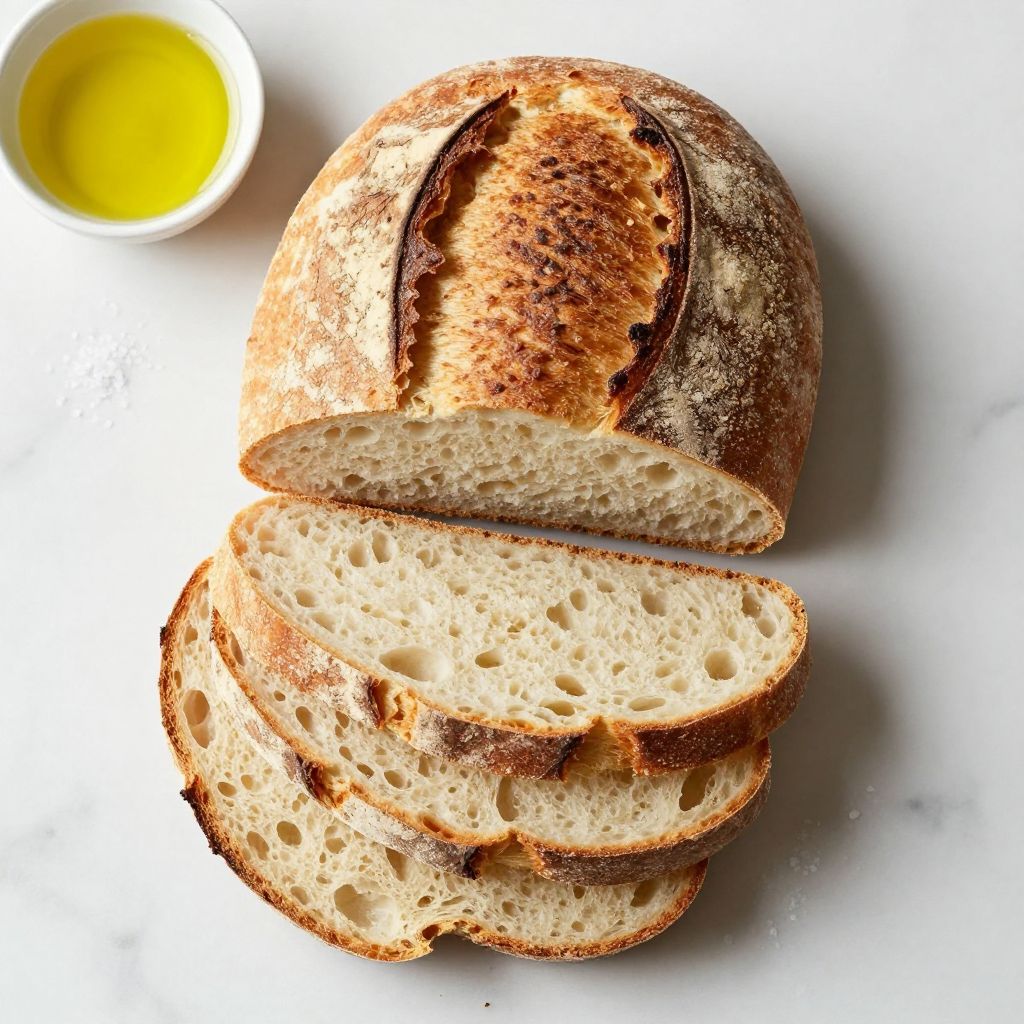
Tuscan Bread
Ingredients
Equipment
Method
- In a large bowl, mix the warm water with the active dry yeast. Let it sit for about 5 minutes until it becomes frothy.
- Add the all-purpose flour and salt to the yeast mixture. Stir with a wooden spoon until the dough starts to come together.
- Transfer the dough onto a floured surface and knead for about 10 minutes.
- Place the kneaded dough in a lightly greased bowl, covering it with plastic wrap or a damp cloth. Let it rise in a warm place for about 1 to 2 hours or until it doubles in size.
- Once risen, punch the dough down to release air. Shape it into a round loaf.
- Place the shaped dough on a baking sheet lined with parchment paper. Cover it with a cloth and let it rise for another 30 minutes.
- Preheat your oven to 450°F (230°C).
- Once the dough has risen again, place it in the preheated oven. Bake for 30 minutes or until the bread is golden brown.