
The first time I spread vibrant green pistachio pesto on warm pasta, I realized I’d been missing out on one of the best flavor combinations that exist. Pistachio pesto swaps the traditional basil for nutty, buttery pistachios that bring a richness and sophistication to your favorite dishes.
This recipe stands out from standard basil pesto because pistachios offer a deeper, more complex flavor that pairs beautifully with everything from pasta to roasted vegetables. The result is creamy, luxurious, and ready in under ten minutes, making it perfect for weeknight dinners or impressing guests without spending hours in the kitchen.
What makes this pesto special is its versatility and the way it transforms simple ingredients into something restaurant-quality. Once you make your first batch, you’ll find yourself reaching for it constantly.
Why You’ll Love This Recipe
This pistachio pesto checks every box for home cooks seeking a quick, elegant sauce that tastes anything but ordinary. The nutty flavor feels luxurious while remaining accessible, and you probably have most ingredients at home already.
- Ready in under 10 minutes from start to finish
- Naturally creamy without heavy cream or mayonnaise
- Works on pasta, vegetables, proteins, and bread
- Stores beautifully in the fridge or freezer for easy meal prep
- Impresses guests while tasting like a restaurant dish
My Experience Making This Recipe
I first discovered pistachio pesto at a small Italian restaurant in Portland, and I became slightly obsessed. The moment I tasted it, I knew I had to recreate it at home, and I’m thrilled I did.
Making this pesto felt like unlocking a secret that chefs had been keeping from me. The pistachios blended into a silky sauce while the garlic and lemon juice cut through the richness perfectly, creating layers of flavor that simple basil pesto just couldn’t match.
My family devoured the first batch over fresh linguine within minutes, and my kids actually asked for seconds without complaint. That’s when I knew this recipe was a keeper.
Recipe Overview
- Recipe Name: Pistachio Pesto
- Servings: 4 to 6 servings
- Prep Time: 10 minutes
- Cook Time: 0 minutes
- Total Time: 10 minutes
- Course: Sauce
- Cuisine: Italian-inspired
- Calories per Serving: 180
Equipment You Will Need
- Food processor
- Measuring cups and spoons
- Cutting board and knife
- Garlic press or mincing tool
- Medium bowl
- Wooden spoon or spatula
- Lemon juicer
Ingredients for Pistachio Pesto
- 1.5 cups roasted unsalted pistachios
- 2 cups fresh basil leaves
- 2 cloves garlic, minced
- 0.5 cup extra virgin olive oil
- 0.25 cup freshly grated Parmesan cheese
- 2 tablespoons fresh lemon juice
- Salt and black pepper to taste
- 1 tablespoon honey (optional, for balancing acidity)
Ingredient Notes and Substitutions
- Roasted pistachios provide that rich, nutty depth that raw pistachios can’t deliver. If you only have raw pistachios, quickly toast them in a dry skillet for 3 to 4 minutes until fragrant.
- Fresh basil brightens the pesto and adds a peppery note that complements the nutty pistachios. Spinach works as a substitute, though it removes the basil freshness.
- Garlic gives the pesto savory backbone and punch. One clove creates a subtler sauce if you prefer less garlic intensity.
- Extra virgin olive oil emulsifies the ingredients and carries flavor beautifully. Regular olive oil works if you’re on a budget, but it lacks the complexity.
- Parmesan cheese adds umami and saltiness to the sauce. Pecorino Romano offers a sharper, more assertive flavor if you want a bolder pesto.
- Fresh lemon juice balances the richness with acidity and brightness. Lime juice creates a completely different but equally delicious flavor profile.
How to Make Pistachio Pesto
Step 1: Prepare Your Pistachios
Pour 1.5 cups of roasted unsalted pistachios into your food processor. You want them already roasted because raw nuts will create a dull, flat-tasting pesto lacking depth.
Step 2: Pulse the Pistachios
Pulse the pistachios 5 to 6 times until they break down into coarse crumbs with some texture remaining. Avoid over-blending at this stage, which turns them into pistachio butter and creates an overly dense sauce.
Step 3: Add Garlic and Basil
Add 2 minced garlic cloves and 2 cups of fresh basil leaves to the food processor. Pulse another 4 to 5 times until the basil and garlic distribute evenly throughout the pistachios.
Step 4: Pour in the Olive Oil
Drizzle in 0.5 cup of extra virgin olive oil while pulsing the mixture gently. This gradual addition helps the oil emulsify with the nuts and herbs, creating a smooth, creamy consistency rather than a separated, oily sauce.
Step 5: Add Cheese and Lemon Juice
Add 0.25 cup of freshly grated Parmesan cheese and 2 tablespoons of fresh lemon juice. Pulse 2 to 3 more times until everything combines, but stop before the mixture becomes completely smooth.
Step 6: Taste and Season
Transfer the pesto to a bowl and taste it carefully. Add salt and black pepper to your preference, stirring gently with a spoon to combine.
Step 7: Add Optional Honey
If the pesto tastes too acidic or bright, stir in 1 tablespoon of honey to balance the flavors. Honey rounds out the sharp lemon and garlic without adding sweetness.
Step 8: Transfer to Serving Bowl
Scrape the pesto into your serving bowl, leaving it with a slightly chunky texture that shows off the pistachio pieces. This texture makes the finished dish look more elegant and feels more luxurious on the palate.
Pro Tip: Pulse your ingredients instead of fully blending them to keep the pesto textured and interesting rather than turning it into a smooth paste.
Tips for the Best Pistachio Pesto
- Use a food processor instead of a blender because blenders over-process the mixture too quickly, creating a dense, pasty texture you don’t want.
- Keep the pesto slightly chunky by pulsing instead of blending continuously. The visible pistachio pieces add visual appeal and pleasant texture.
- Taste as you go and adjust seasonings gradually, especially salt and lemon juice, since you can’t take them back out once added.
- Use the freshest basil you can find because wilted basil creates dull pesto lacking that bright, peppery punch.
- Make pesto just before serving if possible because the basil continues oxidizing and darkening in the fridge, though flavor remains good for days.
- Reserve some pasta cooking water to thin out your pesto when tossing with noodles because the starch helps it cling to the pasta beautifully.
Common Mistakes to Avoid
- Over-blending creates pistachio butter instead of pesto, resulting in a dense, one-note sauce that coats your mouth heavily rather than tasting fresh and lively.
- Using raw pistachios instead of roasted ones produces a pesto tasting bitter and flat because raw nuts lack the toasted depth that makes this recipe shine.
- Skipping the lemon juice removes the acid that balances the rich nuts and cheese, making the pesto feel heavy and one-dimensional on the palate.
- Adding too much garlic overpowers the delicate pistachio flavor, transforming it from elegant to harsh and aggressive.
- Using pre-grated Parmesan with anti-caking agents makes your pesto grainy and prevents smooth emulsification with the oil.
Serving Suggestions
Pistachio pesto shines in countless applications beyond simple pasta dishes. Its versatility makes it one of the most valuable sauces to keep on hand for quick, elegant meals.
- Toss with fresh pasta, reserving pasta water to loosen the sauce and help it cling beautifully
- Spread on grilled chicken breasts or fish fillets for an instant flavor upgrade
- Layer into sandwiches and wraps for a sophisticated twist on classic lunch
- Drizzle over roasted vegetables like zucchini, bell peppers, or green beans
- Dollop on crostini with fresh mozzarella for an elegant appetizer
Variations to Try
- Pistachio Pesto with Mint: Replace half the basil with fresh mint for a brighter, more herbaceous flavor that feels refreshing in summer dishes.
- Pistachio Pesto with Sun-Dried Tomatoes: Add 0.25 cup of chopped sun-dried tomatoes for sweetness and complexity that pairs beautifully with the nuts.
- Creamy Pistachio Pesto: Blend in 0.25 cup of Greek yogurt or sour cream for extra creaminess without adding more oil, creating a lighter sauce.
- Pistachio Pesto with Red Pepper Flakes: Add 0.5 teaspoon of red pepper flakes for heat that cuts through the richness and adds a kick.
- Pistachio Pesto with Pine Nuts: Mix in 0.25 cup of toasted pine nuts alongside the pistachios for even more complex nutty flavor and interesting texture.
Dietary Adaptations
- Gluten-free: This recipe is naturally gluten-free, but verify that your Parmesan cheese wasn’t processed in a facility handling gluten.
- Dairy-free: Replace Parmesan with nutritional yeast, using the same amount, though the flavor becomes slightly less savory and umami-forward.
- Vegan: Omit the Parmesan entirely or use cashew cream blended with lemon juice as a creamy, dairy-free alternative.
- Low-carb/Keto: This pesto is already very low in carbs and high in healthy fats, making it perfectly keto-friendly as written.
Storage and Reheating
Refrigerator
Store pistachio pesto in an airtight container on a shelf in your refrigerator where it stays fresh for up to five days. The basil will darken slightly as oxidation occurs, but the flavor remains delicious throughout.
- Press plastic wrap directly onto the surface of the pesto to minimize air exposure
- Store in glass containers rather than plastic for better flavor preservation
- Keep separate from pasta until ready to serve for best quality
Freezer
Pistachio pesto freezes beautifully for up to three months, making it perfect for batch cooking and quick meals. Freeze in ice cube trays for portion control, then transfer to freezer bags.
- Omit the Parmesan before freezing, adding it fresh after thawing for better texture
- Freeze in small portions so you can thaw only what you need
- Label containers with the date made for easy tracking
Reheating
Pistachio pesto doesn’t need reheating since you serve it cold or at room temperature. Simply thaw overnight in the refrigerator if frozen, then use as directed.
- Never heat pesto at high temperatures, which damages the fresh flavors and makes basil taste bitter
- Warm pasta gently and toss with room-temperature pesto at the last moment
- Stir in fresh lemon juice after thawing to restore brightness
Nutrition Information
| Nutrient | Amount |
|---|---|
| Calories | 180 |
| Total Fat | 16g |
| Saturated Fat | 3g |
| Carbohydrates | 8g |
| Fiber | 2g |
| Sugar | 1g |
| Protein | 6g |
| Sodium | 95mg |
| Cholesterol | 2mg |
These values represent one serving out of six based on standard portion sizes. Individual nutrition varies depending on serving size and specific ingredient brands used.
Frequently Asked Questions
Can I make pistachio pesto without a food processor?
You can make it with a mortar and pestle, though it requires more physical effort and time. A blender works but tends to over-process the mixture into butter, so pulse cautiously if using one.
How long does pistachio pesto keep in the refrigerator?
Properly stored in an airtight container, it lasts up to five days in the fridge before the basil darkens significantly. Freezing extends the life to three months with virtually no quality loss.
Can I substitute the basil with another herb?
Arugula, spinach, or parsley work as substitutes, each bringing different flavor characteristics. Keep in mind that basil’s peppery bite makes it the best choice for balancing pistachio richness.
What if my pesto looks too thick or too thin?
Add more olive oil one tablespoon at a time if it’s too thick, or add more Parmesan if it’s too thin. When using with pasta, reserve pasta water to thin it to your preferred consistency.
Is pistachio pesto good for meal prep?
Absolutely, making a batch on Sunday gives you quick sauce options all week long. Freeze portions in ice cube trays for grab-and-go convenience.
Can I use roasted salted pistachios instead of unsalted?
You can, but reduce the added salt significantly since roasted salted nuts are already quite salty. Taste carefully as you season to avoid an overly salty final product.
Final Thoughts
Making pistachio pesto at home transforms your cooking and opens up entirely new flavor possibilities. This sauce brings sophistication to weeknight dinners without demanding complicated techniques or hours in the kitchen.
Try this recipe this week and see why pistachio pesto deserves space in your regular cooking rotation. Once you taste that luxurious, nutty richness, you’ll find yourself reaching for it again and again.
Explore More Pistachio Recipes
If you enjoyed this pistachio pesto recipe, you might also love exploring other pistachio-based dishes that bring similar nutty elegance to your meals.
Try making a smooth pistachio cream recipe for desserts and elegant plating. For something more sophisticated and fun, mix up a pistachio martini recipe perfect for entertaining or special occasions.
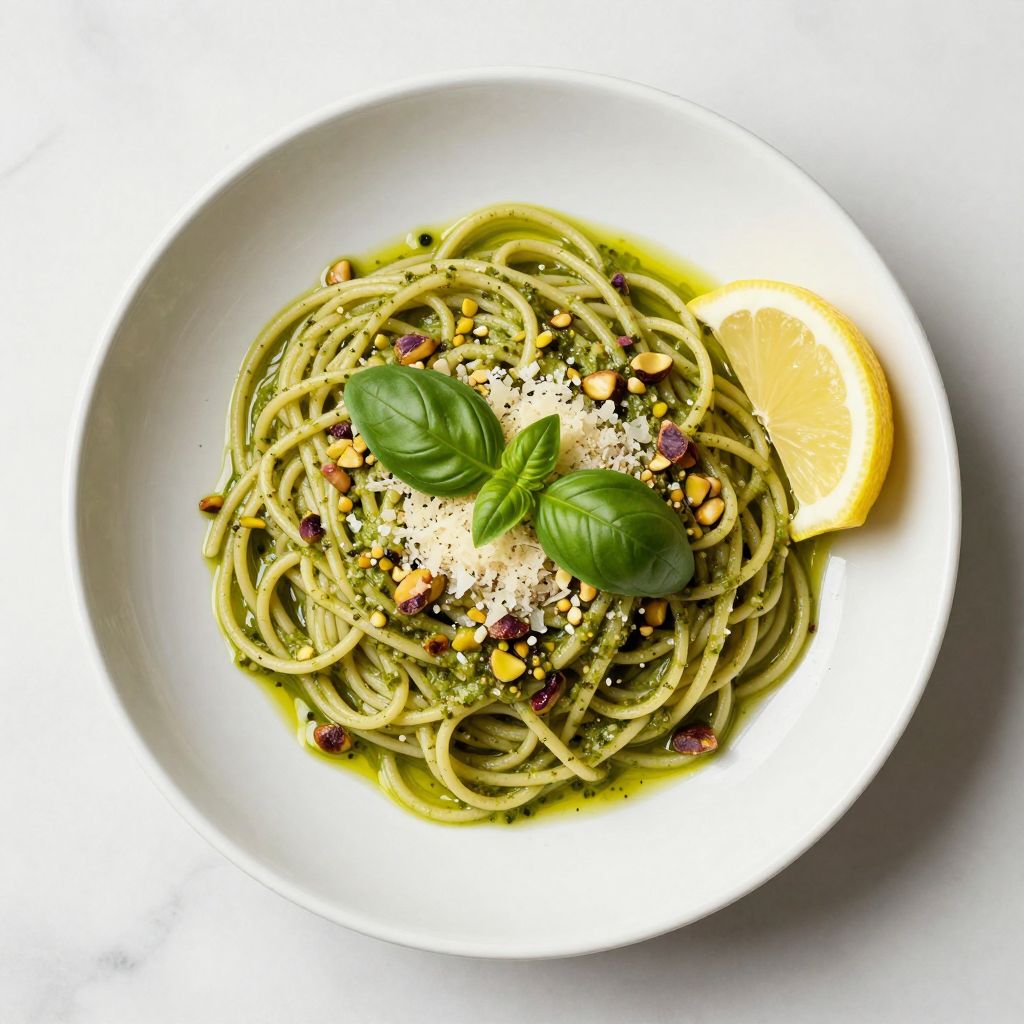
Pistachio Pesto
Ingredients
Equipment
Method
- Pour 1.5 cups of roasted unsalted pistachios into your food processor.
- Pulse the pistachios 5 to 6 times until they break down into coarse crumbs with some texture remaining.
- Add 2 minced garlic cloves and 2 cups of fresh basil leaves to the processor and pulse 4 to 5 times until evenly distributed.
- Drizzle in 0.5 cup of extra virgin olive oil while pulsing gently to emulsify the mixture.
- Add 0.25 cup of freshly grated Parmesan cheese and 2 tablespoons of fresh lemon juice, then pulse 2 to 3 times until combined but still slightly textured.
- Transfer the pesto to a medium bowl and season with salt and black pepper to taste.
- If desired, stir in 1 tablespoon of honey to balance acidity and round out the flavors.
- Scrape the pesto into a serving bowl, leaving it slightly chunky for texture and visual appeal.