
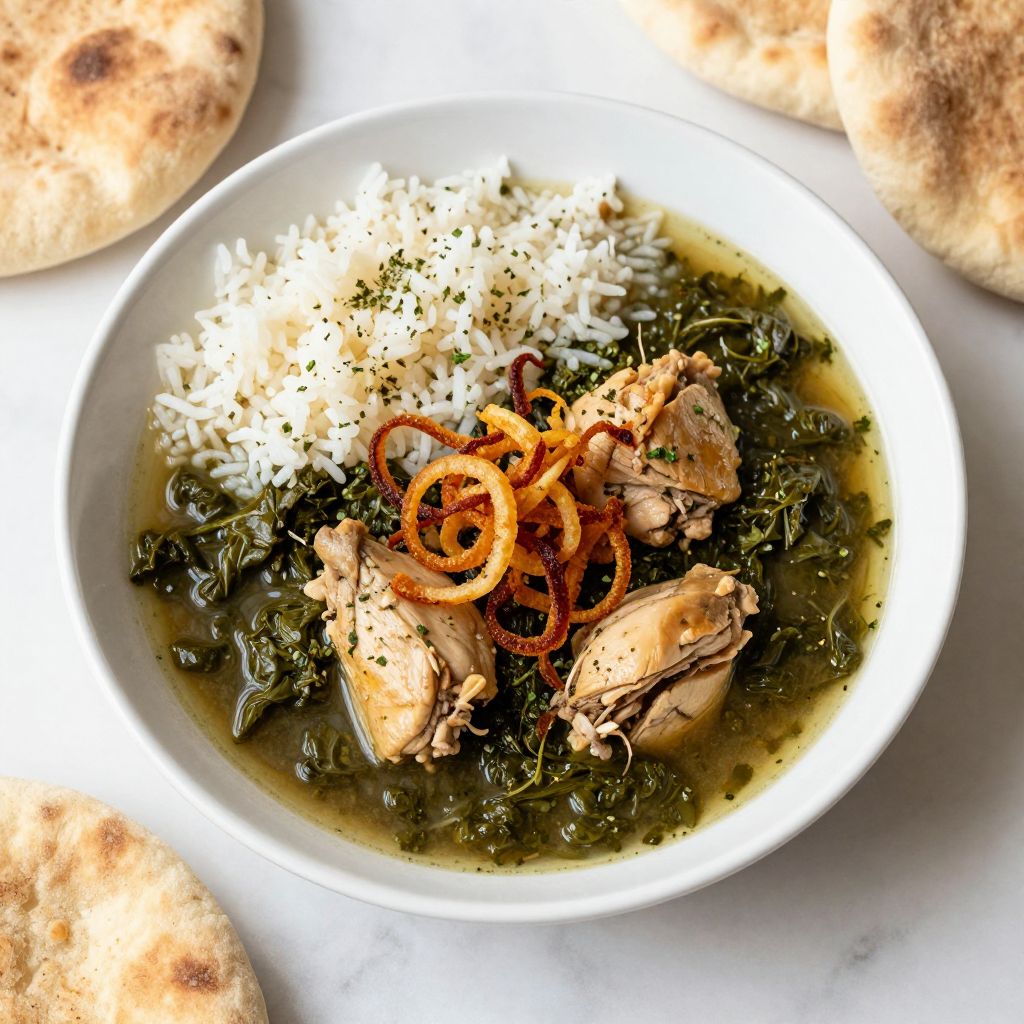
As the aroma of simmering spices fills the kitchen, you can’t help but feel transported to a bustling Middle Eastern market. Mulukhiyah is a traditional dish that delights with its unique texture and earthy flavor, making it a beloved staple in many households. This dish, made from the leaves of the jute plant, is not only comforting but also packed with nutrients. Whether served with rice or bread, it’s a versatile meal that brings warmth to any table.
Why You’ll Love This Recipe
This recipe is a cherished classic for many reasons.
- Rich and savory flavor that stands out.
- Quick to prepare, perfect for busy weeknights.
- Nutritious, packed with vitamins and minerals.
- Customizable with various proteins or vegetarian options.
- Comforting dish that feels like a warm hug.
My Experience Making This Recipe
Making Mulukhiyah in my home is always an adventure. The first time I tried it, I was amazed by the vibrant green color of the leaves and the rich aroma that filled the kitchen.
When I served it to my family, their delighted expressions said it all. This dish has since become a regular feature at our family dinners, and each time, it brings back fond memories.
Recipe Overview
- Recipe Name: Mulukhiyah
- Servings: 4
- Prep Time: 15 minutes
- Cook Time: 30 minutes
- Total Time: 45 minutes
- Course: Main Dish
- Cuisine: Middle Eastern
- Calories per Serving: 250
Equipment You Will Need
- Large pot or Dutch oven
- Wooden spoon
- Knife and cutting board
- Measuring cups and spoons
- Serving bowls
Ingredients for Mulukhiyah
- 1 lb fresh or frozen Mulukhiyah leaves
- 1 lb chicken or beef, cut into pieces
- 6 cups chicken or beef broth
- 1 large onion, finely chopped
- 4 cloves garlic, minced
- 1 tsp ground coriander
- 1 tsp cumin
- Salt and pepper to taste
- 2 tbsp olive oil
Ingredient Notes and Substitutions
- Mulukhiyah leaves: These are the star of the dish, providing a unique flavor and texture. If unavailable, you can substitute with spinach or kale, though the flavor will differ.
- Chicken or beef: This adds depth to the broth. For a vegetarian option, use mushrooms or chickpeas.
- Broth: It enhances the taste of the dish. Vegetable broth can be used for a lighter version.
- Onion and garlic: They provide aromatic depth. Shallots can be a milder alternative.
How to Make Mulukhiyah
Step 1: Prepare the Ingredients
Start by washing and chopping the Mulukhiyah leaves if using fresh ones. This helps to get rid of any dirt and makes them ready for cooking.
Step 2: Sauté the Aromatics
In a large pot, heat the olive oil over medium heat. Add the chopped onion and sauté until golden, releasing a lovely aroma.
Step 3: Add Garlic and Spices
Stir in the minced garlic, ground coriander, and cumin. This step builds a flavorful base that enhances the dish.
Step 4: Brown the Meat
Add the pieces of chicken or beef to the pot. Browning the meat adds richness and depth to the overall flavor.
Step 5: Pour in the Broth
Once the meat is browned, pour in the broth. This will create a flavorful cooking liquid for the Mulukhiyah.
Step 6: Simmer the Meat
Bring the mixture to a boil, then reduce the heat and let it simmer for about 20 minutes. This allows the flavors to meld and the meat to cook through.
Step 7: Add the Mulukhiyah Leaves
Stir in the prepared Mulukhiyah leaves and let them cook for an additional 5 to 10 minutes. This step makes the leaves tender without losing their vibrant color.
Step 8: Season and Serve
Season with salt and pepper to taste. Serve hot with rice or bread, letting everyone enjoy their bowl of comfort.
Pro Tip: For an extra kick, add a splash of lemon juice just before serving for a refreshing twist!
Tips for the Best Mulukhiyah
- Use fresh Mulukhiyah leaves if possible for the best flavor and nutrition.
- Don’t rush the sautéing process; caramelizing the onions enhances the dish.
- Adjust the thickness by adding more broth if you prefer a soupier consistency.
- Let the dish sit for a few minutes after cooking; it allows flavors to settle.
- Garnish with crispy fried onions for added texture and flavor.
Common Mistakes to Avoid
- Not washing the Mulukhiyah leaves properly can lead to gritty texture.
- Overcooking the leaves makes them mushy; a quick cook preserves their integrity.
- Using low-quality broth can dull the dish’s flavor; always opt for homemade or high-quality stock.
- Skipping the seasoning step can result in a bland dish; taste as you go.
Serving Suggestions
Mulukhiyah is best enjoyed with a few accompaniments to balance its rich flavors.
- Serve with fluffy white rice for a satisfying meal.
- Pair with warm pita bread to scoop up the delicious goodness.
- A side of garlic sauce complements the dish beautifully.
- Fresh salad adds a crisp contrast to the warm stew.
Variations to Try
- Add chickpeas for an extra protein boost and a different texture.
- Incorporate spicy peppers for a heat kick that many love.
- Try a vegetarian version using mushrooms instead of meat for a lighter meal.
- Experiment with different spices like paprika or turmeric for unique flavor profiles.
Dietary Adaptations
- Gluten-free: This recipe is naturally gluten-free; just ensure your broth is gluten-free.
- Dairy-free: No dairy is used, making it suitable for lactose-intolerant individuals.
- Vegan/Vegetarian: Substitute meat with mushrooms or tofu.
- Low-carb/Keto: Skip the rice and serve with a side of steamed vegetables instead.
Storage and Reheating
Refrigerator
Store leftovers in an airtight container in the fridge for up to three days.
- Allow it to cool completely before refrigerating.
- Reheat gently on the stove or in the microwave.
Freezer
This dish freezes well for up to three months.
- Portion it out before freezing for easy reheating.
- Thaw overnight in the refrigerator before reheating.
Reheating
Reheat on the stove over low heat, adding a splash of broth if needed.
- Microwave in short intervals, stirring in between.
Nutrition Information
| Nutrient | Amount |
|---|---|
| Calories | 250 |
| Total Fat | 10g |
| Saturated Fat | 2g |
| Carbohydrates | 22g |
| Fiber | 6g |
| Sugar | 2g |
| Protein | 20g |
| Sodium | 500mg |
| Cholesterol | 50mg |
This information is approximate and can vary based on specific ingredients used.
Frequently Asked Questions
Can I use dried Mulukhiyah instead of fresh?
Yes, but the texture will be different. Dried Mulukhiyah tends to be more concentrated in flavor.
Can I make Mulukhiyah ahead of time?
Absolutely! It tastes even better the next day as the flavors meld together.
How do I store leftover Mulukhiyah?
Store it in an airtight container in the refrigerator for up to three days.
Why is my Mulukhiyah slimy?
Overcooking the leaves can lead to a slimy texture. Cook them just until tender for the best results.
What can I serve with Mulukhiyah?
It pairs well with rice, bread, or a fresh salad for a balanced meal.
Final Thoughts
Making Mulukhiyah is a rewarding experience that brings a taste of tradition to your table. I encourage you to try this recipe and savor its unique flavors.
Don’t forget to explore other delightful recipes like Morir Soñando and Saag for more culinary adventures!
Mulukhiyah
Ingredients
Equipment
Method
- Start by washing and chopping the Mulukhiyah leaves if using fresh ones.
- In a large pot, heat the olive oil over medium heat.
- Add the chopped onion and sauté until golden.
- Stir in the minced garlic, ground coriander, and cumin.
- Add the pieces of chicken or beef to the pot and brown the meat.
- Once the meat is browned, pour in the broth.
- Bring the mixture to a boil, then reduce heat and let it simmer for about 20 minutes.
- Stir in the prepared Mulukhiyah leaves and let them cook for an additional 5 to 10 minutes.
- Season with salt and pepper to taste and serve hot.