
There’s nothing quite like the aroma of a steaming bowl of ramen wafting through the kitchen, evoking cozy memories of late-night cravings or comforting dinners. This Home Ramen Recipe is special because it brings the rich flavors of your favorite ramen shop right to your table, all while being quick and customizable. With its delightful broth, tender noodles, and a medley of toppings, this dish is a versatile favorite that can adapt to any taste preference. Let’s gather our ingredients and get started on this delicious journey!
Why You’ll Love This Recipe
This ramen recipe is fantastic for so many reasons.
- Rich, flavorful broth that warms your soul.
- Quick to prepare on a busy weeknight.
- Customizable with endless toppings.
- Perfect for impressing family and friends.
- Healthy options for every diet.
My Experience Making This Recipe
When I first made this ramen at home, I was amazed by how easy it was to replicate that restaurant-quality taste. The fragrant broth simmered on the stove while the noodles cooked, filling my kitchen with mouthwatering scents.
As I added the toppings, I couldn’t help but feel proud of my creation. Each bite was a delightful explosion of flavors, and I knew I had found my go-to ramen recipe.
Recipe Overview
- Recipe Name: Home Ramen Recipe
- Servings: 4
- Prep Time: 15 minutes
- Cook Time: 20 minutes
- Total Time: 35 minutes
- Course: Main
- Cuisine: Japanese
- Calories per Serving: 450
Equipment You Will Need
- Large pot for the broth
- Medium pot for cooking noodles
- Skillet for sautéing
- Cutting board and knife
- Measuring cups and spoons
- Serving bowls
Ingredients for Home Ramen Recipe
- 4 cups chicken or vegetable broth
- 2 cups water
- 2 packs fresh ramen noodles
- 3 tablespoons soy sauce
- 1 tablespoon miso paste
- 2 cloves garlic, minced
- 1 tablespoon ginger, minced
- 2 green onions, sliced
- 1 cup mushrooms, sliced
- 2 eggs
- Optional toppings:
- Sliced pork or chicken
- Nori sheets
- Sesame seeds
- Bean sprouts
- Spinach or bok choy
Ingredient Notes and Substitutions
- Broth: A rich broth is key for flavor; homemade or store-bought both work well.
- Miso paste: Adds depth to the broth; can be substituted with more soy sauce if unavailable.
- Fresh ramen noodles: These cook quickly and provide authentic texture; dried noodles can be used but may require more cooking time.
- Eggs: Soft-boiled eggs add creaminess; you can skip them for a lighter dish.
How to Make Home Ramen Recipe
Step 1: Prepare the Broth
In a large pot, combine the chicken or vegetable broth and water. This serves as the flavorful base for your ramen.
Step 2: Add Aromatics
Stir in the soy sauce, miso paste, minced garlic, and ginger. These ingredients bring a savory depth to the broth.
Step 3: Simmer the Broth
Bring the pot to a gentle simmer over medium heat. This allows the flavors to meld beautifully.
Step 4: Cook the Noodles
In a separate pot, cook the ramen noodles according to package instructions. Fresh noodles typically take just a few minutes.
Step 5: Prepare Toppings
While the noodles cook, slice the mushrooms and green onions. Fresh toppings enhance each bite.
Step 6: Soft Boil the Eggs
In the last few minutes of noodle cooking, gently add the eggs to the pot. Boiling them for about 6-7 minutes gives a perfect soft center.
Step 7: Assemble Bowls
Once the noodles are ready, drain them and divide into serving bowls. Pour the hot broth over the noodles.
Step 8: Add Toppings
Top each bowl with mushrooms, green onions, and soft-boiled eggs. Feel free to get creative with additional toppings.
Pro Tip: Always taste your broth before serving; adjusting the seasoning can make a big difference.
Tips for the Best Home Ramen Recipe
- Use high-quality broth for maximum flavor.
- Experiment with different toppings according to your preference.
- Don’t overcook the noodles; they should have a slight bite.
- For extra richness, add a splash of sesame oil just before serving.
- Make a larger batch of broth and freeze leftovers for future meals.
Common Mistakes to Avoid
- Using low-quality broth can lead to bland ramen; always opt for a flavorful base.
- Overcooking the noodles results in a mushy texture; keep an eye on them.
- Forgetting to add aromatics will leave your broth one-dimensional; don’t skip the garlic and ginger.
- Not adjusting seasoning can make your ramen taste flat; taste and season as you go.
Serving Suggestions
This ramen can be enjoyed as a standalone dish, but pairing it with sides can elevate your meal.
- Serve with a side of gyoza for a complete Japanese experience.
- Include a light salad with sesame dressing.
- Pair with pickled vegetables for a refreshing contrast.
- Offer a selection of dipping sauces for extra flavor.
Variations to Try
- Add spicy chili oil for a kick of heat.
- Swap the broth with a coconut milk base for a creamy twist.
- Try different proteins like tofu or shrimp for variety.
- Experiment with different types of mushrooms for unique flavors.
Dietary Adaptations
- Gluten-free: Use gluten-free noodles and check broth for gluten content.
- Dairy-free: This recipe is naturally dairy-free; enjoy without worry.
- Vegan/Vegetarian: Substitute broth with vegetable version and skip the egg.
- Low-carb/Keto: Use zucchini noodles instead of traditional ramen.
Storage and Reheating
Refrigerator
Store leftover ramen in an airtight container in the fridge.
- Consume within 3 days for best quality.
- Keep broth separate from noodles to prevent sogginess.
Freezer
Freeze broth and toppings separately for longer storage.
- Broth can last up to 3 months in the freezer.
- Noodles are best used fresh but can be frozen; just cook them slightly less.
Reheating
Reheat broth on the stove until hot and serve over freshly cooked noodles.
- Avoid reheating noodles directly in the broth to maintain texture.
- Add fresh toppings after reheating for the best flavor.
Nutrition Information
| Nutrient | Amount |
|---|---|
| Calories | 450 |
| Total Fat | 15g |
| Saturated Fat | 3g |
| Carbohydrates | 63g |
| Fiber | 3g |
| Sugar | 2g |
| Protein | 14g |
| Sodium | 900mg |
| Cholesterol | 75mg |
This nutritional information is an estimate and may vary based on exact ingredients and portion sizes.
Frequently Asked Questions
Can I use dried ramen noodles instead of fresh?
Yes, but they will require longer cooking time and may have a different texture.
How can I make this ramen ahead of time?
You can prepare the broth and toppings in advance, then cook the noodles just before serving.
How should I store leftovers?
Keep the broth and noodles separate in the refrigerator to maintain their textures.
Why is my broth not flavorful enough?
Make sure to taste and adjust the seasoning as you cook, adding more soy sauce or miso if needed.
Can I make this ramen vegetarian?
Absolutely! Just use vegetable broth and skip the eggs or use a vegan alternative.
Final Thoughts
Homemade ramen is a delightful experience that warms the heart and fills the belly. I encourage you to experiment with toppings and flavors to make this recipe your own.
For more delicious recipes, check out my creamy ramen recipe and learn how to make your own ramen seasoning for an extra flavor boost!
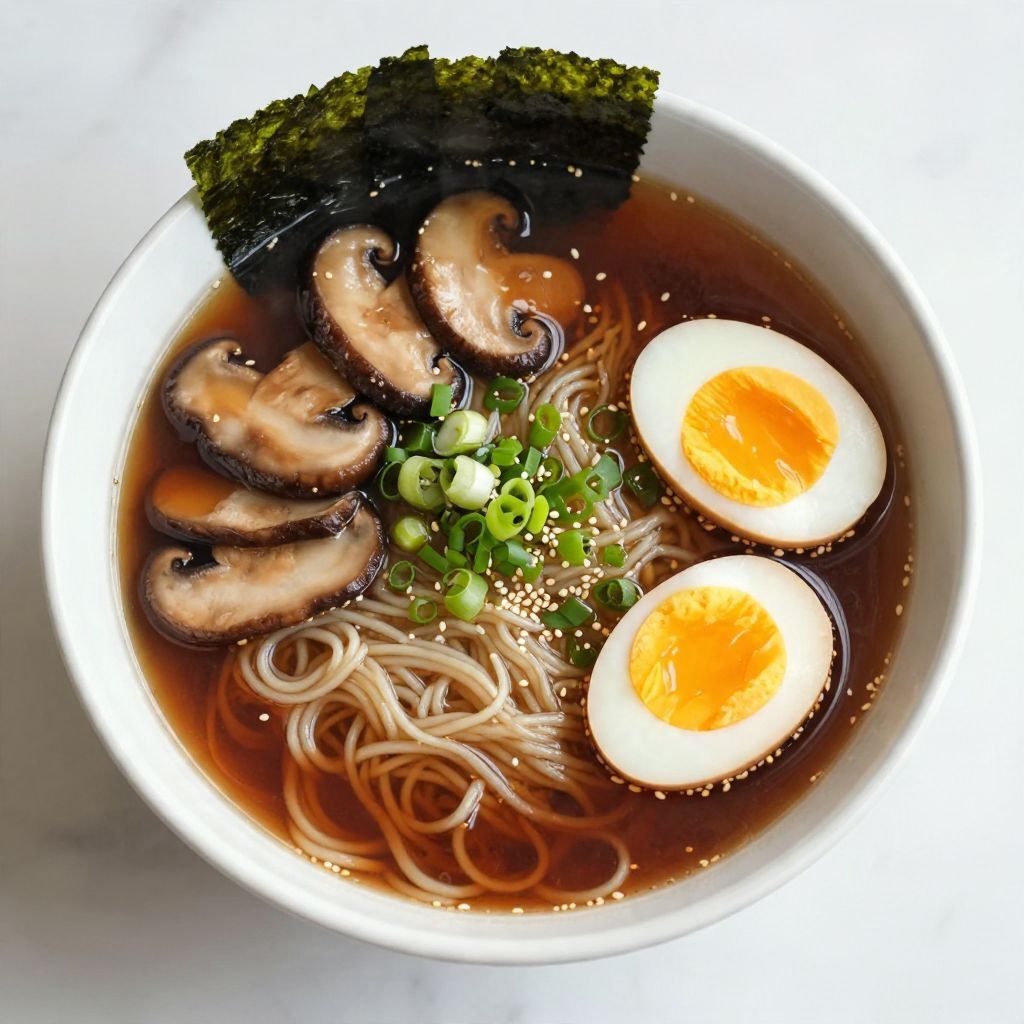
Home Ramen Recipe
Ingredients
Equipment
Method
- In a large pot, combine the chicken or vegetable broth and water.
- Stir in the soy sauce, miso paste, minced garlic, and ginger.
- Bring the pot to a gentle simmer over medium heat.
- In a separate pot, cook the ramen noodles according to package instructions.
- While the noodles cook, slice the mushrooms and green onions.
- In the last few minutes of noodle cooking, gently add the eggs to the pot and boil for about 6-7 minutes.
- Once the noodles are ready, drain them and divide into serving bowls.
- Pour the hot broth over the noodles.
- Top each bowl with mushrooms, green onions, and soft-boiled eggs.