
There’s something almost magical about watching noodles transform in a pot of silky, golden broth, especially when creamy ramen hits your bowl on a cold evening. This creamy ramen recipe pulls inspiration from Japanese tonkotsu traditions but strips away the overnight simmering to fit real life, delivering rich, velvety results in under an hour.
What makes this dish special is how simple ingredients like cream, butter, and miso meld into a broth that tastes like you’ve been tending it all day. The texture is pure comfort, the flavor is deeply satisfying, and honestly, it’s one of those meals that makes you feel like a home chef without the stress.
Why You’ll Love This Recipe
This creamy ramen delivers restaurant-quality flavor at home without the complicated techniques or endless ingredient lists. You get silky broth, tender noodles, and room to customize every bowl to your taste.
- Ready in under 45 minutes from start to finish.
- Rich, velvety broth that tastes like it simmered for hours.
- Works with whatever protein and toppings you have on hand.
- Freezer-friendly broth for quick weeknight dinners.
- Naturally impressive enough to serve guests without feeling fussy.
My Experience Making This Recipe
The first time I made creamy ramen, I was skeptical that cream could work in an Asian noodle bowl without tasting forced. Once the miso and garlic hit the hot cream, my kitchen filled with this incredible aroma that made me a believer instantly.
My partner slurped his bowl in record time and asked if I could make it twice a week. The noodles absorb the broth beautifully, and the toppings stay crisp even as they sit in the heat, which is harder to achieve than it sounds.
What really sold me was how flexible the recipe is. I’ve made it with chicken, mushrooms, tofu, and even leftover roast beef, and every version tastes genuinely delicious. The broth itself is the star, so once you nail that part, you’re unstoppable.
Recipe Overview
- Recipe Name: Creamy Ramen
- Servings: 2 large bowls
- Prep Time: 10 minutes
- Cook Time: 30 minutes
- Total Time: 40 minutes
- Course: Main Dish
- Cuisine: Japanese-Inspired
- Calories per Serving: 520
Equipment You Will Need
- Large pot (at least 3 quarts)
- Small saucepan
- Wooden spoon or silicone spatula
- Whisk
- Colander for draining noodles
- Ramen bowls or large soup bowls
- Ladle
- Cutting board and sharp knife
- Measuring cups and spoons
- Microplane or fine grater for garlic
Ingredients for Creamy Ramen
For the Broth
- 4 cups chicken or vegetable stock
- 1 cup heavy cream
- 3 tablespoons white miso paste
- 2 tablespoons butter
- 4 cloves garlic, minced
- 1 tablespoon soy sauce
- 1 teaspoon sesame oil
- 1/2 teaspoon white pepper
- 1 small piece fresh ginger, minced (about 1 teaspoon)
For Serving
- 8 ounces fresh ramen noodles (or 4 ounces dried)
- 2 large eggs
- 4 ounces protein (sliced cooked chicken, soft tofu, or mushrooms)
- 2 cups fresh spinach or bok choy
- 2 green onions, sliced
- 2 tablespoons crispy fried onions or panko breadcrumbs
- Nori sheets, cut into strips
- Salt to taste
Ingredient Notes and Substitutions
- White Miso Paste: This adds umami depth and slight sweetness without overpowering heat. If unavailable, use red miso paste but reduce the amount to 2 tablespoons since it’s stronger, or swap for 1 teaspoon of miso-flavored instant ramen seasoning packet mixed into the broth.
- Heavy Cream: Full-fat cream creates the silky texture that defines this dish. You can substitute with half-and-half, though the broth will be less rich and may require an extra tablespoon of butter for body.
- Sesame Oil: This provides toasted aromatics that tie the whole dish together. You can skip it if needed, but your broth will lack the traditional ramen warmth and flavor complexity.
- Fresh Ramen Noodles: These cook in minutes and deliver superior texture. Dried ramen works fine if that’s what you have, just follow package directions and avoid the seasoning packet unless you want extra salt.
- Protein Options: Shredded rotisserie chicken, pan-seared scallops, ground pork, crispy tofu cubes, or sauteed mushrooms all work beautifully with this broth.
How to Make Creamy Ramen
Step 1: Start the Broth Base
Melt the butter in a small saucepan over medium heat, then add the minced garlic and ginger. Stir constantly for about 1 minute until the mixture becomes fragrant but the garlic doesn’t brown, which would make it bitter and overpower the delicate broth.
Step 2: Bloom the Miso
Add the white miso paste to the garlic butter and whisk for about 30 seconds until it’s fully combined and aromatic. This blooming step wakes up the miso’s fermented flavors and distributes it evenly throughout the broth instead of creating clumpy pockets later.
Step 3: Add the Stock
Pour the chicken or vegetable stock into the pan slowly while whisking continuously to prevent lumps from forming. Once fully combined, bring the mixture to a gentle simmer and let it cook for about 3 minutes so the flavors meld together.
Step 4: Temper the Cream
Remove the pan from heat and pour the heavy cream into the simmering broth very slowly while stirring gently with a whisk. Adding cold cream directly to high heat can cause curdling, so this slow incorporation keeps the broth smooth and silky.
Step 5: Season the Broth
Whisk in the soy sauce, sesame oil, and white pepper, then taste a small spoonful. Add salt gradually if needed, remembering that the noodles may have residual salt from cooking, so it’s better to undersalt now and adjust in your bowl.
Step 6: Prepare the Noodles and Vegetables
Bring a large pot of salted water to a rolling boil, then add the fresh ramen noodles and cook for 2 to 3 minutes, stirring occasionally to prevent sticking. In the last 30 seconds of cooking, add the spinach or bok choy to the same pot so it wilts slightly and picks up noodle flavor from the water.
Step 7: Prepare the Soft-Boiled Eggs
While the noodles cook, bring a small pot of water to a boil and carefully lower in the eggs using a spoon. Cook for exactly 6 to 7 minutes depending on how runny you like the yolk, then transfer to an ice bath to stop the cooking and cool them quickly.
Step 8: Drain and Assemble
Drain the noodles and vegetables in a colander and divide them between two large bowls. Ladle the hot creamy broth over the noodles, then top each bowl with your chosen protein, a halved soft-boiled egg, green onions, crispy fried onions, and nori strips.
Pro Tip: Keep your broth warm over low heat until you’re ready to serve, but do not boil it vigorously once the cream is added, as high heat can cause separation and make the texture grainy instead of silky.
Tips for the Best Creamy Ramen
- Use fresh garlic and ginger if you can, as they deliver more vibrant flavor than pre-minced versions from a jar. The aromatics are what carry the broth’s identity, so this detail matters more than most people realize.
- Don’t skip the sesame oil even if it seems like a small amount, because those few teaspoons create the toasted note that makes people say your ramen tastes authentic. It’s the invisible backbone of the entire dish.
- Taste the broth before serving and adjust the soy sauce or miso if needed, since salt levels vary across brands. A properly seasoned broth should taste slightly saltier than you want to drink alone, since the bland noodles will balance it out.
- Cook your protein separately and keep it warm, rather than adding it to the broth, so it stays tender and doesn’t overcook or fall apart. This preserves texture and keeps the broth clear instead of cloudy.
- Serve in warmed bowls by running hot water through them first, which keeps the broth at the perfect eating temperature longer. Cold bowls will cool down your ramen quickly, making each slurp less enjoyable.
- Add toppings just before eating so crispy elements like fried onions and nori stay crunchy instead of turning soggy in the steam and broth.
Common Mistakes to Avoid
- Boiling the broth vigorously after adding cream will cause the cream to separate and create a grainy, unappealing texture. Keep heat at a gentle simmer and you’ll maintain that silky, velvety mouthfeel.
- Using red miso paste in the same amount as white miso will make the broth taste too salty and overly fermented, drowning out the other flavors. Red miso is stronger, so use less and taste as you go.
- Overcooking fresh ramen noodles turns them mushy and kills the chewy texture that makes ramen special. Set a timer and taste at the 2 minute mark to catch them at the perfect done-ness.
- Adding cold cream straight into boiling broth can cause curdling, which leaves you with broken, separated liquid instead of smooth sauce. Always temper the cream by adding it slowly to warm broth while whisking.
- Letting the broth sit too long before serving allows it to cool and lose its silky appearance as the fat begins to solidify slightly. Serve immediately after assembly for the best presentation and temperature.
Serving Suggestions
Creamy ramen is naturally a complete meal, but pairing it with the right side dishes elevates the entire dinner. Light, acidic, or crunchy accompaniments balance the richness of the broth beautifully.
- A fresh Asian cucumber salad with rice vinegar and sesame oil cuts through the cream’s richness and refreshes your palate between slurps.
- Steamed dumplings or gyoza on the side add textural contrast and give you something to dip in extra broth at the end.
- A simple miso soup or light salad with ginger dressing provides brightness and helps digestion after a rich bowl.
- Crispy spring rolls or tempura vegetables add crunch and act as a palate cleanser between bites of creamy noodles.
- Pickled ginger and shredded radish on the side offer sharp, peppery notes that balance the savory broth.
Variations to Try
- Spicy Creamy Ramen: Add 1/2 to 1 teaspoon of chili paste or sriracha to the broth, which will create a creamy heat that coats your mouth without burning. The richness of the cream mellows the spice and creates depth instead of just fire.
- Mushroom Cream Ramen: Saute sliced shiitake, oyster, and enoki mushrooms in butter until golden, then add them to the broth along with their cooking liquid for earthy umami. This version works beautifully as a vegetarian main course.
- Seafood Creamy Ramen: Top with pan-seared shrimp, scallops, or canned crab mixed with a touch of lemon juice for brightness. The sweet, delicate seafood contrasts elegantly with the rich, savory broth.
- Miso Butter Ramen: Add an extra tablespoon of softened miso butter on top of each finished bowl so it melts into the broth and intensifies the savory depth. This simple addition makes the ramen taste even more decadent without extra cooking steps.
- Creamy Pork Broth Ramen: Swap chicken stock for a quick pork stock made by simmering pork bones or a pork shoulder for 20 minutes, creating earthier, richer flavor. This version tastes closer to traditional tonkotsu but with the creamy shortcut twist.
Dietary Adaptations
- Gluten-Free: Use tamari instead of soy sauce and certified gluten-free ramen noodles, checking that your miso paste and any condiments don’t contain gluten. The broth itself becomes naturally gluten-free with these swaps, though you may need to source specialty noodles.
- Dairy-Free: Replace heavy cream with full-fat coconut milk and butter with coconut oil for a completely dairy-free broth that stays silky and rich. The coconut adds subtle sweetness that changes the flavor slightly, creating a more Southeast Asian interpretation.
- Vegan and Vegetarian: Use vegetable stock instead of chicken, keep all other ingredients the same, and top with crispy tofu, mushrooms, or seasonal vegetables. The miso paste provides enough umami to make the broth taste deeply savory without animal products.
- Low-Carb or Keto: Replace ramen noodles with shirataki or zucchini noodles and add extra protein like soft-boiled eggs or tofu to make the meal filling. The broth itself is naturally low-carb, so this swap requires minimal changes to the base recipe.
Storage and Reheating
Refrigerator
Store the broth and noodles separately in airtight containers for up to 3 days. Keeping them apart prevents the noodles from absorbing all the liquid and becoming mushy before you eat them.
- Broth keeps well covered on a shelf in the back, away from the door where temperature fluctuates.
- Cooked noodles should be stored in a separate container, and you can refresh them in boiling water for 1 minute before adding to warm broth.
- Toppings like eggs, vegetables, and proteins keep separately for 2 to 3 days in sealed containers.
Freezer
Freeze the broth in ice cube trays or freezer bags for up to 2 months for quick future ramen nights. The cream-based broth freezes beautifully and thaws without separation when handled gently.
- Pour cooled broth into freezer bags, flatten slightly, and stack them to save space.
- Frozen broth thaws best overnight in the refrigerator rather than on the counter, which keeps food safety risks low.
- Do not freeze cooked noodles, as they become mushy and unappetizing when thawed.
Reheating
Thaw broth overnight in the refrigerator, then warm it gently over medium-low heat, stirring occasionally until steaming. Never boil thawed broth vigorously, as high heat can cause the cream to separate and turn grainy.
- Pour warmed broth over freshly cooked noodles and vegetables for the best texture.
- Reheat in a microwave by stirring every 30 seconds, though stovetop reheating gives you better control and prevents overheating.
- Add fresh toppings after reheating so they taste vibrant and stay crispy.
Nutrition Information
| Nutrient | Amount |
|---|---|
| Calories | 520 |
| Total Fat | 28g |
| Saturated Fat | 16g |
| Carbohydrates | 48g |
| Fiber | 3g |
| Sugar | 4g |
| Protein | 22g |
| Sodium | 890mg |
| Cholesterol | 185mg |
These values are estimates based on the main recipe ingredients and a standard serving of 2 bowls. Nutrition can vary depending on your specific protein choice, portion sizes, and any additional toppings you add to your bowl.
Frequently Asked Questions
Can I make the broth ahead of time?
Yes, you can make the broth up to 3 days ahead and store it in an airtight container in the refrigerator. Simply reheat gently over medium-low heat before serving, and assemble fresh noodles and toppings when you’re ready to eat.
What if I don’t have white miso paste?
Use red miso paste but reduce it to 2 tablespoons, or replace it with 1 teaspoon of instant miso powder mixed into the broth. You can also skip miso entirely and add an extra teaspoon of soy sauce for depth, though the broth won’t taste quite as authentic.
How do I get the soft-boiled egg yolk to be perfectly runny?
Cook for exactly 6 to 7 minutes depending on egg size and altitude, then immediately transfer to an ice bath to stop the cooking. A meat thermometer inserted gently should read 160 to 165 degrees Fahrenheit at the yolk’s center for the ideal jammy texture.
Can I use dried ramen noodles instead of fresh?
Yes, but cook them according to package directions, usually 3 to 4 minutes, and ignore the seasoning packet unless you want extra salt. Dried noodles work well in this recipe, though they won’t have quite the same tender bite as fresh versions.
Is there a way to make this recipe less rich?
Replace half the heavy cream with half-and-half or whole milk to reduce fat while keeping creaminess. You may need to add an extra half tablespoon of butter to maintain body, but the overall richness will be noticeably lighter.
Can I double this recipe?
Yes, simply double all ingredients and use a larger pot to prevent boiling over. Keep the cook times the same since you’re just scaling up proportionally, and remember to taste and adjust seasoning since salt needs vary by batch.
Final Thoughts
Creamy ramen sits at that beautiful intersection of comfort and elegance, where you can slurp noodles without apology while impressing anyone who tries it. The recipe respects tradition while taking honest shortcuts, and it rewards you with restaurant-worthy results in less time than you’d spend ordering delivery.
Make this once and you’ll find yourself craving it, tweaking the toppings based on what’s in your kitchen, and maybe even serving it to friends on busy weeknights when you want to taste like you’ve been cooking all day. That’s the real magic of a truly great recipe.
Explore More Ramen and Creamy Sauce Recipes
If you loved this creamy ramen, you might also enjoy exploring other noodle dishes and rich sauce recipes that bring restaurant-quality comfort to your kitchen.
Try this spicy buldak ramen recipe for a different flavor profile with more heat, or explore this alfredo sauce recipe with cream cheese to see how similar techniques work in Italian pasta dishes.
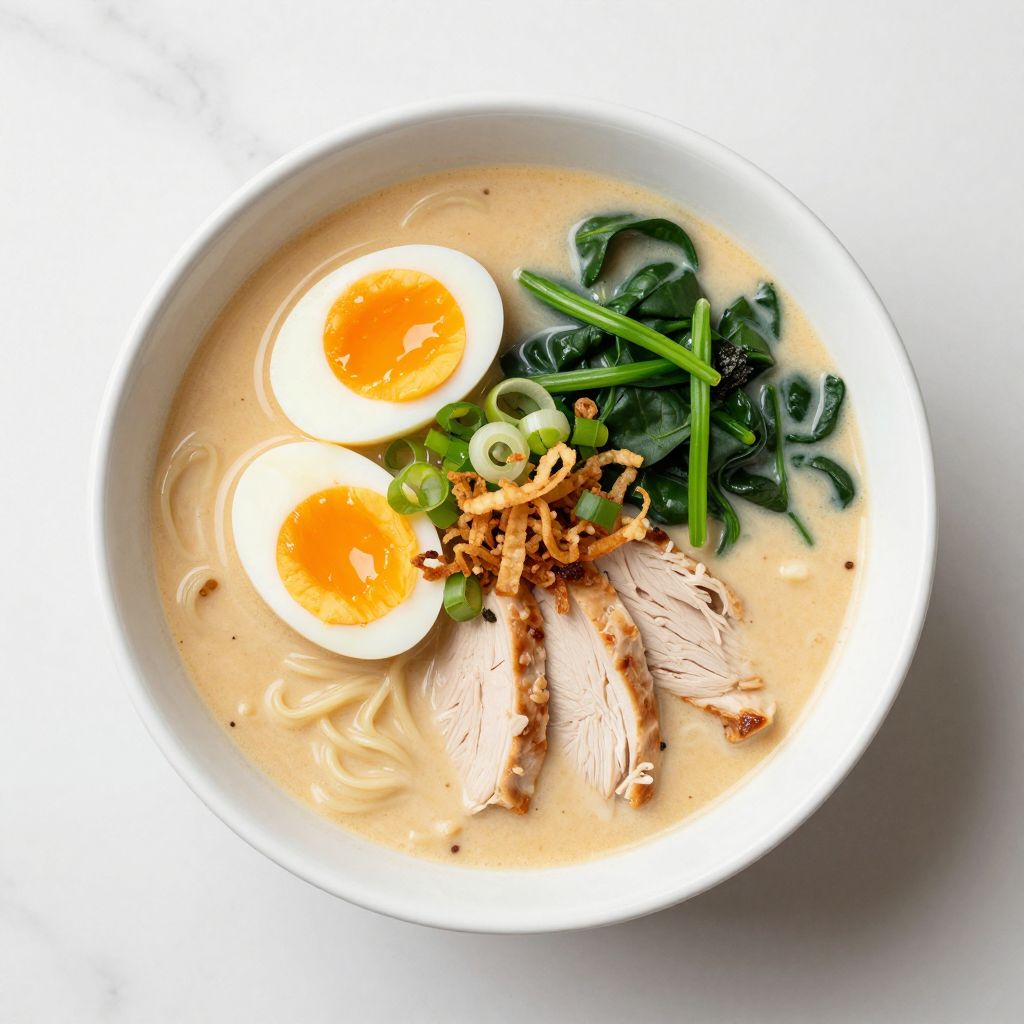
Creamy Ramen
Ingredients
Equipment
Method
- Melt the butter in a small saucepan over medium heat, then add the minced garlic and ginger and stir for 1 minute until fragrant.
- Add the white miso paste and whisk for 30 seconds until fully combined and aromatic.
- Slowly pour in the chicken or vegetable stock while whisking, bring to a gentle simmer, and cook for 3 minutes.
- Remove the pan from heat and slowly pour in the heavy cream while whisking constantly to prevent curdling.
- Whisk in the soy sauce, sesame oil, and white pepper, then taste and add salt as needed.
- Bring a large pot of salted water to a rolling boil, cook the ramen noodles for 2 to 3 minutes until tender, adding the spinach or bok choy for the last 30 seconds.
- Meanwhile, bring a small pot of water to a boil, gently lower in the eggs and cook for 6 to 7 minutes, then transfer to an ice bath.
- Drain the noodles and vegetables, divide them between two bowls, ladle the hot creamy broth over them, and top each with sliced protein, halved eggs, green onions, crispy onions, and nori strips.