
There’s something magical about watching cream cheese melt into silky richness, transforming simple pasta into restaurant-quality comfort on a weeknight.
Alfredo sauce with cream cheese is the secret weapon for anyone who wants creamy, luxurious pasta without the fuss or the traditional heavy cream addiction. Cream cheese makes this sauce thicker, tangier, and honestly more interesting than the classic version, while cutting the cooking time down to minutes.
If you’ve ever worried that homemade Alfredo is too finicky or requires fancy ingredients you can’t pronounce, this recipe proves you wrong. The result tastes like you spent an hour simmering something mysterious, when really you just needed a pan, heat, and patience you can count on one hand.
Why You’ll Love This Recipe
This version delivers everything you want from Alfredo without the cream-induced guilt or the cleanup nightmare.
- Ready in under 15 minutes from start to finish
- Tangy depth from cream cheese that regular Alfredo lacks
- Thicker, clingier sauce that actually coats pasta instead of pooling
- Works with pantry staples you probably already own
- Tastes fancy but requires zero culinary training
My Experience Making This Recipe
I discovered this method by accident when I ran out of heavy cream mid-dinner party. Panic set in, but then I spotted cream cheese in the fridge and decided to improvise.
The sauce came together faster than I expected, and the flavor had this subtle tartness that made people ask what secret ingredient I’d used. That tang keeps the sauce from feeling one-dimensional, which is the problem with butter and cream alone.
Since then, I’ve made it dozens of times, mostly on nights when I need dinner done before anyone asks where it is. Every time, people assume I’ve been cooking all day.
Recipe Overview
- Recipe Name: Alfredo Sauce with Cream Cheese
- Servings: 4
- Prep Time: 5 minutes
- Cook Time: 10 minutes
- Total Time: 15 minutes
- Course: Sauce
- Cuisine: Italian-American
- Calories per Serving: 380
Equipment You Will Need
- Medium saucepan
- Wooden spoon or silicone spatula
- Whisk
- Measuring cups and spoons
- Colander or pasta strainer
- Large pasta pot
Ingredients for Alfredo Sauce with Cream Cheese
- Unsalted butter: 4 tablespoons
- Garlic cloves: 4, minced
- Cream cheese: 8 ounces, cut into small cubes
- Whole milk: 1 cup
- Parmesan cheese: 1 cup, freshly grated
- Salt: 1/2 teaspoon
- Black pepper: 1/4 teaspoon
- Nutmeg: 1/8 teaspoon, freshly grated
- Lemon juice: 1/2 teaspoon
- Fresh parsley: 2 tablespoons, chopped (optional)
Ingredient Notes and Substitutions
- Cream cheese: It creates body and tang that regular heavy cream can’t match. You can use Greek yogurt for a thinner sauce with similar tang, but accept that the texture won’t be quite as silky.
- Parmesan cheese: Freshly grated melts smoother and tastes sharper than pre-shredded. If you use bagged Parmesan, reduce the amount by a quarter since it contains anticaking agents that can make the sauce grainy.
- Whole milk: It balances the richness and keeps the sauce pourable. Half-and-half will make it richer but heavier, while skim milk will make it thinner and less satisfying.
- Unsalted butter: It lets you control the sodium and prevents the sauce from tasting over-salted. Salted butter works if that’s what you have, just reduce the added salt by half.
- Nutmeg: It adds warmth and complexity without tasting obvious. Skip it if you dislike it, but a tiny pinch really does change everything.
How to Make Alfredo Sauce with Cream Cheese
Step 1: Melt the Butter and Cook the Garlic
Place the saucepan over medium heat and add the butter, letting it melt completely. Once melted, add the minced garlic and cook for 60 to 90 seconds, stirring constantly, until fragrant but not browned.
Garlic browns fast at this heat level and turns bitter when it does, so stay focused here. You want it to smell amazing but still look pale and soft.
Step 2: Add the Cream Cheese
Add the cream cheese cubes to the garlic and butter, stirring constantly with your whisk. The pieces will start to soften and break down within 30 seconds.
Cutting the cream cheese into small cubes instead of using it whole helps it melt evenly without creating lumpy pockets. Patience with the whisking matters more than speed here.
Step 3: Pour in the Milk Slowly
While whisking, add the milk in a slow, steady stream rather than all at once. This prevents lumps from forming and keeps the sauce smooth as it comes together.
Think of this like tempering eggs in a custard. The gradual incorporation lets everything emulsify properly instead of seizing up.
Step 4: Whisk Until Smooth
Continue whisking for another minute or two until the sauce looks completely smooth with no streaks of cream cheese visible. The mixture should flow freely off your whisk without clumping.
If you do see small lumps, push the sauce through a fine mesh strainer into a clean pot. This takes 30 seconds and guarantees a silky result.
Step 5: Add the Parmesan Cheese
Remove the pan from heat and sprinkle the grated Parmesan over the surface while whisking continuously. Keep whisking for about one minute until the cheese fully incorporates and the sauce becomes glossy.
Adding Parmesan off heat prevents it from getting too hot and becoming stringy or separating. The residual heat is plenty to melt it smoothly.
Step 6: Season with Salt and Pepper
Add the salt and black pepper, stirring to combine. Taste the sauce and adjust seasoning as needed.
Remember that the pasta water you’ll toss this with later also contains salt, so err on the lighter side now. You can always add more, but you can’t take it out.
Step 7: Add the Nutmeg and Lemon Juice
Grate a tiny pinch of fresh nutmeg directly into the sauce and add the lemon juice, stirring well. The nutmeg adds warmth and sophistication while the lemon brightens the heavy richness.
Lemon juice is the secret that prevents this sauce from tasting heavy or one-dimensional. It cuts through the richness and makes everything taste more vibrant.
Step 8: Toss with Hot Pasta
Cook your pasta in salted boiling water until al dente, then drain it, saving about one cup of the pasta cooking water. Add the hot pasta directly to the sauce and toss gently, adding pasta water a few tablespoons at a time until the sauce reaches your preferred consistency.
The starch in that reserved pasta water helps the sauce cling to the noodles and keeps it from getting too thick as it cools slightly. This last step is what separates restaurant-quality from lumpy.
Pro Tip: Use freshly grated Parmesan and never pre-shredded from a bag, because the anticaking agents in bagged cheese create a grainy, broken sauce that tastes powdery instead of smooth.
Tips for the Best Alfredo Sauce with Cream Cheese
- Keep the heat at medium throughout, never high. High heat can cause the cream cheese and Parmesan to separate and turn grainy or broken. Medium heat gives you time to whisk and creates a silky emulsion.
- Whisk constantly from the moment you add the cream cheese. This keeps the sauce smooth and helps every ingredient incorporate evenly without lumping.
- Grate the Parmesan fresh from a block, not from a shaker or bag. Pre-shredded cheese contains starch that ruins the silky texture you’re working for.
- Taste as you season and remember you can always add more salt, but you can’t remove it. Start conservative and build from there.
- Make sure your pasta is hot and freshly cooked when you combine it with the sauce. Cold pasta will cool the sauce and throw off the consistency.
- Reserve pasta water before draining. That starchy liquid is liquid gold for adjusting sauce consistency and helping it coat the noodles properly.
Common Mistakes to Avoid
- Adding cold milk all at once: Dumping the milk in without whisking causes lumps and uneven melting. The cream cheese seizes up instead of becoming smooth and silky.
- Cooking garlic too long or on high heat: Burnt garlic tastes bitter and ruins the entire sauce. Stay attentive for just a minute and keep the heat moderate.
- Using pre-shredded Parmesan: Those anticaking agents create a grainy, broken sauce that separates and tastes powdery. Fresh grated cheese melts into something silky and luxurious.
- Forgetting to save pasta water: Without it, the sauce gets too thick and doesn’t coat the noodles. That starchy water is the only thing that fixes a sauce that’s gone too thick.
- Cooking the sauce too far ahead: If you make it and let it sit, it thickens and breaks. Make it right when you’re ready to toss the pasta so everything stays hot and creamy.
Serving Suggestions
This sauce is endlessly versatile and works with almost any protein or vegetable combination. The slight tang from the cream cheese pairs beautifully with bold flavors, not just plain noodles.
- Toss with fettuccine and grilled chicken breast for a classic that feels restaurant-quality
- Combine with roasted broccoli and garlic for a vegetable-forward version that doesn’t feel light
- Mix with pan-seared shrimp and crushed red pepper for something with heat and elegance
- Layer with baked salmon and fresh dill for a lighter twist that still feels indulgent
- Add crispy bacon and fresh peas for a version that tastes like comfort but also feels sophisticated
Variations to Try
- Sun-Dried Tomato Alfredo: Stir in one-quarter cup chopped sun-dried tomatoes packed in oil after adding the Parmesan. The tomatoes add brightness and a slight sweetness that makes the sauce feel more complex and interesting.
- Garlic and Herb Version: Replace some of the Parmesan with freshly grated pecorino and add two tablespoons of chopped fresh basil or oregano. Fresh herbs lighten the sauce and add a garden-fresh quality that keeps it from feeling heavy.
- Spicy Alfredo: Add one-quarter teaspoon of cayenne pepper or half a teaspoon of crushed red pepper flakes to the finished sauce. The heat cuts through the richness and adds complexity without overpowering the other flavors.
- Mushroom Alfredo: Saute eight ounces of sliced mushrooms in the butter before adding garlic, then proceed as written. Mushrooms add umami depth and a meaty texture that makes the sauce feel more substantial.
- Truffle Alfredo: Drizzle in one teaspoon of truffle oil after the sauce finishes and stir gently. Truffle oil adds luxury and earthiness without needing fresh truffles that cost a fortune.
Dietary Adaptations
- Gluten-Free: This recipe is naturally gluten-free as written. Just pair it with gluten-free pasta and verify your Parmesan didn’t have any additives, though most pure Parmesan is safe.
- Dairy-Free: Replace the cream cheese with vegan cream cheese, use unsweetened plant-based milk, and swap Parmesan for nutritional yeast mixed with cashew powder. The result won’t be identical, but it’s creamy and tasty with a slightly different flavor profile.
- Vegetarian: This recipe is already vegetarian since it contains no meat. Just verify that your Parmesan is made without animal rennet if that matters for your diet.
- Low-Carb or Keto: Serve this over zucchini noodles, shirataki noodles, or cauliflower rice instead of pasta. The sauce itself is very low-carb and works perfectly with these alternatives, though the texture experience will feel different.
Storage and Reheating
Refrigerator
Store leftover sauce in an airtight container for up to three days. The sauce will thicken as it cools, which is completely normal.
- Let it come to room temperature for 15 minutes before reheating
- Reheat gently over low heat, stirring constantly and adding a splash of milk if needed
- Never microwave the sauce straight, as heat distribution is uneven and can cause separation
Freezer
This sauce freezes well for up to two months in a freezer-safe container. Leave an inch of headspace since it expands slightly as it freezes.
- Thaw overnight in the refrigerator before reheating
- Add the sauce to hot pasta straight from thawing for best results
- The texture may be slightly less silky after freezing, but it still tastes excellent
Reheating
Reheat over low to medium-low heat, stirring frequently and adding a splash of milk to loosen it up. Never use high heat, as this breaks the sauce and causes the dairy to separate.
- Reheat on the stovetop rather than in the microwave for best texture
- Add sauce to hot pasta rather than reheating pasta in the sauce
- Taste and adjust seasoning after reheating, since flavors sometimes mellow during storage
Nutrition Information
| Nutrient | Amount |
|---|---|
| Calories | 380 |
| Total Fat | 28g |
| Saturated Fat | 18g |
| Carbohydrates | 8g |
| Fiber | 0g |
| Sugar | 1g |
| Protein | 18g |
| Sodium | 620mg |
| Cholesterol | 85mg |
These values assume four servings of sauce alone without pasta or protein additions. When you add pasta and toppings, nutritional content will change accordingly.
Frequently Asked Questions
Can I make this sauce without cream cheese?
Yes, you can use equal parts heavy cream and chicken or vegetable broth in place of the cream cheese and milk. The sauce will be slightly thinner and lack the subtle tang, but it will still taste good.
How do I fix a broken or separated sauce?
If the sauce breaks and looks grainy or separated, remove it from heat and whisk in a tablespoon or two of milk at a time. You can also blend it smooth with an immersion blender if whisking doesn’t work.
Can I make this ahead and reheat it?
Yes, but make it no more than a few hours ahead and reheat gently over low heat with a splash of milk. Making it completely ahead and storing it overnight changes the texture slightly, though it still tastes fine.
Why is my sauce grainy instead of smooth?
This usually happens from too much heat, adding cold milk too fast, or using pre-shredded Parmesan with anticaking agents. Next time, use medium heat, whisk constantly, and grate fresh Parmesan.
What if I want a thinner sauce?
Add extra pasta water a tablespoon at a time until you reach the consistency you want. You can always thin it, but you can’t thicken it back up without making it grainy.
Does the sauce have to be served immediately?
It’s best served immediately while everything is hot, but you can keep it warm on the stove over very low heat for 15 or 20 minutes, stirring occasionally. Cover the pan loosely so it doesn’t form a skin.
Final Thoughts
This sauce proves that restaurant-quality cooking isn’t about fancy techniques or hard-to-find ingredients. It’s about understanding how basic components work together and respecting the simple steps that make magic happen.
Make this tonight, watch people ask for the recipe, and enjoy the fact that you’ve just mastered something that looks infinitely more complicated than it actually is. That’s the real secret.
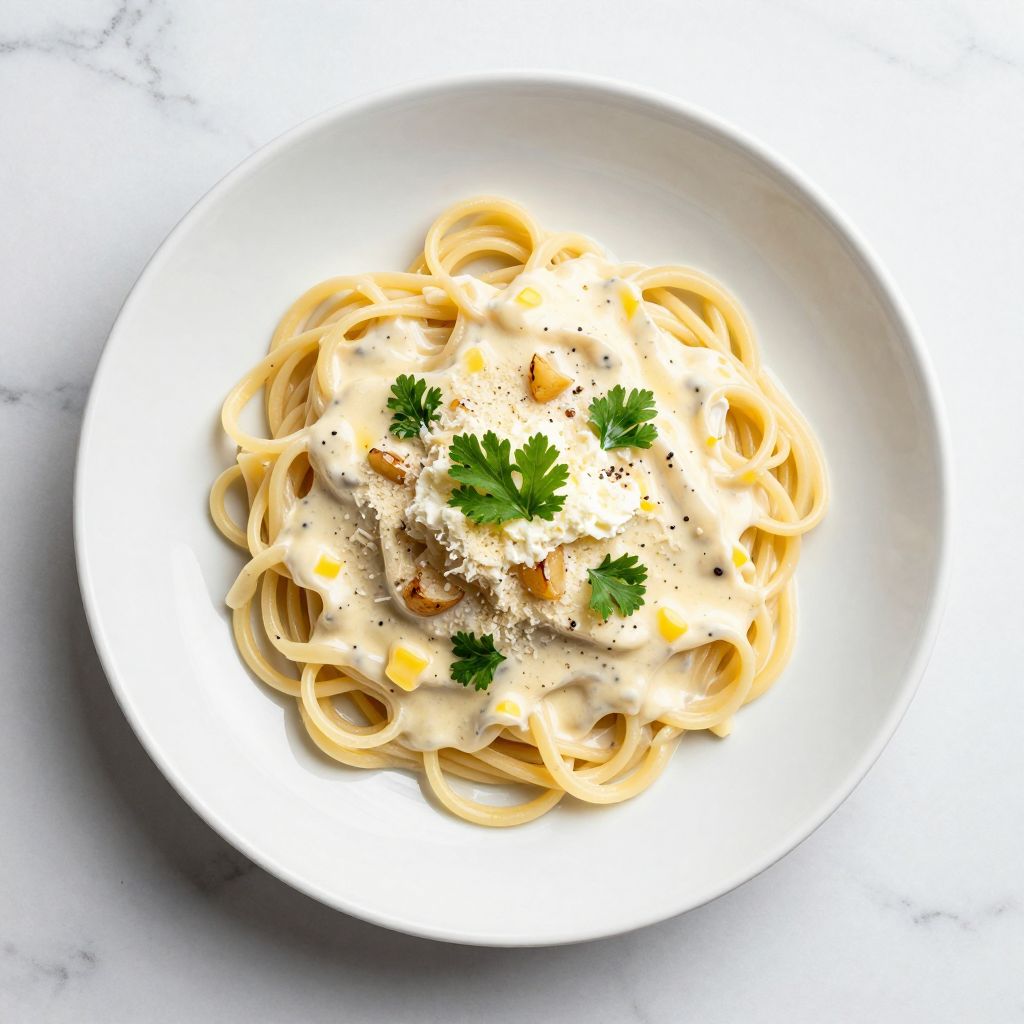
Alfredo Sauce with Cream Cheese
Ingredients
Equipment
Method
- Place the saucepan over medium heat and add the butter, letting it melt completely. Once melted, add the minced garlic and cook for 60 to 90 seconds, stirring constantly, until fragrant but not browned.
- Add the cream cheese cubes to the garlic and butter, stirring constantly with your whisk. The pieces will start to soften and break down within 30 seconds.
- While whisking, add the milk in a slow, steady stream rather than all at once. This prevents lumps from forming and keeps the sauce smooth as it comes together.
- Continue whisking for another minute or two until the sauce looks completely smooth with no streaks of cream cheese visible. The mixture should flow freely off your whisk without clumping.
- Remove the pan from heat and sprinkle the grated Parmesan over the surface while whisking continuously. Keep whisking for about one minute until the cheese fully incorporates and the sauce becomes glossy.
- Add the salt and black pepper, stirring to combine. Taste the sauce and adjust seasoning as needed.
- Grate a tiny pinch of fresh nutmeg directly into the sauce and add the lemon juice, stirring well.
- Cook your pasta in salted boiling water until al dente, then drain it, saving about one cup of the pasta cooking water. Add the hot pasta directly to the sauce and toss gently, adding pasta water a few tablespoons at a time until the sauce reaches your preferred consistency.