
There’s something magical about the moment you crack open a packet of store-bought ramen seasoning and catch that aroma of garlic, ginger, and umami flooding your kitchen. Making homemade ramen seasoning transforms that experience into something you control, customize, and genuinely own.
This recipe lets you skip the mystery ingredients and artificial flavors while building layers of authentic Asian flavors that taste like you’ve been simmering broth for hours. The best part: you’ll use this versatile blend for ramen, soups, stir-fries, and even popcorn seasoning for months.
Why You’ll Love This Recipe
Homemade ramen seasoning gives you restaurant-quality depth without preservatives or additives, and it costs a fraction of what you’d spend on individual packets.
- Full control over sodium levels and ingredient quality
- Lasts for months when stored properly in an airtight container
- Works for ramen, broths, stir-fries, rice bowls, and seasoning blends
- Comes together in under 10 minutes with pantry staples
- Makes an impressive homemade gift for food-loving friends
My Experience Making This Recipe
I first made this blend on a rainy Tuesday when my go-to ramen packets had run out, and I wanted something quick. The smell that filled my kitchen as the spices toasted was incredible, and I realized I’d never go back to store-bought.
The first bowl I made with this seasoning had a richness that surprised me. My partner asked what I’d changed, and when I told him I’d mixed it myself, he skeptically took a bite and then reached for seconds.
Now I make a big batch every month and keep it in a glass jar by my stove. It’s become my shortcut for weeknight ramen, emergency soups, and even a quick flavor boost for scrambled eggs.
Recipe Overview
- Recipe Name: Homemade Ramen Seasoning Blend
- Servings: Makes about 1/2 cup (enough for 8 to 10 bowls of ramen)
- Prep Time: 10 minutes
- Cook Time: 5 minutes
- Total Time: 15 minutes
- Course: Condiment/Seasoning
- Cuisine: Asian/Japanese
- Calories per Serving: 15 calories per teaspoon
Equipment You Will Need
- Small skillet or dry pan
- Measuring spoons and measuring cups
- Wooden spoon or spatula
- Mortar and pestle (optional but recommended)
- Small glass jar with airtight lid for storage
- Fine-mesh strainer (optional, for sifting)
Ingredients for Homemade Ramen Seasoning
- Garlic powder: 2 tablespoons
- Onion powder: 1 tablespoon
- Ginger powder: 1 tablespoon
- Sea salt: 1 tablespoon
- White pepper: 1 teaspoon
- Dried seaweed flakes (nori): 1 teaspoon
- Sesame seeds (white or black): 1 teaspoon
- Dried chili flakes: 1/2 teaspoon (adjust for heat preference)
- MSG or mushroom powder (umami booster): 1/2 teaspoon (optional but highly recommended)
- Coriander powder: 1/4 teaspoon
- Mace or nutmeg: 1/8 teaspoon
Ingredient Notes and Substitutions
- Garlic powder: Provides the foundation of savory depth that defines ramen seasoning. Fresh garlic loses potency when stored, so powder is your best option for a long shelf life. You can use garlic salt instead, but reduce the sea salt in the recipe by half.
- Ginger powder: Adds warmth and a subtle spice that balances richness. Fresh ginger paste works in a pinch, though it will shorten your storage window to a few weeks in the fridge.
- Sea salt: Enhances all the flavors and prevents the blend from tasting flat. Table salt works but tends to clump; kosher salt is a good middle ground if you don’t have sea salt.
- Dried seaweed flakes: Brings authentic oceanic umami that screams “ramen broth.” If you can’t find nori flakes, crush a sheet of nori seaweed by hand or use a pinch of kombu powder.
- MSG or mushroom powder: Delivers the savory umami punch that makes restaurant ramen taste so good. Mushroom powder is a natural alternative if you prefer to avoid MSG, though it’s actually safe and commonly used in Asian cooking.
- Sesame seeds: Add toasted nuttiness and visual appeal. Black sesame seeds look striking and taste slightly earthier, while white seeds are milder and more traditional.
How to Make Homemade Ramen Seasoning
Step 1: Gather and Measure All Dry Ingredients
Measure out every ingredient and place them on a clean counter or in small bowls. This prevents you from accidentally doubling a spice or forgetting something midway through toasting, which would throw off your entire blend.
Step 2: Toast the Sesame Seeds
Heat a small skillet over medium heat for about one minute until it’s warm and dry. Add the sesame seeds and stir constantly for 2 to 3 minutes until they smell nutty and turn slightly golden, then transfer them to a plate to cool.
Toasting releases the oils in the sesame seeds and intensifies their flavor dramatically. This single step transforms them from bland to deeply aromatic.
Step 3: Lightly Toast the Seaweed Flakes
Return the same skillet to medium heat and add the dried seaweed flakes, stirring for about 1 minute until they become fragrant and slightly crisped. Be careful not to overtoast them, or they’ll turn bitter and lose their oceanic flavor.
Step 4: Add Ground Spices to the Pan
Add the garlic powder, onion powder, and ginger powder to the skillet with the seaweed still in the pan. Stir constantly for 1 to 2 minutes, allowing the heat to wake up the spices without burning them.
You’ll notice the aroma becoming noticeably richer as the heat activates the essential oils in the powders. This is the moment you know you’re building something special.
Step 5: Combine All Ingredients in a Mixing Bowl
Turn off the heat and let the toasted spices cool for 2 to 3 minutes in the pan. Pour them into a clean, dry mixing bowl and add the white pepper, chili flakes, MSG or mushroom powder, coriander, and mace.
Step 6: Crush the Sesame Seeds if Desired
Once the sesame seeds have cooled, add them to the bowl and gently crush them using a mortar and pestle if you prefer a more integrated blend. Leaving them whole creates a more interesting texture and bursts of flavor.
Step 7: Mix Thoroughly
Stir all the ingredients together with a spoon until the blend is completely uniform and no clumps remain. If you want an extra-fine texture, pass the entire mixture through a fine-mesh strainer once.
Step 8: Transfer to an Airtight Container
Pour your finished ramen seasoning into a glass jar with an airtight lid while it’s still slightly warm. Label the jar with the date so you know when you made it and can track its freshness.
Glass containers protect the blend better than plastic and allow you to see when you’re running low. Store in a cool, dry place away from direct sunlight for up to 6 months.
Pro Tip: Toast your spices on low to medium heat for just 1 to 2 minutes, because high heat burns them fast and turns your entire blend bitter and unusable.
Tips for the Best Homemade Ramen Seasoning
- Use whole spices and grind them yourself if possible for maximum flavor, though pre-ground spices work well if your containers are fresh and airtight.
- Don’t skip the toasting step, even though it adds 5 minutes to your time. It transforms flat powders into a cohesive, aromatic blend that tastes homemade and complex.
- Adjust the chili flakes based on your heat tolerance. Start with 1/4 teaspoon if you prefer mild seasoning, or go up to 1 full teaspoon if you love spicy ramen.
- Taste a pinch of your finished blend before storing it. If it tastes too salty, you can add more powder, but you can’t remove salt, so start conservative.
- Make a double batch and keep one jar at home and one at work or in your car for quick ramen emergencies.
- Buy spices from stores with high turnover, like Asian markets, where they’re fresher and cheaper than grocery store brands.
Common Mistakes to Avoid
- Burning the spices by using too-high heat or toasting for too long will create a bitter, smoky flavor that ruins the entire batch. Watch carefully and stir constantly during toasting.
- Forgetting to cool the spices before storing them in a jar traps moisture, which causes clumping and mold growth over time.
- Using old or stale spices that have been sitting in your cabinet for years will produce a weak blend with minimal flavor impact. Check the purchase dates on your spice containers before starting.
- Skipping the salt entirely because you’re worried about sodium will result in a flat, one-dimensional seasoning that tastes incomplete. Salt enhances all the other flavors, so include it.
- Not sealing the jar tightly after each use allows moisture and air to degrade the blend, cutting its shelf life in half.
Serving Suggestions
Use this seasoning blend beyond just ramen by sprinkling it on rice bowls, stir-fried vegetables, roasted chicken, or even buttered popcorn. One teaspoon to one tablespoon per serving adjusts the intensity to your taste.
- Traditional ramen noodles in hot broth with a soft-boiled egg and nori strips
- Quick miso soup with tofu, green onions, and a sprinkle of the blend
- Seasoning for roasted vegetables like broccoli, carrots, or snap peas
- Flavor boost for fried rice with eggs, mixed vegetables, and cooked protein
- Sprinkle on avocado toast or scrambled eggs for an Asian-inspired breakfast
Variations to Try
- Spicy Miso Blend: Add 1 tablespoon of red miso powder and increase chili flakes to 1 full teaspoon for a deeper, spicier version that works beautifully in creamy ramen broths.
- Seafood Boost: Mix in 1 teaspoon of bonito flake powder or dried shrimp powder ground into fine bits for an oceanic depth that elevates any broth.
- Smoky Variation: Add 1/2 teaspoon of smoked paprika and a pinch of liquid smoke to create a blend that works wonderfully with ramen featuring grilled or smoked proteins.
- Citrus Twist: Stir in 1/4 teaspoon of dried lemon zest or yuzu powder after the blend has cooled for a bright, tangy version that pairs well with lighter broths.
- Vegetable-Forward Blend: Increase the seaweed to 2 teaspoons and add 1 teaspoon of dried vegetable powder made from mushrooms, shiitake, or mixed vegetables for an umami powerhouse.
Dietary Adaptations
- Gluten-free: This blend is naturally gluten-free, but verify that your store-bought spices and seaweed flakes weren’t processed in facilities with wheat. Most are safe, but reading labels prevents cross-contamination.
- Dairy-free: The recipe contains no dairy, so it works perfectly for dairy-free cooking and vegan ramen broths.
- Vegan and vegetarian: Replace any fish-based umami boosters like bonito with mushroom powder or extra MSG, and verify your seaweed doesn’t contain any anchovies or fish sauce.
- Low-sodium: Cut the sea salt to 1 teaspoon and compensate by increasing garlic powder to 3 tablespoons for depth without extra salt.
- Low-FODMAP: Omit the garlic powder and onion powder, then double the ginger powder and add extra mace for aromatic complexity without triggering sensitivities.
Storage and Reheating
Refrigerator
Store your ramen seasoning blend in an airtight glass jar on a cool, dark shelf in your pantry rather than the refrigerator, where moisture can accumulate. When stored properly, it lasts up to 6 months.
- Use clean, dry spoons every time you scoop to prevent introducing moisture
- Wipe the jar’s rim dry before sealing to prevent condensation
- Keep the lid tightly closed between uses
Freezer
Freezing isn’t necessary for this blend, but you can store it in a freezer-safe airtight container for up to one year if you’ve made a massive batch. Thaw completely before opening to prevent moisture damage.
- Use a small freezer bag to portion out individual teaspoons before freezing
- Label with the date so you remember how old it is
Reheating
This is a dry seasoning blend, so there’s no reheating involved. Simply measure out what you need and stir it directly into hot broth, soups, or other dishes when you’re ready to use it.
- For ramen, add the seasoning to your hot broth about 30 seconds before serving so the flavors bloom without the spices settling at the bottom
- Stir well to ensure the blend distributes evenly throughout your dish
Nutrition Information
| Nutrient | Amount |
|---|---|
| Calories | 15 |
| Total Fat | 0.5g |
| Saturated Fat | 0.1g |
| Carbohydrates | 2.5g |
| Fiber | 0.2g |
| Sugar | 0.1g |
| Protein | 0.8g |
| Sodium | 450mg |
| Cholesterol | 0mg |
Nutrition values are calculated per teaspoon of seasoning blend. This is a condiment, so one serving is typically 1 to 2 teaspoons mixed into a full bowl of ramen or soup, adding 15 to 30 calories.
Frequently Asked Questions
Can I use fresh garlic and ginger instead of powder?
Fresh ingredients will shorten your shelf life to about 2 weeks in the refrigerator because of their moisture content. Powders are designed for long-term storage, so stick with them for this blend if you want it to last months.
Is MSG really safe to use?
MSG is a naturally occurring amino acid that your body recognizes the same way it does salt or other minerals. Decades of scientific research show it’s safe, and it’s used routinely in professional Asian cooking because it delivers genuine umami flavor that’s hard to replicate otherwise.
How much seasoning should I use per bowl of ramen?
Start with 1 teaspoon per 2 cups of broth and adjust from there based on your taste preferences. Some people love a light dusting, while others add up to 2 teaspoons for a more intense, seasoning-forward bowl.
What’s the difference between white pepper and black pepper in this blend?
White pepper has a cleaner, hotter bite that doesn’t create dark specks in your light-colored broth. Black pepper would work in a pinch, but white pepper blends more invisibly and tastes less sharp in a ramen context.
Can I make this seasoning without toasting the spices?
You can, but the flavor will be noticeably flat and one-dimensional compared to the toasted version. The 5 minutes of toasting transforms powders from muted to vibrant, so it’s worth the small time investment.
Where can I buy seaweed flakes if my grocery store doesn’t carry them?
Asian markets almost always stock dried nori in multiple forms, including pre-crushed flakes. Online retailers like Amazon also carry them, and they’re usually affordable at any specialty Asian store.
Final Thoughts
Making your own ramen seasoning gives you control over quality, flavor intensity, and what actually goes into your bowl. This blend beats any packet you’ll find at the store, tastes fresher, and costs far less once you buy your spices in bulk.
Try this recipe this week and taste the difference that homemade brings to your ramen game. You’ll find yourself reaching for this jar constantly, and you might even start giving jars to friends who are serious about their cooking.
Ready to explore more ramen possibilities in your kitchen? Check out our creamy ramen recipe for a rich, indulgent take on the classic bowl. For those who love heat, our buldak ramen recipe turns up the spice with fiery depth that pairs perfectly with this seasoning blend.
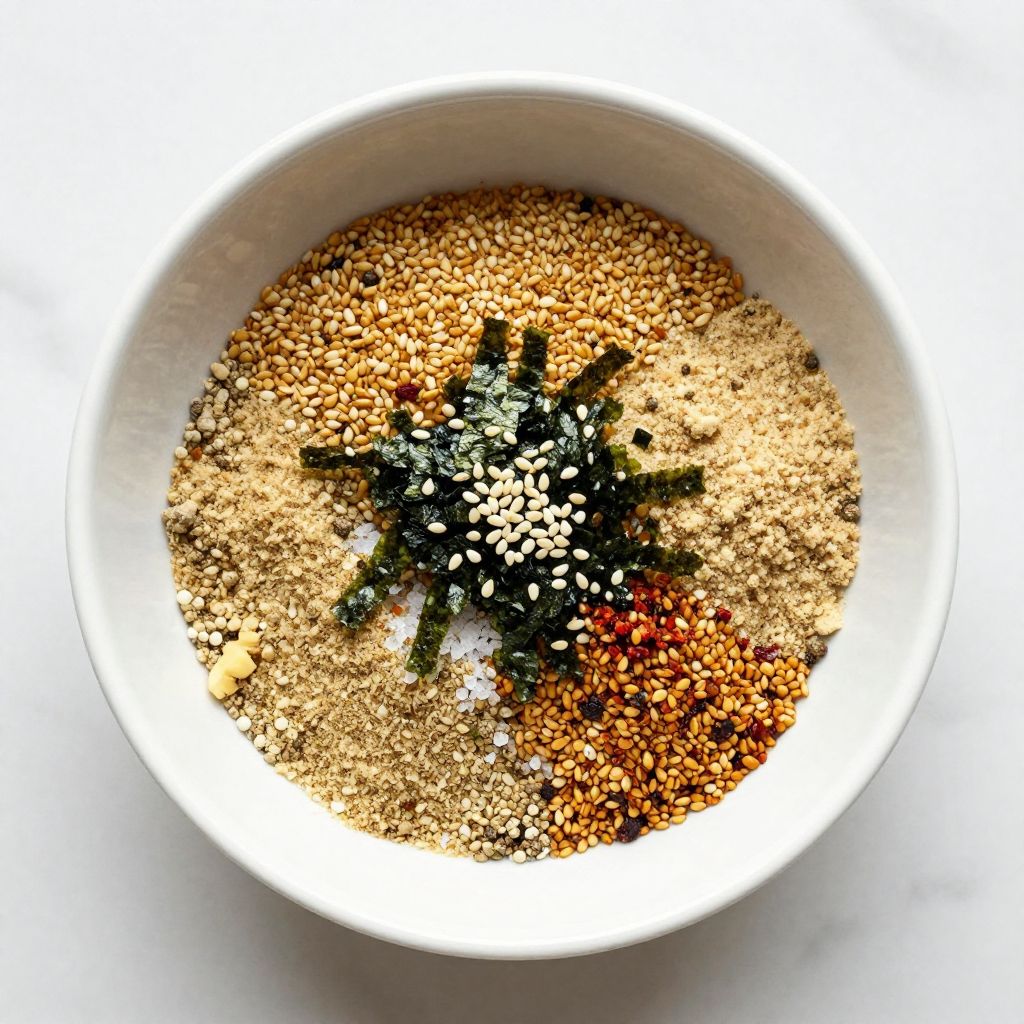
Homemade Ramen Seasoning Blend
Ingredients
Equipment
Method
- Measure out every ingredient and place them on a clean counter or in small bowls.
- Heat a small skillet over medium heat for about 1 minute until warm and dry, then add the sesame seeds and stir constantly for 2 to 3 minutes until nutty and slightly golden; transfer to a plate to cool.
- Return the skillet to medium heat, add the dried seaweed flakes, and stir for about 1 minute until fragrant and slightly crisped.
- Add the garlic powder, onion powder, and ginger powder to the skillet with the seaweed, stirring constantly for 1 to 2 minutes to toast the spices.
- Turn off the heat and let the toasted spices cool for 2 to 3 minutes, then pour into a mixing bowl and add the white pepper, dried chili flakes, MSG or mushroom powder, coriander powder, and mace or nutmeg.
- Once the sesame seeds are cool, add them to the bowl and gently crush them using a mortar and pestle if desired for a more integrated blend.
- Stir all ingredients together until the blend is uniform and no clumps remain; optionally pass through a fine-mesh strainer for a finer texture.
- Transfer the seasoning into a glass jar with an airtight lid while still slightly warm, label with the date, and store in a cool, dry place away from direct sunlight for up to 6 months.