
There’s something undeniably refreshing about a well-crafted Vinaigrette, isn’t there? This simple dressing transforms ordinary salads into extraordinary culinary experiences with just a few whisked ingredients, offering zingy flavor and delightful texture.
What makes this vinaigrette special is its versatility; you can customize it to suit any dish or mood. Whether you’re drizzling it over crisp greens, roasted vegetables, or even grilled meats, it adds a burst of flavor that elevates every bite. Let’s dive into how you can whip up this delightful dressing yourself!
Why You’ll Love This Recipe
This vinaigrette is a must-try for every home cook. It’s easy to make and bursting with flavor.
- Quick and simple to prepare.
- Uses common pantry ingredients.
- Versatile for salads, marinades, or dips.
- Can be customized with herbs and spices.
- Healthier than store-bought options.
My Experience Making This Recipe
When I first made this vinaigrette, I was surprised by how quickly it came together. The combination of tangy vinegar and rich oil created a flavor that danced on my taste buds.
My friends were impressed, and requests for the recipe started rolling in. It’s become a staple in my kitchen, and I love experimenting with different herbs and spices to keep things fresh.
Recipe Overview
- Recipe Name: Vinaigrette
- Servings: 4
- Prep Time: 5 minutes
- Cook Time: 0 minutes
- Total Time: 5 minutes
- Course: Dressing
- Cuisine: American
- Calories per Serving: 90
Equipment You Will Need
- Whisk or fork
- Mixing bowl
- Measuring cups
- Measuring spoons
- Jar or bottle for storage
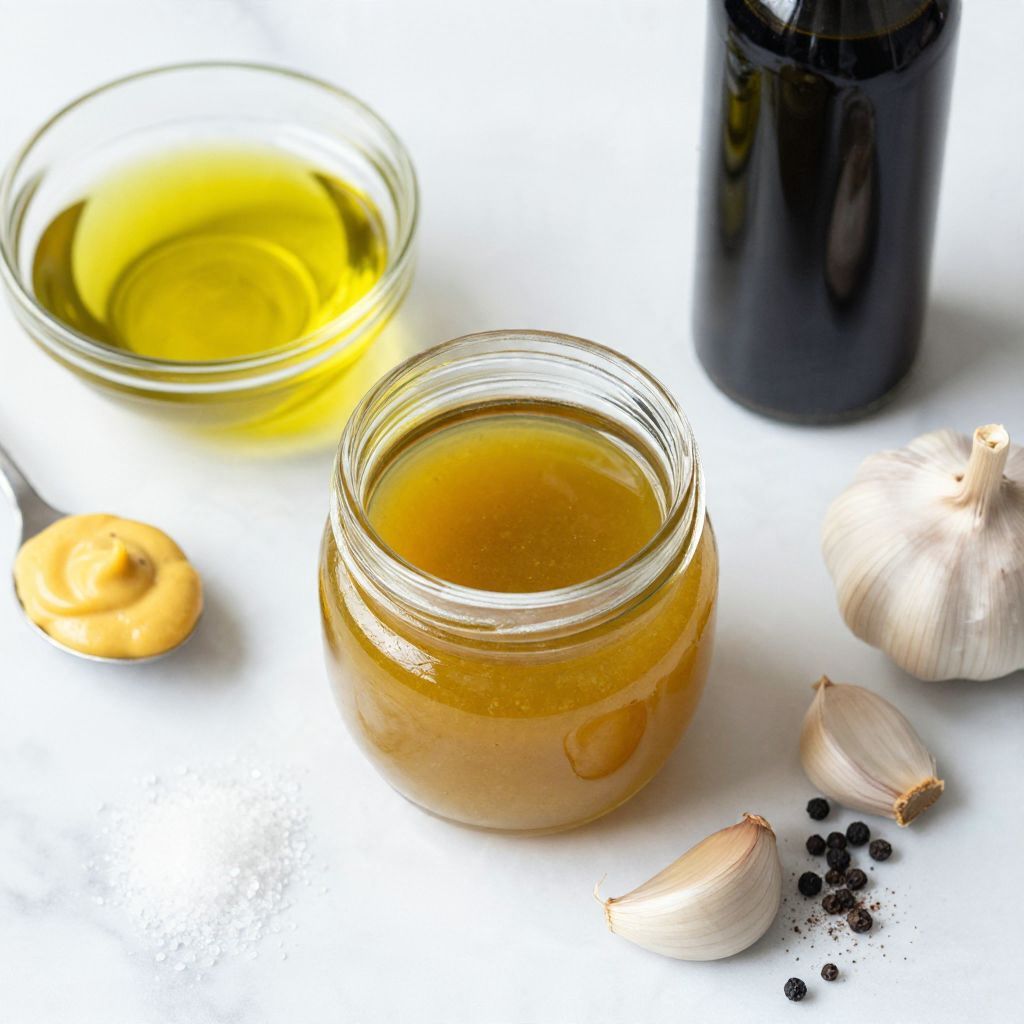
Ingredients for Vinaigrette
- 1/4 cup of extra virgin olive oil
- 2 tablespoons of vinegar (red wine, white wine, or balsamic)
- 1 teaspoon of Dijon mustard
- 1 clove of garlic, minced (optional)
- Salt and pepper to taste
Ingredient Notes and Substitutions
- Extra virgin olive oil: This adds richness and depth. You can substitute with avocado oil for a different flavor.
- Vinegar: Each type of vinegar offers a unique flavor. Try lemon juice for a lighter option.
- Dijon mustard: Acts as an emulsifier for a creamy texture. Yellow mustard can be used in a pinch.
- Garlic: Adds a savory note to the vinaigrette. Omit it if you prefer a milder flavor.
- Salt and pepper: Essential for seasoning. Use sea salt for a gourmet touch.
How to Make Vinaigrette
Step 1: Gather Your Ingredients
Start by measuring out all your ingredients. This ensures you have everything ready for a smooth mixing process.
Step 2: Combine Vinegar and Mustard
In a mixing bowl, whisk together the vinegar and Dijon mustard. This combination will create a tangy base for your vinaigrette.
Step 3: Add Garlic (Optional)
If you’re using garlic, add the minced clove to the bowl. It imparts a lovely flavor that complements the acidity of the vinegar.
Step 4: Slowly Incorporate Olive Oil
While whisking, slowly drizzle in the olive oil. This gradual addition helps emulsify the dressing, creating a creamy texture.
Step 5: Season with Salt and Pepper
Add salt and pepper to taste. This step is crucial to balance the flavors and enhance the overall taste.
Step 6: Taste and Adjust
Give your vinaigrette a taste. Feel free to adjust the vinegar or oil according to your preference.
Step 7: Transfer to Storage Container
Pour the vinaigrette into a jar or bottle for easy storage. This makes it convenient to shake up before using.
Step 8: Refrigerate If Not Using Immediately
If you’re not using it right away, store it in the refrigerator. Just remember to shake it well before serving, as ingredients may separate.
Pro Tip: For an extra kick, try adding fresh herbs like basil or thyme to your vinaigrette.
Tips for the Best Vinaigrette
- Always use fresh ingredients for the best flavor and quality.
- Experiment with different types of vinegar to discover your favorite flavor combinations.
- Make it ahead of time; the flavors meld beautifully after a few hours.
- Store it in a glass jar; it’s easier to shake and pour from.
- Always taste before serving to ensure seasoning is just right.
Common Mistakes to Avoid
- Not whisking long enough: This can lead to separation. Emulsification is key.
- Using stale ingredients: Old oils or vinegars can ruin the flavor. Freshness matters.
- Not adjusting the seasoning: A little salt and pepper can go a long way. Taste as you go.
- Overdoing the vinegar: Too much acidity can overpower the dressing. Balance is important.
Serving Suggestions
This vinaigrette shines when paired with fresh salads or roasted vegetables. It also works wonders as a marinade.
- Mixed greens salad
- Grilled chicken or fish
- Roasted vegetables
- Quinoa or grain bowls
Variations to Try
- Add honey or maple syrup for a touch of sweetness.
- Incorporate citrus juice like lemon or lime for a zesty twist.
- Use flavored oils, such as garlic-infused or chili oil, for extra depth.
- Try adding nuts or seeds for a nutty flavor and texture.
Dietary Adaptations
- Gluten-free: This recipe is naturally gluten-free; no adjustments needed.
- Dairy-free: It’s dairy-free, making it suitable for lactose-intolerant individuals.
- Vegan/Vegetarian: Perfect for both diets; all plant-based ingredients.
- Low-carb/Keto: Very low in carbs, making it keto-friendly.
Storage and Reheating
Refrigerator
Store your vinaigrette in the fridge for up to two weeks. Make sure it’s in a sealed container.
- Shake well before each use.
- Discard if it develops an off smell.
Freezer
It’s not recommended to freeze vinaigrette as it may separate. Fresh is always best.
- Prepare in small batches to avoid waste.
Reheating
There’s no need to heat vinaigrette; it’s best served cold or at room temperature. Just give it a good shake before serving.
Nutrition Information
| Nutrient | Amount |
|---|---|
| Calories | 90 |
| Total Fat | 10g |
| Saturated Fat | 1.5g |
| Carbohydrates | 0g |
| Fiber | 0g |
| Sugar | 0g |
| Protein | 0g |
| Sodium | 5mg |
| Cholesterol | 0mg |
This information is an estimate and may vary based on ingredients used.
Frequently Asked Questions
Can I make this vinaigrette ahead of time?
Absolutely! It stores well in the fridge for up to two weeks.
What can I substitute for Dijon mustard?
Yellow mustard or even a bit of mayo can work in a pinch.
How should I store leftover vinaigrette?
Keep it in a sealed jar in the refrigerator for maximum freshness.
Why is my vinaigrette separating?
This can happen if it wasn’t whisked long enough. Just give it a good shake before using.
Can I use flavored vinegars?
Yes! Flavored vinegars can add an exciting twist to your vinaigrette.
Final Thoughts
This Vinaigrette recipe is a game changer for elevating your meals. With just a few ingredients, you can create something delicious and versatile.
So why not give it a try? You’ll be amazed at how something so simple can transform your dishes into something special.
If you enjoyed this vinaigrette, check out more delicious recipes, like Chipotle Vinaigrette for a spicy twist or learn about freezing cooked chicken to save time in the kitchen.
Ingredients
Equipment
Method
- Start by measuring out all your ingredients.
- In a mixing bowl, whisk together the vinegar and Dijon mustard.
- If you’re using garlic, add the minced clove to the bowl.
- While whisking, slowly drizzle in the olive oil.
- Add salt and pepper to taste.
- Give your vinaigrette a taste and adjust the vinegar or oil as preferred.
- Pour the vinaigrette into a jar or bottle for storage.
- If not using immediately, refrigerate and shake well before serving.