
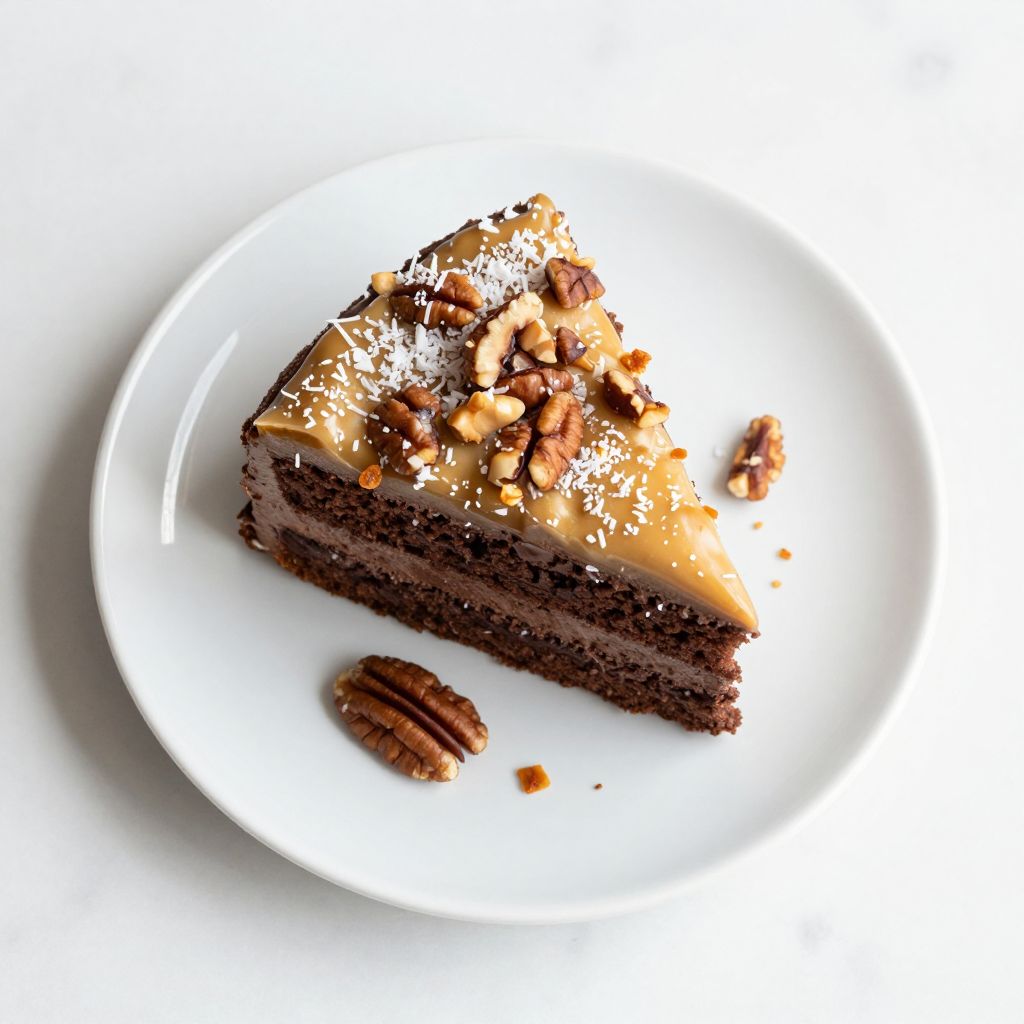
The aroma of cocoa and coconut wafting through the kitchen while a glossy caramel frosting sets is pure nostalgia in chocolate form. German chocolate cake has been a beloved dessert since its debut in 1957, and this original recipe captures that classic elegance with its tender chocolate layers and that unforgettable pecan-coconut topping.
This cake stands apart from typical chocolate desserts because of its unique frosting, which sits somewhere between a sauce and a frosting with its rich, gooey texture. The combination of dark chocolate cake with a sweet, nutty topping creates a contrast that keeps people coming back for slice after slice.
Why You’ll Love This Recipe
This vintage cake delivers impressive results without requiring advanced baking techniques or hard-to-find ingredients. The magic happens in how the simple components work together to create something that tastes like it came from a professional bakery.
- Tender, moist chocolate layers that stay fresh for days
- Distinctive caramel-coconut-pecan frosting that sets without being overly sweet
- A showstopper dessert that impresses at potlucks and dinner parties
- Makes enough for a crowd (12 generous slices)
- Can be assembled ahead, making it perfect for entertaining
My Experience Making This Recipe
I first made this cake on a rainy Saturday afternoon, and my kitchen filled with the most intoxicating chocolate smell within minutes. The batter came together smoothly, and watching those caramel-coconut layers bubble and turn golden brown in the oven felt like watching edible gold being created.
My family gathered around before I even finished the frosting, drawn by the aroma alone. When I finally cut into the first slice, the contrast between the tender chocolate cake and that sticky, nutty topping made everyone pause mid-bite and ask for seconds immediately.
What impressed me most was how well this cake ages. The layers stayed incredibly moist even on day three, and the frosting continued to soften slightly, making each bite more decadent than the last.
Recipe Overview
- Recipe Name: Original German Chocolate Cake (1957)
- Servings: 12 slices
- Prep Time: 20 minutes
- Cook Time: 35 minutes
- Total Time: 1 hour 15 minutes (plus cooling)
- Course: Dessert
- Cuisine: German-American
- Calories per Serving: 520
Equipment You Will Need
- Two 9-inch round cake pans
- Parchment paper
- Electric mixer or whisk
- Medium saucepan
- Wooden spoon
- Measuring cups and spoons
- Mixing bowls (at least 3)
- Cake tester or toothpick
- Wire cooling racks
- Offset spatula
Ingredients for Original German Chocolate Cake
For the Cake Layers
- 4 ounces German chocolate (or semi-sweet chocolate), chopped
- 1/2 cup boiling water
- 2 cups all-purpose flour
- 1 teaspoon baking soda
- 1/4 teaspoon salt
- 1 cup (2 sticks) unsalted butter, softened
- 2 cups granulated sugar
- 4 large eggs, separated
- 1 teaspoon vanilla extract
- 1/2 cup buttermilk
For the Pecan-Coconut Frosting
- 1 cup evaporated milk
- 3 egg yolks (not whites)
- 1 cup (2 sticks) unsalted butter
- 1 1/3 cups granulated sugar
- 2 cups shredded sweetened coconut
- 1 cup chopped pecans
- 2 teaspoons vanilla extract
Ingredient Notes and Substitutions
- German Chocolate: This blend of cocoa, sugar, and cocoa butter creates a milder chocolate flavor than dark chocolate. You can substitute with 4 ounces of semi-sweet or milk chocolate if German chocolate is unavailable, though the flavor will shift slightly toward less sweetness.
- Buttermilk: The acidity reacts with baking soda to create tender crumb and light texture. Replace it with 1/2 cup plain yogurt thinned with 2 tablespoons milk, or use the “sour milk” trick by mixing regular milk with lemon juice.
- Egg Whites Separately: Beating egg whites creates air pockets that make the cake rise higher and stay tender. If you skip this step, your cake will still bake but will be denser and less fluffy.
- Evaporated Milk: The concentrated milk provides richness and helps the frosting set with that signature gooey-but-firm texture. Sweetened condensed milk creates a frosting that’s too soft and overly sweet.
- Shredded Coconut: Sweetened coconut works best here for texture and flavor balance. Unsweetened coconut will require a slight sugar adjustment, adding about 2 tablespoons extra.
How to Make Original German Chocolate Cake
Step 1: Melt the Chocolate
Pour boiling water over the chopped German chocolate in a small bowl and let it sit for 2 minutes without stirring. The residual heat softens the chocolate, making it melt smoothly when you stir, which creates a silky batter with no lumps.
Step 2: Combine Dry Ingredients
Sift together flour, baking soda, and salt in a medium bowl, then set aside. Sifting incorporates air and ensures even distribution of leavening, which helps the cake rise uniformly and prevents dense pockets.
Step 3: Cream Butter and Sugar
Beat softened butter with sugar for 3 to 4 minutes on medium-high speed until the mixture turns pale and fluffy. This creaming process traps air bubbles that expand during baking, creating the light, tender structure that makes this cake memorable.
Step 4: Add Egg Yolks and Chocolate
Add egg yolks one at a time, beating well after each addition, then pour in the cooled melted chocolate mixture and vanilla. Adding eggs gradually prevents the batter from breaking and ensures they emulsify properly with the butter for a smooth, cohesive mixture.
Step 5: Alternate Dry Ingredients and Buttermilk
Begin with one-third of the dry mixture, beating on low speed, then half the buttermilk, then repeat, ending with the final third of dry ingredients. Alternating prevents overmixing and keeps the flour from becoming tough, which would make the cake dense and chewy instead of tender.
Step 6: Beat the Egg Whites
In a separate, completely clean bowl, beat the four egg whites until stiff peaks form. These beaten whites act as a built-in leavening agent that makes the cake rise higher and creates an incredibly tender, almost feathery crumb.
Step 7: Fold in Egg Whites and Bake
Gently fold the beaten egg whites into the chocolate batter in two additions, using a spatula to preserve the air you’ve worked so hard to incorporate. Divide between two greased and floured 9-inch pans and bake at 350 degrees Fahrenheit for 30 to 35 minutes until a cake tester comes out clean.
Step 8: Cool and Prepare for Frosting
Let the cakes cool in their pans for 10 minutes, then turn them out onto wire racks to cool completely. Cooling completely prevents the hot cake layers from melting or softening the frosting, which would make the cake unstable and difficult to slice cleanly.
Step 9: Make the Pecan-Coconut Frosting
Combine evaporated milk, egg yolks, butter, and sugar in a saucepan over medium heat, stirring constantly for 10 to 12 minutes until it thickens slightly and coats the back of a spoon. This cooking process emulsifies the ingredients while the heat pasteurizes the egg yolks, making the frosting both safe and silky smooth.
Step 10: Add Coconut, Pecans, and Cool
Remove the frosting from heat and stir in coconut, pecans, and vanilla, then spread it on the cooled cake layers immediately while it’s still warm and pliable. The frosting thickens as it cools, so applying it warm ensures it settles into all the nooks and doesn’t slide off the sides.
Pro Tip: Make the frosting while the cakes cool, and apply it when both are ready at the same time for the smoothest, most even layers.
Tips for the Best Original German Chocolate Cake
- Use room temperature eggs and butter so they incorporate smoothly and create maximum volume when beaten. Cold ingredients create lumpy batter and dense cake.
- Don’t skip the chocolate bloom step where you pour boiling water over chopped chocolate. This method creates silky-smooth batter with no specks of unmelted chocolate.
- Beat egg whites in a spotlessly clean bowl with no traces of grease or egg yolk, or they won’t whip to stiff peaks. Even one drop of fat prevents proper volume.
- Spread the warm frosting immediately after it comes off the heat, as it will thicken and become difficult to spread as it cools. Work quickly but gently to avoid pressing down the cake layers.
- Let the finished cake sit for at least 2 hours before slicing so the frosting sets firmly and the cake holds its shape when cut. This patience pays off in clean, beautiful slices.
- Store the cake at room temperature covered loosely with foil if you’ll serve it within 24 hours. The frosting actually improves slightly as it sits, becoming even more decadent.
Common Mistakes to Avoid
- Overmixing the batter after adding flour causes gluten development, which makes the cake tough and chewy instead of tender. Mix on low speed and stop as soon as the flour disappears.
- Using cold eggs or butter creates a batter that doesn’t emulsify properly, resulting in a grainy texture and dense crumb. Always bring these ingredients to room temperature first.
- Spreading frosting on warm cake layers causes it to melt and slide down, creating an uneven coating. Let both cakes cool completely before frosting.
- Not cooking the frosting long enough means it stays too thin and slides off the cake or never sets properly. Cook until it noticeably thickens and coats a spoon.
- Skipping the separation of egg whites removes the secret ingredient that makes this cake so light. The beaten whites create lift that ordinary baking soda and powder alone cannot achieve.
Serving Suggestions
This cake deserves to be the star of the dessert table, and it pairs beautifully with several accompaniments that complement its rich chocolate and sweet topping. Serve it at room temperature for the best flavor and texture.
- A scoop of vanilla ice cream melting into the warm frosting creates an indulgent contrast of temperatures and textures
- A strong cup of coffee or espresso cuts through the sweetness and highlights the cocoa notes in the cake layers
- Whipped cream dolloped on the side adds a light, airy element that balances the dense cake
- A glass of cold milk brings back childhood nostalgia and perfectly complements the chocolate and pecans
- Fresh berries like raspberries or strawberries add brightness and tartness that offsets the sweetness of the frosting
Variations to Try
- Darker Chocolate Cake: Replace the 4 ounces of German chocolate with 4 ounces of dark chocolate (70 percent cacao) for a more sophisticated, less sweet cake that appeals to chocolate purists. The frosting remains unchanged and provides the perfect counterbalance.
- Walnut or Almond Version: Substitute pecans with the same amount of walnuts or sliced almonds in the frosting for a different flavor profile and crunch. Walnuts create an earthier taste while almonds add delicate sweetness.
- Toasted Coconut Cake: Toast the shredded coconut in a dry skillet for 3 to 4 minutes before adding it to the frosting to deepen the flavor and add nutty complexity. This small step elevates the whole cake with minimal extra effort.
- Cream Cheese Frosting Hybrid: Mix 8 ounces softened cream cheese with the traditional frosting mixture for a tangier, slightly less sweet version that some find more balanced. Reduce sugar by 2 tablespoons when making this variation.
- Mini Cake Pops: Crumble cooled cake layers, mix with a few tablespoons of the pecan-coconut frosting, roll into balls, dip in melted chocolate, and top with pecans and coconut. This transforms leftovers into elegant party bites.
Dietary Adaptations
- Gluten-Free Version: Replace all-purpose flour with a 1:1 gluten-free flour blend and add 1/4 teaspoon xanthan gum if your blend doesn’t contain it. The cake will be slightly denser but still delicious, and the frosting remains unchanged.
- Dairy-Free Adaptation: Use dairy-free butter and replace buttermilk with unsweetened almond milk mixed with 1 tablespoon lemon juice. For the frosting, use canned full-fat coconut milk in place of evaporated milk and dairy-free butter.
- Vegan Conversion: Replace eggs with flax eggs (1 tablespoon ground flaxseed plus 3 tablespoons water per egg, mixed and set 15 minutes), use dairy-free butter, and almond milk with lemon juice for buttermilk. The frosting can use aquafaba (3 tablespoons per egg yolk) instead of whole eggs for binding.
- Lower-Sugar Option: Reduce sugar in both the cake and frosting by 25 percent and add 1 teaspoon of vanilla extract to compensate for perceived sweetness loss. The result will be less sweet but the cake will still work perfectly.
Storage and Reheating
Refrigerator
Store the frosted cake covered loosely with foil or in an airtight container in the refrigerator for up to 5 days. The frosting actually softens slightly when chilled, creating an even more luxurious texture.
- Slice the cake with a hot, wet knife for cleaner cuts when cold
- Bring slices to room temperature for 20 minutes before serving for best flavor
- The cake keeps moist and fresh longer when refrigerated than at room temperature
Freezer
Wrap the cooled but unfrosted cake layers tightly in plastic wrap and foil, then freeze for up to 2 months. Prepare the frosting fresh after thawing for best texture and flavor.
- Thaw wrapped layers at room temperature for 2 to 3 hours before frosting
- You can also freeze the fully frosted cake in an airtight container for up to 1 month
- Never refreeze a thawed cake as it becomes dry and crumbly
Reheating
This cake tastes best at room temperature and doesn’t need reheating. If you prefer it warm, place a slice on a microwave-safe plate and heat for 15 to 20 seconds at 50 percent power.
- Don’t overheat or the frosting will melt completely and slide off the cake
- Room temperature brings out the full flavor of both cake and frosting
Nutrition Information
| Nutrient | Amount |
|---|---|
| Calories | 520 |
| Total Fat | 28g |
| Saturated Fat | 18g |
| Carbohydrates | 62g |
| Fiber | 2g |
| Sugar | 48g |
| Protein | 6g |
| Sodium | 210mg |
| Cholesterol | 85mg |
These values are approximate and based on standard ingredient amounts and serving sizes. Variations in ingredients and portions will affect the final nutritional profile.
Frequently Asked Questions
Can I Make This Cake the Day Before?
Yes, this cake actually improves when made a day ahead. Bake the unfrosted layers, wrap them well, and frost the next day when you have more time to focus on a neat finish.
What If I Don’t Have German Chocolate?
Semi-sweet or milk chocolate works as a substitute, though the flavor will be slightly different. Use the same amount by weight, and the cake will still turn out beautifully with a richer chocolate taste.
Why Is My Frosting Too Thin?
The frosting likely didn’t cook long enough on the stovetop. It needs at least 10 to 12 minutes of constant stirring to thicken properly. If it’s already cooled and thin, you can refrigerate it briefly to help it set firmer.
Can I Use Oil Instead of Butter?
For the cake layers, you can replace butter with an equal amount of neutral oil like vegetable or canola oil. The frosting requires butter specifically for flavor and texture, so it’s not a good candidate for oil substitution.
How Do I Get Clean Cake Slices?
Use a hot, sharp knife and wipe it clean between each slice. Refrigerating the finished cake for at least 2 hours before slicing also helps the frosting set firmly so it doesn’t smudge.
Is This Cake Safe to Serve to Pregnant Women?
The frosting contains cooked egg yolks that reach 160 degrees Fahrenheit, making them safe. If you’re concerned, you can use pasteurized eggs to be extra cautious when serving to pregnant guests.
Final Thoughts
This original German chocolate cake recipe delivers everything that made it famous in 1957 and still earns a place on modern dessert tables. The combination of tender chocolate layers with that unforgettable gooey, nutty frosting creates magic that tastes nothing like ordinary chocolate cake.
Your kitchen will smell absolutely incredible while this cake bakes, and your guests will ask for the recipe. Go ahead and make it this weekend, and join generations of home bakers who have fallen in love with this classic dessert.
Want to explore more traditional dessert recipes? Try pairing this cake with bavarian cream recipe for an elegant meal, or balance the richness with german red cabbage recipe as a surprising side dish that bridges sweet and savory flavors beautifully.
Original German Chocolate Cake (1957)
Ingredients
Equipment
Method
- Preheat the oven to 350°F (175°C).
- Pour boiling water over chopped German chocolate in a bowl and let sit for 2 minutes, then stir until smooth.
- Sift together flour, baking soda, and salt in a medium bowl and set aside.
- Beat softened butter and granulated sugar on medium-high speed for 3 to 4 minutes until pale and fluffy.
- Add egg yolks one at a time, beating after each addition, then mix in the cooled chocolate and vanilla extract.
- Alternate adding the dry ingredients and buttermilk in three parts, beginning and ending with the dry ingredients, mixing on low speed.
- In a clean bowl, beat egg whites until stiff peaks form.
- Gently fold the beaten egg whites into the chocolate batter in two additions with a spatula.
- Divide the batter evenly between the prepared pans and bake for 30 to 35 minutes until a cake tester comes out clean.
- Cool the cakes in the pans for 10 minutes, then transfer to wire racks to cool completely.
- Combine evaporated milk, egg yolks, butter, and sugar in a saucepan over medium heat and stir constantly for 10 to 12 minutes until thickened.
- Remove from heat, stir in coconut, pecans, and vanilla, then spread the warm frosting over the cooled cake layers.