
Picture a spoon sinking into silky, cloud-like custard that tastes like vanilla and cream had a perfect conversation together. Bavarian cream is that elegant dessert that looks like it came from a fancy French bakery but actually belongs in your home kitchen right now.
This dessert deserves a spot on your table because it combines just a handful of ingredients into something that tastes restaurant-quality and feels special without the fuss. The texture is impossibly smooth, the flavor is pure comfort, and you can make it ahead so you’re not stressed when guests arrive.
Why You’ll Love This Recipe
Bavarian cream works because it balances simplicity with sophistication, and it genuinely impresses without demanding hours in the kitchen. Here’s what makes it so worth your time:
- Silky, custard-like texture that melts on your tongue with zero grittiness
- Make-ahead friendly: prepare it the day before and forget about it until dessert time
- Pairs beautifully with fresh berries, fruit compote, or chocolate sauce
- Naturally elegant presentation that looks far more complicated than it actually is
- Uses common pantry staples you probably already have at home
My Experience Making This Recipe
The first time I made Bavarian cream, I was convinced something would go wrong because the process felt too simple. Whisking egg yolks and sugar together, heating cream, folding in whipped cream and gelatin: it all came together in about 20 minutes of actual work.
The moment I tasted it chilled the next day, I understood why this dessert has survived for centuries. It’s not showy or complicated, but it delivers this incredible silky sensation that makes you feel like you’re eating something genuinely luxurious.
My dinner guests last spring had the same reaction I did: quiet appreciation followed by requests for the recipe. That’s when I knew this was a keeper, especially because I could tell them honestly that they could make it themselves without stress.
Recipe Overview
- Recipe Name: Bavarian Cream
- Servings: 6
- Prep Time: 25 minutes
- Chill Time: 4 hours or overnight
- Total Time: 4 hours 25 minutes
- Course: Dessert
- Cuisine: French/German
- Calories per Serving: 285
Equipment You Will Need
- Medium saucepan
- Whisk or hand mixer
- Medium mixing bowl
- Large mixing bowl for whipped cream
- Instant-read thermometer (optional but helpful)
- Fine mesh strainer
- 6 serving dishes or ramekins, or one 1-quart mold
- Measuring cups and spoons
- Rubber spatula
Ingredients for Bavarian Cream
- Heavy cream: 2 cups, divided (1 cup for heating, 1 cup for whipping)
- Whole milk: 1 cup
- Egg yolks: 5 large
- Granulated sugar: 3/4 cup, divided (1/2 cup for yolks, 1/4 cup for whipped cream)
- Vanilla extract: 2 teaspoons pure vanilla
- Gelatin: 2 1/2 teaspoons (unflavored, about one 1/4-ounce packet)
- Cold water: 3 tablespoons
- Salt: 1 pinch
Ingredient Notes and Substitutions
- Heavy cream creates the rich, silky texture that defines Bavarian cream. If you’re in a pinch, use half heavy cream and half whole milk, though the richness will be noticeably lighter.
- Egg yolks provide both flavor and richness to the custard base. You cannot substitute these without changing the dish entirely, so use fresh eggs from a reliable source.
- Vanilla extract adds the signature warm flavor note that ties everything together. Vanilla bean paste works beautifully if you prefer visible specks, using the same 2 teaspoons.
- Gelatin sets the cream while keeping it light and airy rather than dense. Agar-agar works as a vegan alternative at the same ratio, though the texture will be slightly firmer.
- Sugar sweetens the custard and the whipped cream component. You can reduce this to 1/2 cup total if you prefer a less sweet dessert, but it will taste less balanced.
How to Make Bavarian Cream
Step 1: Bloom the Gelatin
Sprinkle the gelatin over cold water in a small bowl and let it sit for about 5 minutes without stirring. This hydration process, called blooming, helps the gelatin dissolve smoothly later and prevents lumps in your final dessert.
Step 2: Heat the Cream and Milk
Pour 1 cup of heavy cream and the whole milk into a medium saucepan and place it over medium heat. Stir occasionally and heat until small bubbles form around the edges of the pan (about 160 to 170 degrees Fahrenheit if using a thermometer), but do not boil the mixture.
Step 3: Prepare the Egg Mixture
While the cream heats, whisk together the egg yolks and 1/2 cup sugar in a medium bowl until the mixture becomes pale yellow and slightly thickened, about 2 to 3 minutes. This whisking process incorporates air and helps the yolks cook evenly without scrambling when the hot cream is added.
Step 4: Temper the Eggs
Slowly pour the hot cream mixture into the egg yolk mixture while whisking constantly. Pour only about 1/4 of the hot cream at first while whisking vigorously, then gradually add the rest as you whisk, which prevents the eggs from cooking too quickly and scrambling.
Step 5: Cook the Custard
Pour the combined mixture back into the saucepan and place it over medium-low heat. Stir constantly with a wooden spoon or whisk for 8 to 10 minutes until the mixture reaches 160 degrees Fahrenheit on an instant-read thermometer or coats the back of a spoon, which indicates the eggs are safely pasteurized.
Step 6: Strain and Cool the Custard
Pour the custard through a fine mesh strainer into a clean bowl to remove any bits of cooked egg white that may have formed. Stir in the bloomed gelatin and vanilla extract, stirring until the gelatin completely dissolves in the warm custard, then let the mixture cool to room temperature, stirring occasionally (about 15 to 20 minutes).
Step 7: Whip the Remaining Cream
Pour the remaining 1 cup of heavy cream into a large mixing bowl and whip it with a hand mixer or whisk until soft peaks form. Add the remaining 1/4 cup sugar to the whipped cream and continue whipping until stiff peaks form, which usually takes another minute or two.
Step 8: Fold Everything Together
Once the custard has cooled completely, gently fold the whipped cream into it using a rubber spatula with a few careful motions, being careful not to deflate the whipped cream. The mixture should be light, fluffy, and uniform in color without any white streaks of whipped cream remaining.
Step 9: Chill Until Set
Pour the Bavarian cream into individual serving dishes or a 1-quart mold and refrigerate for at least 4 hours, though overnight is ideal. The gelatin will set the cream into its signature silky, mousse-like texture that holds its shape beautifully.
Pro Tip: Cool the custard to room temperature before folding in the whipped cream; if it’s too warm, the gelatin will melt the whipped cream and deflate your dessert into a flat pudding instead of a fluffy mousse.
Tips for the Best Bavarian Cream
- Use fresh eggs from a reliable source and ensure they reach 160 degrees Fahrenheit to eliminate any food safety concerns when using raw or undercooked eggs in traditional recipes.
- Don’t skip the straining step; even tiny bits of cooked egg white will create an unpleasant grainy texture that spoils the silky mouthfeel.
- Let the custard cool completely to room temperature before folding in whipped cream, otherwise the warm custard will melt the whipped cream and ruin the airy texture.
- Use pure vanilla extract, not imitation vanilla, which will taste noticeably flat and chemical in such a simple dessert.
- Chill the dessert for the full 4 hours or overnight; rushing this step means the gelatin hasn’t fully set and your Bavarian cream will taste more like thick pudding than proper mousse.
Common Mistakes to Avoid
- Overheating the cream mixture causes it to boil, which can curdle the milk and create a grainy texture that won’t smooth out no matter how well you whisk.
- Not tempering the eggs properly leads to scrambled bits throughout the custard that create an unpleasant grainy mouthfeel instead of silky smoothness.
- Folding the whipped cream too vigorously deflates all the air you just whipped into it, resulting in a dense, heavy dessert instead of a light mousse.
- Skipping the blooming step with gelatin causes lumps to form that won’t dissolve completely and will create a gritty texture.
- Using too much gelatin makes the dessert rubbery and overly firm, while too little gelatin results in a mixture that never sets properly.
Serving Suggestions
Bavarian cream shines when paired with bright, fresh flavors that cut through the richness and add visual appeal to the plate. Here are some fantastic serving ideas:
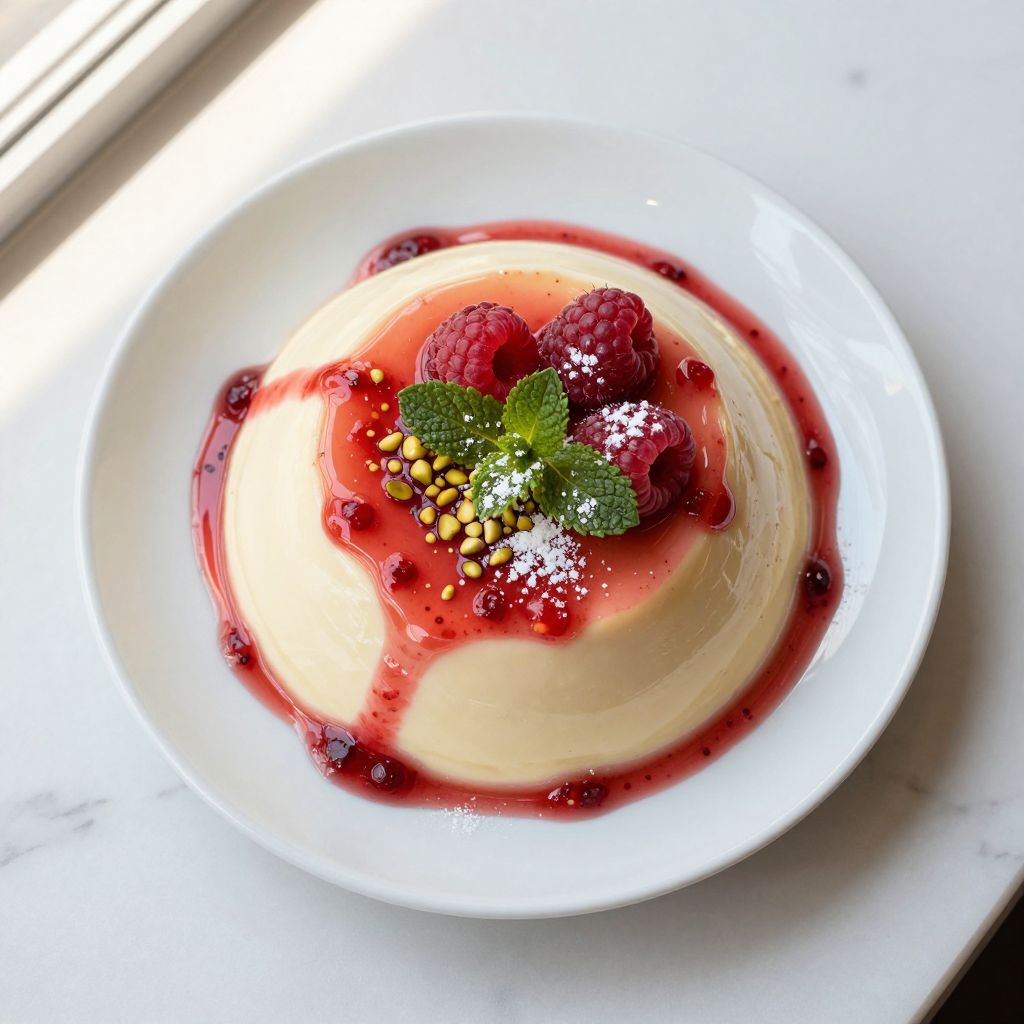
- Top with fresh raspberries or strawberries and a drizzle of raspberry coulis for a classic berry pairing
- Serve alongside a warm chocolate sauce and crushed amaretti cookies for chocolate-almond elegance
- Add a spoonful of fruit compote on top, such as cherry, plum, or mixed berry
- Garnish with candied lemon zest and a few crushed pistachios for bright, nutty sophistication
- Pair with crispy tuile cookies or pirouette wafers for added texture contrast
Variations to Try
- Coffee Bavarian Cream: Dissolve 1 tablespoon of instant espresso powder in the hot cream mixture before tempering the eggs, which adds deep coffee flavor without bitterness.
- Chocolate Bavarian Cream: Add 4 ounces of melted dark or milk chocolate to the warm custard before cooling, creating a rich chocolate version with the same silky texture.
- Fruit-Flavored Bavarian Cream: Replace the vanilla with 1/2 cup of fruit puree (such as raspberry, strawberry, or passion fruit) folded in after cooling for natural fruit flavor.
- Liqueur-Infused Bavarian Cream: Add 1 to 2 tablespoons of your favorite liqueur such as Grand Marnier, Chambord, or Frangelico to the cooled custard before folding in whipped cream.
- Honey Bavarian Cream: Replace some of the sugar with honey for a subtly floral sweetness and slightly different texture that feels luxurious.
Dietary Adaptations
- Gluten-Free: This recipe is naturally gluten-free, though always verify that your vanilla extract and any add-ins don’t contain hidden gluten.
- Dairy-Free: Substitute coconut cream for heavy cream and unsweetened oat milk for whole milk, though the texture will be slightly less silky and the flavor less rich.
- Vegan: Use aquafaba (chickpea liquid) whipped to stiff peaks instead of eggs and dairy cream, with agar-agar instead of gelatin for a completely plant-based version that’s nearly as luxurious.
- Low-Carb or Keto: Replace sugar with erythritol or monk fruit sweetener at a 1:1 ratio, keeping in mind that the texture may be slightly different since these sweeteners behave differently than sugar during cooking.
Storage and Reheating
Refrigerator
Bavarian cream keeps beautifully in the refrigerator for up to 4 days when covered with plastic wrap or stored in an airtight container. The gelatin sets properly and the flavors meld together nicely over the first day or two.
- Store in individual serving dishes to prevent waste and make serving easy
- Cover tightly to prevent the cream from absorbing refrigerator odors
- Keep away from strong-smelling foods like fish or onions
Freezer
Bavarian cream can be frozen for up to 2 months, though the texture becomes slightly grainy after thawing because of how the gelatin and cream freeze. If you do freeze it, thaw it slowly in the refrigerator overnight before serving.
- Freeze in individual portions for easier thawing and serving
- Wrap each serving tightly in plastic wrap before placing in a freezer container
- Label with the date so you remember when you made it
Reheating
Do not reheat Bavarian cream; it’s a cold dessert meant to be served chilled straight from the refrigerator. The gelatin will break down if warmed, and the texture will transform into something closer to pudding than mousse.
- Remove from the refrigerator 5 to 10 minutes before serving if your kitchen is very cold
- Serve immediately after removing from the fridge for the best texture
- Add fresh toppings just before serving to maintain their texture and appearance
Nutrition Information
| Nutrient | Amount |
|---|---|
| Calories | 285 |
| Total Fat | 22 grams |
| Saturated Fat | 14 grams |
| Carbohydrates | 22 grams |
| Fiber | 0 grams |
| Sugar | 20 grams |
| Protein | 4 grams |
| Sodium | 35 milligrams |
| Cholesterol | 195 milligrams |
These values are approximate and based on standard ingredients; variations in specific brands or substitutions will affect the final nutrition profile. This information is provided for reference only and should not be considered medical or dietary advice.
Frequently Asked Questions
Can I Make Bavarian Cream Without Gelatin?
Not really, because gelatin is what gives Bavarian cream its signature set texture and mousse-like consistency. Without gelatin, you’d essentially have whipped custard that never sets, which is a different dessert altogether.
What Can I Use Instead of Egg Yolks?
You can substitute 1/4 cup of pasteurized egg yolk product (sometimes labeled as liquid egg yolk) for the fresh egg yolks if you’re concerned about food safety. The texture will be nearly identical, though some people notice a very slight difference in richness.
How Far Ahead Can I Make This?
You can prepare Bavarian cream up to 4 days ahead and store it covered in the refrigerator. This makes it perfect for entertaining because you can finish your dessert course the day before guests arrive.
Why Is My Bavarian Cream Grainy?
Graininess usually comes from either not straining the cooked custard properly, overheating the cream mixture during cooking, or not dissolving the bloomed gelatin completely. Always strain through fine mesh and stir the gelatin thoroughly into the warm custard.
Can I Use Powdered Gelatin Instead of Unflavored Sheets?
Yes, powdered gelatin works perfectly at the same measurement, so use 2.5 teaspoons of powdered gelatin. Bloom it the same way in cold water for 5 minutes before stirring it into the warm custard.
What’s the Difference Between Bavarian Cream and Mousse?
Bavarian cream uses a custard base that’s set with gelatin, while mousse typically contains whipped egg whites or whipped cream as its main structure. Bavarian cream also tends to be denser and richer than mousse, which is lighter and airier.
Final Thoughts
Making Bavarian cream at home feels like you’re doing something fancy, but honestly, it’s one of the simplest desserts to master once you understand the basic technique. The reward is a dessert that tastes like it came from a restaurant kitchen and impresses everyone at your table.
Take the time to make this properly, chill it fully, and serve it with something fresh and bright on top. You’ll understand why this dessert has been beloved for generations and why your guests will ask for the recipe immediately after their first spoonful.
Looking to explore more elegant dessert options? Check out our pistachio cream recipe for another silky, sophisticated treat that shines with minimal effort. If you want to deepen your cream-based dessert skills, our creme fraiche recipe opens up countless topping and sauce possibilities for Bavarian cream and beyond.
Bavarian Cream
Ingredients
Equipment
Method
- Sprinkle the gelatin over the cold water in a small bowl and let it sit 5 minutes to bloom.
- Combine 1 cup heavy cream and 1 cup whole milk in a medium saucepan over medium heat and heat until small bubbles form around the edges, about 160°F, without boiling.
- Whisk together the egg yolks and 1/2 cup granulated sugar in a medium bowl until pale yellow and slightly thickened, about 2–3 minutes.
- Slowly pour about 1/4 of the hot cream mixture into the egg yolk mixture while whisking constantly, then gradually whisk in the remaining cream to temper the eggs.
- Return the mixture to the saucepan and cook over medium-low heat, stirring constantly, until it reaches 160°F or coats the back of a spoon, about 8–10 minutes.
- Strain the custard through a fine mesh strainer into a clean bowl, stir in the bloomed gelatin and vanilla extract until dissolved, and cool to room temperature, about 15–20 minutes.
- In a large mixing bowl, whip the remaining 1 cup heavy cream with the remaining 1/4 cup sugar until stiff peaks form, about 2 minutes.
- Gently fold the whipped cream into the cooled custard with a rubber spatula until uniform and no white streaks remain.
- Divide the mixture into individual ramekins or a 1-quart mold and refrigerate for at least 4 hours or overnight until set.