
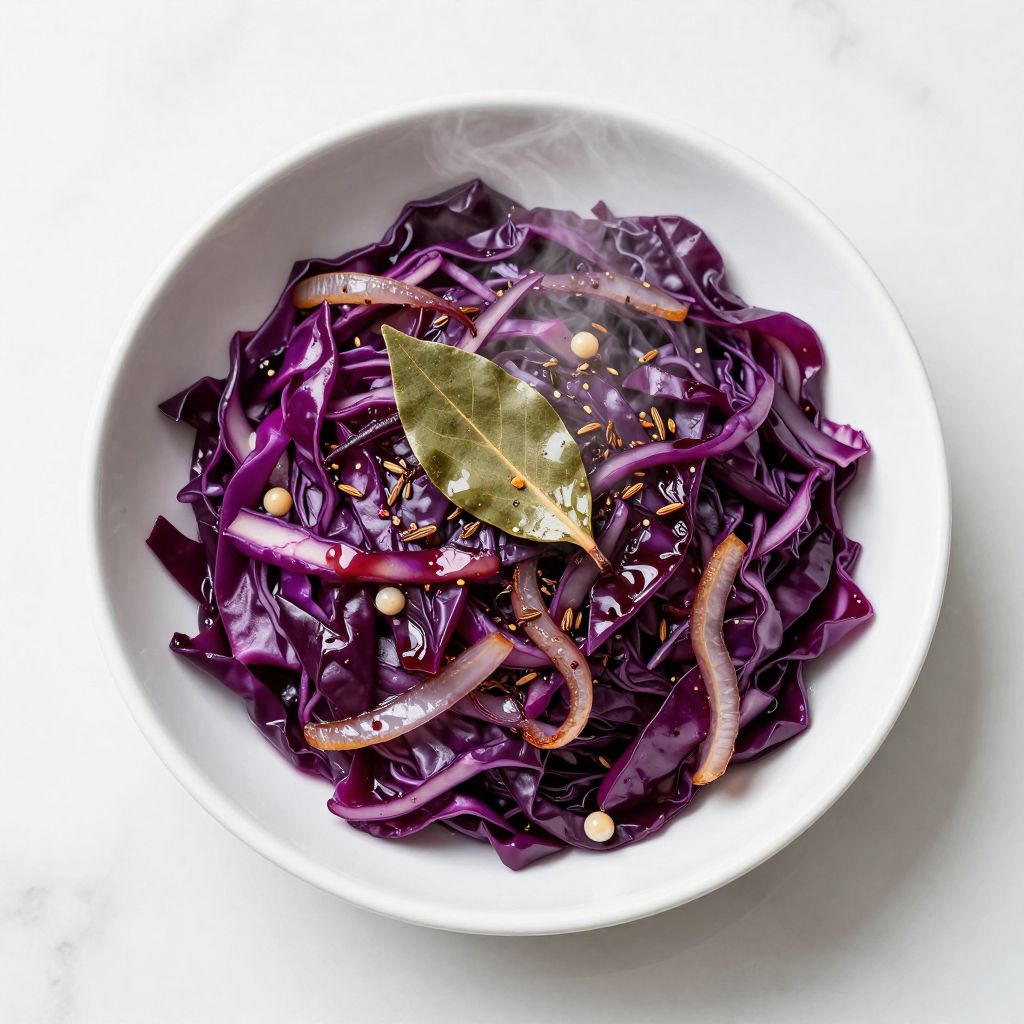
The smell of vinegar and spices simmering with deep red cabbage takes me right back to my grandmother’s kitchen on Sunday afternoons. German red cabbage, or Rotkohl, is a traditional side dish that appears on tables across Germany, Austria, and beyond for good reason: it’s tangy, slightly sweet, and pairs beautifully with almost any protein you set it next to.
This recipe is special because it strikes a perfect balance between ease and restaurant-quality results. The flavors deepen as it sits, making it an ideal make-ahead dish for weeknight dinners or holiday gatherings.
Why You’ll Love This Recipe
This dish delivers serious flavor with minimal effort, and it genuinely improves over time.
- Sweet and tangy flavor profile that complements pork, duck, and beef beautifully
- Takes just 30 minutes to prepare, with mostly hands-off cooking time
- Tastes better the next day, making it perfect for meal prep
- Works as a side dish or a light main course paired with grains
- Budget-friendly and uses pantry staples you probably already have
My Experience Making This Recipe
I first made this dish after picking up a head of red cabbage at the farmer’s market with zero plan. I chopped it roughly, threw it in a pot with vinegar and brown sugar, and let it do its thing for 20 minutes while I prepped everything else.
The transformation was remarkable: that raw, slightly bitter cabbage became silky, deeply flavored, and just a touch sweet. My dinner guests asked for the recipe before they even finished their plates.
What really won me over was making it a day ahead for a dinner party. The flavors had melded into something even better, and I simply reheated it gently while I finished other dishes. That’s when I knew this would become a regular in my rotation.
Recipe Overview
- Recipe Name: German Red Cabbage (Rotkohl)
- Servings: 6 servings
- Prep Time: 10 minutes
- Cook Time: 25 minutes
- Total Time: 35 minutes
- Course: Side Dish
- Cuisine: German
- Calories per Serving: 120
Equipment You Will Need
- Large chef’s knife
- Cutting board
- Large pot or Dutch oven with a lid
- Wooden spoon or silicone spatula
- Measuring spoons and cups
- Small bowl for mixing spices
Ingredients for German Red Cabbage
- 1 medium head red cabbage (about 2 pounds), thinly sliced
- 3 tablespoons butter or neutral oil
- 1 medium onion, thinly sliced
- 3 tablespoons red wine vinegar or apple cider vinegar
- 2 tablespoons brown sugar
- 1 teaspoon caraway seeds (optional but traditional)
- 1/2 teaspoon ground cloves
- 1/2 teaspoon salt
- 1/4 teaspoon black pepper
- 1/2 cup vegetable or chicken broth
- 1 bay leaf
Ingredient Notes and Substitutions
- Red cabbage adds vibrant color and a slightly earthy flavor that pairs perfectly with acidic vinegar; green cabbage works as a substitute but lacks the same visual appeal and sweetness.
- Butter creates richness and helps carry flavors; olive oil or coconut oil work fine if you prefer, though the taste will shift slightly.
- Red wine vinegar provides depth and balance to the sweetness; white vinegar is sharper and less complex, while apple cider vinegar offers a similar profile to red wine vinegar.
- Brown sugar adds subtle molasses notes that make the dish taste more authentic; white sugar or honey can replace it, though honey will make the dish slightly thinner.
- Caraway seeds are traditional and add an earthy spice; if you dislike them, simply omit or swap for a pinch of fennel seeds.
- Ground cloves bring warmth and complexity; don’t skip or double this, as cloves can easily overpower the dish.
How to Make German Red Cabbage
Step 1: Prepare the Cabbage and Onion
Start by removing the outermost leaves of the red cabbage and discarding them, then rinse the cabbage under cold water. Slice the cabbage in half, remove the core, and slice it into thin ribbons, about 1/4 inch thick; thin slices cook evenly and absorb flavors better than chunks.
Step 2: Heat the Butter
Place a large pot over medium-high heat and add the butter, allowing it to melt completely and just begin to foam. This takes about 1 minute and ensures the fat is hot enough to cook the onions without steaming them.
Step 3: Cook the Onion
Add the sliced onion to the hot butter and stir occasionally for 3 to 4 minutes until it becomes translucent and soft. The onion should look glassy and begin to release its sweetness; this base flavor is essential to the dish.
Step 4: Add the Spices
Sprinkle the caraway seeds, ground cloves, salt, and black pepper directly into the pot with the onions. Stir constantly for about 30 seconds to toast the spices and release their aromatics into the butter; this prevents them from tasting raw or gritty.
Step 5: Add the Cabbage
Pour all the sliced cabbage into the pot; it will look like a mountain of red vegetable matter. Stir continuously for 2 to 3 minutes, allowing the cabbage to begin releasing its moisture and absorbing the spiced butter; this is where the color and aroma really start to develop.
Step 6: Deglaze the Pot
Pour the red wine vinegar and brown sugar directly over the cabbage and stir well for about 1 minute. The acid immediately begins softening the cabbage fibers while the sugar balances the sourness; watch as the cabbage deepens in color as it reacts to the acid.
Step 7: Add the Liquid and Bay Leaf
Pour the broth into the pot and add the bay leaf, then stir everything together. The liquid helps steam the cabbage and prevents sticking on the bottom; it will reduce significantly as the cabbage cooks down.
Step 8: Simmer Until Tender
Reduce the heat to medium-low, cover the pot partially with a lid, and simmer for 15 to 20 minutes, stirring occasionally. The cabbage should become completely tender and the liquid should reduce by about half; taste it around the 15-minute mark and cook longer if it still feels slightly firm.
Step 9: Taste and Adjust
Remove the bay leaf and taste the cabbage; adjust the seasoning with additional salt, vinegar, or sugar as needed. Some people prefer it more tangy, others prefer it sweeter, so trust your palate and add just a bit more of whatever you’re missing.
Pro Tip: Make this dish the day before you serve it, then reheat it gently over medium-low heat just before serving; the flavors will have melded and deepened overnight, and the texture becomes even silkier.
Tips for the Best German Red Cabbage
- Slice the cabbage as thinly as possible with a sharp knife or mandoline; thin slices cook evenly in 20 minutes and absorb flavors faster than thick pieces.
- Don’t skip toasting the caraway and cloves in the butter; this step releases their essential oils and prevents harsh, raw spice flavor.
- Use red wine vinegar or apple cider vinegar rather than white vinegar, which tastes too sharp and one-dimensional in this dish.
- If your pot seems dry during cooking, add a splash more broth; the goal is just enough liquid to steam the cabbage, not to make a soup.
- Taste and adjust the sweet-to-sour ratio before serving; this personal preference varies widely, and a tablespoon more sugar or vinegar can transform the dish to match your taste.
- Stir occasionally rather than constantly to prevent the bottom from scorching and to encourage even cooking.
Common Mistakes to Avoid
- Cutting the cabbage too thick slows cooking and creates an uneven texture; aim for 1/4 inch slices that cook in the 20-minute window.
- Skipping the spice-toasting step leaves you with a one-note dish that tastes flat; warming caraway and cloves in fat brings out their complex aromatics.
- Adding too much liquid turns this into cabbage soup; use just enough broth to prevent sticking and let most of it evaporate.
- Cooking on high heat can scorch the bottom and cook the cabbage unevenly; medium-low heat gives the flavors time to develop while the cabbage stays silky.
- Forgetting to remove the bay leaf before serving is awkward and potentially dangerous for your guests; always fish it out with a spoon.
Serving Suggestions
Serve this dish alongside roasted pork, braised duck, or beef stew for an authentic German meal. It also pairs beautifully with grilled sausages, roasted chicken, or even vegetarian grain bowls.
- Roasted pork tenderloin with mashed potatoes and this cabbage on the side
- Crispy duck breast with a simple arugula salad and red cabbage
- German-style beef stew with egg noodles and a generous spoonful of cabbage
- Grilled bratwurst or knockwurst served on a bun with a heap of this slaw-like cabbage on top
- Grain bowl with roasted chickpeas, quinoa, and a scoop of this cabbage for tangy balance
Variations to Try
- Apple variation: Add 1 to 2 sliced apples when you add the cabbage for a sweeter, more Alsatian flavor; the apples soften and blend into the cabbage beautifully.
- Spiced version: Add a stick of cinnamon and a pinch of nutmeg alongside the cloves for warming holiday flavors; this works especially well for autumn and winter meals.
- Bacon-forward: Cook 3 strips of diced bacon first, remove it, and sauté the onion in the bacon fat before continuing; stir the crispy bacon back in at the end for richness.
- Fruity twist: Replace half the vinegar with pomegranate juice or cranberry juice for tartness with a fruity depth; reduce the brown sugar slightly since fruit juice adds sweetness.
- Lighter version: Use vegetable broth instead of butter, skip the sugar, and add a splash more vinegar for a cleaner, less rich result that suits lighter proteins.
Dietary Adaptations
- Gluten-free: This recipe is naturally gluten-free as written; just verify your broth is gluten-free if using store-bought.
- Dairy-free: Replace butter with olive oil or another neutral oil without changing quantities; the flavor will shift slightly but the dish remains excellent.
- Vegan: Use oil instead of butter and vegetable broth instead of chicken broth; the dish is entirely plant-based and tastes just as authentic.
- Low-carb/keto: Reduce brown sugar to 1 tablespoon and skip it entirely if you prefer; the vinegar and spices provide enough flavor, though the result will taste less traditionally balanced.
Storage and Reheating
Refrigerator
Store leftover red cabbage in an airtight container in the refrigerator for up to 5 days. The flavors will actually improve as they sit, making this an ideal make-ahead dish.
- Cool the cabbage to room temperature before covering to prevent condensation
- Keep it in a glass container to prevent staining from the red pigment
- Stir occasionally if serving cold, as the liquid may separate from the vegetables
Freezer
Red cabbage freezes well for up to 3 months, though the texture becomes softer after thawing. This is ideal if you want to make a double batch and save half for later.
- Cool completely before transferring to a freezer-safe container
- Leave a bit of headspace since the liquid expands slightly when frozen
- Thaw overnight in the refrigerator before reheating
Reheating
Reheat gently over medium-low heat, stirring occasionally and adding a splash of water if the dish seems dry. Never microwave it, as high heat can make the cabbage mushy and the flavors harsh.
- Stovetop reheating takes about 5 to 7 minutes and gives the best texture
- Add a small splash of vinegar or water if the bottom seems to stick
- Taste and adjust seasonings before serving, as flavors can fade after freezing
Nutrition Information
| Nutrient | Amount |
|---|---|
| Calories | 120 |
| Total Fat | 7 g |
| Saturated Fat | 4 g |
| Carbohydrates | 14 g |
| Fiber | 3 g |
| Sugar | 9 g |
| Protein | 2 g |
| Sodium | 320 mg |
| Cholesterol | 15 mg |
These values are approximate and based on standard ingredient measurements. Actual nutrition varies depending on specific brands and any recipe adjustments you make.
Frequently Asked Questions
Can I make this recipe without caraway seeds?
Absolutely; caraway seeds are traditional but optional. The dish still tastes delicious without them, though it loses that distinctive German-style earthiness.
How far in advance can I make this dish?
You can prepare it up to 2 days ahead and store it covered in the refrigerator. The flavors actually improve overnight, making it perfect for meal planning.
What if my cabbage turns brown instead of staying red?
Brown cabbage usually means the heat was too high or it cooked too long. Cook on medium-low heat and check for doneness around 15 minutes; the cabbage should stay a deep ruby red or burgundy color.
Can I use a food processor to slice the cabbage?
Yes, a food processor with a slicing blade works quickly and consistently. Hand-slicing takes longer but gives you more control over thickness if you prefer thinner or thicker pieces.
Is this recipe vegan and vegetarian friendly?
Yes, simply swap butter for oil and use vegetable broth instead of chicken broth. The recipe is naturally plant-based with only those two minor substitutions.
Why does my cabbage still taste raw after cooking?
This happens when the pieces are too thick or the heat is too low. Cut your slices thinner (about 1/4 inch) and cook on medium-low for at least 20 minutes; it should soften completely.
Can I double this recipe?
Yes, the recipe scales up beautifully. Double all ingredients and give it an extra 5 to 10 minutes of cooking time; stir more frequently to ensure even cooking in the larger batch.
Final Thoughts
This German red cabbage recipe proves that simple, humble ingredients create extraordinary flavor when treated with respect and care. The beauty of this dish is its versatility; it works as a traditional German side or adapts beautifully to any cuisine that needs a bright, tangy vegetable element.
Try this dish this week alongside whatever protein you have on hand, and I think you’ll understand why it’s been a staple on German tables for generations. The fact that it tastes even better the next day means you can make it without stress, knowing it only improves with time.
German Red Cabbage (Rotkohl)
Ingredients
Equipment
Method
- Remove the outermost leaves of the red cabbage and discard them, then rinse the cabbage under cold water. Slice the cabbage in half, remove the core, and slice it into thin ribbons, about 1/4 inch thick.
- Place a large pot over medium-high heat and add the butter, allowing it to melt completely and just begin to foam, about 1 minute.
- Add the sliced onion to the hot butter and stir occasionally for 3 to 4 minutes until it becomes translucent and soft.
- Sprinkle the caraway seeds, ground cloves, salt, and black pepper directly into the pot with the onions. Stir constantly for about 30 seconds to toast the spices and release their aromatics.
- Pour all the sliced cabbage into the pot and stir continuously for 2 to 3 minutes, allowing the cabbage to begin releasing its moisture and absorbing the spiced butter.
- Pour the red wine vinegar and brown sugar directly over the cabbage and stir well for about 1 minute.
- Pour the broth into the pot and add the bay leaf, then stir everything together.
- Reduce the heat to medium-low, cover the pot partially with a lid, and simmer for 15 to 20 minutes, stirring occasionally, until the cabbage is completely tender and the liquid has reduced by about half.
- Remove the bay leaf and taste the cabbage. Adjust the seasoning with additional salt, vinegar, or sugar as needed before serving.