
There’s a moment when you first crack open a jar of lemon pepper seasoning and that bright, citrusy aroma hits you, and you realize you’re about to transform ordinary chicken, fish, or roasted vegetables into something restaurant-quality. This humble spice blend is your secret weapon for adding punch to nearly any savory dish without fussing over complicated flavor layering.
Homemade lemon pepper seasoning beats store-bought versions because you control the freshness and intensity of each component. You’ll use just a handful of simple ingredients, most of which you probably have in your pantry right now, and five minutes later you’ll have a versatile blend that lasts for months.
Once you make this once, you’ll wonder why you ever bought the pre-mixed stuff. Let’s get into how to build this game-changing seasoning.
Why You’ll Love This Recipe
This seasoning blend delivers bright, zesty flavor that works on practically everything you cook. You’ll save money, control the salt level, and always have fresh seasoning on hand.
- Takes just 5 minutes to make with no cooking required
- Uses simple pantry staples you likely already own
- Lasts 3 to 4 months in an airtight container
- Works perfectly on chicken, fish, vegetables, popcorn, eggs, and more
- Costs a fraction of specialty seasoning blends at the grocery store
My Experience Making This Recipe
I first made this seasoning blend when I was tired of paying eight dollars for tiny bottles of fancy lemon pepper at specialty shops. I mixed together what I had in my spice cabinet and was shocked at how close I got to that expensive version on my first try.
Now I make a batch every couple of months and keep it in a small mason jar on my counter. My family uses it on roasted salmon, grilled chicken breasts, and even scrambled eggs at breakfast.
The real test came when I sprinkled it on homemade potato chips at a dinner party and three people asked me where I bought it. That’s when I knew I had nailed the formula.
Recipe Overview
- Recipe Name: Homemade Lemon Pepper Seasoning
- Servings: About 1/4 cup (enough for multiple uses)
- Prep Time: 5 minutes
- Cook Time: 0 minutes
- Total Time: 5 minutes
- Course: Seasoning/Pantry Staple
- Cuisine: American
- Calories per Serving: 0 (seasoning has negligible calories per typical serving size)
Equipment You Will Need
- Small mixing bowl
- Measuring spoons
- Microplane zester or box grater for lemon zest
- Spoon for stirring
- Airtight container or small glass jar
- Label and marker (optional, but helpful)
Ingredients for Lemon Pepper Seasoning
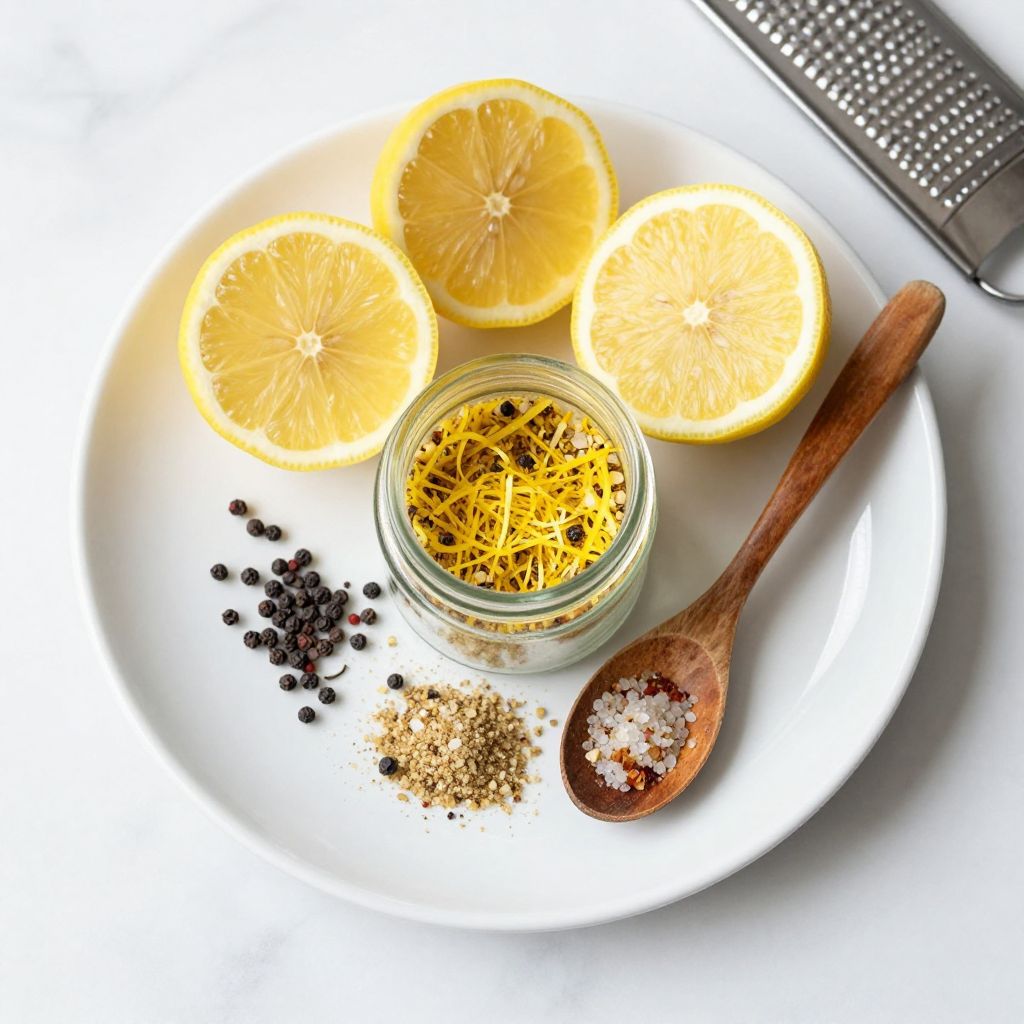
- 2 tablespoons fresh lemon zest
- 1 tablespoon kosher salt
- 2 teaspoons black peppercorns, freshly cracked
- 1 teaspoon garlic powder
- 1/2 teaspoon onion powder
- 1/4 teaspoon red pepper flakes (optional, for a subtle heat)
Ingredient Notes and Substitutions
- Fresh lemon zest: The zest provides bright citrus flavor that dried zest cannot match. If you only have dried lemon zest, use half the amount and accept that the flavor will be less vibrant, though still usable.
- Kosher salt: Kosher salt has larger crystals and measures differently than table salt, giving you better control over seasoning. Sea salt works as a one-to-one replacement if you prefer it, with virtually the same result.
- Freshly cracked black pepper: Freshly cracked peppercorns offer more pungent, complex pepper flavor than pre-ground pepper. Pre-ground black pepper works in a pinch, but use slightly less since it can taste more bitter when not freshly cracked.
- Garlic powder: Garlic powder adds savory depth without adding moisture to your dry blend. Garlic salt can replace it at a one-to-one ratio, but reduce the kosher salt by 1/4 teaspoon to compensate.
- Onion powder: Onion powder rounds out the flavor profile with subtle sweetness and umami. Onion salt works the same way as garlic salt, so adjust your kosher salt down by 1/8 teaspoon if you use it.
How to Make Lemon Pepper Seasoning
Step 1: Zest Your Lemons
Wash two or three fresh lemons under cool water and pat them dry. Use a microplane zester to remove just the bright yellow outer layer of the skin, avoiding the bitter white pith underneath, until you have about 2 tablespoons of zest.
Step 2: Spread the Zest to Dry
Place your fresh lemon zest on a small plate or cutting board and let it sit at room temperature for 30 minutes to an hour. This step helps the zest dry out slightly so it mixes better with the other dry ingredients and won’t clump in your finished blend.
Step 3: Measure Your Salt and Pepper
Pour 1 tablespoon of kosher salt into your small mixing bowl. Crack 2 teaspoons of black peppercorns by placing them in a zip-top bag and crushing them with the bottom of a heavy pan or use a mortar and pestle for more control.
Step 4: Add the Aromatics
Measure 1 teaspoon of garlic powder and 1/2 teaspoon of onion powder into the bowl with the salt and pepper. These powders provide savory backbone that makes the lemon and pepper really shine without overpowering them.
Step 5: Incorporate the Lemon Zest
Add your dried lemon zest to the bowl. The zest should be mostly dry at this point, so it will break apart easily and distribute throughout the blend without clumping.
Step 6: Add the Optional Heat
If you enjoy a slight kick of heat, add 1/4 teaspoon of red pepper flakes now. This step is completely optional and depends on whether you want your seasoning family-friendly or with a subtle spicy note.
Step 7: Mix Everything Together
Stir all the ingredients together with a spoon until they’re evenly distributed and you see no streaks of zest or clumps of powder. Mix for at least one full minute to ensure the garlic and onion powders spread throughout the blend.
Step 8: Store in an Airtight Container
Transfer your finished lemon pepper seasoning into a small glass jar or airtight container. Seal it tightly and store it in a cool, dark place away from direct sunlight and heat, where it will stay fresh for 3 to 4 months.
Pro Tip: The fresher your lemon zest, the brighter your finished seasoning will taste, so make small batches every couple of months rather than one huge batch.
Tips for the Best Lemon Pepper Seasoning
- Use a microplane zester instead of a box grater for finer, more consistent lemon zest that distributes evenly throughout your blend.
- Always start with unwaxed lemons or wash your lemons thoroughly before zesting to avoid adding any waxy coating to your seasoning.
- Crack your black peppercorns fresh rather than using pre-ground pepper, as the aromatic oils in freshly cracked pepper taste noticeably brighter.
- Let your lemon zest dry for at least 30 minutes before mixing to prevent moisture from clumping the garlic and onion powders.
- Label your container with the date you made it so you know when to make a fresh batch in a few months.
- Store your seasoning in a cool cupboard or pantry away from the stove, where heat and steam can degrade the flavor faster.
Common Mistakes to Avoid
- Using pre-ground pepper instead of freshly cracking peppercorns results in a flatter, less vibrant pepper flavor that some describe as slightly musty or stale.
- Skipping the drying step for your lemon zest causes moisture to activate the powdered spices, creating clumps that won’t distribute evenly when you sprinkle the seasoning.
- Including the white pith of the lemon adds bitter flavor that overpowers the bright citrus notes you’re trying to achieve.
- Storing your seasoning near the stove or in direct sunlight fades the lemon flavor and can turn the black pepper dusty or less aromatic.
- Adding too much salt at the beginning means you can’t take it out later, so measure carefully and taste your dish before adding more seasoning.
Serving Suggestions
Sprinkle this lemon pepper seasoning on nearly any protein or vegetable you cook, and it immediately adds restaurant-quality flavor. Here are my favorite ways to use it.
- Roasted salmon fillets or grilled fish, where the brightness complements the richness perfectly
- Grilled or pan-seared chicken breasts for a simple weeknight dinner with big flavor
- Roasted vegetables like broccoli, Brussels sprouts, or asparagus for crispy, flavorful sides
- Buttered popcorn for a savory snack that tastes like it came from a fancy movie theater
- Scrambled eggs or omelets at breakfast for an unexpected flavor boost
Variations to Try
- Garlic Lover’s Version: Increase the garlic powder to 1.5 teaspoons for those who want more savory depth and less citrus brightness in every bite.
- Spicy Lemon Pepper: Bump the red pepper flakes up to 1/2 teaspoon and add a pinch of cayenne powder for a seasoning blend that brings real heat to chicken or roasted vegetables.
- Herb Infused Blend: Add 1 teaspoon of dried oregano or Italian seasoning to create a Mediterranean-inspired version that works beautifully on fish and pasta.
- Lime Pepper Alternative: Substitute lime zest for lemon zest to create a tropical twist that pairs wonderfully with chicken, shrimp, or avocado.
- Truffle Version: Mix in 1/4 teaspoon of truffle powder for a luxurious seasoning that elevates roasted potatoes or steak.
Dietary Adaptations
- Gluten-Free: This recipe is naturally gluten-free, as all ingredients are whole spices and zest with no additives or fillers.
- Dairy-Free: This seasoning contains no dairy products whatsoever, making it safe for anyone with dairy allergies or sensitivities.
- Vegan and Vegetarian: The blend is completely plant-based with no animal products, making it suitable for all dietary preferences.
- Low-Sodium Version: Reduce the kosher salt to 1 teaspoon and rely on the garlic, onion, and lemon flavors to carry the seasoning if you’re watching sodium intake.
Storage and Reheating
Refrigerator
Store your lemon pepper seasoning in an airtight container in a cool cupboard or pantry. It will keep fresh for 3 to 4 months, though the lemon brightness fades slightly over time.
- Use glass jars rather than plastic to prevent flavors from absorbing into the container
- Label your container with the date you made it for easy reference
- Keep it away from direct sunlight and heat sources like the stove
Freezer
Freezing is not necessary and not recommended, as the seasoning will keep well at room temperature in your pantry. Moisture from the freezer can degrade the blend and cause clumping.
- Room temperature storage is ideal for maintaining flavor and texture
- Skip the freezer and stick with a cool, dark pantry instead
Reheating
There is no reheating involved with this dry seasoning blend, as you simply sprinkle it on food as you cook or serve. Use it straight from the jar whenever you need bright lemon pepper flavor.
- Sprinkle it on food before cooking so flavors meld together
- Add it to finished dishes for a fresher citrus pop if you prefer
Nutrition Information
| Nutrient | Amount |
|---|---|
| Calories | 5 |
| Total Fat | 0g |
| Saturated Fat | 0g |
| Carbohydrates | 1g |
| Fiber | 0g |
| Sugar | 0g |
| Protein | 0g |
| Sodium | 460mg |
| Cholesterol | 0mg |
Nutrition values are based on a 1 teaspoon serving size, which is a typical amount used to season a single protein serving. Your actual intake will vary depending on how much seasoning you use per dish.
Frequently Asked Questions
Can I use bottled lemon juice instead of fresh lemon zest?
Bottled lemon juice contains preservatives and won’t create the bright, fresh flavor you get from zest. Fresh lemon zest is essential to this recipe, so I recommend zesting fresh lemons every time.
How long does homemade lemon pepper seasoning actually last?
In an airtight container stored in a cool, dark place, it stays fresh for 3 to 4 months before the lemon flavor starts fading noticeably. Make smaller batches more frequently rather than one large batch if you want maximum brightness.
Can I make this seasoning without the red pepper flakes?
Absolutely, the red pepper flakes are completely optional and won’t affect the core flavor of the blend. Leave them out if you prefer a seasoning that works for all family members regardless of heat tolerance.
What’s the best way to crack peppercorns if I don’t have a mortar and pestle?
Place your peppercorns in a sturdy zip-top bag and crush them firmly with the bottom of a heavy pan or the side of a meat mallet. You want pieces ranging from coarsely cracked to slightly powdered for ideal texture and flavor.
Can I substitute dried lemon zest if I don’t have fresh lemons on hand?
Dried lemon zest works but with noticeably less vibrant flavor since some of the aromatic oils have been lost during drying. Use half the amount of dried zest compared to fresh and accept that your blend won’t be quite as bright.
Is this seasoning good on meat other than chicken and fish?
Yes, it works wonderfully on beef, pork, and lamb, though the lemon flavor shines brightest on lighter proteins like chicken and fish. Try it on grilled pork chops or roasted lamb for a Mediterranean-inspired twist.
Final Thoughts
Making your own lemon pepper seasoning is one of the easiest pantry projects you’ll ever tackle, and the reward is months of exceptional flavor at a fraction of store-bought prices. Once you taste how much better fresh homemade seasoning is compared to pre-mixed bottles, you’ll wonder why you didn’t start making it sooner.
Pull out your finest lemons this week and give this recipe a try. Your grilled chicken, roasted fish, and scrambled eggs will thank you, and you’ll discover a new pantry staple that becomes indispensable in your kitchen.
If you love bright, citrusy flavors, you’ll also want to explore our collection of lemon desserts and seasonal recipes. Our lemon icebox pie and lemon dump cake both showcase how lemon brings sunshine to the table in different ways. Stop by and discover more ways to use this versatile citrus in your home cooking.
Homemade Lemon Pepper Seasoning
Ingredients
Equipment
Method
- Wash and pat dry two or three fresh lemons, then use a microplane zester to remove just the yellow outer peel until you have 2 tablespoons of zest.
- Spread the lemon zest on a plate or cutting board and let it air dry at room temperature for 30 to 60 minutes.
- Measure and combine 1 tablespoon kosher salt and 2 teaspoons freshly cracked black peppercorns in a small mixing bowl.
- Add 1 teaspoon garlic powder and 1/2 teaspoon onion powder to the bowl and stir to combine.
- Add the dried lemon zest to the bowl, breaking up any clumps so it mixes evenly with the spices.
- If using heat, add 1/4 teaspoon red pepper flakes to the mixture and stir to incorporate.
- Stir all ingredients together for at least 1 minute until evenly distributed and no streaks of zest or clumps remain.
- Transfer the seasoning blend to an airtight container or small glass jar, seal tightly, and store in a cool, dark place for up to 3 to 4 months.