
Fresh, zesty, and downright addictive, Lebanese Tabbouleh is a salad that never fails to impress. With its vibrant green parsley, juicy tomatoes, and a hint of lemon, this dish is a celebration of flavors that brings a taste of the Middle East right to your table.
Why You’ll Love This Recipe
This recipe is a wonderful addition to any meal, whether as a side dish or a light lunch. Here’s why you’ll adore it:
- Quick and easy to prepare, perfect for busy weeknights.
- Fresh ingredients create a refreshing, flavorful experience.
- Healthy and packed with nutrients, making it a guilt-free choice.
- Versatile, as it pairs well with many dishes.
- Great make-ahead option, enhancing flavors when it sits.
My Experience Making This Recipe
When I first tried making Tabbouleh, I was surprised at how simple yet satisfying it was. The aroma of fresh herbs and the tang of lemon filled my kitchen, instantly uplifting my mood.
Every bite was a burst of freshness, and it received rave reviews from my family, who couldn’t get enough of it. It quickly became a regular feature at our family gatherings.
Recipe Overview
- Recipe Name: Lebanese Tabbouleh
- Servings: 4
- Prep Time: 20 minutes
- Cook Time: 0 minutes
- Total Time: 20 minutes
- Course: Salad
- Cuisine: Lebanese
- Calories per Serving: 150
Equipment You Will Need
- Chopping board
- Sharp knife
- Mixing bowl
- Measuring cups
- Measuring spoons
Ingredients for Lebanese Tabbouleh
- 1 cup finely chopped fresh parsley
- 1/2 cup finely chopped mint leaves
- 1 cup diced tomatoes
- 1/4 cup diced cucumber
- 1/4 cup finely chopped red onion
- 1/2 cup bulgur wheat, rinsed and soaked
- 1/4 cup fresh lemon juice
- 1/4 cup extra virgin olive oil
- Salt to taste
- Pepper to taste
Ingredient Notes and Substitutions
- Fresh parsley: It is the star of Tabbouleh, providing vibrant flavor. If unavailable, use cilantro for a different twist.
- Bulgur wheat: Adds texture and nutty flavor. Quinoa can be a gluten-free alternative.
- Mint leaves: They lend freshness and brightness to the salad. You could use basil if mint is hard to find.
- Lemon juice: It adds necessary acidity. Lime juice works in a pinch, though the flavor will differ slightly.
How to Make Lebanese Tabbouleh
Step 1: Prepare the Bulgur
Soak the bulgur wheat in cold water for about 30 minutes until it softens. This step is crucial for achieving the right texture and ensuring it integrates well into the salad.
Step 2: Chop the Herbs
Finely chop the parsley and mint, making sure to remove any tough stems. A sharp knife helps maintain the herbs’ freshness and vibrant color.
Step 3: Dice the Vegetables
Dice the tomatoes and cucumber into small pieces. Uniform sizes ensure an even distribution of flavors and a pleasing presentation.
Step 4: Chop the Onion
Finely chop the red onion, balancing the flavor without overwhelming the dish. Rinsing the onion under cold water can mellow its sharpness if desired.
Step 5: Combine Ingredients
In a large mixing bowl, combine the parsley, mint, tomatoes, cucumber, onion, and soaked bulgur. This mixture creates the colorful foundation of your Tabbouleh.
Step 6: Add Dressing
Drizzle in the lemon juice and olive oil, then sprinkle with salt and pepper to taste. This step enhances the salad’s flavor profile and brings everything together.
Step 7: Toss and Taste
Gently toss all the ingredients until well combined. It’s essential to taste and adjust the seasoning if needed, as this will elevate the dish.
Step 8: Chill Before Serving
Let the Tabbouleh sit in the refrigerator for at least 30 minutes. Chilling allows the flavors to meld beautifully, making each bite even more delicious.
Pro Tip: Use fresh herbs for the best flavor; dried herbs just won’t cut it in this bright dish.
Tips for the Best Lebanese Tabbouleh
- Make sure to chop the herbs finely for a delightful texture.
- Use ripe, juicy tomatoes to enhance the salad’s freshness.
- Adjust the lemon juice according to your taste; some prefer it zestier.
- Allow the salad to sit for a while; it gets better as it marinates.
- Experiment with different herbs for a unique twist on the classic recipe.
Common Mistakes to Avoid
- Using dried herbs instead of fresh — it will lack the bright, aromatic punch.
- Over-soaking the bulgur — it can turn mushy; a quick soak is sufficient.
- Not adjusting the seasoning — taste as you go to ensure balance.
- Forgetting to chill — serving it fresh is great, but chilling amplifies the flavors.
Serving Suggestions
Lebanese Tabbouleh shines as a side dish but can also be a star on its own. Here are some pairings:
- Serve alongside grilled meats for a refreshing contrast.
- Pair with pita bread and hummus for a delightful mezze platter.
- Enjoy with fish tacos for a fresh twist.
- Complement with a light protein such as grilled chicken or shrimp.
Variations to Try
- Add diced avocado for creaminess and healthy fats.
- Incorporate roasted red peppers for a smoky flavor.
- Mix in feta cheese for a tangy twist.
- Substitute quinoa for bulgur for a gluten-free version.
Dietary Adaptations
- Gluten-free: Use quinoa instead of bulgur for a gluten-free alternative.
- Dairy-free: This recipe is naturally dairy-free.
- Vegan: Perfectly fits a vegan diet without any modifications.
- Low-carb/Keto: Reduce the bulgur or substitute with cauliflower rice.
Storage and Reheating
Refrigerator
Store leftovers in an airtight container in the fridge. Tabbouleh is best enjoyed within 2-3 days.
- Keep it separate from dressings to maintain freshness.
- Store in the coolest part of the refrigerator.
Freezer
Freezing is not recommended as it can change the texture of the fresh ingredients. However, if necessary, freeze without dressing.
- Place in a freezer-safe container for up to one month.
- Thaw in the refrigerator before serving.
Reheating
Reheating is not typically necessary, but if you must, do so gently. Avoid high heat to preserve texture and flavor.
- Use a microwave on low power, stirring frequently.
- Serve cold for the best experience.
Nutrition Information
| Nutrient | Amount |
|---|---|
| Calories | 150 |
| Total Fat | 10g |
| Saturated Fat | 1g |
| Carbohydrates | 14g |
| Fiber | 4g |
| Sugar | 2g |
| Protein | 3g |
| Sodium | 150mg |
| Cholesterol | 0mg |
This nutrition information is an estimate and will vary based on specific ingredients used.
Frequently Asked Questions
Can I substitute the bulgur wheat?
Yes, quinoa or cauliflower rice can be great alternatives for a gluten-free or lower-carb option.
How can I make Tabbouleh ahead of time?
Prepare the salad and store it in the refrigerator for up to 2 days before serving for the best flavor.
Can I add more vegetables?
Absolutely! Feel free to mix in bell peppers, radishes, or even shredded carrots for added texture and flavor.
What if my Tabbouleh is too sour?
If it tastes too sour, add a touch of sugar or honey to balance the acidity.
How do I store leftovers?
Keep leftovers in an airtight container in the fridge for up to 3 days, separating from any dressing.
Final Thoughts
Lebanese Tabbouleh is a delightful dish that brings the spirit of the Mediterranean right to your kitchen. I can’t recommend it enough for its fresh flavors and simple preparation.
Give this recipe a try, and discover how it can elevate your meals. For more cooking tips, check out substitutions for herbs or learn about molasses for sweetening your dishes!
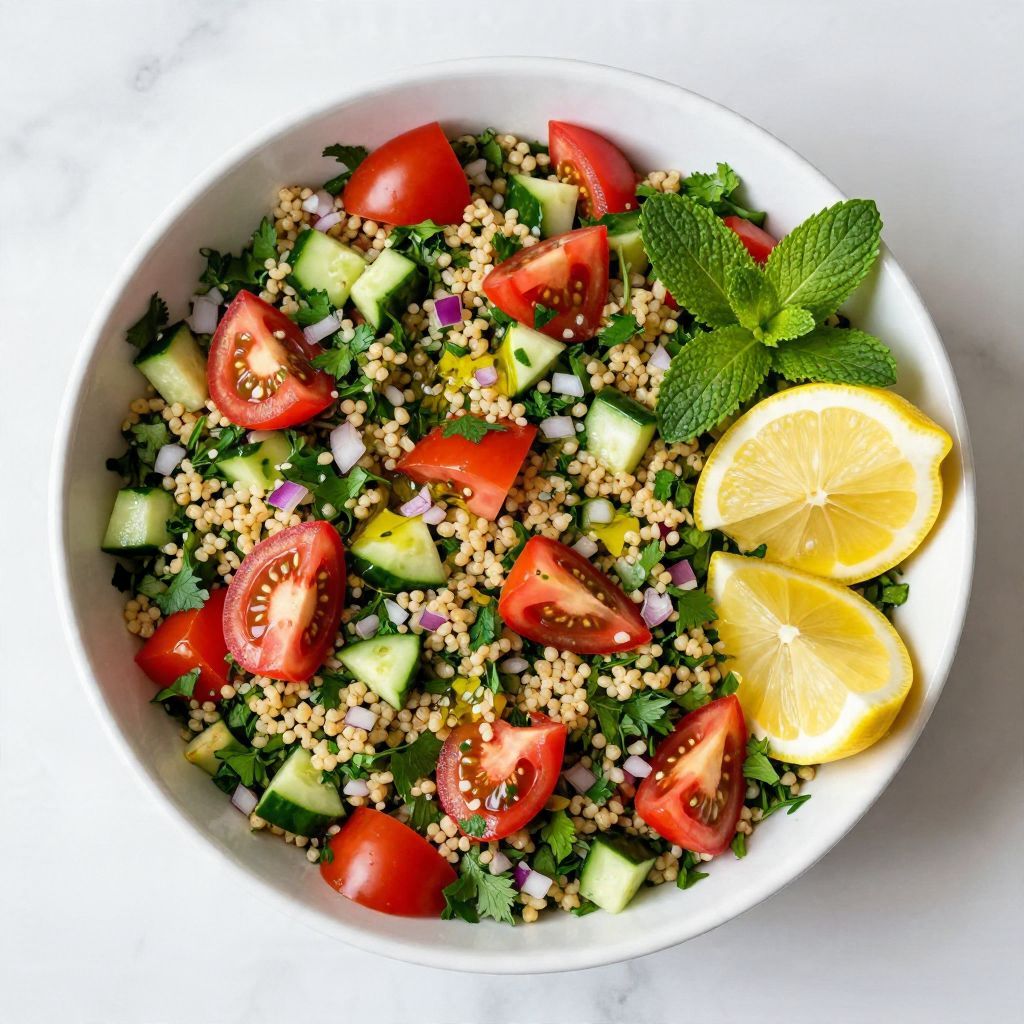
Lebanese Tabbouleh
Ingredients
Equipment
Method
- Soak the bulgur wheat in cold water for about 30 minutes until it softens.
- Finely chop the parsley and mint, making sure to remove any tough stems.
- Dice the tomatoes and cucumber into small pieces.
- Finely chop the red onion, rinsing under cold water if desired.
- In a large mixing bowl, combine parsley, mint, tomatoes, cucumber, onion, and soaked bulgur.
- Drizzle in lemon juice and olive oil, then sprinkle with salt and pepper.
- Gently toss all ingredients until well combined.
- Let Tabbouleh sit in the refrigerator for at least 30 minutes before serving.