
There’s something truly magical about the vibrant aroma of fresh ginger and scallions wafting through your kitchen. This Ginger Scallion Sauce is a versatile condiment that elevates any dish, from grilled meats to steamed vegetables, with its bright, savory punch. It’s quick to whip up and packed with flavor, making it a must-have in your culinary arsenal.
Why You’ll Love This Recipe
This sauce is a flavor bomb that complements countless meals.
- Quick to prepare in under 10 minutes.
- Perfect balance of spicy ginger and fresh scallions.
- Versatile enough to use with meats, seafood, and vegetables.
- Enhances dishes with a fresh zing.
- Can be made ahead and stored for later use.
My Experience Making This Recipe
The first time I made this sauce, I was blown away by how a handful of simple ingredients could transform a dish. Just the sound of chopping ginger and scallions was a symphony of freshness that instantly lifted my spirits.
When I drizzled it over grilled chicken, my family couldn’t get enough. The way the flavors mingled made me feel like a culinary genius, and I quickly became the go-to sauce maker in my house.
Recipe Overview
- Recipe Name: Ginger Scallion Sauce
- Servings: 4
- Prep Time: 10 minutes
- Cook Time: 0 minutes
- Total Time: 10 minutes
- Course: Condiment
- Cuisine: Asian
- Calories per Serving: 70
Equipment You Will Need
- Sharp knife
- Cutting board
- Mixing bowl
- Whisk or fork
- Storage container
Ingredients for Ginger Scallion Sauce
- 1/2 cup finely chopped scallions (green onions)
- 1/4 cup finely grated fresh ginger
- 1/4 cup vegetable oil
- 2 tablespoons soy sauce
- 1 tablespoon rice vinegar
- 1 teaspoon sesame oil
- Salt to taste
Ingredient Notes and Substitutions
- Scallions: They add a mild onion flavor. You can substitute with shallots for a different taste.
- Fresh ginger: This provides a spicy kick. Ground ginger can be used, but it won’t have the same freshness.
- Vegetable oil: It acts as a neutral base. Olive oil can be used, but it may alter the flavor profile.
- Soy sauce: It adds umami depth. Tamari is a gluten-free alternative.
- Rice vinegar: This gives a mild acidity. Apple cider vinegar can be a substitute but will change the flavor slightly.
- Sesame oil: It adds a nutty flavor. You can omit it for a lighter sauce.
How to Make Ginger Scallion Sauce
Step 1: Prepare the Ingredients
Start by finely chopping the scallions and grating the fresh ginger. This helps release their essential oils and flavors, ensuring a vibrant sauce.
Step 2: Combine Scallions and Ginger
In a mixing bowl, add the chopped scallions and grated ginger together. Stirring them now allows the flavors to begin to meld.
Step 3: Add the Oils
Pour in the vegetable oil and sesame oil. The oils will carry the flavors and create a luscious texture.
Step 4: Incorporate the Soy Sauce
Stir in the soy sauce for that savory depth. It adds the essential umami flavor that rounds out the sauce beautifully.
Step 5: Add Rice Vinegar
Add the rice vinegar to introduce a touch of acidity. This balances the flavors and brightens the sauce.
Step 6: Season with Salt
Sprinkle in some salt to taste. This enhances all the other flavors, making them pop.
Step 7: Mix Well
Use a whisk or fork to combine everything thoroughly. You want a consistent blend of flavors that will coat your dishes nicely.
Step 8: Store or Serve
If you’re not using it immediately, transfer the sauce to a storage container. This sauce can be kept in the fridge for up to a week; just remember to give it a good stir before serving.
Pro Tip: For an extra kick, let the sauce sit for an hour before serving to let the flavors deepen.
Tips for the Best Ginger Scallion Sauce
- Use fresh ingredients for maximum flavor impact.
- Adjust the ginger amount according to your spice tolerance.
- Store in an airtight container to preserve freshness.
- Experiment with adding chili flakes for some heat.
- Try using a food processor for an even finer consistency.
Common Mistakes to Avoid
- Using old ginger can lead to a bland sauce; always use fresh.
- Skipping the salt can result in a flat flavor profile.
- Not allowing the sauce to rest before serving can miss out on flavor development.
- Overmixing can break down the texture; combine gently.
Serving Suggestions
This sauce is incredibly versatile and pairs beautifully with a variety of dishes.
- Drizzle over grilled chicken or fish.
- Use as a dip for dumplings.
- Top steamed vegetables for added flavor.
- Mix into stir-fries for an aromatic finish.
Variations to Try
- Add soy sauce and honey for a sweet-savory twist.
- Incorporate lime juice for a citrusy zing.
- Mix in chopped cilantro for an herbal note.
- Include crushed garlic for an extra layer of flavor.
Dietary Adaptations
- Gluten-free: Use gluten-free soy sauce or tamari.
- Dairy-free: This sauce is naturally dairy-free.
- Vegan/Vegetarian: The recipe is vegan-friendly.
- Low-carb/Keto: Use a low-sugar soy sauce alternative.
Storage and Reheating
Refrigerator
Store the sauce in an airtight container in the fridge.
- It will last for up to one week.
- Give it a stir before using, as ingredients may settle.
Freezer
You can freeze the sauce for longer storage.
- Use ice cube trays for portioning.
- Transfer to a freezer-safe container once frozen.
Reheating
This sauce is best served fresh, but if frozen, thaw in the refrigerator overnight.
- Stir well after thawing to recombine the ingredients.
Nutrition Information
| Nutrient | Amount |
|---|---|
| Calories | 70 |
| Total Fat | 7g |
| Saturated Fat | 1g |
| Carbohydrates | 2g |
| Fiber | 0g |
| Sugar | 0g |
| Protein | 1g |
| Sodium | 200mg |
| Cholesterol | 0mg |
This nutritional information is approximate and may vary based on specific ingredients used.
Frequently Asked Questions
Can I substitute ginger with something else?
While fresh ginger is best, you could use ground ginger in a pinch, but flavor will differ.
Can I make this sauce ahead of time?
Absolutely! It gets better as it sits, so feel free to prepare it a day in advance.
How should I store leftover sauce?
Store in an airtight container in the refrigerator for up to one week.
What if my sauce is too oily?
Try adding more scallions or ginger to balance the oiliness.
Can I use this sauce on cold dishes?
Yes! It works wonderfully on cold noodles and salads for an added flavor kick.
Final Thoughts
Once you make this Ginger Scallion Sauce, you’ll wonder how you ever lived without it. It’s a delightful way to add a fresh, zesty flavor to your meals.
Go ahead and give it a try; I’m sure you’ll be as hooked as I am. Don’t forget to explore more delicious recipes like Ginger Syrup and Hibachi Sauce for even more flavor inspiration!
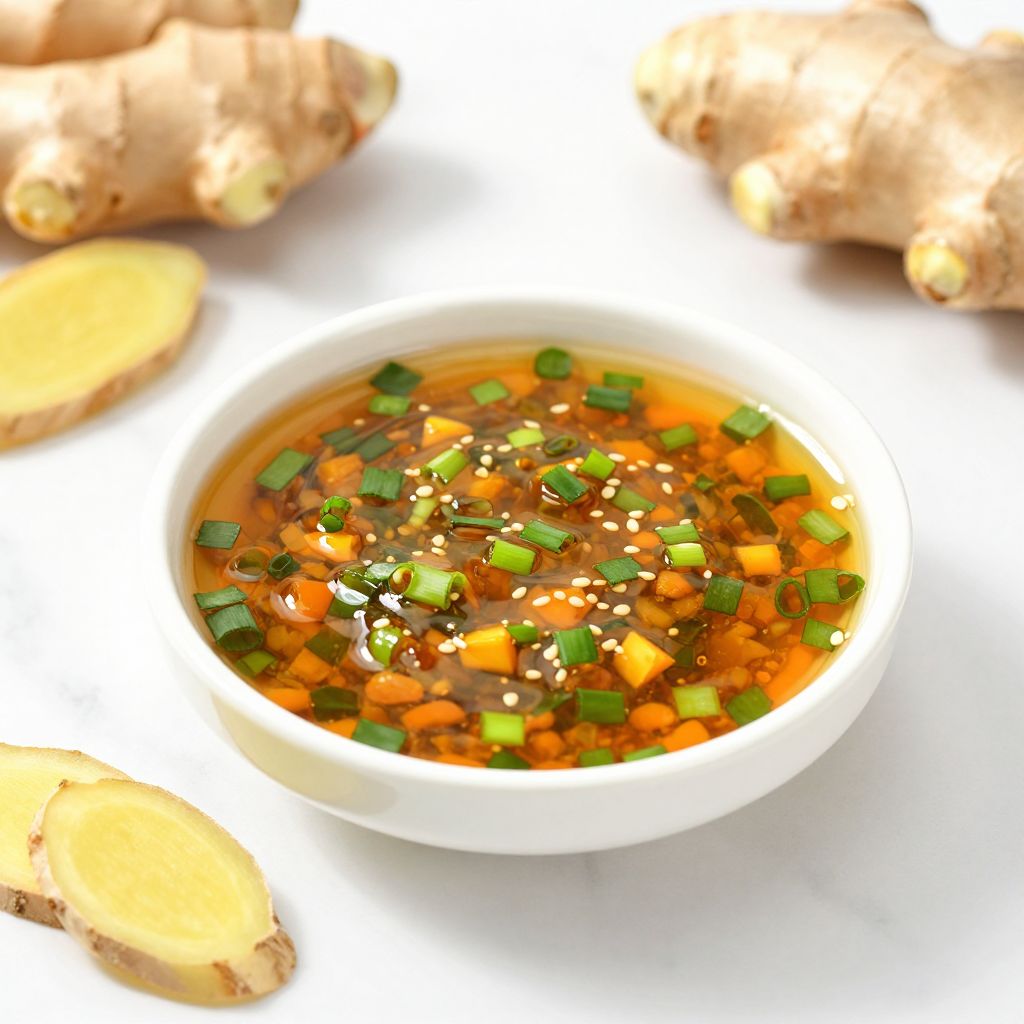
Ginger Scallion Sauce
Ingredients
Equipment
Method
- Start by finely chopping the scallions and grating the fresh ginger.
- In a mixing bowl, add the chopped scallions and grated ginger.
- Pour in the vegetable oil and sesame oil.
- Stir in the soy sauce.
- Add the rice vinegar.
- Sprinkle in some salt to taste.
- Use a whisk or fork to combine everything thoroughly.
- Transfer the sauce to a storage container if not using immediately.