
The warm, spicy aroma of ginger syrup simmering on the stove instantly transforms any kitchen into something magical. This ginger syrup is the kind of pantry staple that quietly becomes indispensable once you start making it at home.
Homemade ginger syrup beats store-bought bottles in both flavor depth and cost, and you’ll use it constantly. Drizzle it over pancakes, stir it into cocktails, sweeten your tea, or pour it over ice cream for an instant upgrade that takes seconds but tastes like you spent an hour in the kitchen.
Why You’ll Love This Recipe
This recipe delivers big ginger flavor in a silky, pourable syrup that works in sweet and savory applications. You control the heat level and sweetness, and the whole process takes less than 30 minutes from start to finish.
- Ready in under 30 minutes with minimal hands-on time
- Stores beautifully in the fridge for up to three weeks
- Works in drinks, desserts, breakfast dishes, and savory glazes
- Cheaper than bottled versions and tastes infinitely better
- Customizable heat and sweetness to match your preferences
My Experience Making This Recipe
I first made this syrup on a whim after buying too much ginger at the farmer’s market. What started as a way to use up produce became a weekly ritual that my family now requests constantly.
The sensory experience is half the appeal. Watching the ginger infuse into golden liquid while your kitchen fills with that clean, sharp spice is genuinely therapeutic. My kids request it on everything from waffles to yogurt, and I’ve served it at dinner parties where guests ask for the recipe before dessert even arrives.
The best part? Making a batch takes less time than binge-watching a single episode of TV, and you end up with something that tastes like you put real effort into it. That’s my kind of kitchen win.
Recipe Overview
- Recipe Name: Ginger Syrup
- Servings: Makes approximately 1.5 cups
- Prep Time: 10 minutes
- Cook Time: 15 minutes
- Total Time: 25 minutes
- Course: Condiment
- Cuisine: International
- Calories per Serving: 45 calories per tablespoon
Equipment You Will Need
- Cutting board and sharp knife
- Vegetable peeler or microplane
- Medium saucepan
- Wooden spoon for stirring
- Fine mesh strainer
- Cheesecloth or coffee filter (optional but helpful)
- Glass jar with an airtight lid for storage
- Measuring spoons and cups
Ingredients for Ginger Syrup
- Fresh ginger root, about 4 ounces, peeled and sliced thin: 1 cup
- Granulated sugar: 1 cup
- Water: 1 cup
- Lemon juice, freshly squeezed: 2 tablespoons
- Sea salt: 1/4 teaspoon
- Optional: hot pepper flakes for extra heat, or vanilla extract for richness
Ingredient Notes and Substitutions
- Fresh ginger root brings bright, natural spice and complexity that dried ginger cannot match. Substitute with 1 to 2 tablespoons of ground ginger if fresh is unavailable, though the flavor will be more muted and slightly different.
- Granulated sugar provides clean sweetness and dissolves quickly into the liquid. Use honey, maple syrup, or coconut sugar in equal amounts for different flavor profiles and natural sweetness, though cook time may shift slightly.
- Water serves as the neutral base that allows ginger flavor to shine. Substitute with apple juice or white tea for added complexity and subtle sweetness that complements the ginger beautifully.
- Lemon juice adds brightness and prevents crystallization of the syrup. Lime juice works as a 1:1 substitute if you prefer a different citrus note, or skip it entirely if you want pure ginger sweetness.
- Sea salt rounds out flavors and deepens the ginger notes without adding saltiness you can detect. Omit it entirely for a cleaner taste, or use kosher salt in the same amount.
How to Make Ginger Syrup
Step 1: Prepare the Ginger
Peel your ginger root using a vegetable peeler or the edge of a spoon, which removes only the thin skin and wastes less ginger than a knife. Slice the peeled ginger into thin coins or matchsticks so it infuses quickly and evenly into the syrup.
Step 2: Combine Sugar and Water
Pour 1 cup of sugar and 1 cup of water into your medium saucepan and place it over medium heat. Stir gently until the sugar dissolves completely, which takes about 2 to 3 minutes; you’re looking for a clear liquid with no grainy texture at the bottom.
Step 3: Add the Ginger
Once your sugar dissolves, add the sliced ginger to the pan and increase the heat to medium-high. Bring the mixture to a gentle boil, which will take 3 to 4 minutes; you should see small bubbles breaking the surface across the entire pan.
Step 4: Reduce Heat and Simmer
Lower the heat to medium-low and let the syrup simmer gently for 10 to 12 minutes without stirring too much. The longer you simmer, the more concentrated and spicy your syrup becomes; taste it at 10 minutes and decide if you want it stronger or lighter.
Step 5: Add Acid and Salt
Turn off the heat and stir in your 2 tablespoons of lemon juice and 1/4 teaspoon of sea salt. The acid brightens the ginger flavor and prevents the syrup from crystallizing as it cools, while salt enhances and deepens all the spice notes.
Step 6: Cool Slightly Before Straining
Let the syrup cool for about 5 minutes at room temperature so it’s still warm but not scalding when you strain it. This temperature makes it easier to handle and pour without splashing.
Step 7: Strain Out the Ginger
Pour the syrup through a fine mesh strainer into a clean bowl or measuring cup, pressing gently on the ginger pieces to extract all the liquid. If you want a crystal-clear syrup, line your strainer with cheesecloth or a coffee filter and let it drip slowly; this extra step takes a few minutes but gives you restaurant-quality clarity.
Step 8: Transfer and Cool Completely
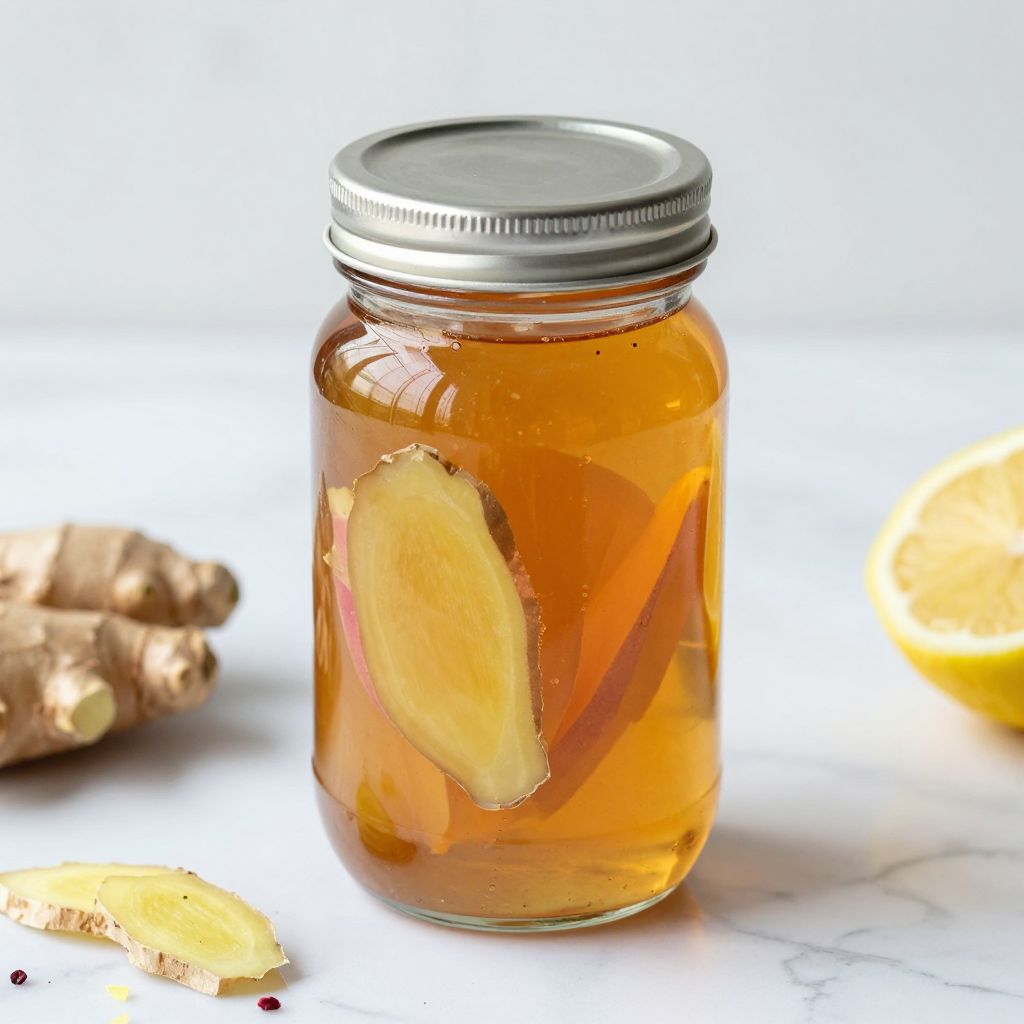
Pour your strained syrup into a clean glass jar with an airtight lid and let it cool to room temperature on the counter, which takes about 30 to 45 minutes. Once cooled, seal the jar tightly and refrigerate it until you’re ready to use it.
Pro Tip: Don’t skip the lemon juice and salt. These ingredients seem minor but they prevent crystallization during storage and add complexity that transforms good ginger syrup into something you’ll crave.
Tips for the Best Ginger Syrup
- Choose plump, smooth ginger root without wrinkles or soft spots, which indicates age and dryness. Young ginger from spring produces syrup with milder, more delicate flavor, while mature ginger delivers stronger spice and heat.
- Don’t skip peeling the ginger even though it adds a few seconds to prep time. The peel contains bitter compounds that muddy the clean ginger flavor you’re after in the finished syrup.
- Taste the syrup at the 10-minute simmer mark to check strength before committing to longer cooking. Remove it early if you prefer subtle ginger notes, or simmer longer if you want bold, peppery intensity.
- Store your syrup in glass jars rather than plastic bottles, which can absorb flavors and degrade over time. Dark glass protects it from light exposure and keeps it fresher longer.
- Keep a small squeeze bottle of ginger syrup in your fridge door for quick access to drinks, desserts, and breakfast dishes. Its visibility makes you more likely to use it creatively and consistently.
- Double or triple the recipe and store extra jars in the fridge or freezer for backup supplies. It’s barely more work than making a single batch, and you’ll always have some on hand.
Common Mistakes to Avoid
- Overcooking the syrup at a rolling boil causes it to evaporate too quickly and become overly concentrated or even bitter. Maintain a gentle simmer instead to extract flavor gently without burning the ginger or caramelizing the sugar excessively.
- Forgetting to add lemon juice results in a syrup that crystallizes into a grainy mess within a few days in the fridge. The citric acid prevents this chemical reaction, so never skip it.
- Leaving ginger slices too thick means they won’t infuse their flavor evenly into the syrup and you’ll end up with weak, watery results. Slice them thin so the flavor releases quickly and completely.
- Storing syrup in warm places or leaving it at room temperature after cooking shortens its shelf life dramatically. Cool it completely and refrigerate it immediately to prevent fermentation and spoilage.
- Using old or dried-out ginger produces syrup with muted, dusty flavor that won’t impress anyone. Fresh, firm ginger is worth the small extra cost.
Serving Suggestions
This syrup is a chameleon in the kitchen, working equally well in sweet breakfast dishes and complex cocktails. Here are my favorite ways to use it.
- Pour it over pancakes or waffles alongside butter and whipped cream for instant breakfast elegance
- Stir a tablespoon into hot tea, sparkling water, or cocktails for instant spiced flavor complexity
- Drizzle over vanilla ice cream or yogurt with a sprinkle of sea salt for a simple dessert that tastes restaurant-quality
- Mix into salad dressings or brush onto grilled fish and chicken for a sweet and spicy glaze
- Swirl into smoothie bowls, oatmeal, or chia pudding for breakfast that tastes indulgent without extra effort
Variations to Try
- Spicy Ginger Syrup: Add 1/4 teaspoon of cayenne pepper or a small pinch of hot pepper flakes during the simmer for syrup with serious kick. This version transforms plain oatmeal and works beautifully drizzled over spicy food.
- Honey Ginger Syrup: Replace half the sugar with honey and reduce the water slightly to account for honey’s liquid content. Honey adds floral sweetness and viscosity that sugar alone cannot achieve, creating a richer texture.
- Ginger Turmeric Syrup: Add 1 teaspoon of ground turmeric during simmering for earthy depth and golden color. Turmeric pairs beautifully with ginger and adds wellness properties without changing the essential flavor profile.
- Orange Ginger Syrup: Replace lemon juice with fresh orange juice and add the zest of one orange at the beginning of simmering. Orange creates warmer, rounder sweetness that feels festive and pairs wonderfully with chocolate desserts.
- Ginger Vanilla Syrup: Stir in 1/2 teaspoon of vanilla extract after cooling for added warmth and richness. Vanilla softens the ginger’s spice and adds complexity that makes this version perfect for ice cream and cream-based desserts.
Dietary Adaptations
- Gluten-Free: This recipe is naturally gluten-free as written with no flour or gluten-containing ingredients, so no modifications are needed.
- Dairy-Free: The syrup contains no dairy products and works in any application without adaptation or substitution.
- Vegan and Vegetarian: This recipe is completely plant-based and suitable for vegan and vegetarian diets without any changes.
- Low-Carb and Keto: Replace granulated sugar with an equal amount of erythritol or monk fruit sweetener, though the final texture may be slightly thinner and taste slightly different due to sweetener properties.
Storage and Reheating
Refrigerator
Store your ginger syrup in a clean glass jar with an airtight lid in the coldest part of your fridge for up to three weeks. The syrup will thicken slightly as it cools, which is completely normal and actually improves the consistency.
- Check for any signs of mold or fermentation before each use
- Keep the jar sealed tightly between uses to prevent evaporation
- If crystallization occurs, warm the jar gently in hot water to dissolve the crystals
Freezer
Freeze ginger syrup in ice cube trays for convenient portions that last up to three months. Once frozen solid, pop the cubes into a labeled freezer bag and use them as needed for drinks and recipes.
- Label your freezer bag with the date and contents for easy identification
- Thaw cubes at room temperature or microwave them briefly for warm syrup
- Frozen syrup cubes work beautifully in cold drinks without diluting as regular ice would
Reheating
This syrup is typically used cold or at room temperature, but you can warm it gently if you prefer. Heat it over low heat or microwave it in short bursts, never letting it come to a rolling boil which would change the texture and concentrate it further.
- Warm syrup works beautifully drizzled over hot oatmeal or pancakes
- Never reheat syrup in a microwave for longer than 30 seconds at a time
Nutrition Information
| Nutrient | Amount |
|---|---|
| Calories | 45 |
| Total Fat | 0g |
| Saturated Fat | 0g |
| Carbohydrates | 12g |
| Fiber | 0g |
| Sugar | 12g |
| Protein | 0g |
| Sodium | 25mg |
| Cholesterol | 0mg |
Nutritional values are approximate and based on one tablespoon serving size. Actual values vary based on specific ingredients used and exact measurements in your batch.
Frequently Asked Questions
Can I make this syrup with ground ginger instead of fresh?
Yes, use 1.5 to 2 tablespoons of ground ginger mixed with 1 cup water, then proceed with the recipe as written. The flavor will be noticeably different and more muted because fresh ginger contains volatile oils that ground ginger loses during drying, but it still produces a tasty syrup.
How long does this syrup actually last in the fridge?
Properly stored in a sealed glass jar, it lasts up to three weeks, though I’ve kept mine for a month without issues. If you notice any mold, off-smell, or fizzy behavior, discard it immediately.
Can I make a big batch and store it for months?
Freezing in ice cube trays extends the shelf life to three months, which is your best option for long-term storage. The fridge keeps it fresh for about three weeks, so plan ahead and make batches as needed rather than one massive amount.
Why does my syrup feel grainy instead of smooth?
Crystallization occurs when you skip the lemon juice or don’t cool the syrup completely before sealing the jar. Gently warm the jar in hot water to redissolve the crystals, then store it better next time by always adding lemon juice.
What’s the difference between syrup and simple syrup, and can I use this in cocktails?
This ginger syrup is actually a flavored simple syrup, so it works perfectly in any cocktail that calls for syrup. It adds complexity and spice that plain simple syrup cannot achieve, making it ideal for whiskey drinks, gin-based cocktails, and tropical tiki drinks.
Can I add other spices like cinnamon or cloves to this recipe?
Absolutely, add 1/2 teaspoon of cinnamon, one or two whole cloves, or even a star anise during simmering for warm spice depth. Remove any whole spices before straining so they don’t cloud your finished syrup or affect shelf life.
Final Thoughts
Homemade ginger syrup is the kind of simple project that pays dividends for weeks every time you make it. Once you start keeping a jar in your fridge, you’ll wonder how you ever lived without it.
Make a batch this week and experiment with it in unexpected places. You’ll quickly discover that this humble syrup transforms everything from coffee to cocktails, and you’ll never buy bottled versions again.
Ginger Syrup
Ingredients
Equipment
Method
- Peel your ginger root using a vegetable peeler or the edge of a spoon. Slice the peeled ginger into thin coins or matchsticks.
- Pour 1 cup of sugar and 1 cup of water into your medium saucepan and place it over medium heat. Stir gently until the sugar dissolves completely, about 2 to 3 minutes.
- Once your sugar dissolves, add the sliced ginger to the pan and increase the heat to medium-high. Bring the mixture to a gentle boil, about 3 to 4 minutes.
- Lower the heat to medium-low and let the syrup simmer gently for 10 to 12 minutes without stirring too much. Taste at 10 minutes to check strength.
- Turn off the heat and stir in your 2 tablespoons of lemon juice and 1/4 teaspoon of sea salt.
- Let the syrup cool for about 5 minutes at room temperature.
- Pour the syrup through a fine mesh strainer into a clean bowl or measuring cup, pressing gently on the ginger pieces to extract all the liquid. For crystal-clear syrup, line your strainer with cheesecloth or a coffee filter.
- Pour your strained syrup into a clean glass jar with an airtight lid and let it cool to room temperature on the counter, about 30 to 45 minutes. Once cooled, seal the jar tightly and refrigerate until ready to use.