
There’s something truly magical about the first bite of Eggplant Caponata — the sweet and tangy flavor explosion is a delightful reminder of summer gatherings. This classic Sicilian dish is not only a celebration of eggplant but also a showcase of vibrant Mediterranean flavors that come together beautifully.
It’s perfect as an appetizer, side dish, or even a main when paired with crusty bread. With its rich texture and bold taste, this caponata is a fantastic way to elevate any meal, and it’s surprisingly easy to make at home.
Why You’ll Love This Recipe
This recipe is a must-try for anyone who appreciates bold flavors and simple cooking techniques.
- Easy to prepare, making it ideal for busy weeknights.
- Versatile: serve it warm, cold, or at room temperature.
- Great for meal prep — it tastes even better the next day.
- A healthy, vegetable-packed dish that is full of flavor.
My Experience Making This Recipe
Making Eggplant Caponata has become a cherished ritual in my kitchen. The aroma of garlic and sautéed veggies brings back fond memories of summer meals shared with loved ones.
When I served this dish at my last gathering, it vanished in minutes, and everyone was begging for the recipe. It’s always a hit!
Recipe Overview
- Recipe Name: Eggplant Caponata
- Servings: 6
- Prep Time: 15 minutes
- Cook Time: 30 minutes
- Total Time: 45 minutes
- Course: Appetizer, Side Dish
- Cuisine: Italian
- Calories per Serving: 150
Equipment You Will Need
- Large skillet or sauté pan
- Cutting board
- Sharp knife
- Wooden spoon or spatula
- Measuring cups and spoons
Ingredients for Eggplant Caponata
- 1 large eggplant, diced into 1-inch cubes
- 2 tablespoons olive oil
- 1 onion, finely chopped
- 2 cloves garlic, minced
- 1 bell pepper, diced (red or yellow)
- 2 stalks celery, diced
- 1 can (14 ounces) diced tomatoes, drained
- 3 tablespoons capers, rinsed
- 1/4 cup balsamic vinegar
- 1 tablespoon sugar (optional, for sweetness)
- Salt and pepper, to taste
- Fresh basil, for garnish
Ingredient Notes and Substitutions
- Eggplant: Adds a rich, meaty texture. You can substitute zucchini for a lighter version.
- Olive oil: Provides healthy fats and flavor. Use vegetable oil if preferred.
- Onion and garlic: Essential for building flavor. Shallots work as a great alternative.
- Canned tomatoes: For convenience and consistency. Fresh tomatoes can be used, just adjust cooking time.
- Balsamic vinegar: Adds sweetness and acidity. Red wine vinegar is a suitable substitute.
How to Make Eggplant Caponata
Step 1: Prepare the Eggplant
Start by dicing the eggplant into 1-inch cubes. This size ensures even cooking and a nice texture throughout the dish.
Step 2: Salt the Eggplant
Place the diced eggplant in a colander and sprinkle with salt. Let it sit for about 20 minutes to draw out excess moisture and bitterness.
Step 3: Sauté the Aromatics
In a large skillet, heat the olive oil over medium heat. Add the onion and garlic, sautéing until fragrant and translucent, about 5 minutes.
Step 4: Add the Vegetables
Stir in the bell pepper and celery, cooking for another 5 minutes until softened. This builds a flavorful base for your caponata.
Step 5: Cook the Eggplant
Rinse the salt off the eggplant and pat it dry. Add it to the skillet, stirring to combine, and cook for 10 minutes until it becomes tender.
Step 6: Incorporate Tomatoes and Capers
Add the drained diced tomatoes and capers to the mixture. These ingredients contribute a burst of brightness and complexity to the dish.
Step 7: Add Vinegar and Sugar
Pour in the balsamic vinegar and add sugar if desired. Let the mixture simmer for about 10 minutes, allowing flavors to meld together.
Step 8: Season and Garnish
Finally, season with salt and pepper to taste. Serve warm or let it cool to room temperature before garnishing with fresh basil.
Pro Tip: Let the caponata sit for a few hours or overnight in the fridge to deepen the flavors — trust me, it’s worth the wait!
Tips for the Best Eggplant Caponata
- Choose a firm eggplant for the best texture; soft ones can be bitter.
- Don’t skip salting the eggplant; it really enhances the flavor.
- Experiment with additional vegetables like zucchini or olives for extra flavor.
- Serve it with crusty bread or over pasta for a hearty meal.
- Try adding pine nuts for a delightful crunch.
Common Mistakes to Avoid
- Not salting the eggplant: This can result in a bitter taste and soggy texture.
- Overcooking the vegetables: They should be tender but not mushy for the best dish.
- Skipping the resting time: This is crucial for the flavors to develop fully.
- Using too much vinegar: Balance is key; too much can overpower the dish.
Serving Suggestions
Serve your caponata as a stunning appetizer or side dish that pairs wonderfully with various meals.
- Crusty bread or crostini
- As a topping for grilled chicken or fish
- Mixed into pasta for a hearty main course
- As part of a Mediterranean platter with olives and cheeses
Variations to Try
- Add chickpeas for a protein boost and extra texture.
- Incorporate olives for a briny twist.
- Use red wine vinegar instead of balsamic for a sharper flavor.
- Mix in raisins for a touch of sweetness that contrasts nicely.
Dietary Adaptations
- Gluten-free: This dish is naturally gluten-free, so enjoy without worry.
- Dairy-free: Caponata is dairy-free, making it perfect for vegan diets.
- Vegetarian: A delicious vegetarian dish full of flavor.
- Low-carb/keto: Great for low-carb diets; just watch portions.
Storage and Reheating
Refrigerator
Store leftover caponata in an airtight container in the fridge.
- Good for up to 4 days.
Freezer
Caponata freezes well for longer storage.
- Freeze in a sealed container for up to 3 months.
Reheating
Reheat gently on the stovetop or in the microwave.
- Add a splash of water or olive oil if it looks dry.
Nutrition Information
| Nutrient | Amount |
|---|---|
| Calories | 150 |
| Total Fat | 7g |
| Saturated Fat | 1g |
| Carbohydrates | 20g |
| Fiber | 5g |
| Sugar | 6g |
| Protein | 3g |
| Sodium | 320mg |
| Cholesterol | 0mg |
This nutritional information is an estimate and can vary based on ingredient brands and portion sizes.
Frequently Asked Questions
Can I make caponata in advance?
Absolutely! It tastes even better after a day in the fridge, letting the flavors meld.
What can I substitute for eggplant?
Zucchini is a good alternative; it offers a different texture but still absorbs flavors well.
How should I store leftovers?
Keep them in an airtight container in the refrigerator for up to four days or freeze for three months.
Why does my caponata seem too watery?
This can happen if the eggplant wasn’t salted long enough. Ensure you let it sit to draw out moisture.
Can I use fresh tomatoes instead of canned?
Yes, just make sure to peel them and adjust the cooking time as needed.
Final Thoughts
Making Eggplant Caponata is a delightful way to enjoy the flavors of the Mediterranean right in your kitchen. With its rich taste and endless versatility, this dish is sure to become a staple in your recipe collection.
So, gather your ingredients and give this dish a try. I promise you won’t regret it — and neither will your taste buds!
If you’re interested in more delicious recipes, don’t miss out on my Thai Eggplant Recipe or learn about what moussaka is.
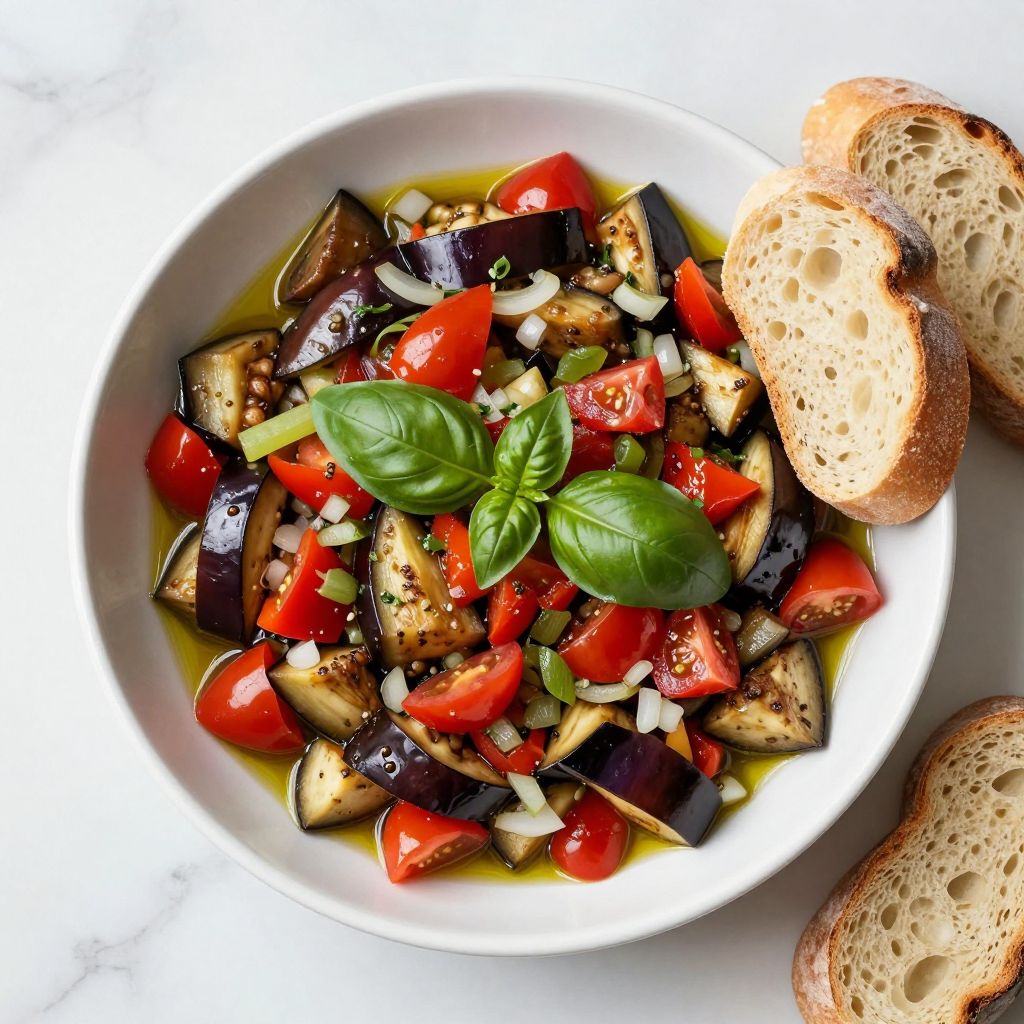
Eggplant Caponata
Ingredients
Equipment
Method
- Dice the eggplant into 1-inch cubes.
- Place the diced eggplant in a colander and sprinkle with salt. Let it sit for about 20 minutes.
- In a large skillet, heat the olive oil over medium heat. Add the onion and garlic, sautéing until fragrant and translucent, about 5 minutes.
- Stir in the bell pepper and celery, cooking for another 5 minutes until softened.
- Rinse the salt off the eggplant and pat it dry. Add it to the skillet, stirring to combine, and cook for 10 minutes until tender.
- Add the drained diced tomatoes and capers to the mixture.
- Pour in the balsamic vinegar and add sugar if desired. Let the mixture simmer for about 10 minutes.
- Season with salt and pepper to taste. Serve warm or let it cool to room temperature before garnishing with fresh basil.