
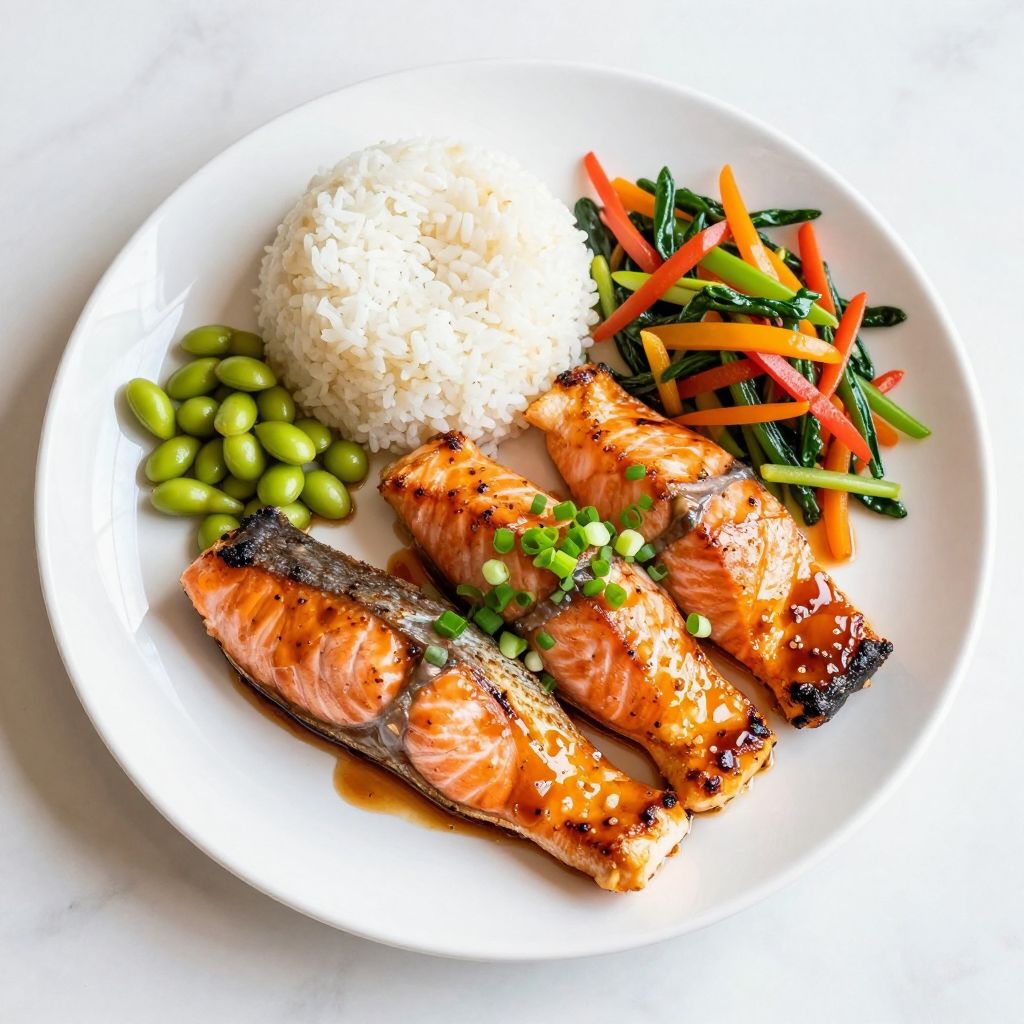
Picture this: the aroma of grilled salmon wafting through your kitchen, creating a cozy atmosphere that makes it feel like a restaurant in your home. This Japanese Salmon Recipe is a delightful blend of sweet and savory flavors that will transport your taste buds straight to Japan.
What makes this dish truly special is its simplicity and elegance. It’s quick to prepare, perfect for busy weeknights or a special occasion, and boasts a glaze that caramelizes beautifully, giving the salmon a rich, irresistible flavor. Let’s gather our ingredients and get cooking!
Why You’ll Love This Recipe
This recipe is one you’ll want to keep on repeat. It brings together everything you love about salmon in a deliciously easy way.
- Quick to prepare and cook, making it perfect for busy evenings.
- Sweet and savory glaze that complements the fish beautifully.
- Healthful and packed with omega-3 fatty acids.
- Versatile for pairing with rice, vegetables, or salads.
- Impressive enough for entertaining guests while being simple enough for family dinners.
My Experience Making This Recipe
The first time I made this salmon, I was amazed at how quickly it came together. The glaze bubbled and caramelized, creating a delicious crust that was just divine.
Each bite was a perfect balance of sweet and savory, leaving my family asking for seconds. Trust me, this is a dish you’ll want to share with everyone!
Recipe Overview
- Recipe Name: Japanese Salmon Recipe
- Servings: 4
- Prep Time: 10 minutes
- Cook Time: 15 minutes
- Total Time: 25 minutes
- Course: Main Course
- Cuisine: Japanese
- Calories per Serving: 350
Equipment You Will Need
- Grill or grill pan
- Mixing bowl
- Whisk or fork
- Measuring spoons
- Fish spatula
Ingredients for Japanese Salmon Recipe
- 4 salmon fillets (about 6 ounces each)
- 1/4 cup soy sauce
- 2 tablespoons mirin (Japanese sweet rice wine)
- 1 tablespoon sake (optional)
- 2 tablespoons brown sugar
- 1 teaspoon grated ginger
- 1 teaspoon sesame oil
- 1 tablespoon chopped green onions (for garnish)
Ingredient Notes and Substitutions
- Salmon fillets: A great source of protein and omega-3s; you can use trout as a substitute for a different flavor.
- Soy sauce: Adds umami and saltiness; tamari can be used for a gluten-free option.
- Mirin: Provides sweetness; you can substitute with a mixture of sugar and water for a non-alcoholic version.
- Sake: Enhances flavor; if unavailable, you can omit it or use white wine.
- Brown sugar: Balances the saltiness; coconut sugar can work as a healthier alternative.
How to Make Japanese Salmon Recipe
Step 1: Prepare the Marinade
In a mixing bowl, whisk together the soy sauce, mirin, sake, brown sugar, grated ginger, and sesame oil. This marinade is key for infusing flavor into the fish.
Step 2: Marinate the Salmon
Place the salmon fillets in a shallow dish and pour the marinade over them. Let it marinate in the refrigerator for at least 15 minutes to absorb the flavors.
Step 3: Preheat the Grill
While the salmon marinates, preheat your grill or grill pan over medium-high heat. This ensures a nice sear on the salmon.
Step 4: Remove the Salmon from Marinade
Take the salmon out of the marinade and let any excess liquid drip off. This prevents flare-ups on the grill.
Step 5: Grill the Salmon
Place the salmon fillets on the grill, skin-side down. Cook for about 4-5 minutes on each side until the fish flakes easily with a fork.
Step 6: Baste with Marinade
During the last minute of grilling, brush the fillets with leftover marinade for extra flavor. This creates a delicious glaze.
Step 7: Remove and Let Rest
Once cooked, remove the salmon from the grill and let it rest for a couple of minutes. This helps the juices redistribute for a moist texture.
Step 8: Garnish and Serve
Sprinkle chopped green onions over the salmon before serving. This adds a fresh touch and a pop of color.
Pro Tip: For the best flavor, marinate the salmon for up to an hour if you have the time.
Tips for the Best Japanese Salmon Recipe
- Don’t skip the marinating step; it’s crucial for flavor.
- Make sure your grill is properly preheated for a nice sear.
- Use a fish spatula to handle the salmon gently while grilling.
- Adjust the cooking time based on the thickness of your fillets.
- Experiment with adding chili flakes for a spicy kick.
Common Mistakes to Avoid
- Marinating for too long can make the fish too salty.
- Skipping the resting step can result in dry salmon.
- Not preheating the grill can lead to sticking and uneven cooking.
- Using high heat for too long can cause the salmon to dry out.
Serving Suggestions
This salmon pairs beautifully with various sides that complement its rich flavor. Here are some ideas to elevate your meal.
- Steamed jasmine rice for a classic combination.
- Stir-fried vegetables for a colorful plate.
- Edamame for a protein-packed snack.
- Seaweed salad for a refreshing crunch.
- Pickled ginger to cleanse the palate.
Variations to Try
- Add miso paste to the marinade for a deeper flavor.
- Incorporate citrus like orange or lemon for a bright twist.
- Try a teriyaki sauce instead of soy sauce for a sweeter result.
- Swap salmon for tuna or chicken for different protein options.
Dietary Adaptations
- Gluten-Free: Use tamari instead of soy sauce.
- Dairy-Free: This recipe is naturally dairy-free.
- Vegan/Vegetarian: Substitute salmon with firm tofu for a plant-based option.
- Low-Carb/Keto: This dish is already low in carbs, making it perfect for keto diets.
Storage and Reheating
Refrigerator
Store any leftovers in an airtight container in the refrigerator for up to 3 days.
- Reheat gently in a microwave or on the stovetop.
- Avoid reheating too long to prevent drying out.
Freezer
You can freeze cooked salmon for up to 2 months. Make sure it’s cooled completely before sealing in a freezer-safe container.
- Thaw in the refrigerator overnight before reheating.
- Reheat gently to maintain texture.
Reheating
For the best results, reheat salmon at a low temperature. This keeps it moist and tender.
- Cover with foil to prevent drying.
- Heat until just warmed through.
Nutrition Information
| Nutrient | Amount |
|---|---|
| Calories | 350 |
| Total Fat | 20g |
| Saturated Fat | 3g |
| Carbohydrates | 8g |
| Fiber | 0g |
| Sugar | 5g |
| Protein | 32g |
| Sodium | 800mg |
| Cholesterol | 90mg |
This nutritional information is an estimate and can vary based on ingredient choices and portion sizes.
Frequently Asked Questions
Can I use frozen salmon for this recipe?
Yes, just make sure to thaw it completely before marinating and cooking.
What can I substitute for mirin?
You can mix sugar with water to create a similar sweetness if mirin is unavailable.
How do I know when the salmon is done?
The salmon is done when it flakes easily with a fork and is opaque in the center.
Can I make this recipe ahead of time?
Yes, you can marinate the salmon a few hours in advance for more intense flavor.
What should I serve with this salmon?
Pair it with rice, steamed veggies, or a fresh salad to round out the meal.
Final Thoughts
This Japanese Salmon Recipe is a delightful way to enjoy a healthy and flavorful meal. With its easy preparation and delicious results, it’s bound to become a staple in your kitchen.
Don’t hesitate to experiment with flavors and pairings. For more delicious recipes, check out my salmon loaf recipe or learn how soy sauce is made for some kitchen fun!
Japanese Salmon Recipe
Ingredients
Equipment
Method
- In a mixing bowl, whisk together the soy sauce, mirin, sake, brown sugar, grated ginger, and sesame oil.
- Place the salmon fillets in a shallow dish and pour the marinade over them.
- Let it marinate in the refrigerator for at least 15 minutes.
- Preheat your grill or grill pan over medium-high heat.
- Take the salmon out of the marinade and let any excess liquid drip off.
- Place the salmon fillets on the grill, skin-side down.
- Cook for about 4-5 minutes on each side until the fish flakes easily with a fork.
- During the last minute of grilling, brush the fillets with leftover marinade.
- Once cooked, remove the salmon from the grill and let it rest for a couple of minutes.
- Sprinkle chopped green onions over the salmon before serving.