
Picture this: steaming bowls of thick, chewy noodles swimming in a rich broth, bringing warmth on a chilly evening. This Easy Udon Recipe captures that comforting essence of Japanese cuisine, making it a delightful dish for any night of the week.
What sets this udon apart is its simplicity and versatility; you can customize it with your favorite vegetables and proteins. Plus, it’s a quick way to satisfy cravings without the fuss of complicated techniques.
Why You’ll Love This Recipe
This udon dish is everything you need for a cozy meal at home.
- Quick and easy to prepare, perfect for busy weeknights.
- Rich flavors that can be adjusted to your liking.
- A comforting, hearty dish that feels like a warm hug.
- Versatile: swap in different proteins and veggies.
- Great for meal prep and leftovers.
My Experience Making This Recipe
Making this udon was a delightful experience, filling my kitchen with comforting aromas. The noodles turned out perfectly chewy, and the broth was a deliciously savory surprise.
When I served it to my family, their smiles said it all; they couldn’t get enough of the rich flavor. It became an instant favorite, and I found myself making it again just a week later.
Recipe Overview
- Recipe Name: Easy Udon Recipe
- Servings: 4
- Prep Time: 10 minutes
- Cook Time: 15 minutes
- Total Time: 25 minutes
- Course: Main
- Cuisine: Japanese
- Calories per Serving: 300
Equipment You Will Need
- Large pot
- Strainer
- Measuring cups and spoons
- Knife and cutting board
- Serving bowls
Ingredients for Easy Udon Recipe
- 14 ounces fresh udon noodles
- 4 cups vegetable or chicken broth
- 2 tablespoons soy sauce
- 1 tablespoon miso paste
- 1 teaspoon sesame oil
- 1 cup sliced mushrooms
- 1 cup bok choy or spinach
- 2 green onions, sliced
- Optional: protein of your choice (tofu, chicken, shrimp)
Ingredient Notes and Substitutions
- Udon noodles: These are thick, chewy noodles that give this dish its unique texture. You can substitute with soba or rice noodles if needed.
- Broth: Use vegetable or chicken broth for depth of flavor. Homemade broth enhances taste but store-bought is perfectly fine.
- Soy sauce: Adds umami and saltiness. Tamari is a great gluten-free substitute.
- Miso paste: Provides a savory depth to the broth. If unavailable, increase soy sauce and add a bit of tahini for creaminess.
- Vegetables: Feel free to use any greens or mushrooms you like. Carrots or bell peppers are excellent alternatives.
How to Make Easy Udon Recipe
Step 1: Boil the Udon Noodles
Start by bringing a large pot of water to a boil. Cook the udon noodles according to package directions until just tender, usually about 3-4 minutes.
Step 2: Drain and Rinse
Once cooked, drain the noodles in a strainer and rinse under cold water. Rinsing stops the cooking process and helps keep them from sticking.
Step 3: Prepare the Broth
In the same pot, pour in the vegetable or chicken broth and bring it to a simmer over medium heat. This broth is the heart of your dish, so let it gently bubble away.
Step 4: Add Flavorings
Stir in the soy sauce, miso paste, and sesame oil. This combination transforms your broth from ordinary to extraordinary.
Step 5: Incorporate Vegetables
Add the sliced mushrooms and bok choy to the simmering broth. They will add texture and nutrients while soaking up the delicious flavors.
Step 6: Cook Until Tender
Allow the vegetables to cook in the broth for about 3-5 minutes. You want them tender but not mushy, maintaining some crunch.
Step 7: Combine Noodles and Broth
Finally, add the cooked udon noodles back into the pot. Stir gently to combine everything, ensuring the noodles are heated through.
Step 8: Serve and Garnish
Divide the udon and broth into serving bowls. Top with sliced green onions for a fresh kick.
Pro Tip: For added depth, simmer the broth with a piece of kombu (dried kelp) for 30 minutes before removing it.
Tips for the Best Easy Udon Recipe
- Don’t overcook the noodles; they should be tender yet chewy for the best texture.
- Experiment with different broth bases to find your ideal flavor.
- Adding protein like tofu or chicken makes this a complete meal.
- Use fresh vegetables for better flavor and nutrition.
- Garnish with sesame seeds or nori for an extra touch.
Common Mistakes to Avoid
- Overcooking the noodles leads to mushy textures; keep an eye on them.
- Not rinsing the noodles can cause them to clump together.
- Skipping the flavoring step results in a bland broth.
- Using old vegetables can diminish flavor and nutrition.
Serving Suggestions
This udon is delicious on its own, but pairing it with other dishes enhances the meal.
- Serve with a side of crispy tempura.
- Pair with a light salad for a refreshing contrast.
- Enjoy with pickled vegetables for a tangy bite.
- Complement with a simple miso soup.
Variations to Try
- Add a splash of chili oil for a spicy kick.
- Use soba noodles for a nutty flavor profile.
- Incorporate seafood like shrimp for a coastal twist.
- Try a vegan version by omitting any animal products.
Dietary Adaptations
- Gluten-free: Use gluten-free udon noodles made from rice flour.
- Dairy-free: This recipe is naturally dairy-free, so no adjustments needed.
- Vegan/Vegetarian: Use vegetable broth and tofu for protein.
- Low-carb/Keto: Substitute noodles with spiralized zucchini.
Storage and Reheating
Refrigerator
Store leftovers in an airtight container in the fridge for up to 3 days.
- Keep noodles and broth separate to maintain texture.
Freezer
You can freeze the udon broth for up to 2 months.
- Freeze in portions for easy meal prep.
Reheating
Reheat gently on the stove over low heat or in the microwave.
- Add a splash of water if the broth thickens too much.
Nutrition Information
| Nutrient | Amount |
|---|---|
| Calories | 300 |
| Total Fat | 8g |
| Saturated Fat | 1g |
| Carbohydrates | 50g |
| Fiber | 3g |
| Sugar | 2g |
| Protein | 10g |
| Sodium | 800mg |
| Cholesterol | 0mg |
This information is approximate and can vary based on specific ingredients used.
Frequently Asked Questions
Can I make udon noodles from scratch?
Yes, if you’re feeling adventurous, homemade udon noodles can be made with just flour, water, and salt.
Can I prepare this udon ahead of time?
Yes, you can prep the broth and chop vegetables a day in advance, but it’s best to cook the noodles fresh.
How do I store leftover udon?
Store leftover udon in an airtight container, keeping noodles and broth separate for best results.
What can I do if my broth is too salty?
Add a bit of water or low-sodium broth to balance the flavors.
Can I use frozen udon noodles?
Absolutely! Just cook them according to the package instructions, and they will be just as delicious.
Final Thoughts
This Easy Udon Recipe is a fantastic way to bring a taste of Japan into your home. It’s comforting, customizable, and a perfect dish to share with loved ones.
So grab your ingredients and get cooking; I promise you won’t regret it! For more information on udon noodles, check out what udon noodles are made of. If you’re in the mood for something creamy, try my creamy ramen recipe too!
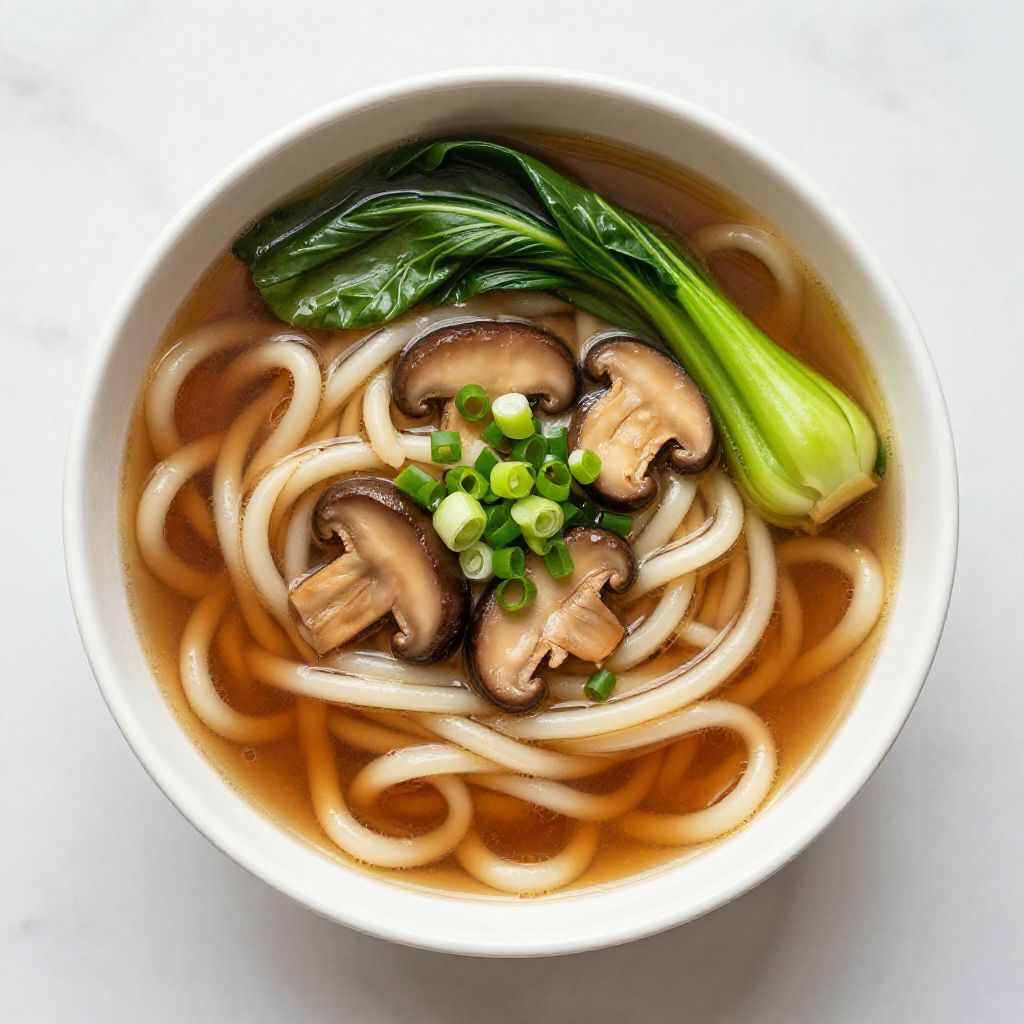
Easy Udon Recipe
Ingredients
Equipment
Method
- Start by bringing a large pot of water to a boil. Cook the udon noodles according to package directions until just tender, usually about 3-4 minutes.
- Once cooked, drain the noodles in a strainer and rinse under cold water.
- In the same pot, pour in the vegetable or chicken broth and bring it to a simmer over medium heat.
- Stir in the soy sauce, miso paste, and sesame oil.
- Add the sliced mushrooms and bok choy to the simmering broth.
- Allow the vegetables to cook in the broth for about 3-5 minutes.
- Finally, add the cooked udon noodles back into the pot and stir gently to combine.
- Divide the udon and broth into serving bowls and top with sliced green onions.