
There’s a moment when you bite into a dumpling and that first dip into the sauce hits your palate, and suddenly everything clicks into place. This dumpling dipping sauce is that moment, a perfect balance of tangy, spicy, and savory that transforms any dumpling from good to unforgettable.
Making your own sauce at home takes about five minutes and tastes infinitely better than anything bottled, plus you control exactly how much heat and acid you want. The beauty of this recipe lies in its simplicity: just a handful of pantry staples come together to create something that works with steamed dumplings, fried dumplings, or even a quick stir-fry.
Whether you’re serving dumplings to a crowd or meal-prepping for the week, this sauce keeps in the fridge for weeks and pairs beautifully with gyoza, wontons, or potstickers. Let’s make something that tastes like you spent way longer in the kitchen than you actually did.
Why You’ll Love This Recipe
This sauce delivers restaurant-quality flavor in under five minutes with ingredients you already have on hand. It’s versatile, customizable, and tastes markedly better than store-bought versions.
- Ready in five minutes with zero cooking required
- Works with any dumpling style, fried rice, or noodles
- Keeps for three weeks in the refrigerator
- Easily scaled up for parties or meal prep
- Customize heat and tang to your exact preference
My Experience Making This Recipe
I started making this sauce after a disappointing takeout order, and I’ve never looked back. The first time I served it at a dumpling night, three people asked for the recipe before they’d finished eating.
What struck me was how forgiving it is. You can adjust the vinegar if you want it tangier, add more chili oil if you like heat, or tone down the soy if you’re serving it to kids. I’ve made it dozens of times now, and every batch tastes consistently excellent.
My favorite part is watching people taste it for the first time and immediately dip another dumpling in, then another. That’s the kind of sauce that gets people excited about eating.
Recipe Overview
- Recipe Name: Dumpling Dipping Sauce
- Servings: Makes about 1/2 cup (8 servings)
- Prep Time: 5 minutes
- Cook Time: 0 minutes
- Total Time: 5 minutes
- Course: Condiment
- Cuisine: Asian, Chinese
- Calories per Serving: 35
Equipment You Will Need
- Small mixing bowl
- Whisk or small spoon for stirring
- Measuring spoons
- Measuring cups
- Glass jars for storage (optional but recommended)
Ingredients for Dumpling Dipping Sauce
- Rice vinegar: 3 tablespoons
- Soy sauce: 3 tablespoons
- Sesame oil: 1 tablespoon
- Chili oil: 1 to 2 teaspoons (adjust to taste)
- Garlic: 2 cloves, minced finely
- Fresh ginger: 1 teaspoon, minced finely
- Green onion: 1 tablespoon, sliced thin (optional garnish)
- White sugar: 1/2 teaspoon (optional, balances acidity)
Ingredient Notes and Substitutions
- Rice vinegar: This provides the tangy backbone without overpowering the sauce. White vinegar works in a pinch but tastes slightly harsher; use 2 tablespoons instead of 3.
- Soy sauce: The umami-rich core that makes dumplings crave another dip. Tamari works for gluten-free needs but tastes slightly richer and less salty.
- Sesame oil: Adds nutty depth and aroma that elevates this from ordinary to crave-worthy. Skip it and the sauce still works but loses its signature warmth.
- Chili oil: Your heat control lever; start with 1 teaspoon and add more until you hit your spice threshold. Hot sauce or sriracha can substitute but will add sugar and different flavor notes.
- Fresh ginger: Brings peppery freshness that cuts through the salt and oil. Jarred ginger works but use only 1/2 teaspoon as it concentrates faster.
How to Make Dumpling Dipping Sauce
Mince your garlic and ginger as finely as possible so they distribute evenly throughout the sauce and don’t create unpleasant chunks. Measure all liquids before you start mixing so you can work quickly and ensure proper balance.
Step 1: Gather and Prepare Your Ingredients
Mince your garlic and ginger as finely as possible so they distribute evenly throughout the sauce and don’t create unpleasant chunks. Measure all liquids before you start mixing so you can work quickly and ensure proper balance.
Step 2: Pour the Rice Vinegar into Your Bowl
Start with the rice vinegar as your base since it’s acidic and cuts through the richer ingredients that follow. This sets the tangy foundation for your sauce.
Step 3: Add the Soy Sauce
Pour in the soy sauce and stir gently to combine with the vinegar. The two liquids blend immediately and create the backbone of your umami-rich sauce.
Step 4: Whisk in the Sesame Oil
Add the sesame oil and whisk vigorously for about 10 seconds to help it emulsify slightly with the other liquids. This ensures the nutty flavor distributes evenly rather than floating on top.
Step 5: Stir in the Chili Oil
Add 1 teaspoon of chili oil and mix thoroughly, then taste immediately. You can always add more heat, but you can’t take it back, so start conservative and adjust upward.
Step 6: Add Your Minced Garlic and Ginger
Fold in the finely minced garlic and ginger using a spoon, stirring for about 20 seconds to ensure they’re evenly distributed throughout. These aromatics need time to infuse the sauce, even during the five minutes you’ll use it.
Step 7: Taste and Adjust for Balance
Taste a tiny spoonful and evaluate: is it tangy enough, salty enough, and spicy enough for your preference? Add another 1/4 teaspoon of sugar if you find the vinegar too sharp, or another splash of chili oil if you want more heat.
Step 8: Add Green Onion and Let It Rest
Stir in the green onion slices if using, and let the sauce sit for 2 to 3 minutes before serving. This short resting time allows the flavors to marry and the aromatics to infuse more fully.
Pro Tip: Make a big batch at the start of your week and store it in a glass jar in the refrigerator; the flavors actually deepen and improve over the first few days as the garlic and ginger continue infusing.
Tips for the Best Dumpling Dipping Sauce
- Mince your garlic and ginger by hand rather than using a food processor, which can make them watery and create uneven texture. A microplane grater works beautifully for ginger.
- Use fresh garlic and ginger whenever possible, as their brightness matters more in such a simple recipe. Pre-minced jarred versions work but taste noticeably duller.
- Whisk the sesame oil vigorously to help it incorporate rather than separate; this keeps every spoonful tasting consistent. A quick emulsification prevents the rich oil from pooling at the bottom.
- Taste as you go and adjust one ingredient at a time so you can pinpoint what needs changing. This prevents over-correcting and keeps the sauce balanced.
- Warm the sauce slightly before serving if it’s been refrigerated, which brings out the aromatics and nutty sesame flavor. Room temperature or gently warmed sauce tastes noticeably better than cold sauce straight from the fridge.
Common Mistakes to Avoid
- Using low-quality soy sauce will make your sauce taste thin and overly salty without depth. Premium soy sauce costs a bit more but tastes exponentially better in a simple recipe where it’s a main player.
- Skipping the sesame oil thinking it’s optional; it’s actually the ingredient that separates homemade from mediocre. Even a small amount adds complexity that makes people wonder what the secret ingredient is.
- Adding too much chili oil at once and making it inedibly spicy, forcing you to start over. Remember that heat intensifies over time as the oil infuses, so conservative additions work better.
- Using pre-minced or powdered garlic instead of fresh; the flavor changes dramatically and tastes vaguely stale. Fresh garlic takes 30 seconds to mince and absolutely matters in a five-ingredient sauce.
- Mixing the sauce hours in advance and forgetting to stir it before serving, causing the oil to separate and create inconsistent bites. A quick stir right before serving ensures every dip tastes the same.
Serving Suggestions
This sauce shines with any style of dumpling, from steamed to fried to pan-seared, and works beautifully as a condiment for rice, noodles, or even grilled chicken. Serve it in small individual bowls so everyone can control their dipping depth.
- Steamed or boiled dumplings with a light, delicate wrapper
- Fried or crispy wontons for textural contrast
- Pan-seared potstickers with golden bottoms
- Stir-fried rice or noodles drizzled lightly over the top
- Grilled chicken or pork as a finishing sauce
Variations to Try
- Spicy Version: Increase chili oil to 1 tablespoon and add 1/4 teaspoon red pepper flakes for a sauce that builds heat and doesn’t back down. This version pairs beautifully with fried dumplings.
- Sweet and Tangy: Add 1 teaspoon of rice vinegar and 1/2 teaspoon of sugar to create a more balanced sweet-sour profile that appeals to a broader crowd. This variation works especially well with shrimp dumplings.
- Peanut Version: Whisk in 1 tablespoon of smooth peanut butter and reduce sesame oil to 1/2 teaspoon, then add a splash of water to thin it. This transforms the sauce into something thicker and more substantial for dipping.
- Citrus-Forward: Replace 1 tablespoon of rice vinegar with fresh lime or lemon juice and add a tiny pinch of lime zest. The brightness completely changes the character and works wonderfully with vegetable dumplings.
- Ginger-Focused: Double the fresh ginger to 2 teaspoons and add 1/4 teaspoon of white pepper for a sauce that leans into warming spices. This version pairs beautifully with pork dumplings.
Dietary Adaptations
- Gluten-Free: Use tamari instead of regular soy sauce, which swaps wheat for a similar umami punch. The flavor shifts slightly toward deeper and less salty, so taste and adjust accordingly.
- Dairy-Free: This recipe is naturally dairy-free, as it contains no milk, cream, or butter in any form. Serve confidently to anyone with dairy restrictions.
- Vegan/Vegetarian: This sauce is already vegan and vegetarian, making it perfect for mixed dietary needs at your table. No modifications needed at all.
- Low-Sodium: Reduce soy sauce to 2 tablespoons and add 1 tablespoon of rice vinegar to compensate for lost umami and salt. The trade-off is slightly less savory but still absolutely delicious.
Storage and Reheating
Refrigerator
Store your sauce in a glass jar or airtight container in the refrigerator for up to three weeks. The flavors actually deepen and improve over a few days as the garlic and ginger continue infusing into the oil.
- Use a glass container rather than plastic to prevent staining and flavor absorption
- Stir the sauce before each use, as oils naturally separate over time
- Check for any cloudiness or off-smells before using after two weeks
Freezer
Freezing works but isn’t ideal, as the texture changes slightly and the fresh garlic and ginger flavors dull with time. If you do freeze it, use within two months for best flavor.
- Freeze in ice cube trays for convenient portions
- Thaw in the refrigerator overnight rather than at room temperature
- Re-whisk after thawing to recombine any separated oil
Reheating
Gently warm the sauce in a small bowl over warm water or microwave for 10 to 15 seconds until it reaches room temperature. Never boil or overheat, as high temperatures damage the fresh ginger and garlic flavors.
- Warm sauce tastes noticeably better than cold sauce straight from the fridge
- Use a water bath method for gentle, even warming without hot spots
- Stir immediately after warming to recombine any separated ingredients
Nutrition Information
| Nutrient | Amount |
|---|---|
| Calories | 35 |
| Total Fat | 3g |
| Saturated Fat | 0.5g |
| Carbohydrates | 1g |
| Fiber | 0g |
| Sugar | 0.5g |
| Protein | 1g |
| Sodium | 480mg |
| Cholesterol | 0mg |
These values are based on an 8-serving batch and do not account for optional sugar. Individual portions vary depending on how much sauce you use per dumplings, so feel free to adjust accordingly.
Frequently Asked Questions
Can I Make This Sauce Without Sesame Oil?
You can, but the sauce loses its signature nutty depth and tastes noticeably flatter. If you don’t have sesame oil on hand, consider picking some up; a small bottle lasts for months in your pantry.
How Far in Advance Can I Prepare This?
You can make it up to three days ahead, which actually allows the flavors to deepen and merge beautifully. Store it in an airtight jar in the refrigerator and give it a quick stir before serving.
What’s the Best Way to Store Leftover Sauce?
Transfer it to a glass jar with a tight-fitting lid and refrigerate for up to three weeks. Avoid plastic containers, which absorb the strong garlic and ginger flavors and can stain.
Why Does My Sauce Separate, and Is That Normal?
The oil naturally separates from the vinegar and soy sauce over time, especially after refrigeration. A quick stir before serving recombines everything and doesn’t affect the taste one bit.
Can I Scale This Recipe Up for a Party?
Absolutely, and in fact it’s worth making a double or triple batch since people always come back for more. The ratios stay exactly the same, so simply multiply every ingredient by however much you need.
What Should I Do If I Accidentally Made It Too Spicy?
Add another tablespoon of rice vinegar and 1 teaspoon of sesame oil to dilute the heat while maintaining balance. Taste and adjust further if needed, adding one small element at a time.
Final Thoughts
This dumpling dipping sauce proves that the best recipes don’t need to be complicated to be crave-worthy. Five minutes of work transforms a handful of pantry staples into something that tastes like you spent hours perfecting it.
Make a batch this week and watch people fall in love with dumplings all over again, this time dipped in sauce they actually want to talk about. You’ve got this, and your dumplings are about to taste so much better.
Explore More Delicious Sauces
Once you master this dumpling dipping sauce, explore other flavor profiles that work beautifully with Asian dishes and beyond.
Try our hot honey sauce recipe for a sweet and spicy drizzle that transforms everything from fried chicken to roasted vegetables. For those who love bold, fermented flavors, check out our gochujang sauce recipe, which brings deep umami and controlled heat to any meal.
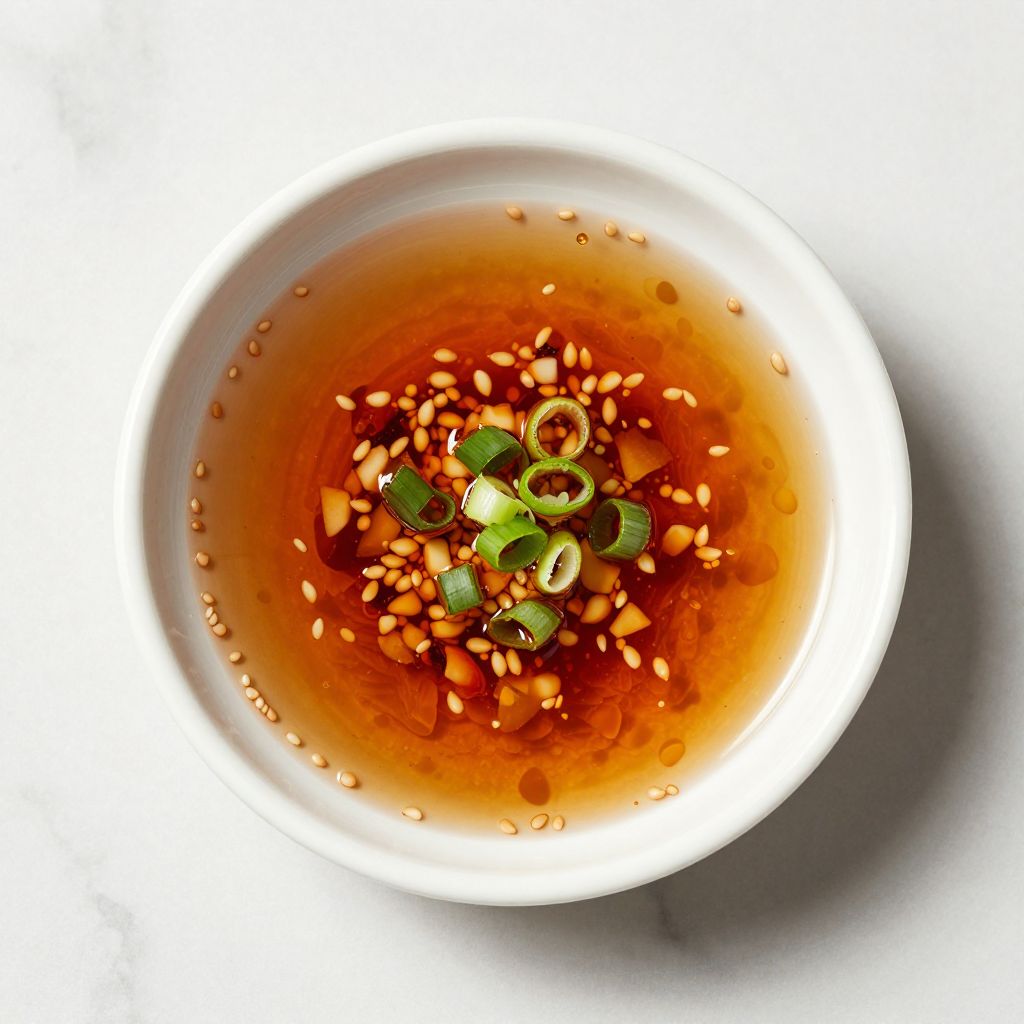
Dumpling Dipping Sauce
Ingredients
Equipment
Method
- Mince the garlic and ginger as finely as possible and measure all liquids before starting.
- Pour 3 tablespoons rice vinegar into a small mixing bowl.
- Add 3 tablespoons soy sauce to the bowl and stir to combine.
- Whisk in 1 tablespoon sesame oil vigorously for about 10 seconds to emulsify.
- Stir in 1 teaspoon chili oil, taste, and adjust heat as desired.
- Fold in the minced garlic and ginger and stir for about 20 seconds to distribute evenly.
- Taste the sauce and adjust balance by adding more sugar, vinegar, or chili oil one small element at a time.
- Stir in sliced green onion if using and let the sauce rest for 2 to 3 minutes before serving.