
There’s something magical about opening a jar of homemade zucchini relish in the middle of winter and tasting summer all over again.
This recipe transforms an abundance of mild zucchini into a tangy, crisp condiment that tastes nothing like the bland vegetable most people think they don’t like. Zucchini relish has a bright vinegar bite, warm spice notes, and a satisfying crunch that makes it endlessly useful.
Whether you’re canning it for the pantry or making a small batch for immediate use, this recipe delivers restaurant-quality results in about an hour. Home cooks love it because it’s straightforward, uses simple ingredients, and solves the eternal problem of too many zucchini in August.
Why You’ll Love This Recipe
This zucchini relish is a game changer for anyone who gardens, shops farmers markets, or simply wants a homemade condiment that tastes infinitely better than store-bought versions.
- Bright, tangy flavor from apple cider vinegar and a splash of lemon that cuts through rich foods perfectly
- Crisp, crunchy texture that holds up well in storage and never turns mushy
- Naturally low in calories and carbs with no added sugar if you skip the sweetener
- Shelf-stable when canned, making it a smart preserve for using up summer produce
- Versatile enough to serve with hot dogs, burgers, grilled chicken, or alongside charcuterie boards
My Experience Making This Recipe
I first made this relish on a sweltering August afternoon when I had more zucchini than I knew what to do with. The transformation from raw vegetable to tangy condiment happened so fast that I couldn’t believe something this delicious came from my kitchen.
The smell while it simmers is pure nostalgia, with notes of vinegar, mustard seed, and turmeric filling the house. My kids actually asked what smelled so good, which never happens with vegetables, and they’ve been putting it on everything from scrambled eggs to roasted vegetables ever since.
Friends who normally avoid anything pickle-adjacent ask for jars of it repeatedly. That’s when you know you’ve nailed a recipe.
Recipe Overview
- Recipe Name: Zucchini Relish
- Servings: Makes about 4 pints (32 servings as a condiment)
- Prep Time: 20 minutes
- Cook Time: 40 minutes
- Total Time: 1 hour
- Course: Condiment
- Cuisine: American
- Calories per Serving: 15
Equipment You Will Need
- Large stainless steel pot (8-quart capacity minimum)
- Food processor or box grater
- Colander or fine-mesh strainer
- Cutting board and sharp chef’s knife
- Measuring cups and spoons
- Wooden spoon for stirring
- Canning jars with lids and bands (if preserving)
- Canning pot and rack (if preserving)
- Jar lifter (if preserving)
Ingredients for Zucchini Relish
- 8 medium zucchini (about 3 pounds total, shredded)
- 3 medium onions, finely diced
- 1 red bell pepper, finely diced
- 1 green bell pepper, finely diced
- 2 cups apple cider vinegar
- 1/4 cup sugar (optional, or use 2 tablespoons honey)
- 2 tablespoons pickling salt (or kosher salt, not table salt)
- 2 teaspoons yellow mustard seeds
- 1 teaspoon turmeric powder
- 1/2 teaspoon celery seeds
- 1/4 teaspoon cayenne pepper
- 1/4 teaspoon black peppercorns
- 2 cloves garlic, minced
- Juice of 1 fresh lemon
Ingredient Notes and Substitutions
- Zucchini: The vegetable backbone of this relish, providing mild flavor and body. Substitute with yellow squash if you prefer a slightly sweeter taste, though zucchini’s neutral profile is ideal here.
- Apple cider vinegar: This vinegar brings warm, fruity acidity that defines the relish’s flavor. White vinegar works but tastes sharper and less rounded; use only if you must reduce the amount slightly.
- Pickling salt: This salt dissolves cleanly without additives that cloud the brine. Table salt or iodized salt will work but may make the relish cloudy and taste metallic.
- Yellow mustard seeds: These add a subtle, peppery warmth without overpowering heat. Brown mustard seeds taste stronger; use half the amount if substituting.
- Turmeric: This spice delivers earthy notes and a golden color that makes the relish visually appealing. Omit it if you don’t have it on hand, though the relish will look less vibrant.
- Sugar: A small amount balances the vinegar’s bite and enhances the vegetable’s natural sweetness. Honey, agave, or even a pinch of stevia work as replacements, adjusting quantity to taste.
How to Make Zucchini Relish
Step 1: Prepare and Salt the Zucchini
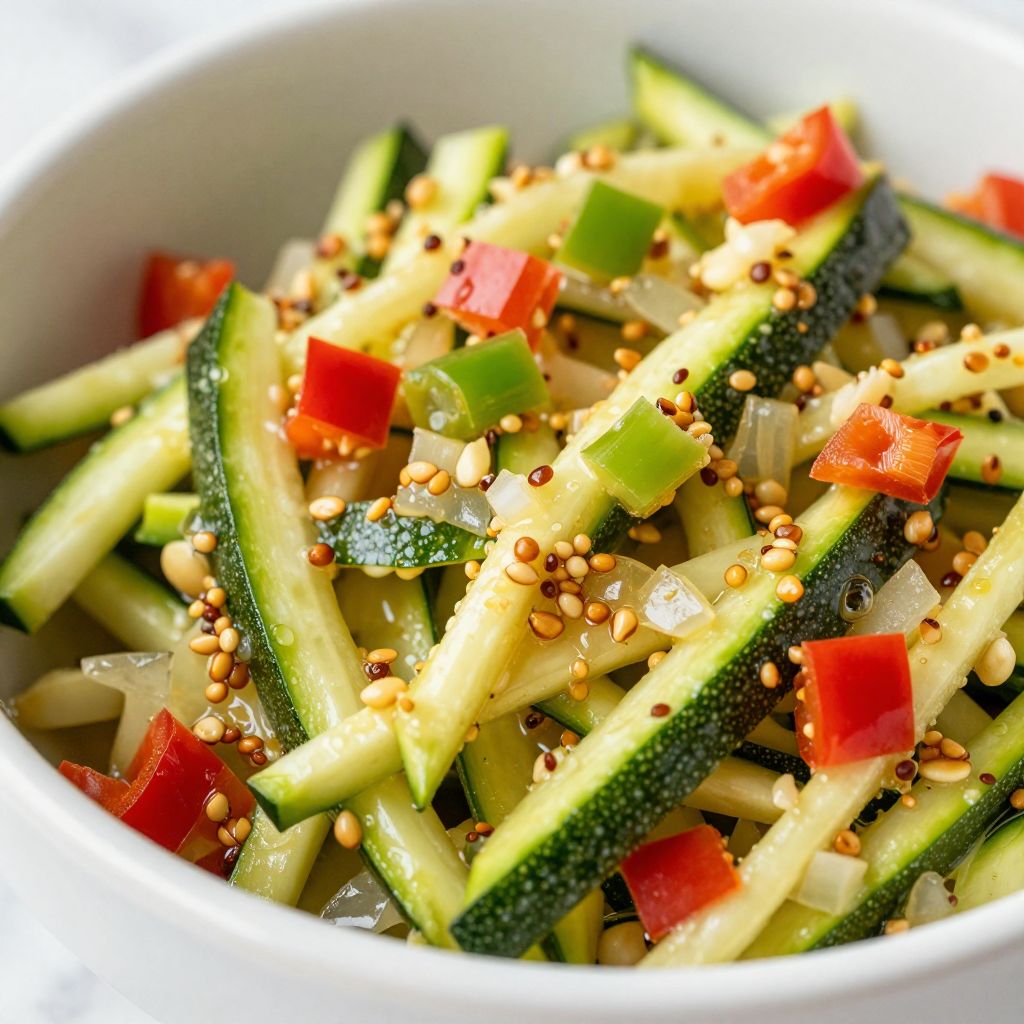
Trim the ends off your zucchini and use a food processor or box grater to shred them into thin strands. Transfer the shredded zucchini to a colander and toss with the pickling salt, letting it sit for 10 minutes to release excess water.
Salting draws out the zucchini’s moisture, which prevents a watery relish and helps it stay crisp during storage. Squeezing out this liquid is crucial for texture.
Step 2: Drain the Zucchini Thoroughly
After 10 minutes, press the shredded zucchini gently with clean hands or a clean kitchen towel to remove as much liquid as possible. Transfer the drained zucchini to your large pot.
Don’t skip this step; extra water will dilute your vinegar base and create a mushy final product. A dry zucchini base is non-negotiable for good texture.
Step 3: Prepare the Other Vegetables
While the zucchini drains, dice your onions and bell peppers into small, uniform pieces about the size of peas. Mince your garlic as fine as you can manage.
Uniform sizing ensures everything cooks at the same rate and creates a pleasant, cohesive texture throughout the relish. Larger pieces of onion will remain too crunchy while smaller pieces turn mushy.
Step 4: Combine All Ingredients in the Pot
Add the diced onions, red bell pepper, green bell pepper, and minced garlic to the pot with the drained zucchini. Pour in the apple cider vinegar, add the sugar, and sprinkle in the pickling salt, mustard seeds, turmeric, celery seeds, cayenne pepper, and black peppercorns.
Squeeze in the lemon juice last, as fresh lemon adds brightness that develops as the relish sits. Stir everything thoroughly to distribute the spices evenly.
Step 5: Bring the Mixture to a Boil
Place the pot over medium-high heat and bring the mixture to a rolling boil, stirring occasionally. You should see vigorous bubbles breaking across the entire surface.
Boiling activates the flavors, helps the vegetables absorb the vinegar and spices, and begins the cooking process that sets the relish’s texture. This usually takes about 5 to 8 minutes.
Step 6: Reduce Heat and Simmer
Once boiling, reduce the heat to medium or medium-low and let the relish simmer uncovered for 30 to 35 minutes. Stir occasionally to prevent sticking and ensure even cooking.
This slower simmer allows the vegetables to soften slightly while the vinegar and spices infuse deeply into everything. The mixture will reduce in volume and take on a glossy, cohesive appearance.
Step 7: Test for Doneness and Texture
The relish is done when the vegetables are tender but still hold their shape, and the liquid has reduced by about a third. Taste a spoonful and adjust seasoning with a pinch more salt, vinegar, or lemon juice if needed.
The flavor should be bright and tangy with warm spice notes coming through. If it tastes too sharp, add a teaspoon of sugar; if it’s too mild, add another splash of vinegar.
Step 8: Cool and Store or Can
Remove the pot from heat and let the relish cool to room temperature, about 30 minutes. You can then transfer it to sterilized jars and refrigerate for immediate use, or proceed with water bath canning for shelf stability.
For canning, fill hot sterilized pint jars leaving half an inch of headspace, place lids on top, and process in a boiling water bath for 10 minutes. This creates a shelf-stable product that lasts up to a year.
Pro Tip: The longer your zucchini relish sits in the jar, the better the flavors meld together; wait at least 2 weeks before opening a canned jar for the most rounded, developed taste.
Tips for the Best Zucchini Relish
- Use young, smaller zucchini with thin skin and small seed cavities; larger zucchini tend to be watery and have oversized seeds that make the relish grainy.
- Don’t skip the salting and draining step, as this is what separates homemade relish from soggy, watery condiments.
- Taste as you cook and adjust seasonings in the final minutes; vinegar strength varies by brand, so your relish may need a bit more or less.
- Use a stainless steel pot to avoid any discoloration from the turmeric or reaction with metal; aluminum or cast iron can affect both appearance and taste.
- If you prefer a chunkier relish, pulse your zucchini in the food processor rather than shredding it fine, or dice it by hand.
- Let the relish cool completely before canning or refrigerating to prevent condensation on the lids, which can promote spoilage.
Common Mistakes to Avoid
- Skipping the salt and drain step results in a watery, limp relish that loses its texture within days. This one step is the difference between relish and vegetable soup.
- Using iodized table salt instead of pickling salt clouds the brine and can introduce off-flavors. Always reach for pickling or kosher salt.
- Overcooking the relish past 35 minutes turns the vegetables mushy and the brine muddy-looking. Stop as soon as the vegetables are tender and the liquid is glossy.
- Adding too much sugar masks the bright vinegar flavor and defeats the purpose of a tangy condiment. A teaspoon or two is enough.
- Packing jars while the relish is still piping hot can cause the lids to warp or seal improperly. Always cool to room temperature before canning.
Serving Suggestions
Zucchini relish shines as a topping for grilled foods and as a zesty addition to cheese boards. Its tangy crunch elevates simple meals instantly.
- Spoon generously over hot dogs, hamburgers, and bratwurst for a vegetable-forward condiment that beats ketchup
- Serve alongside a charcuterie board with sharp cheeses like aged cheddar or smoked gouda
- Top tacos, especially fish or carnitas, for brightness and crunch
- Stir into cream cheese or sour cream as a dip for crackers or fresh vegetables
- Spoon onto grilled chicken, pork, or salmon as a finishing sauce
Variations to Try
- Spicy Zucchini Relish: Increase cayenne to half a teaspoon and add one diced jalapeno to the vegetables for a relish with real heat.
- Herb-Infused Version: Add 2 tablespoons of fresh dill or basil in the final minute of cooking for a garden-fresh flavor profile.
- Sweeter Relish: Increase sugar to half a cup if you prefer a sweeter-sour balance, or add a tablespoon of honey for depth.
- Whole Spice Version: Skip the ground turmeric and add a cinnamon stick, a teaspoon of whole mustard seeds, and a bay leaf for a more rustic appearance and whole-spice flavor.
- Yellow Squash Blend: Substitute half the zucchini with yellow squash for a relish with a warmer, slightly sweeter undertone.
Dietary Adaptations
- Gluten-Free: This recipe is naturally gluten-free as written; just verify your vinegar and spices are certified gluten-free if serving someone with celiac disease.
- Dairy-Free: Zucchini relish contains no dairy ingredients, making it safe for anyone avoiding milk products.
- Vegan: This recipe is fully vegan and contains no animal products of any kind.
- Low-Carb/Keto: Omit the sugar entirely or use a non-nutritive sweetener like erythritol; the relish remains under 5 grams of carbs per serving without any sweetener.
Storage and Reheating
Refrigerator
Store homemade zucchini relish in clean, airtight containers or jars in the refrigerator. It keeps well for up to 3 weeks and actually improves in flavor over the first week as the spices continue to meld.
- Keep the relish submerged in vinegar brine to prevent discoloration
- Use clean utensils every time you scoop out relish to prevent contamination
- Discard immediately if you notice any mold, off-smell, or cloudiness that suggests spoilage
Freezer
Zucchini relish freezes beautifully for up to 3 months in freezer containers or even ice cube trays for portioned amounts. The texture stays firm and the flavor remains bright.
- Freeze in 4-ounce portions for easy thawing and single-use servings
- Leave half an inch of headspace to account for expansion
- Thaw in the refrigerator overnight before serving
Reheating
Zucchini relish is best served cold or at room temperature, so reheating is rarely necessary. If you prefer it warm alongside a hot dish, simply thaw it and warm it gently on the stovetop or microwave it for 30 seconds.
- Never boil thawed relish, as the texture can turn mushy from reheating
- Warm only what you plan to serve immediately
Nutrition Information
| Nutrient | Amount |
|---|---|
| Calories | 15 |
| Total Fat | 0 g |
| Saturated Fat | 0 g |
| Carbohydrates | 4 g |
| Fiber | 1 g |
| Sugar | 2 g |
| Protein | 0 g |
| Sodium | 280 mg |
| Cholesterol | 0 mg |
Nutrition values are approximate and based on the use of optional sugar and pickling salt. Values will vary depending on your specific ingredients and any substitutions made.
Frequently Asked Questions
Can I make zucchini relish without canning?
Absolutely. Simply cool the relish and transfer it to clean jars or containers, then refrigerate for up to 3 weeks. You skip the canning process entirely and still enjoy fresh, homemade relish.
How do I know if my canned relish has gone bad?
Discard any jar with a popped or bulging lid, visible mold, cloudiness in the brine, or any off-smell when opened. Trust your senses; safe canned goods should look clear and smell bright and vinegary.
Can I use a food mill instead of a food processor to shred the zucchini?
A food mill works, but it produces much finer pieces and can release more water from the zucchini. A box grater gives you better control over texture and is my preferred method for this recipe.
Why did my relish turn brown instead of staying green?
Zucchini naturally oxidizes and loses its bright green color during cooking and storage. This is normal and doesn’t affect taste or safety; add turmeric for color if you prefer a golden appearance instead of drab green.
Can I double this recipe?
Yes, doubling works perfectly. Simply multiply all ingredients by two and simmer for about 40 to 45 minutes instead of 30 to 35, as the larger volume needs more time to reduce and infuse.
What’s the difference between relish and pickle?
Relish is finely chopped or shredded vegetables preserved in vinegar that you use as a condiment in small amounts. Pickles are whole or larger vegetable pieces fully submerged in brine that you eat by themselves or in bigger portions.
Final Thoughts
Making homemade zucchini relish is one of those kitchen projects that feels fancy but is genuinely simple, rewarding people who make it with jars of something they can’t buy at the store. The first time you serve it to friends or family, watch their faces light up when they taste real, intentional flavor.
Pull out a jar next summer and remember the August afternoon you made it, tasting fresh vegetables transformed into something that tastes like time and care. You’ve earned every compliment.
Ready to put your zucchini abundance to work? Start with this relish, then explore similar preserves like cowboy candy recipe for even more ways to capture summer in a jar. If you enjoy pickling and brining, you’ll also love the tangy crunch of cabbage boil recipe for a completely different take on preserved vegetables.

Zucchini Relish
Ingredients
Equipment
Method
- Trim the ends off 8 medium zucchini and shred them using a food processor or box grater. Toss the shredded zucchini with 2 tablespoons pickling salt in a colander and let sit for 10 minutes to draw out excess moisture.
- Press the zucchini gently with a clean towel or your hands to remove liquid, then transfer the drained zucchini to a large 8-quart stainless steel pot.
- Dice 3 medium onions and 1 red and 1 green bell pepper into small uniform pieces, and mince 2 garlic cloves.
- Add the diced onions, bell peppers, minced garlic to the pot with zucchini. Pour in 2 cups apple cider vinegar, add 1/4 cup sugar, 2 teaspoons yellow mustard seeds, 1 teaspoon turmeric powder, 1/2 teaspoon celery seeds, 1/4 teaspoon cayenne pepper, 1/4 teaspoon black peppercorns, and squeeze in juice of 1 lemon. Stir to combine.
- Place the pot over medium-high heat and bring to a rolling boil, stirring occasionally, about 5 to 8 minutes.
- Reduce heat to medium-low and simmer uncovered for 30 minutes, stirring occasionally to prevent sticking.
- Taste the relish and check that the vegetables are tender but still hold shape and the liquid has reduced by about one-third. Adjust seasoning with salt, vinegar, lemon juice, or sugar if needed.
- Remove from heat and let cool to room temperature, about 30 minutes. Transfer to sterilized jars and refrigerate for immediate use or process in a boiling water bath for 10 minutes for shelf-stable canning.