
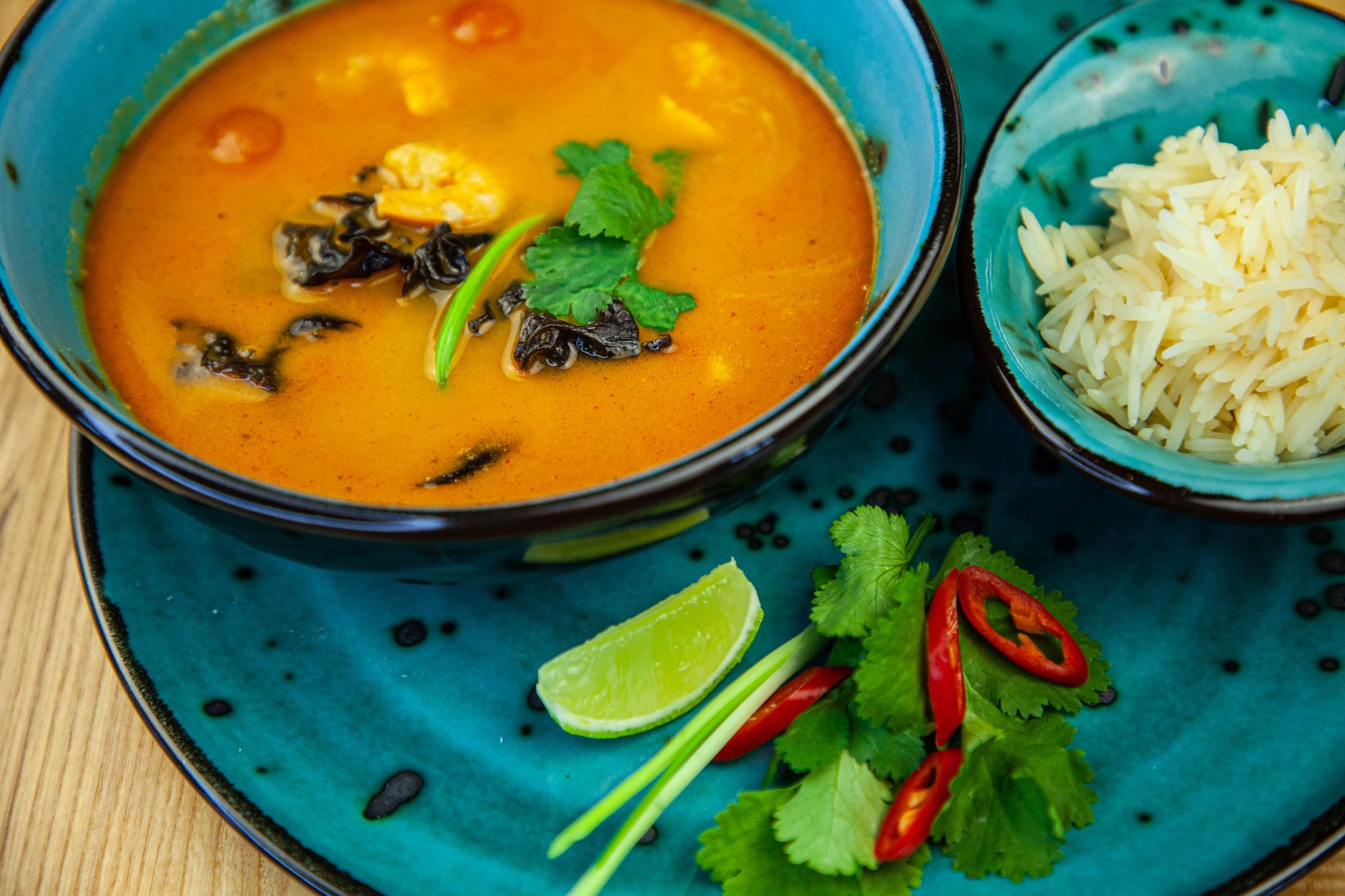
Thai curry is a vibrant and aromatic dish that holds a special place in Thai cuisine. It encompasses a variety of curry types, each distinguished by its unique color, flavor profile, and ingredient composition. These curries are typically served alongside rice, making them a satisfying and nourishing meal choice.
The essential components of Thai curry include curry paste, coconut milk, vegetables, and protein options like meat, seafood, or tofu. Understanding the different types of Thai curry, their ingredients, flavors, and how to serve them can enhance your culinary experience.
What Is Thai Curry?
Thai curry refers to a variety of curries that originate from Thailand, distinguished by their use of fresh herbs, spices, and unique flavors. The main types are red, green, and yellow curries, each differing in color and taste. Red curry is spicy and rich, green curry is fragrant and herbaceous, and yellow curry is milder with a hint of sweetness. Each curry type features a blend of core ingredients that enhance its profile.
Key Ingredients in Thai Curry
The composition of Thai curry varies widely based on the type, but all share some common ingredients. Below is a detailed look at the core components of Thai curry.
Curry Paste
Curry paste is the heart of Thai curry, and it is typically made from a blend of fresh herbs and spices. The most common ingredients in curry paste include:
- Thai garlic
- Shallots
- Galangal
- Lemongrass
- Kaffir lime leaves
- Bird’s eye chili or other chili varieties
- Salt
- Coriander root or seeds
Each type of Thai curry uses a different curry paste. For instance, green curry paste includes green chilies, while red curry relies on red chilies for its vibrant hue.
Coconut Milk
Coconut milk adds creaminess and richness to Thai curries, balancing out the spiciness of the curry paste. It is essential for creating a smooth and flavorful base. Canned coconut milk is commonly used for convenience, but fresh coconut milk can elevate the dish even further.
Vegetables
Thai curries often incorporate a variety of vegetables, enhancing both flavor and texture. Common vegetable options include:
- Bell peppers
- Carrots
- Eggplant
- Zucchini
- Green beans
- Spinach or bok choy
Vegetable choices can be adjusted based on personal preference or seasonal availability, allowing for creativity in curry-making.
Proteins
To give depth to the dish, Thai curries can include various proteins, such as:
- Chicken
- Beef
- Pork
- Shellfish (shrimp, crab, etc.)
- Firm tofu or tempeh (for a vegetarian option)
The protein used will influence the overall flavor and heartiness of the curry.
Herbs and Garnishes
Fresh herbs and garnishes enhance the flavor complexity of Thai curry. Popular herbs used include:
- Basil (especially Thai basil)
- Cilantro (coriander leaves)
- Green onions
These herbs are generally added just before serving to preserve their fresh flavor and vibrant color.
Flavor Profiles of Thai Curry
Understanding the flavor profiles of Thai curry can help you choose the right type based on your palate. Here’s a breakdown of the most popular Thai curries:
Red Curry
Red curry features a rich and mildly spicy flavor. Its base, made with red chili paste, gives it a bold, fiery hue. Coconut milk adds creaminess, while the addition of vegetables and proteins rounds out the dish, making it satisfying and hearty.
Green Curry
Green curry is known for its vibrant green color and herbal aroma, primarily derived from the use of green chilies and fresh herbs. It tends to be the spiciest among the thrice curries, boasting a unique sweetness from coconut milk and a fresh finish from ingredients like Thai basil.
Yellow Curry
Yellow curry is often milder than its red and green counterparts, featuring a warm, golden hue thanks to turmeric. Its flavor is slightly sweet and aromatic, with curry powder often used for seasoning. It has a creamy texture and is typically less spicy, making it an excellent choice for those with a lower tolerance for heat.
Panang Curry
Panang curry has a thicker consistency and a richer flavor profile than traditional red curry. It contains additional ground peanuts, producing a subtly sweet and nutty background that balances the heat. This curry is generally milder and is often garnished with kaffir lime leaves for added fragrance.
Mussaman Curry
Mussaman curry is distinctive with its influence from Indian cuisine, featuring spices like cinnamon and cardamom. It boasts a warm, fragrant flavor profile that is slightly sweet, thanks to added sugar or tamarind. This curry often includes potatoes and peanuts, making it hearty and comforting.
How to Serve Thai Curry
A well-prepared Thai curry is best enjoyed with rice, which helps soak up the delicious sauce. Here are some common serving suggestions:
Pairing with Rice
Steamed jasmine rice is the traditional accompaniment to Thai curry. The fragrant rice complements the intense flavors of the curry while providing a neutral base. Other rice options, like brown or sticky rice, can also be used, depending on preference.
Vegetarian and Vegan Options
To cater to vegetarians and vegans, opt for plant-based proteins like tofu or tempeh, and include a variety of vegetables. Ensure that the curry paste does not include fish sauce, or make your own paste using plant-based alternatives.
Accompaniments and Garnishes
Adding a fresh salad or simple side of steamed vegetables offers a delightful contrast to the richness of curry. Garnish the dish with chopped fresh herbs, lime wedges, and sliced chili for an extra burst of flavor.
Practical Tips for Making Thai Curry
Creating a delicious Thai curry is relatively straightforward. However, here are some practical tips to enhance your cooking experience:
Choosing the Right Curry Paste
Choosing quality curry paste is vital; fresh, homemade paste is often more flavorful than store-bought. For convenience, various brands of authentic Thai curry paste are available, ensuring options for different spice levels.
Layering Flavors
To add depth to your curry, try sautéing the curry paste in oil before adding coconut milk. This will help release the essential oils and deep flavors of the spices, creating a more aromatic base.
Adjusting Spiciness
If you find the dish too spicy, balance the heat by incorporating additional coconut milk or adding a sweet ingredient such as sugar or even fresh pineapple. Conversely, if you prefer more heat, increase the amount of chili in the paste, or add fresh sliced chili during cooking.
Cook Proteins Separately
To ensure perfectly cooked proteins, consider cooking them separately and adding them to the curry towards the end. This method helps prevent overcooking and allows for more control over flavor and texture.
Make-Ahead Suggestions
Thai curry can be made ahead of time. In fact, many find that the flavors develop and improve after the curry has sat for a day. Store any leftovers in an airtight container in the refrigerator for up to 3 days and reheat gently on the stove.
Common Mistakes to Avoid
While making Thai curry may seem straightforward, there are some common pitfalls to avoid for the best results:
- Overcooking the vegetables can lead to mushiness; add them in stages according to their cooking times.
- Using too much coconut milk can dilute the flavor; start with a smaller amount and adjust to taste.
- Neglecting to taste as you go can result in an imbalanced dish; seasoning at various stages is crucial for a well-rounded flavor.
Storage and Reheating Guidance
To properly store Thai curry, allow it to cool before placing it in an airtight container. Refrigerate it for up to 3 days. For longer storage, curry can be frozen for up to 2 months. To reheat, simply simmer gently on the stovetop, adding a splash of water or coconut milk to return its creamy texture.
Summing Up the Experience of Thai Curry
Thai curry is a delightful harmony of flavors, colors, and aromas that showcases the richness of Thai cuisine. Understanding the essential ingredients, how to prepare them, and proper serving techniques can help elevate your curry experience. Whether you prefer spicy, mild, or a touch of sweetness, there is a Thai curry for every palate.
Explore the world of flavors in your kitchen by trying different types of Thai curries and don’t hesitate to experiment with ingredients. Each variation invites you to make the dish your own.
For those looking to incorporate seafood, try a delicious shrimp curry recipe, or check out this flavorful Thai eggplant recipe for a vegetarian twist. Enhance your culinary repertoire with these delightful recipes and tips!