
Picture this: the aroma of toasted spices hitting your nose as golden shrimp tumbles in a silky, fragrant curry sauce, steam rising from the pan and filling your kitchen with warmth.
Shrimp curry is one of those dishes that feels fancy enough for dinner guests but quick enough for a Tuesday night when you’re hungry and tired.
The magic here is simplicity married with complex flavor. In under 30 minutes, you go from raw ingredients to a restaurant-quality dish that tastes like you’ve been cooking it all day.
The shrimp stays tender, the sauce clings beautifully, and the spices build layers of warmth without heat that overpowers.
Why You’ll Love This Recipe
This shrimp curry hits every mark for a weeknight dinner or weekend entertaining. The entire recipe comes together in less than half an hour, and it tastes like you fussed far more than you actually did.
- Ready in 25 minutes from start to finish, no advance prep stress
- Shrimp stays tender and juicy, never rubbery or overcooked
- Creamy coconut sauce balances spices without overwhelming heat
- Naturally gluten-free and pairs with rice, naan, or on its own
- Easily scaled up for a crowd or halved for two
My Experience Making This Recipe
The first time I made this, I was skeptical that 20 minutes could produce something this good. I had always assumed curry needed hours of simmering and a pantry of hard-to-find ingredients.
I was wrong. Within minutes of adding the shrimp, my kitchen smelled incredible, and my guests asked for the recipe before they’d finished eating.
The real revelation was how forgiving the recipe is. I’ve made it with coconut milk from three different brands, with fresh ginger one night and ground the next, and it’s consistently delicious.
Recipe Overview
- Recipe Name: Shrimp Curry
- Servings: 4
- Prep Time: 10 minutes
- Cook Time: 15 minutes
- Total Time: 25 minutes
- Course: Main Dish
- Cuisine: Thai-Inspired
- Calories per Serving: 285
Equipment You Will Need
- Large skillet or wok
- Cutting board
- Sharp chef’s knife
- Measuring spoons and cups
- Wooden spoon or spatula
- Small bowl for mixing spices
- Can opener
Ingredients for Shrimp Curry
- 2 tablespoons coconut oil
- 1 medium onion, diced
- 3 cloves garlic, minced
- 1 tablespoon fresh ginger, minced
- 2 tablespoons red curry paste
- 1 can (13.5 ounces) coconut milk
- 1 pound large shrimp, peeled and deveined
- 1 red bell pepper, sliced
- 1 cup snap peas
- 1 tablespoon fish sauce
- 1 tablespoon lime juice
- 1 teaspoon brown sugar
- Fresh basil or cilantro for garnish
- Salt and pepper to taste
Ingredient Notes and Substitutions
- Coconut oil adds richness and helps bloom the spices evenly. You can swap it for regular oil, though you’ll lose some of that tropical flavor depth.
- Red curry paste is your flavor foundation, delivering heat and complexity. Green curry paste works fine if you prefer a lighter, fresher taste, or use yellow paste for milder heat.
- Coconut milk creates the silky sauce and balances spice with subtle sweetness. Light coconut milk reduces calories but thins the sauce slightly; full-fat is creamier.
- Shrimp cooks fast and stays tender when not overdone. You can use prawns or even chunk firm fish like cod if you prefer, adjusting cook time to 8 minutes.
- Fish sauce adds umami depth that makes people ask what the secret ingredient is. Skip it only if you can’t find it; the curry loses something without it, but it’s still good.
How to Make Shrimp Curry
Step 1: Prepare Your Ingredients
Dice the onion into bite-sized pieces, mince the garlic and ginger, and slice the bell pepper into strips. Having everything prepped before you start cooking means you won’t be scrambling mid-sizzle, which is when things burn.
Step 2: Heat the Oil
Pour coconut oil into a large skillet over medium-high heat and let it warm for about 30 seconds until it shimmers slightly. Hot oil helps the aromatics release their flavors faster and prevents the spices from sitting in cold fat and steaming instead of toasting.
Step 3: Saute the Aromatics
Add the diced onion to the hot oil and stir for 2 minutes until it starts to soften and turn translucent at the edges. This gives the onion a gentle head start before you add the garlic and ginger, which burn quickly if hit with full heat first.
Step 4: Add Garlic and Ginger
Stir in the minced garlic and ginger, cooking for 30 to 45 seconds until fragrant. You’ll know it’s ready when the raw edge disappears from the smell and your kitchen suddenly smells like a Thai kitchen.
Step 5: Bloom the Curry Paste
Add the red curry paste and stir constantly for 1 to 2 minutes, breaking up any clumps and letting the paste coat the pan. This blooming step unlocks the complex spice flavors that would stay buried if you just dumped the paste into liquid.
Step 6: Add the Coconut Milk
Pour in the coconut milk, stirring well to combine it with the spice paste and create a smooth, fragrant sauce. The mixture should look rich and slightly thick at this point, which is perfect.
Step 7: Season and Add Vegetables
Stir in the fish sauce, lime juice, and brown sugar, then add the bell pepper and snap peas. The sugar balances the spice and salt, while the acid from lime brightens everything and prevents the sauce from tasting flat.
Step 8: Cook the Vegetables
Simmer the vegetables for 3 to 4 minutes, stirring occasionally, until the peppers are just tender-crisp. You want them to have a slight bite left, not soft and mushy.
Step 9: Add the Shrimp
Add the shrimp to the curry and stir gently to coat them in sauce. Shrimp cooks fast, so don’t walk away now.
Step 10: Cook Until Done
Cook for 3 to 4 minutes, stirring occasionally, until the shrimp turn pink and opaque all the way through. Overcooked shrimp gets rubbery and small, so the moment they lose their gray translucence, pull the pan from heat.
Step 11: Taste and Adjust
Taste the curry and add salt and pepper as needed. If it feels too hot, a splash of lime juice or a touch more sugar tames the spice without diluting the sauce.
Step 12: Garnish and Serve
Tear fresh basil or cilantro over the top and serve immediately over jasmine rice, cauliflower rice, or with warm naan. The fresh herbs add brightness that cuts through the richness and signals that dinner is ready.
Pro Tip: Don’t skip the lime juice; it’s the final touch that makes all the spice flavors pop and prevents the dish from tasting one-dimensional.
Tips for the Best Shrimp Curry
- Buy shrimp that’s already peeled and deveined if you’re short on time. It costs a bit more but saves 5 minutes of prep work.
- Use full-fat coconut milk for a richer, silkier sauce. Light versions make the dish watery and less satisfying.
- Toast whole spices in a dry pan for 30 seconds before grinding if you want to make your own curry paste. The flavor difference is worth the extra step.
- Taste the sauce before adding shrimp so you can dial in the seasoning while there’s still time to adjust without affecting the protein.
- Cook shrimp just until pink, then stop. Shrimp continues cooking slightly from carryover heat even after you remove the pan from the stove.
- Stir gently when the shrimp is in the pan to avoid breaking it into pieces. You want intact, pretty shrimp on the plate.
Common Mistakes to Avoid
- Skipping the lime juice thinking it’s optional. Without it, the curry tastes muddy and one-note instead of bright and balanced.
- Overcooking the shrimp because you’re nervous about food safety. Shrimp is done the second it turns solid pink; five more seconds makes it rubbery.
- Using lite coconut milk instead of full-fat. The sauce ends up thin and less creamy, making the whole dish feel undernourished.
- Crowding the pan with shrimp so they steam instead of sear. Cook in batches if needed to keep the temperature high enough for color and flavor.
- Not letting the curry paste bloom long enough. If you skip straight to adding liquid, the spices taste raw and powdery instead of mellow and complex.
Serving Suggestions
This curry shines alongside warm, fluffy rice that soaks up every drop of sauce. The richness of the curry balances cool, crisp sides that refresh the palate between bites.
- Jasmine or basmati rice to catch and hold the creamy sauce
- Warm naan or roti for scooping and dipping
- A fresh green salad with lime vinaigrette to balance the richness
- Cucumber slices with a pinch of salt for cooling contrast
- Cauliflower rice for a lower-carb option that doesn’t sacrifice satisfaction
Variations to Try
- Green Curry Version: Swap red curry paste for green and add a handful of Thai basil at the end. Green curry tastes fresher and lighter with a sharper heat profile.
- Pineapple Shrimp Curry: Add 1 cup fresh pineapple chunks or canned pineapple in juice, stirring them in with the vegetables. The sweetness plays beautifully against the spice and adds a tropical punch.
- Creamy Coconut Without Heat: Use yellow curry paste instead of red and add an extra squeeze of lime. Yellow paste is milder and slightly sweeter, perfect if you have heat-sensitive eaters at the table.
- Loaded Vegetable Version: Toss in baby spinach, mushrooms, carrots, or green beans alongside the peppers and snap peas. More vegetables make the curry heartier and stretch it further without diluting flavors.
- Spicy Kick: Add a sliced fresh Thai chili or 1/4 teaspoon cayenne pepper after blooming the curry paste. This takes the heat from warm and inviting to genuinely spicy without burning.
Dietary Adaptations
- Gluten-Free: This recipe is naturally gluten-free as written. Just check your curry paste label to confirm it contains no wheat, as some brands sneak it in.
- Dairy-Free: The recipe uses coconut milk instead of cream, so it’s already dairy-free and naturally vegan if you skip the fish sauce.
- Vegan or Vegetarian: Swap shrimp for firm tofu cubes or chickpeas, reduce cook time to 2 minutes for tofu to avoid breaking, and replace fish sauce with soy sauce or extra salt to maintain umami.
- Low-Carb or Keto: Serve over cauliflower rice or zucchini noodles instead of grain rice. The curry itself is already low in carbs and high in fat, making it keto-friendly.
Storage and Reheating
Refrigerator
Let the curry cool to room temperature, then transfer it to an airtight container and refrigerate for up to 3 days. The flavors deepen as it sits, making day-two curry sometimes better than day-one.
- Store shrimp and sauce together for easiest reheating
- Keep garnishes separate until you’re ready to eat
Freezer
Cool completely, then freeze in airtight containers or freezer bags for up to 2 months. For best results, freeze the sauce and shrimp together so the shrimp doesn’t dry out during thawing.
- Leave 1 inch of headspace in containers to allow for expansion
- Label with the date so you remember when you made it
Reheating
Thaw overnight in the refrigerator if frozen, then reheat gently over medium heat, stirring occasionally, until warmed through. Add a splash of coconut milk or water if the sauce has thickened too much during storage.
- Reheat on the stovetop for best texture and sauce consistency
- Avoid microwaving if possible, which can make shrimp chewy
- Taste and adjust seasoning with lime juice or salt before serving
Nutrition Information
| Nutrient | Amount |
|---|---|
| Calories | 285 |
| Total Fat | 18g |
| Saturated Fat | 14g |
| Carbohydrates | 12g |
| Fiber | 2g |
| Sugar | 4g |
| Protein | 24g |
| Sodium | 620mg |
| Cholesterol | 172mg |
These values are approximate and based on standard ingredient brands and USDA data. Your nutrition facts may vary slightly based on the specific products you use and portion sizes.
Frequently Asked Questions
Can I use frozen shrimp instead of fresh?
Yes, absolutely. Thaw frozen shrimp in the refrigerator the night before or under cool running water for 10 minutes, then pat dry before adding to the curry. Frozen shrimp works just as well and often costs less than fresh.
What if I can’t find red curry paste?
You can make a quick paste by combining 1 tablespoon curry powder, 1 tablespoon tomato paste, and 1 tablespoon water. It won’t be identical but gives you a similar spice base and fragrant sauce.
How do I make this dish less spicy?
Use yellow curry paste instead of red, add an extra squeeze of lime juice and a pinch of sugar to balance heat, or stir in a splash of coconut milk to cool things down. You can also reduce the curry paste from 2 tablespoons to 1.5 tablespoons.
Can I cook this in an instant pot or slow cooker?
The stovetop method is best because shrimp cooks so quickly that slow cooking makes it rubbery. If you must use a slow cooker, prepare the sauce on high heat first, then add shrimp in the last 2 minutes before serving.
Why is my shrimp tough and chewy?
Shrimp overcooks in seconds, so the moment it turns solid pink and opaque, remove it from heat. Continuing to cook it past that point shrinks the shrimp and makes it rubbery and unpleasant.
Is fish sauce really necessary?
Fish sauce adds a savory depth that makes people wonder what the secret ingredient is. You can leave it out and use soy sauce instead, but the curry loses some of its complexity and authentic flavor.
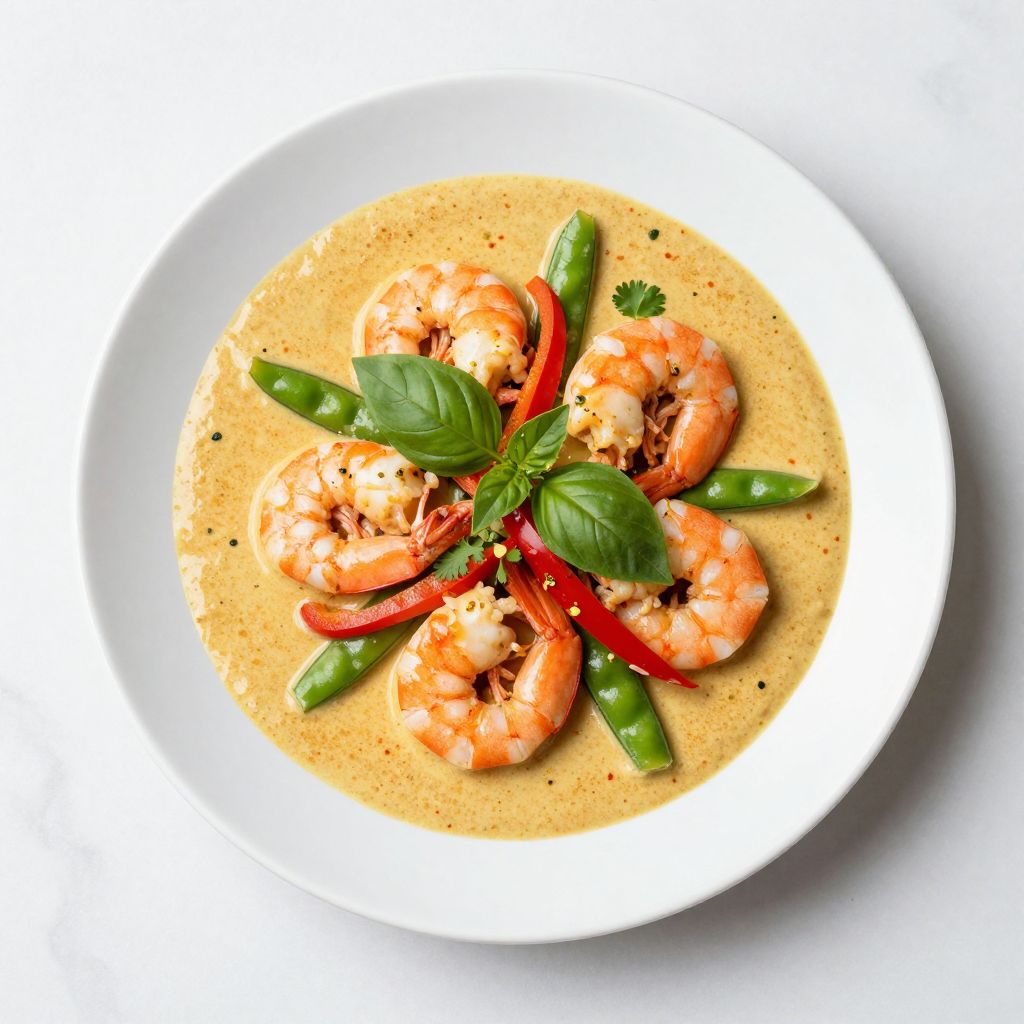
Shrimp Curry
Ingredients
Equipment
Method
- Dice the onion into bite-sized pieces, mince the garlic and ginger, and slice the bell pepper into strips.
- Pour coconut oil into a large skillet over medium-high heat and let it warm for about 30 seconds until it shimmers slightly.
- Add the diced onion to the hot oil and stir for 2 minutes until it starts to soften and turn translucent at the edges.
- Stir in the minced garlic and ginger, cooking for 30 to 45 seconds until fragrant.
- Add the red curry paste and stir constantly for 1 to 2 minutes, breaking up any clumps and letting the paste coat the pan.
- Pour in the coconut milk, stirring well to combine it with the spice paste and create a smooth, fragrant sauce.
- Stir in the fish sauce, lime juice, and brown sugar, then add the bell pepper and snap peas.
- Simmer the vegetables for 3 to 4 minutes, stirring occasionally, until the peppers are just tender-crisp.
- Add the shrimp to the curry and stir gently to coat them in sauce.
- Cook for 3 to 4 minutes, stirring occasionally, until the shrimp turn pink and opaque all the way through.
- Taste the curry and add salt and pepper as needed.
- Tear fresh basil or cilantro over the top and serve immediately over jasmine rice, cauliflower rice, or with warm naan.
Notes
Final Thoughts
This shrimp curry proves that restaurant-quality cooking doesn’t require hours, a degree, or an intimidating ingredient list. Twenty-five minutes separates you from a warm, fragrant, utterly craveable meal that tastes like you’ve been in the kitchen all day.
The beauty is in how easily you can make it your own. Whether you prefer it spicier, creamier, loaded with vegetables, or loaded with extras, this foundation flexes to match what you’re craving. Make it tonight, and you’ll find yourself craving it again within a week.