
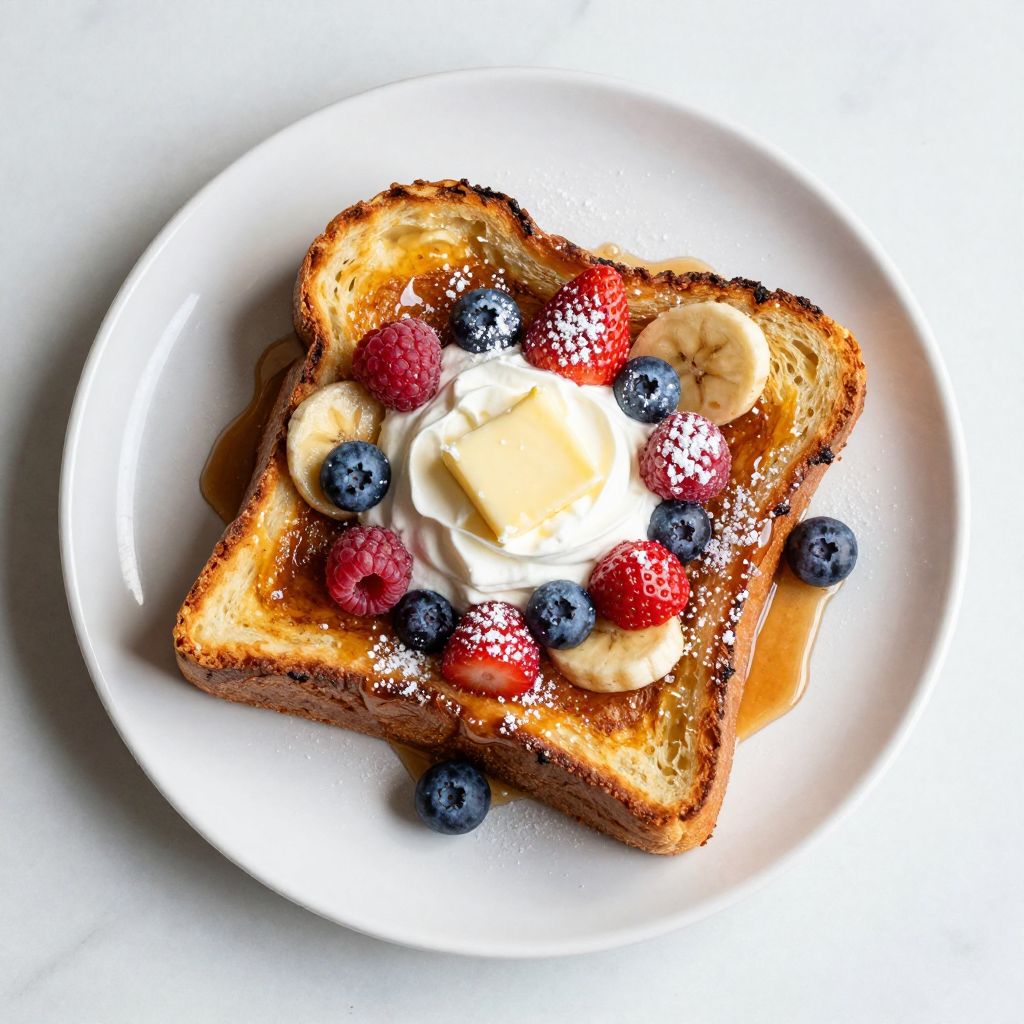
The aroma of sourdough french toast sizzling on a hot griddle is pure breakfast magic, filling your kitchen with buttery warmth before the sun fully rises. This recipe transforms tangy sourdough bread into golden, crispy-edged slices with a custardy center that actually tastes like something special, not just eggy bread.
Sourdough french toast stands apart from the standard version because the bread’s natural tang plays beautifully against sweet toppings, and its sturdy crumb holds up perfectly to the egg mixture without turning to mush. You’ll love how forgiving this recipe is: make it for a lazy Sunday brunch, whip it together for a weeknight dinner (yes, dinner), or prep components ahead when you’re hosting guests.
Why You’ll Love This Recipe
This recipe delivers restaurant-quality results at home with minimal fuss, and the sourdough base gives you flavor depth that regular bread simply cannot match.
- Tangy sourdough pairs perfectly with maple syrup, fresh fruit, and whipped cream
- Crispy exterior with a creamy, custard-like center in every bite
- Ready in under 30 minutes from start to table
- Works for breakfast, brunch, or even dessert
- Easily scales up or down depending on how many people you’re feeding
My Experience Making This Recipe
I first made sourdough french toast on a Saturday morning when I had a sourdough loaf sitting on my counter that was two days old and past its prime for sandwiches. I figured why not experiment, and the moment I took that first bite, I understood why this would become a regular rotation in my kitchen.
The sourdough’s slight sourness created this perfect balance with the sweet custard coating, something I’d never quite achieved with brioche or challah. My family returned their plates licked clean, and now they request it at least twice a month, which tells you everything you need to know about how crowd-pleasing this dish truly is.
What surprised me most was how the bread’s sturdy texture prevented any sogginess, even when I made extra servings and let them sit for a few minutes before cooking. The crust develops this beautiful golden-brown color that photographs gorgeously, which is a bonus if you’re the type to share your food on social media.
Recipe Overview
- Recipe Name: Sourdough French Toast
- Servings: 4 servings (2 slices per person)
- Prep Time: 10 minutes
- Cook Time: 15 minutes
- Total Time: 25 minutes
- Course: Breakfast, Brunch, Dessert
- Cuisine: American
- Calories per Serving: 380
Equipment You Will Need
- Large shallow bowl or pie dish
- Whisk
- Griddle or large skillet
- Spatula
- Measuring cups and spoons
- Cutting board and serrated knife
- Serving plates
Ingredients for Sourdough French Toast
- 8 slices sourdough bread (about 3/4 inch thick, day-old or slightly stale)
- 4 large eggs
- 1/2 cup whole milk
- 1/4 cup heavy cream
- 2 tablespoons granulated sugar
- 1 teaspoon vanilla extract
- 1/2 teaspoon ground cinnamon
- 1/4 teaspoon salt
- 3 tablespoons unsalted butter (plus more as needed)
- Maple syrup for serving
- Optional toppings: fresh berries, whipped cream, powdered sugar, sliced banana
Ingredient Notes and Substitutions
- Sourdough bread: Day-old or stale bread absorbs the custard mixture perfectly without becoming mushy. Fresh bread will work but may turn soggy; let it sit out for a few hours or lightly toast it first.
- Eggs: Large eggs provide the right custard consistency and structure. Avoid using extra-large eggs, which would make the mixture too liquidy.
- Heavy cream: The cream adds richness and prevents the custard from being too watery. Substitute half and half if you prefer a lighter version, though the richness will decrease slightly.
- Vanilla extract: Pure vanilla is worth using here since it shines in such a simple dish. Almond extract makes an interesting alternative if you enjoy that flavor profile.
- Cinnamon: Ground cinnamon is the classic choice, but you can swap in pumpkin pie spice or replace it entirely with cardamom for a unique twist.
- Butter: Use unsalted so you control the salt level completely. Ghee creates a nuttier, more complex flavor if you want to experiment.
How to Make Sourdough French Toast
Step 1: Prepare Your Custard Base
Crack your 4 eggs into a large shallow bowl and whisk them together until the yolks and whites are fully combined. Add the milk, heavy cream, sugar, vanilla extract, cinnamon, and salt, then whisk everything together until the sugar dissolves and you have a smooth, uniform custard mixture.
Step 2: Heat Your Cooking Surface
Place a griddle or large skillet over medium heat and let it warm for about 2 minutes until a drop of water sizzles when it hits the surface. The medium heat is important because it gives you time to cook the bread through without burning the exterior, which is the biggest difference between soggy french toast and perfect french toast.
Step 3: Add Butter to the Griddle
Add 1 tablespoon of butter to the hot griddle and swirl it around until it coats the entire cooking surface evenly. Let it melt completely and foam slightly before you add your bread slices, which typically takes about 30 seconds.
Step 4: Dip Each Bread Slice
Take one slice of sourdough and dip it into the custard mixture for about 1 second on each side, making sure both surfaces get coated but the bread doesn’t get completely saturated. This quick dip method is the secret to french toast with a creamy center and a structure that doesn’t fall apart on the griddle.
Step 5: Cook the First Batch
Place the dipped bread slices on the hot, buttered griddle and cook for 2 to 3 minutes until the bottom is golden brown and has a slight crust. Resist the urge to flip too early; you want that crust to develop fully, which is what gives you that satisfying contrast between crispy outside and soft inside.
Step 6: Flip and Cook the Second Side
Using a spatula, carefully flip each slice and cook the other side for another 2 to 3 minutes until it matches the color of the first side. You’ll notice the slices puff up slightly as they cook, which is the eggs setting and creating that custardy texture you’re after.
Step 7: Transfer and Keep Warm
Transfer the cooked french toast slices to a serving plate and cover them loosely with foil to keep them warm while you repeat steps 4 through 6 with the remaining bread slices. Add another 1 to 2 tablespoons of butter to the griddle before cooking the second batch.
Step 8: Plate and Serve Immediately
Arrange the sourdough french toast on individual plates and serve right away while it’s still warm and crispy. The texture deteriorates quickly as it cools, so timing your plating with your eating schedule makes all the difference.
Pro Tip: Use day-old or slightly stale sourdough because fresh bread absorbs too much liquid and becomes mushy, while stale bread maintains its structure and creates that perfect custardy center with crispy edges.
Tips for the Best Sourdough French Toast
- Cut your bread slices to about 3/4 inch thickness, which is thick enough to soak up the custard without falling apart on the griddle. Too thin and they cook too fast; too thick and the center stays raw.
- Keep your custard mixture simple and well-mixed before you start dipping, which ensures every slice gets the same consistent coating and cooks evenly.
- Don’t crowd your griddle when cooking, as this drops the temperature and causes the exterior to steam instead of developing a crust. Cook in batches and give each slice space to breathe.
- Flip only once and resist pressing down on the bread with your spatula, which squeezes out the custard and creates tough, dense slices instead of tender ones.
- If your griddle starts smoking or the butter browns too quickly, lower the heat slightly and wipe it clean with a paper towel before continuing.
- Make your custard mixture the night before if you want a completely hands-off morning, then simply reheat it gently before dipping your bread.
Common Mistakes to Avoid
- Using fresh bread instead of day-old: Fresh bread soaks up too much custard and turns into a soggy mess in the middle, even though the outside looks beautiful.
- Dipping for too long: Submerge the bread for more than a second or two and it becomes waterlogged and may fall apart when you try to flip it on the griddle.
- Heat that’s too high: Cranking the heat makes the outside burn before the inside cooks through, leaving you with a dark crust and a cold custard center.
- Overcrowding the griddle: Cooking too many slices at once drops the temperature so much that you end up steaming the bread instead of searing it, which eliminates that crispy exterior.
- Flipping too many times: Every flip disrupts the crust formation and releases the custard’s moisture, so once per side is the absolute rule.
Serving Suggestions
Sourdough french toast begs for classic toppings, but it also pairs beautifully with unexpected flavor combinations that take advantage of its tangy bread base. Here are the best ways to finish your plate:
- Warm maple syrup with a pat of melting butter and a sprinkle of fleur de sel for the traditional approach
- Fresh berries (strawberries, blueberries, raspberries) with whipped cream and a drizzle of honey
- Nutella, sliced banana, and crushed toasted hazelnuts for an indulgent dessert-like experience
- Lemon curd, fresh whipped cream, and powdered sugar for a bright, tangy finish that echoes the sourdough’s flavor
- Caramelized apples with a touch of cinnamon and vanilla ice cream for a warm, cozy brunch or dessert
Variations to Try
- Eggnog French Toast: Replace half the milk with eggnog and omit the sugar, creating a rich, festive version perfect for the holidays with spiced rum drizzled on top.
- Brown Butter French Toast: Brown your butter separately before adding it to the griddle, which adds a nutty, complex flavor that elevates the entire dish.
- Savory Sourdough Toast: Skip the sugar and cinnamon entirely and add fresh herbs like thyme or rosemary to the custard, then top with gruyere and crispy bacon for a savory brunch.
- Challah Hybrid: Mix your sourdough with a slice or two of challah, which gives you the tang of sourdough with the richness and slight sweetness of challah in every bite.
- Stuffed French Toast: Spread cream cheese mixed with jam or Nutella between two slices before dipping and cooking, creating a gooey surprise center.
Dietary Adaptations
- Gluten-Free: Use a sturdy gluten-free sourdough bread, which can be trickier to find but produces nearly identical results; the trade-off is slightly higher cost and less tang from the fermentation.
- Dairy-Free: Replace the milk and cream with unsweetened oat milk or coconut milk and use vegan butter instead of regular butter; the richness decreases somewhat but the dish remains delicious.
- Vegan: Swap the eggs for a flax or chia egg (1 tablespoon ground flax or chia mixed with 3 tablespoons water per egg), use plant-based milk and vegan butter, and the texture becomes slightly less custardy but still satisfying.
- Low-Carb or Keto: Use low-carb bread made with almond flour, replace the sugar with monk fruit or erythritol, and use full-fat cream instead of milk for a version that fits your macros.
Storage and Reheating
Refrigerator
Store leftover sourdough french toast in an airtight container on a paper towel to absorb moisture, and it keeps for up to 3 days. The texture becomes softer as it sits, but it remains perfectly edible.
- Stack slices with parchment paper between each one to prevent sticking
- Store toppings separately to prevent sogginess
Freezer
Freeze cooked french toast slices on a baking sheet for 2 hours, then transfer them to a freezer bag where they keep for up to 2 months. This method prevents them from freezing into one large block.
- Thaw overnight in the refrigerator before reheating
- Or reheat directly from frozen (add a couple minutes to cooking time)
Reheating
Refresh your leftovers in a 350-degree oven for 5 to 10 minutes until warmed through and the exterior crisps back up. The oven method works far better than the microwave, which creates a rubbery texture.
- Toast the slices on a baking sheet lined with foil
- Avoid the microwave as it destroys the crispy exterior
Nutrition Information
| Nutrient | Amount |
|---|---|
| Calories | 380 |
| Total Fat | 18g |
| Saturated Fat | 10g |
| Carbohydrates | 42g |
| Fiber | 2g |
| Sugar | 12g |
| Protein | 10g |
| Sodium | 520mg |
| Cholesterol | 195mg |
These values are approximate and based on standard ingredient sizes; the exact nutrition will vary depending on the specific brand of sourdough bread and toppings you choose.
Frequently Asked Questions
Can I make the custard mixture ahead of time?
Absolutely, you can prepare the custard mixture up to 24 hours in advance and store it in an airtight container in the refrigerator. Simply give it a quick whisk before using to recombine any separated ingredients.
What if I don’t have heavy cream?
You can replace the heavy cream with an equal amount of half-and-half or whole milk, though the custard will be slightly less rich and custardy. The french toast will still taste delicious, just a bit lighter.
How do I know when my sourdough bread is stale enough?
Bread that’s 1 to 2 days old is ideal; it should feel slightly firm and may have hardened slightly on the edges. If your bread is completely rock-hard, let it sit in the custard for just a hair longer since it needs a bit more liquid absorption.
Why does my french toast sometimes fall apart when I flip it?
This happens when you dip the bread too long and it becomes oversaturated, or when your griddle temperature is too low and the exterior hasn’t set enough to hold together. Keep your dips quick and your heat at a steady medium.
Can I use frozen sourdough bread for this recipe?
Frozen sourdough will thaw and work fine, though it may be slightly less custardy in texture because freezing breaks down the crumb structure slightly. Thaw it completely at room temperature before slicing and dipping.
What’s the best way to serve this to a crowd?
Cook all your slices and keep them warm on a foil-covered baking sheet in a 200-degree oven while everyone sits down, then bring them to the table together. This ensures everyone eats at the same time while the toast is still crispy.
Final Thoughts
Sourdough french toast is one of those recipes that feels fancy enough to impress dinner guests but simple enough to make on a busy weekday morning. The sourdough’s natural tang creates complexity that brioche or standard white bread simply cannot match, and the technique is forgiving enough for beginners while satisfying enough for experienced home cooks.
Once you master this recipe, you’ll find yourself making it regularly and probably experimenting with your own toppings and variations. Your future self will thank you for keeping this one in your cooking rotation.
If you love making creative breakfast dishes, you might also enjoy trying a french toast recipe for one for quieter mornings, or exploring homemade sourdough baguette to have perfectly stale bread on hand whenever the craving strikes.
Sourdough French Toast
Ingredients
Equipment
Method
- In a large shallow bowl, whisk together 4 eggs, 1/2 cup whole milk, 1/4 cup heavy cream, 2 tablespoons granulated sugar, 1 teaspoon vanilla extract, 1/2 teaspoon ground cinnamon, and 1/4 teaspoon salt until smooth.
- Heat a griddle or large skillet over medium heat for about 2 minutes until a drop of water sizzles on the surface.
- Add 1 tablespoon of butter to the hot griddle and swirl to coat the surface, letting it melt and foam for 30 seconds.
- Quickly dip one slice of sourdough bread into the custard mixture for about 1 second per side, coating both surfaces without saturating.
- Place the dipped bread on the griddle and cook for 2 to 3 minutes until the bottom is golden brown and a crust forms.
- Flip the slice and cook the other side for another 2 to 3 minutes until golden and the custard is set.
- Transfer cooked slices to a serving plate and cover with foil; add another tablespoon of butter to the griddle and repeat dipping and cooking with remaining bread.
- Serve immediately while warm and crispy with maple syrup and optional toppings.