
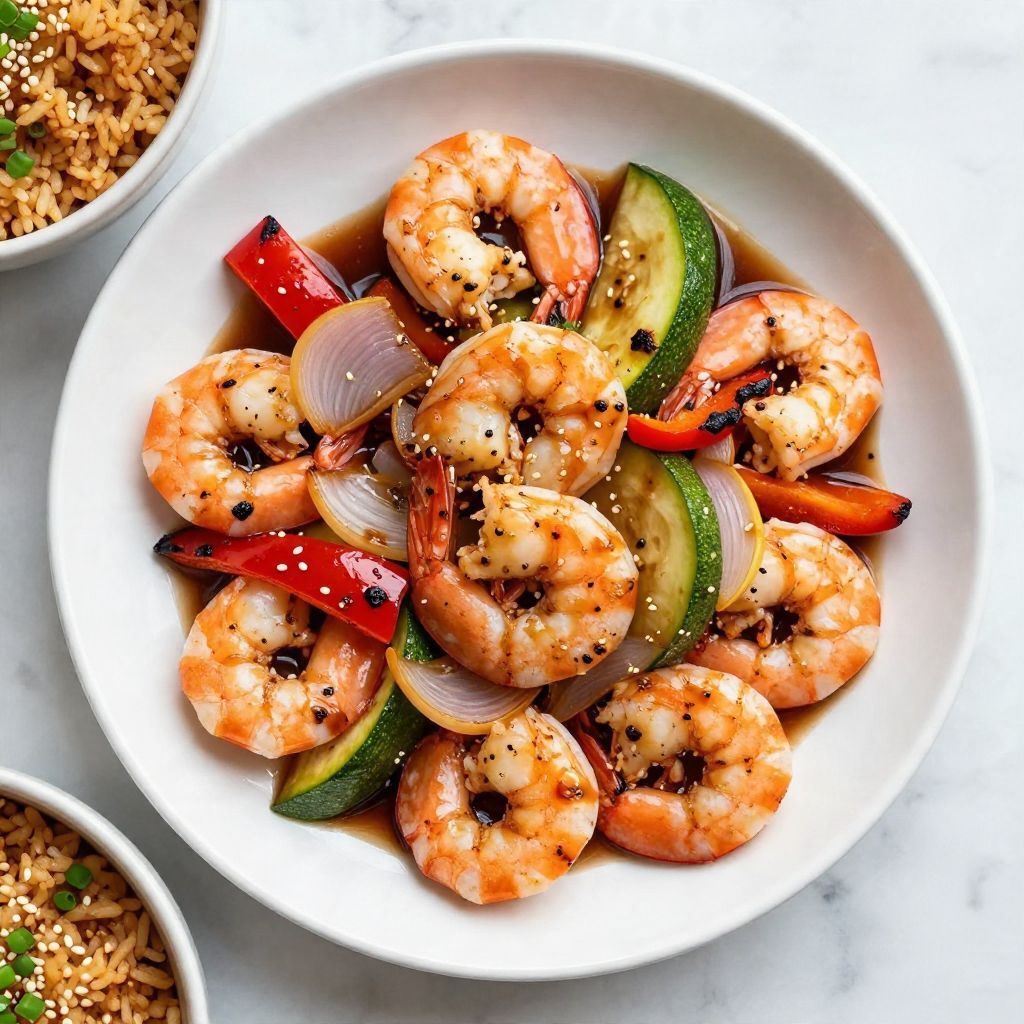
Picture this: the sizzle of shrimp hitting a hot grill, the aroma of garlic and soy sauce filling the air, and the delightful crunch of fresh vegetables all coming together. This Shrimp Hibachi Recipe brings the flavors of a Japanese steakhouse right into your home, making it a fun and easy weeknight dinner. It’s a crowd-pleaser with a perfect balance of savory, sweet, and umami flavors, plus it’s quick to prepare, taking just about 30 minutes from start to finish. Let’s jump into the ingredients you’ll need to make this delicious dish.
Why You’ll Love This Recipe
This recipe is not just tasty; it’s also a great way to impress friends or family with minimal effort.
- Quick cooking time—ready in just 30 minutes.
- Versatile—perfect for weeknight dinners or special occasions.
- Flavor-packed with a delightful garlic-soy sauce.
- Customizable with your favorite vegetables.
- Great for meal prep and leftovers.
My Experience Making This Recipe
Every time I make this Shrimp Hibachi, I’m transported back to my favorite Japanese steakhouse. The excitement of the cooking process and the vibrant colors of the ingredients always get my family buzzing with anticipation.
As soon as the shrimp hit the skillet, the aroma fills the kitchen and makes it feel like a special occasion. Even my picky eaters are always eager to dig in, especially when I serve it with a side of fried rice.
Recipe Overview
- Recipe Name: Shrimp Hibachi
- Servings: 4
- Prep Time: 10 minutes
- Cook Time: 20 minutes
- Total Time: 30 minutes
- Course: Main Course
- Cuisine: Japanese
- Calories per Serving: 350
Equipment You Will Need
- Large skillet or wok
- Spatula or wooden spoon
- Measuring cups and spoons
- Cutting board
- Chef’s knife
Ingredients for Shrimp Hibachi
- 1 pound shrimp, peeled and deveined
- 2 tablespoons vegetable oil
- 3 cloves garlic, minced
- 1 cup zucchini, sliced
- 1 cup bell pepper, sliced
- 1 cup onion, sliced
- 1/4 cup soy sauce
- 2 tablespoons butter
- 1 tablespoon sesame oil
- Salt and pepper, to taste
Ingredient Notes and Substitutions
- Shrimp: Provides protein and a delightful texture. You can substitute with chicken or tofu for different flavors.
- Vegetable oil: Used for frying. Olive oil or canola oil can work in a pinch.
- Garlic: Adds aromatic flavor. Garlic powder can be used if fresh is unavailable.
- Vegetables: A mix of zucchini, bell pepper, and onion offers color and crunch. Feel free to use whatever you have on hand like broccoli or carrots.
- Soy sauce: Essential for flavor. Tamari is a gluten-free alternative.
How to Make Shrimp Hibachi
Step 1: Prepare the Ingredients
Start by peeling and deveining the shrimp if not already done. This ensures a clean, succulent bite.
Step 2: Heat the Oil
In a large skillet over medium-high heat, add the vegetable oil. This helps to sear the shrimp and vegetables quickly.
Step 3: Cook the Shrimp
Add the shrimp to the hot skillet in a single layer. Cooking them without overcrowding ensures they get that beautiful sear.
Step 4: Add Garlic
Once the shrimp turn pink, add the minced garlic. This infuses the oil with flavor, making the dish aromatic.
Step 5: Add Vegetables
Throw in the sliced zucchini, bell pepper, and onion. Cooking them until they soften adds a nice crunch to the dish.
Step 6: Add Soy Sauce
Pour in the soy sauce and stir everything together. This adds depth and brings all the flavors together.
Step 7: Finish with Butter and Sesame Oil
Add the butter and sesame oil, stirring to combine. This enriches the dish with a silky texture.
Step 8: Season and Serve
Season with salt and pepper to taste, then serve immediately. Enjoying it hot enhances the experience.
Pro Tip: For an authentic touch, try cooking on a flat-top grill if available—this replicates the hibachi experience!
Tips for the Best Shrimp Hibachi
- Use fresh shrimp for the best flavor and texture.
- Do not overcrowd the pan; cook in batches if necessary.
- Prep all ingredients in advance to keep the cooking process smooth.
- Adjust the soy sauce based on your sodium preference.
- Experiment with different vegetables for variety and taste.
Common Mistakes to Avoid
- Overcooking the shrimp can make them rubbery—cook just until pink.
- Not preheating the skillet may result in steaming instead of searing.
- Skipping the butter can make the dish less rich and flavorful.
- Using too much soy sauce can overpower the dish—measure carefully.
Serving Suggestions
This dish pairs beautifully with several sides and sauces. Try these options for a complete meal.
- Fried rice for a classic hibachi experience.
- Steamed vegetables for added nutrition.
- Teriyaki sauce for an extra layer of flavor.
- Pickled ginger for a refreshing contrast.
Variations to Try
- Swap shrimp for chicken or beef for a different protein.
- Add pineapple for a sweet and tangy twist.
- Use a variety of sauces like teriyaki or garlic butter.
- Try adding bean sprouts for extra crunch.
Dietary Adaptations
- Gluten-free: Use tamari instead of soy sauce.
- Dairy-free: Omit butter; use more oil instead.
- Vegetarian: Substitute shrimp with tofu or tempeh.
- Low-carb/Keto: Skip rice and focus on vegetables.
Storage and Reheating
Refrigerator
Store leftovers in an airtight container for up to 2 days.
- Let it cool before sealing.
- Refrigerate promptly to maintain freshness.
Freezer
Freeze for up to 1 month if you want to save it longer.
- Use freezer-safe containers to prevent freezer burn.
- Label with the date for easy tracking.
Reheating
Reheat in a skillet over low heat until warmed through.
- Add a splash of water or soy sauce to keep it moist.
- Microwave for quick reheating, but be cautious of overcooking.
Nutrition Information
| Nutrient | Amount |
|---|---|
| Calories | 350 |
| Total Fat | 14g |
| Saturated Fat | 4g |
| Carbohydrates | 12g |
| Fiber | 3g |
| Sugar | 5g |
| Protein | 35g |
| Sodium | 800mg |
| Cholesterol | 200mg |
Nutrition values are approximate and can vary based on specific ingredients used.
Frequently Asked Questions
Can I make this recipe ahead of time?
You can prep the ingredients in advance, but it’s best to cook it fresh for optimal flavor and texture.
What can I substitute for shrimp?
Chicken, tofu, or even beef can make excellent substitutes, each bringing their own flavor.
How do I store leftovers?
Store in an airtight container in the fridge for up to 2 days, or freeze for longer storage.
Why are my shrimp rubbery?
Overcooking shrimp can lead to a rubbery texture, so cook just until they are pink and opaque.
Can I use frozen shrimp?
Yes, just make sure to thaw them properly before cooking for even results.
Final Thoughts
This Shrimp Hibachi Recipe is a delightful way to create a restaurant-quality meal at home. I hope you enjoy making it as much as I do.
For more delicious recipes, explore options like Shrimp Sauce to complement your meal or try out a flavorful Hibachi Sauce for dipping. Happy cooking!