
Picture this: a perfectly seared piece of salmon, its crisp skin giving way to tender, flaky fish, paired with vibrant bok choy that adds a delightful crunch. This Salmon and Bok Choy Recipe is not just a meal; it’s a celebration of flavors that come together in a matter of minutes, making it perfect for busy weeknights or a simple yet impressive dinner. With its rich umami from the salmon and the slightly peppery taste of bok choy, this dish offers a wonderful balance of textures and tastes.
Why You’ll Love This Recipe
This recipe is a winner for several reasons.
- Quick and easy to prepare, taking only about 25 minutes.
- Packed with nutrients and healthy fats from the salmon.
- Bright and fresh flavors that keep dinner exciting.
- Versatile enough to pair with rice, noodles, or on its own.
- Elegant presentation that impresses without the fuss.
My Experience Making This Recipe
The first time I made this dish, the aroma of the salmon sizzling in the pan filled my kitchen, instantly making it feel cozy and inviting. My family was drawn to the kitchen, and as we sat down to eat, the blend of flavors made it clear this would become a regular on our dinner table.
Each bite was a delightful mix of crispy skin and juicy fish, with bok choy adding that perfect fresh crunch. It was a meal that sparked conversation about what other vegetables might pair well with salmon, but honestly, this combination was hard to beat.
Recipe Overview
- Recipe Name: Salmon and Bok Choy
- Servings: 4
- Prep Time: 10 minutes
- Cook Time: 15 minutes
- Total Time: 25 minutes
- Course: Main Dish
- Cuisine: Asian-Inspired
- Calories per Serving: 350
Equipment You Will Need
- Large skillet or frying pan
- Spatula
- Knife
- Cutting board
- Measuring spoons
Ingredients for Salmon and Bok Choy
- 4 (6-ounce) salmon fillets
- 2 tablespoons olive oil
- 4 cups bok choy, chopped
- 2 cloves garlic, minced
- 1 tablespoon soy sauce
- 1 teaspoon fresh ginger, grated
- Salt and pepper, to taste
- 1 tablespoon sesame seeds, for garnish
Ingredient Notes and Substitutions
- Salmon: A great source of omega-3 fatty acids, offering rich flavor. You can substitute with trout or another fatty fish if desired.
- Bok Choy: Adds a refreshing crunch and is packed with vitamins. Swiss chard or spinach can be used as alternatives.
- Soy Sauce: Provides umami flavor and depth. Tamari or coconut aminos can be used for a gluten-free version.
- Ginger: Offers a warm, spicy note. Ground ginger can be used in a pinch, though fresh is preferred.
How to Make Salmon and Bok Choy
Step 1: Prepare the Ingredients
Start by chopping the bok choy and mincing the garlic and ginger. Having everything ready makes cooking a breeze.
Step 2: Heat the Skillet
Place a large skillet over medium-high heat and add the olive oil. This ensures that the oil is hot enough to sear the salmon perfectly.
Step 3: Season the Salmon
Season the salmon fillets with salt and pepper on both sides. This simple step enhances the natural flavor of the fish.
Step 4: Cook the Salmon
Carefully add the salmon fillets to the skillet, skin-side down. Cook for about 4-5 minutes until the skin is crispy and golden brown.
Step 5: Flip the Salmon
Gently flip the salmon and cook for an additional 3-4 minutes. This allows the fish to cook evenly without drying out.
Step 6: Add Bok Choy
Once the salmon is nearly cooked, add the chopped bok choy, minced garlic, and ginger to the skillet. Stir to combine and let it wilt down.
Step 7: Add Soy Sauce
Drizzle soy sauce over the mixture and toss everything together gently. This infuses the vegetables and salmon with incredible flavor.
Step 8: Serve and Garnish
Remove the skillet from heat and plate the salmon with the bok choy mixture. Sprinkle with sesame seeds for a nutty finish.
Pro Tip: For extra flavor, marinate the salmon in soy sauce and ginger for 30 minutes before cooking.
Tips for the Best Salmon and Bok Choy
- Use fresh ingredients for the best taste and texture.
- Don’t overcrowd the pan; cook in batches if necessary to ensure even cooking.
- Adjust cooking time based on the thickness of your salmon fillets.
- Feel free to add more vegetables like bell peppers or snap peas for variety.
- Serve immediately for the best texture and flavor experience.
Common Mistakes to Avoid
- Not patting the salmon dry before cooking can prevent a crispy skin.
- Overcooking the salmon will lead to a dry texture.
- Skipping the seasoning can result in bland flavors.
- Adding bok choy too early will make it soggy instead of crisp.
Serving Suggestions
This dish shines on its own but pairs wonderfully with side dishes for a complete meal.
- Steamed jasmine rice for a classic pairing.
- Quinoa for a protein-packed alternative.
- Noodles tossed in sesame oil for an Asian twist.
- A light green salad to balance the richness of the salmon.
Variations to Try
- Add a splash of lemon juice for a zesty kick.
- Incorporate chili flakes for a spicy undertone.
- Swap salmon for chicken or tofu for different protein options.
- Mix in other greens like spinach or kale for added nutrition.
Dietary Adaptations
- Gluten-free: Use tamari instead of soy sauce.
- Dairy-free: This recipe is naturally dairy-free.
- Vegan/Vegetarian: Replace salmon with marinated tofu.
- Low-carb/Keto: Enjoy as is, or serve with cauliflower rice.
Storage and Reheating
Refrigerator
Store leftovers in an airtight container in the fridge for up to 3 days.
- Keep salmon and bok choy separate to maintain texture.
Freezer
This dish is best enjoyed fresh, but you can freeze the salmon for up to 2 months.
- Thaw in the fridge overnight before cooking.
Reheating
Reheat in a skillet over low heat, just until warmed through.
- Avoid using the microwave as it may dry out the fish.
Nutrition Information
| Nutrient | Amount |
|---|---|
| Calories | 350 |
| Total Fat | 20g |
| Saturated Fat | 3g |
| Carbohydrates | 7g |
| Fiber | 2g |
| Sugar | 1g |
| Protein | 35g |
| Sodium | 450mg |
| Cholesterol | 70mg |
Nutrition values are approximate and can vary based on ingredient brands and cooking methods.
Frequently Asked Questions
Can I use frozen salmon for this recipe?
Yes, just make sure to thaw it completely before cooking for even results.
What can I substitute for bok choy?
You can use Swiss chard, spinach, or other greens that you enjoy.
Can I make this ahead of time?
While it is best enjoyed fresh, you can prep the ingredients ahead of time for quicker cooking.
How do I know when the salmon is done?
The salmon should be opaque and flake easily with a fork when cooked through.
Is it necessary to marinate the salmon?
Marinating is not necessary, but it can enhance the flavor if you have time.
Final Thoughts
This Salmon and Bok Choy Recipe truly delivers on taste and ease, making it a fantastic addition to your weeknight meals. I hope you give it a try, as I’m sure it will become a favorite in your home.
If you enjoyed this recipe, explore other delicious options like our salmon loaf recipe or learn more about how soy sauce is made for deeper culinary insights!
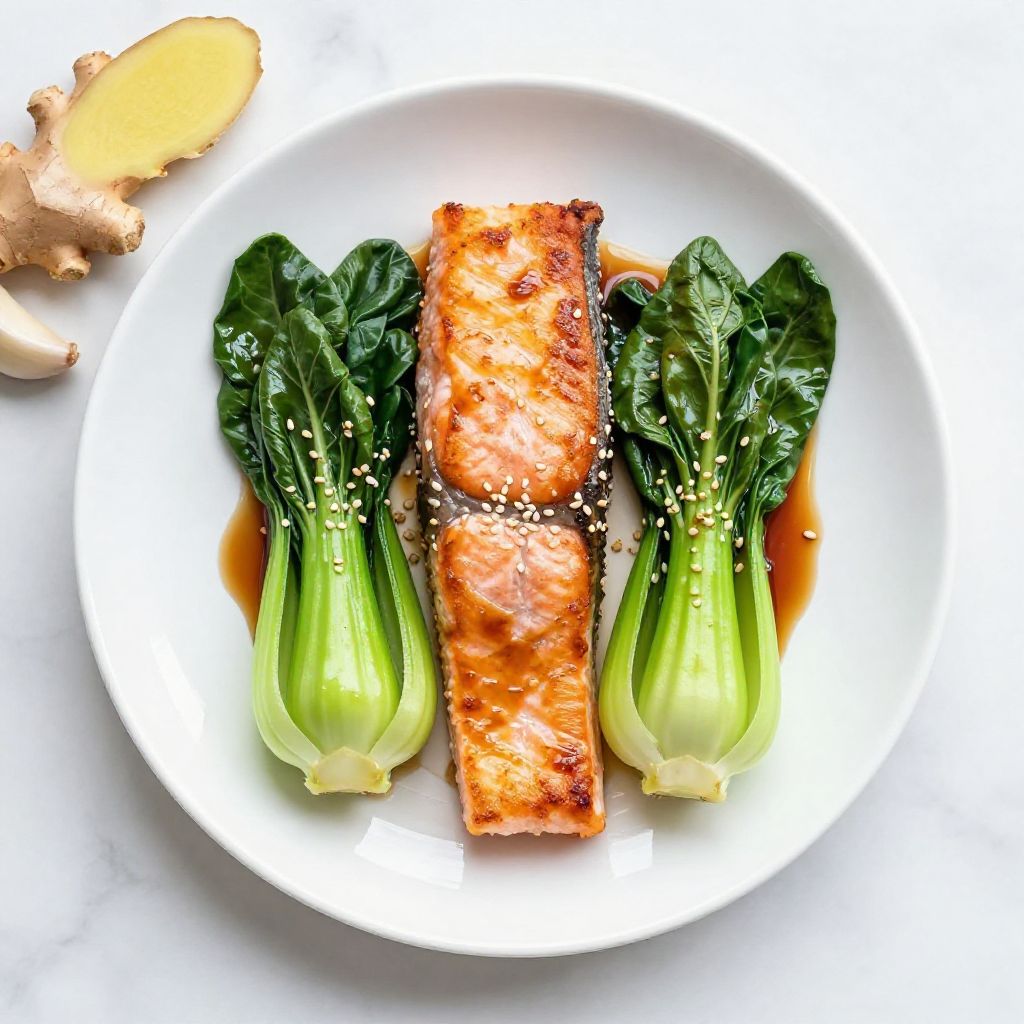
Salmon and Bok Choy
Ingredients
Equipment
Method
- Chop the bok choy into bite-size pieces and mince the garlic and grate the ginger.
- Heat a large skillet over medium-high heat and add 2 tablespoons of olive oil.
- Season both sides of the salmon fillets with salt and pepper.
- Place the salmon fillets skin-side down in the hot skillet and cook for 4-5 minutes until the skin is crispy and golden brown.
- Flip the salmon fillets and cook for an additional 3-4 minutes, until the fish is opaque and flakes easily with a fork.
- Add the chopped bok choy, minced garlic, and grated ginger to the skillet with the salmon and stir gently, cooking for 2-3 minutes until the bok choy wilts.
- Drizzle 1 tablespoon of soy sauce over the salmon and bok choy, toss gently to coat, and cook for another minute.
- Remove from heat, plate the salmon and bok choy, and sprinkle with 1 tablespoon of sesame seeds before serving.