
Picture this: a sizzling wok filled with fluffy rice, sweet crab meat, and vibrant veggies dancing together in perfect harmony. This Thai Crab Fried Rice recipe is your ticket to a taste of Thailand right in your kitchen, bringing a delightful blend of flavors and textures that will make your taste buds sing. It’s a quick and satisfying dish that’s versatile enough for a weeknight meal or a special occasion. With its umami-packed notes and a hint of freshness, you’ll find it hard to resist going back for seconds. Ready to whip up something delicious?
Why You’ll Love This Recipe
This dish is a crowd-pleaser that brings the flavors of Thai cuisine to your table effortlessly.
- Quick to prepare, great for busy weeknights.
- Loaded with fresh ingredients for a vibrant taste.
- Can be customized with your favorite vegetables.
- Perfect for using up leftover rice.
- A beautiful presentation that impresses guests.
My Experience Making This Recipe
Making this Thai Crab Fried Rice took me back to my travels in Thailand, where street vendors served up heaping plates of fragrant fried rice. The aroma filled my kitchen, and I couldn’t help but sneak a taste before it was even ready.
When I served it, everyone gathered around the table, and the compliments flowed as freely as the soy sauce. The blend of flavors and textures made it a hit, and I knew it was a recipe I’d be making again!
Recipe Overview
- Recipe Name: Thai Crab Fried Rice
- Servings: 4
- Prep Time: 10 minutes
- Cook Time: 15 minutes
- Total Time: 25 minutes
- Course: Main Course
- Cuisine: Thai
- Calories per Serving: 450
Equipment You Will Need
- Wok or large skillet
- Spatula or wooden spoon
- Measuring spoons and cups
- Knife and cutting board
- Serving dish
Ingredients for Thai Crab Fried Rice
- 4 cups cooked jasmine rice (day-old is best)
- 1 cup cooked crab meat, shredded
- 2 tablespoons vegetable oil
- 3 green onions, sliced
- 2 eggs, beaten
- 1 cup mixed vegetables (peas, carrots, bell peppers)
- 3 tablespoons soy sauce
- 1 tablespoon fish sauce
- 1 teaspoon sesame oil
- 1 tablespoon lime juice
- Fresh cilantro for garnish
Ingredient Notes and Substitutions
- Jasmine rice: This rice adds a lovely fragrance. You can substitute with basmati rice, but the flavor will differ slightly.
- Crab meat: Fresh crab is ideal for the best flavor. You can use canned crab if fresh is unavailable, but check for quality.
- Vegetable oil: This oil has a high smoke point. You can use canola or peanut oil as alternatives.
- Mixed vegetables: Feel free to use any veggies you like. Frozen mixed veggies work perfectly in a pinch.
- Fish sauce: This ingredient adds depth of flavor. If you prefer a vegetarian option, use soy sauce instead.
How to Make Thai Crab Fried Rice
Step 1: Prepare the Rice
If you have leftover rice, that’s ideal for this recipe. Day-old rice dries out slightly, preventing it from getting mushy when cooked.
Step 2: Heat the Wok
Heat your wok or skillet over medium-high heat and add the vegetable oil. A hot pan helps to stir-fry the ingredients evenly.
Step 3: Scramble the Eggs
Add the beaten eggs to the hot oil and scramble them until fully cooked. This adds richness to your fried rice.
Step 4: Sauté the Vegetables
Add the mixed vegetables and sliced green onions to the wok. Sauté them for about 2-3 minutes until they soften slightly.
Step 5: Add the Rice
Stir in the cooked jasmine rice, breaking up any clumps. This ensures the rice heats evenly and mixes well with the other ingredients.
Step 6: Incorporate the Crab
Gently fold in the shredded crab meat, mixing thoroughly. This is where the magic happens, as the crab infuses the rice with its sweet flavor.
Step 7: Season the Rice
Pour in the soy sauce, fish sauce, sesame oil, and lime juice. Toss everything together to ensure even distribution of flavors.
Step 8: Serve and Garnish
Transfer the fried rice to a serving dish and garnish with fresh cilantro. The herbs add a refreshing note that balances the dish beautifully.
Pro Tip: Always use day-old rice for fried rice; it makes a huge difference in texture!
Tips for the Best Thai Crab Fried Rice
- Use cold, leftover rice for the best texture.
- Don’t overcrowd the pan; work in batches if needed.
- Adjust the seasoning to your taste; add more soy sauce if you prefer.
- Feel free to add chili flakes for a spicy kick.
- Garnish with lime wedges for an extra zesty flavor.
Common Mistakes to Avoid
- Using fresh rice can lead to mushy fried rice. Stick to day-old rice for best results.
- Not heating the wok enough results in steaming instead of frying. A hot pan is key for that perfect texture.
- Overcrowding the pan can lead to uneven cooking. Fry in batches if necessary.
- Skipping the fish sauce diminishes the depth of flavor. Use it for that authentic taste.
Serving Suggestions
This Thai Crab Fried Rice is delightful on its own, but it pairs beautifully with various sides.
- Thai cucumber salad for a refreshing crunch.
- Spring rolls for an extra appetizer.
- Tom Yum soup for a warm, spicy complement.
- Thai iced tea to balance the flavors.
Variations to Try
- Swap crab for shrimp for a different seafood flavor.
- Add scrambled tofu for a vegetarian option.
- Include pineapple for a sweet and savory twist.
- Use different vegetables like broccoli or zucchini based on your preference.
Dietary Adaptations
- Gluten-free: Use gluten-free soy sauce to make this dish suitable.
- Dairy-free: This recipe is naturally dairy-free.
- Vegan/Vegetarian: Replace crab with tofu and adjust sauces for flavor.
- Low-carb/keto: Substitute rice with cauliflower rice for a lower-carb option.
Storage and Reheating
Refrigerator
Store any leftovers in an airtight container in the fridge.
- Consume within 3 days for optimal freshness.
- Reheat in the microwave or on the stovetop to maintain texture.
Freezer
Fried rice can be frozen for later enjoyment.
- Place in a freezer-safe container and store for up to 1 month.
- Thaw in the fridge before reheating for best results.
Reheating
To reheat, add a splash of water to the rice and cover it while warming.
- This helps to steam and revive the rice.
- Stir occasionally for even heating.
Nutrition Information
| Nutrient | Amount |
|---|---|
| Calories | 450 |
| Total Fat | 15g |
| Saturated Fat | 2g |
| Carbohydrates | 68g |
| Fiber | 3g |
| Sugar | 2g |
| Protein | 14g |
| Sodium | 900mg |
| Cholesterol | 120mg |
This information is estimated and may vary based on specific ingredients used.
Frequently Asked Questions
Can I use fresh crab instead of canned?
Absolutely! Fresh crab adds the best flavor, but canned crab is a great alternative.
Can I make this ahead of time?
Yes, you can prepare the ingredients and store them separately. Mix everything right before serving.
How do I store leftovers?
Keep leftovers in an airtight container in the fridge for up to three days.
What if my rice is too sticky?
Using day-old rice helps prevent stickiness. If it’s still sticky, try rinsing it before cooking.
Can I add more vegetables?
Definitely! Feel free to mix in any vegetables you enjoy for added nutrition and flavor.
Final Thoughts
Now that you have the perfect recipe for Thai Crab Fried Rice, it’s time to bring a taste of Thailand to your dinner table. Trust me, this dish is sure to impress!
If you enjoyed this recipe, check out my other favorites like Thai Cucumber Salad and Benihana Fried Rice for more delightful meals.
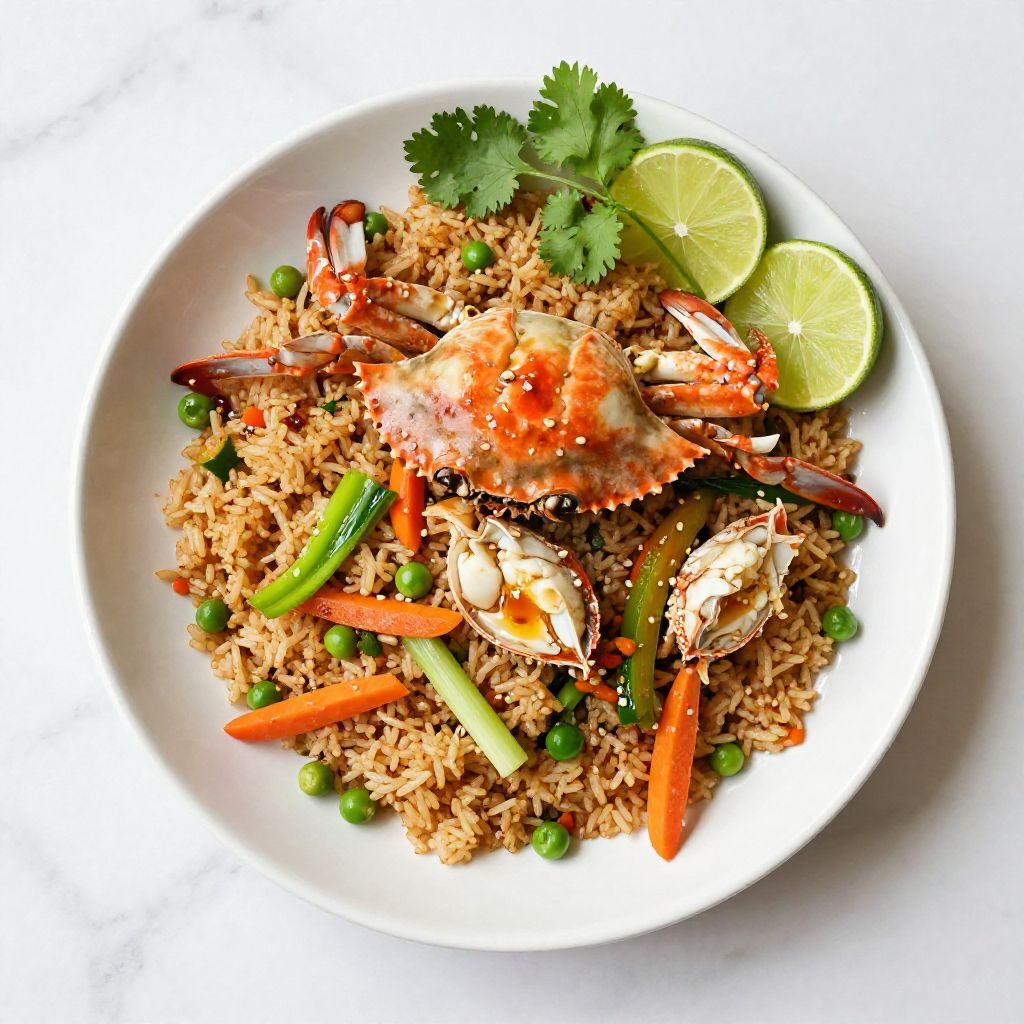
Thai Crab Fried Rice
Ingredients
Equipment
Method
- If you have day-old jasmine rice, fluff it with a fork to remove any clumps.
- Heat a wok or large skillet over medium-high heat and add 2 tablespoons vegetable oil.
- Pour in the beaten eggs and scramble until fully cooked, about 1 minute.
- Add mixed vegetables and sliced green onions, sautéing for 2-3 minutes until slightly softened.
- Stir in the cooked jasmine rice, breaking up any clumps, and cook for 3 minutes to heat through.
- Gently fold in shredded crab meat and cook for 1-2 minutes until warmed.
- Pour soy sauce, fish sauce, sesame oil, and lime juice over the rice and toss to combine, cooking for 1 minute.
- Transfer the fried rice to a serving dish and garnish with fresh cilantro before serving.