
Picture this: a flaky, buttery piece of salmon paired with tender, slightly crisp asparagus, all drizzled with a zesty lemon sauce. This Salmon and Asparagus Recipe is not just a meal; it’s an experience that brings together good food and great company. With its incredible flavor and vibrant colors, this dish is perfect for a weeknight dinner or an impressive gathering. It’s simple yet elegant, highlighting fresh ingredients that require little fuss. Let’s dive into how to make this delightful dish!
Why You’ll Love This Recipe
This recipe shines for its ease and deliciousness. It’s a one-pan wonder that delivers on flavor without a mountain of dishes.
- Quick cooking time makes it perfect for busy evenings.
- Healthy ingredients that are rich in omega-3 fatty acids.
- Bright, fresh flavors that brighten any plate.
- Versatile enough for customization with different herbs and spices.
- Minimal cleanup required since it all cooks in one pan.
My Experience Making This Recipe
When I first tried this recipe, I was amazed at how quickly it came together. The aroma of the salmon sizzling and asparagus roasting filled my kitchen, making it feel like a fancy restaurant.
My family devoured every bite, and I loved how they raved about the balance of flavors. The lemon zest and garlic added a brightness that truly elevated the dish.
Recipe Overview
- Recipe Name: Salmon and Asparagus
- Servings: 4
- Prep Time: 10 minutes
- Cook Time: 15 minutes
- Total Time: 25 minutes
- Course: Main Dish
- Cuisine: American
- Calories per Serving: 350
Equipment You Will Need
- Large oven-safe skillet
- Spatula or tongs
- Measuring spoons
- Knife and cutting board
Ingredients for Salmon and Asparagus
- 4 salmon fillets (about 6 ounces each)
- 1 bunch asparagus, trimmed
- 2 tablespoons olive oil
- 3 cloves garlic, minced
- 1 lemon, zested and juiced
- Salt and pepper to taste
- Fresh parsley, for garnish (optional)
Ingredient Notes and Substitutions
- Salmon fillets: Rich in flavor and healthy fats, they cook quickly. You can substitute with trout or cod if desired.
- Asparagus: This adds a delightful crunch. Broccoli or green beans can work well in its place.
- Olive oil: Used for sautéing and flavor. Avocado oil is a great alternative.
- Garlic: Provides a savory punch. Shallots can be a milder substitute.
- Lemon: Brightens the dish with acidity. Lime can be used for a different twist.
How to Make Salmon and Asparagus
Step 1: Preheat the Oven
Set your oven to 400°F (200°C). This ensures that your salmon cooks evenly and maintains its moisture.
Step 2: Prepare the Asparagus
Trim the woody ends off the asparagus. This helps avoid any tough, chewy bites.
Step 3: Heat the Skillet
In a large oven-safe skillet, heat the olive oil over medium heat. You want it hot enough to sear the salmon, creating a nice crust.
Step 4: Sear the Salmon
Season the salmon fillets with salt and pepper, then place them skin-side down in the skillet. Searing locks in flavor and creates that desirable crispy skin.
Step 5: Add Garlic and Asparagus
After 2-3 minutes, add the minced garlic and asparagus around the salmon. This allows the garlic to infuse the oil and flavor both the fish and veggies.
Step 6: Drizzle with Lemon Juice
Pour the lemon juice over the salmon and asparagus. This brightens the flavors and helps to tenderize the fish as it cooks.
Step 7: Bake in the Oven
Transfer the skillet to the preheated oven and bake for 10-12 minutes. The salmon should be flaky and the asparagus tender yet crisp.
Step 8: Garnish and Serve
Remove from the oven, sprinkle with lemon zest and fresh parsley if desired. This final touch adds freshness and visual appeal.
Pro Tip: Use a meat thermometer to check that the salmon is cooked to 145°F for perfect doneness.
Tips for the Best Salmon and Asparagus
- Choose salmon with a vibrant color; it indicates freshness.
- Don’t overcrowd the pan; give the salmon and asparagus room to cook evenly.
- Let the salmon rest for a couple of minutes after cooking for juicier results.
- Experiment with herbs like dill or thyme for added flavor.
- For a little heat, sprinkle red pepper flakes before serving.
Common Mistakes to Avoid
- Cooking the salmon on too high heat can dry it out. Keep it medium to ensure it stays moist.
- Skipping the seasoning will result in bland flavors. A little salt and pepper go a long way.
- Not preheating the oven can lead to uneven cooking. Always start with a hot oven.
- Overcooking the asparagus makes it mushy. Keep an eye on it to retain that nice crunch.
Serving Suggestions
This dish pairs wonderfully with a variety of sides. Here are some great ideas to accompany your meal:
- Quinoa or rice for a heartier base.
- Mixed greens salad with a light vinaigrette.
- Roasted potatoes or sweet potatoes for extra comfort.
- Crusty bread to soak up any leftover juices.
Variations to Try
- Add cherry tomatoes for a burst of sweetness and color.
- Incorporate a splash of white wine for deeper flavor.
- Substitute the asparagus with zucchini or bell peppers for a different veggie profile.
- Top with feta cheese for a Mediterranean twist.
Dietary Adaptations
- Gluten-free: This recipe is naturally gluten-free, just ensure all your ingredients are certified.
- Dairy-free: No dairy is used, making it friendly for lactose-intolerant eaters.
- Vegan/Vegetarian: Substitute salmon with marinated tofu or tempeh.
- Low-carb/Keto: This dish is already low in carbs; enjoy it as is.
Storage and Reheating
Refrigerator
Store any leftovers in an airtight container in the fridge for up to 3 days.
- Cool completely before sealing to avoid condensation.
- Refrigerate promptly to maintain freshness.
Freezer
This dish is best enjoyed fresh, but you can freeze salmon fillets before cooking. Cooked salmon can lose its texture when frozen.
- Wrap tightly in foil or freezer-safe bags.
- Use within 2 months for optimal flavor.
Reheating
Reheat gently in the oven to avoid drying out. Microwaving is quicker but can make the fish rubbery.
- Cover with a damp paper towel for microwaving.
- Heat in 350°F for about 10 minutes in the oven.
Nutrition Information
| Nutrient | Amount |
|---|---|
| Calories | 350 |
| Total Fat | 20g |
| Saturated Fat | 4g |
| Carbohydrates | 6g |
| Fiber | 2g |
| Sugar | 1g |
| Protein | 34g |
| Sodium | 350mg |
| Cholesterol | 80mg |
This nutritional information is an estimate and can vary based on specific ingredients and portion sizes.
Frequently Asked Questions
Can I make this recipe ahead of time?
It’s best served fresh, but you can prepare the ingredients and store them separately until ready to cook.
What can I substitute for salmon?
Trout or cod work great as alternatives, offering similar textures and flavors.
How do I store leftovers?
Keep leftovers in an airtight container in the fridge for up to 3 days for the best quality.
Why is my salmon dry?
Overcooking can lead to dryness; using a meat thermometer can help ensure it’s just right.
Can I use frozen salmon?
Yes, but thaw it completely before cooking for the best results.
Final Thoughts
This Salmon and Asparagus Recipe is a delightful way to enjoy a healthy, flavorful meal without spending hours in the kitchen. With its simple ingredients and straightforward steps, it’s perfect for both novice cooks and seasoned chefs.
So grab your skillet, and let’s make dinner exciting! For more delicious ideas, check out my Salmon Loaf Recipe and learn how long to boil asparagus for perfect tenderness.
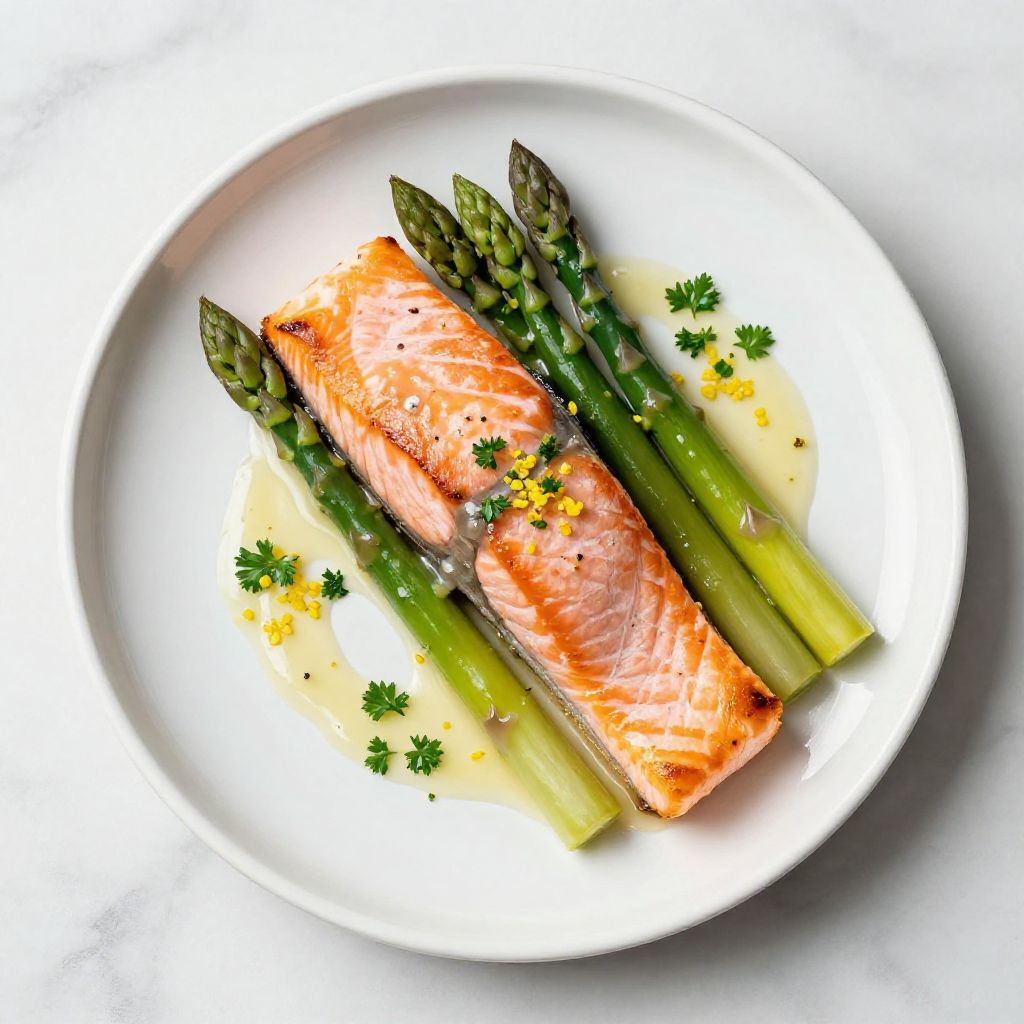
Salmon and Asparagus
Ingredients
Equipment
Method
- Preheat the oven to 400°F (200°C).
- Trim the woody ends off the asparagus.
- Heat the olive oil in a large oven-safe skillet over medium heat until shimmering.
- Season the salmon fillets with salt and pepper and place them skin-side down in the skillet, searing for 2-3 minutes.
- Add the minced garlic and arrange the asparagus around the salmon, cooking for 1-2 minutes to infuse flavor.
- Drizzle the lemon juice over the salmon and asparagus.
- Transfer the skillet to the preheated oven and bake for 10-12 minutes, until the salmon flakes easily and the asparagus is tender-crisp.
- Remove from the oven, sprinkle with lemon zest and fresh parsley, let rest for 2 minutes, then serve.