
Nothing beats the aroma of freshly baked Rye Bread wafting through your kitchen, especially on a chilly day. This hearty bread is not only packed with flavor but also has a delightful texture that makes it perfect for sandwiches or simply slathered with butter.
Why You’ll Love This Recipe
This recipe will quickly become a staple in your home. It’s a wholesome option that brings warmth and comfort to any meal.
- Rich, nutty flavor that elevates any dish.
- Perfectly chewy texture with a crispy crust.
- Simple ingredients that are easy to find.
- Great for sandwiches or toast.
- Freezes well for future enjoyment.
My Experience Making This Recipe
The first time I baked this rye bread, my kitchen transformed into a cozy bakery. As I kneaded the dough, I could already imagine the delicious sandwiches to come.
When I finally sliced into the warm loaf, the crust crackled beautifully, and my family gathered around to savor the first bite. It was a hit, and I knew I had struck gold with this recipe.
Recipe Overview
- Recipe Name: Rye Bread
- Servings: 12 slices
- Prep Time: 20 minutes
- Cook Time: 40 minutes
- Total Time: 1 hour
- Course: Bread
- Cuisine: American
- Calories per Serving: 150
Equipment You Will Need
- Mixing bowl
- Measuring cups and spoons
- Wooden spoon or dough scraper
- Loaf pan
- Kitchen towel
- Wire rack
Ingredients for Rye Bread
- 2 cups rye flour
- 1 cup all-purpose flour
- 1 packet active dry yeast (2 1/4 teaspoons)
- 1 tablespoon sugar
- 1 teaspoon salt
- 1 cup warm water (about 110°F)
- 2 tablespoons vegetable oil
Ingredient Notes and Substitutions
- Rye flour: It provides that signature flavor and density. You can substitute with whole wheat flour for a different taste.
- All-purpose flour: This gives the bread structure and lightness. Bread flour can be used for a chewier texture.
- Active dry yeast: This is essential for the bread to rise. Instant yeast can be used without any adjustments.
- Sugar: It activates the yeast and adds a hint of sweetness. Honey can be a natural alternative.
- Vegetable oil: It enriches the dough. Olive oil can add a lovely flavor twist.
How to Make Rye Bread
Step 1: Prepare the Dough
In a mixing bowl, combine the rye flour, all-purpose flour, yeast, sugar, and salt. This ensures even distribution of ingredients for a balanced flavor.
Step 2: Add the Wet Ingredients
Pour in the warm water and vegetable oil. The warmth helps activate the yeast, making the bread rise beautifully.
Step 3: Mix the Ingredients
Stir the mixture with a wooden spoon until a rough dough forms. This is where the magic begins; the dough starts coming together.
Step 4: Knead the Dough
Transfer the dough to a floured surface and knead for about 8-10 minutes until smooth. Kneading develops gluten, giving the bread its structure.
Step 5: First Rise
Place the dough in a lightly greased bowl, cover it with a kitchen towel, and let it rise in a warm spot for about 1 hour. This helps the dough double in size, creating a fluffy texture.
Step 6: Shape the Loaf
Once risen, punch down the dough to release excess air. Shape it into a loaf and place it in a greased loaf pan.
Step 7: Second Rise
Cover the loaf with the kitchen towel again and let it rise for 30 minutes. This second rise allows for a lighter loaf.
Step 8: Bake the Bread
Preheat your oven to 375°F. Bake the bread for 35-40 minutes until golden brown. The crust will be beautifully crisp, and the aroma will be irresistible.
Pro Tip: For a crustier loaf, place a pan of hot water in the oven while baking to create steam.
Tips for the Best Rye Bread
- Use fresh ingredients for the best flavor.
- Ensure your water is warm, not hot, to avoid killing the yeast.
- Don’t skip the kneading; it’s key for the dough’s texture.
- Experiment with adding seeds like caraway or sunflower for extra flavor.
- Let the bread cool completely before slicing to avoid a gummy texture.
Common Mistakes to Avoid
- Skipping the second rise can lead to a dense loaf.
- Using cold water will stunt yeast activation.
- Not kneading enough results in a heavy bread.
- Overbaking can dry out the loaf, so keep an eye on it.
Serving Suggestions
This rye bread is fantastic on its own but pairs beautifully with various toppings.
- Layer it with smoked salmon and cream cheese.
- Make a hearty reuben sandwich with corned beef.
- Serve with a bowl of soup for a cozy meal.
- Top with avocado and a sprinkle of salt for a simple snack.
Variations to Try
- Add caraway seeds for a traditional flavor profile.
- Incorporate sunflower seeds for added crunch and nutrition.
- For a sweeter loaf, mix in raisins or honey.
- Experiment with whole grain flour for a heartier texture.
Dietary Adaptations
- Gluten-free: Use a gluten-free flour blend, but results may vary.
- Dairy-free: This recipe is already dairy-free as written.
- Vegan: Substitute honey with maple syrup.
- Low-carb/keto: Use almond flour or coconut flour, but adjust liquids accordingly.
Storage and Reheating
Refrigerator
Store in an airtight container for up to a week.
- Slice before storing for easy access.
- Wrap in plastic wrap to keep it fresh.
Freezer
Freeze for up to three months in a sealed bag.
- Slice before freezing for convenience.
- Thaw at room temperature or in the microwave.
Reheating
Reheat slices in the toaster or oven for a crispy texture.
- Wrap in foil and warm in the oven for a softer loaf.
- Microwave for a few seconds for a quick fix.
Nutrition Information
| Nutrient | Amount |
|---|---|
| Calories | 150 |
| Total Fat | 3g |
| Saturated Fat | 0.5g |
| Carbohydrates | 28g |
| Fiber | 3g |
| Sugar | 1g |
| Protein | 5g |
| Sodium | 200mg |
| Cholesterol | 0mg |
This information is an estimate and can vary based on specific ingredients used.
Frequently Asked Questions
Can I use whole wheat flour instead of rye flour?
Yes, you can use whole wheat flour, but it will change the flavor and texture of the bread.
Can I make this bread ahead of time?
Absolutely! The dough can be made in advance and stored in the refrigerator for a day before baking.
How should I store leftover rye bread?
Keep it in an airtight container at room temperature for up to a week or freeze for longer storage.
Why is my rye bread dense?
A dense loaf usually means the dough didn’t rise enough, possibly due to inactive yeast or skipping the second rise.
Can I add seeds or nuts to the bread?
Definitely! Seeds like caraway or sunflower seeds can be mixed in for added flavor and texture.
Final Thoughts
Baking your own rye bread is a rewarding experience that fills your home with warmth and deliciousness. You’ll find it hard to go back to store-bought once you taste the difference.
So roll up your sleeves, gather your ingredients, and enjoy the process of making this delightful rye bread at home. Don’t forget to check out my Einkorn Bread Recipe and my Sourdough Baguette Recipe for more baking inspiration!
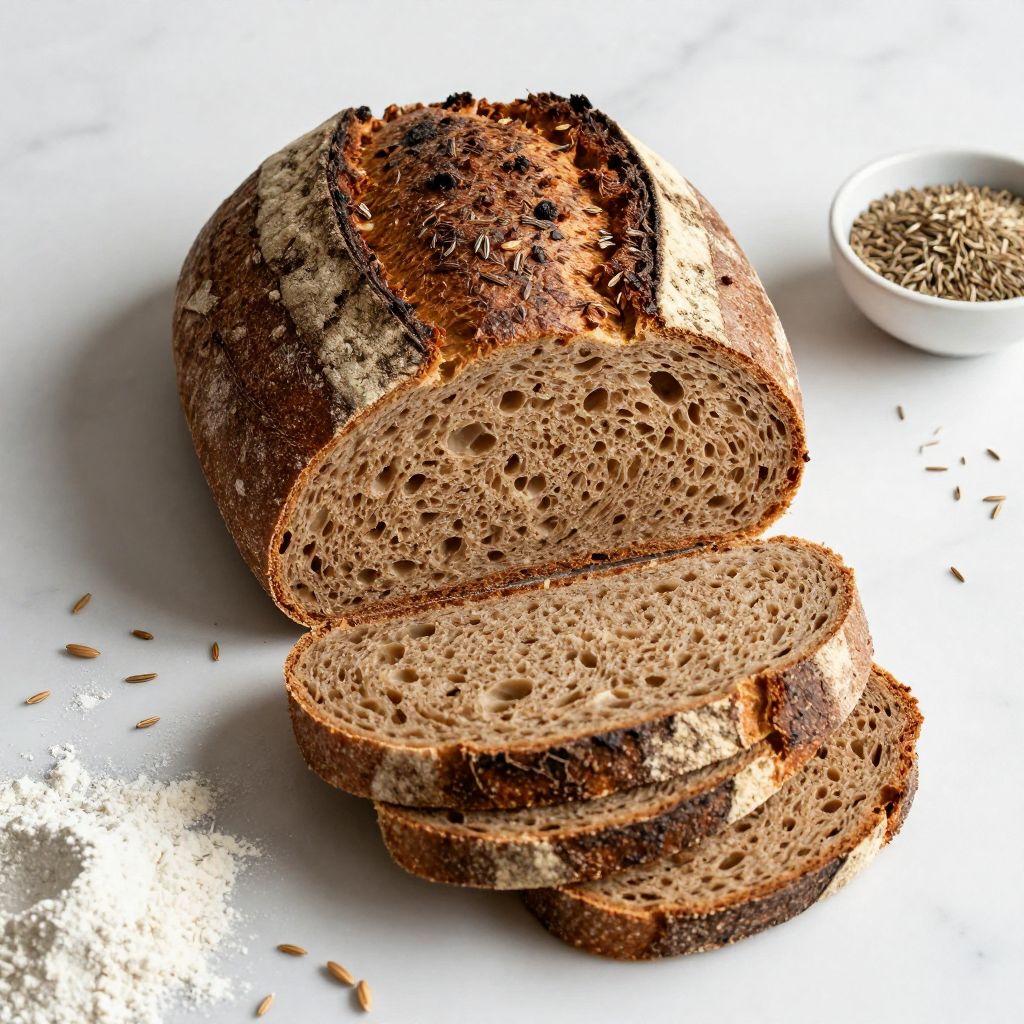
Rye Bread
Ingredients
Equipment
Method
- In a mixing bowl, combine the rye flour, all-purpose flour, yeast, sugar, and salt.
- Pour in the warm water and vegetable oil.
- Stir the mixture with a wooden spoon until a rough dough forms.
- Transfer the dough to a floured surface and knead for about 8-10 minutes until smooth.
- Place the dough in a lightly greased bowl, cover it with a kitchen towel, and let it rise in a warm spot for about 1 hour.
- Once risen, punch down the dough to release excess air, shape it into a loaf, and place it in a greased loaf pan.
- Cover the loaf with the kitchen towel again and let it rise for 30 minutes.
- Preheat your oven to 375°F.
- Bake the bread for 35-40 minutes until golden brown.