
Picture this: a creamy, rich spread that elevates sandwiches, salads, and dips to divine levels. Making your own Recipe Mayonnaise is not just about flavor; it’s about knowing exactly what goes into that deliciousness. This homemade mayo is silky, customizable, and so much better than store-bought. You’ll love how quickly it comes together, and the satisfaction of crafting something fresh is unbeatable. Let’s roll up our sleeves and dive into this easy yet rewarding culinary adventure!
Why You’ll Love This Recipe
This mayonnaise recipe is a must-try for anyone who enjoys cooking. It offers an incredible flavor and texture that store-bought brands just can’t match.
- Simple ingredients that you likely already have at home.
- Customizable flavors to match your preferences.
- Quick to make, taking only about 10 minutes.
- Perfect for sandwiches, dressings, and dips.
- Freshness that elevates any dish you add it to.
My Experience Making This Recipe
The first time I made mayonnaise, I was surprised at how easy it was. With just a few ingredients whipped together, I created something that tasted far superior to any jarred version.
Watching the mixture transform from a liquid to a creamy concoction was pure magic. Each time I serve it, I get compliments, and I can’t help but feel a bit proud of my homemade creation.
Recipe Overview
- Recipe Name: Recipe Mayonnaise
- Servings: About 1 cup
- Prep Time: 10 minutes
- Cook Time: 0 minutes
- Total Time: 10 minutes
- Course: Condiment
- Cuisine: American
- Calories per Serving: Approximately 100 calories
Equipment You Will Need
- Mixing bowl
- Whisk or hand blender
- Measuring cups
- Measuring spoons
- Storage container
Ingredients for Recipe Mayonnaise
- 1 large egg (at room temperature)
- 1 tablespoon Dijon mustard (adds flavor and stability)
- 1 tablespoon white wine vinegar (for acidity)
- 1 cup neutral oil (like canola or vegetable oil)
- Salt (to taste)
- Freshly ground pepper (optional, for seasoning)
Ingredient Notes and Substitutions
- Egg: Provides creaminess; a pasteurized egg can be used for safety.
- Dijon mustard: Offers flavor and helps emulsify; yellow mustard is a fine substitute.
- White wine vinegar: Adds tang; lemon juice can also work well.
- Neutral oil: Gives a smooth texture; olive oil can be used for a stronger flavor but may change the color.
How to Make Recipe Mayonnaise
Step 1: Gather Your Ingredients
Ensure all your ingredients are at room temperature, especially the egg. This helps create a better emulsion.
Step 2: Start with the Egg
In a mixing bowl, add the egg, mustard, and vinegar. This forms the base of your mayo and helps with emulsification.
Step 3: Whisk Together
Use a whisk or hand blender to combine the ingredients until they are well blended. This should take about 30 seconds.
Step 4: Slowly Add the Oil
With your mixer running, slowly drizzle in the oil. This gradual addition is crucial for creating a stable emulsion.
Step 5: Watch for Thickening
Continue to blend until the mixture begins to thicken. This is where the magic happens, and it should take about 1-2 minutes.
Step 6: Season to Taste
Add salt and pepper to taste. This is your chance to make it your own, so taste and adjust as necessary.
Step 7: Store Properly
Transfer the mayonnaise to a clean storage container. Storing it in the fridge will help it last longer.
Step 8: Enjoy!
Your homemade mayonnaise is ready to use! Enjoy it on sandwiches, in salads, or even as a dip.
Pro Tip: Make sure to add the oil very slowly at first to ensure a proper emulsion.
Tips for the Best Recipe Mayonnaise
- Use a fresh egg for the best flavor and texture.
- Keep the oil at room temperature for better emulsification.
- Experiment with different vinegars for unique flavor profiles.
- Whisk continuously while adding oil to ensure it thickens properly.
- Store in an airtight container for freshness and longevity.
Common Mistakes to Avoid
- Adding oil too quickly; this can cause the mayo to break.
- Using cold ingredients; they can prevent proper emulsification.
- Not whisking enough; under-mixing can lead to a runny consistency.
- Skipping the tasting step; seasoning is key for great flavor.
Serving Suggestions
Homemade mayonnaise is incredibly versatile. Try it as a spread, dip, or dressing.
- Slather it on sandwiches and burgers.
- Mix it into potato or pasta salads.
- Use it as a base for creamy dressings.
- Pair it with fresh vegetables as a dip.
Variations to Try
- Add garlic for a delicious garlic mayo.
- Incorporate herbs like dill or basil for added freshness.
- Swap in lemon juice for vinegar for a zesty twist.
- Add a touch of sriracha for a spicy kick.
Dietary Adaptations
- Gluten-free: This recipe is naturally gluten-free.
- Dairy-free: No dairy ingredients are used, making it suitable for lactose intolerance.
- Vegan/Vegetarian: Substitute the egg with aquafaba (chickpea water) for a vegan version.
- Low-carb/Keto: Use low-carb sweeteners or skip the sugar for a keto-friendly mayo.
Storage and Reheating
Refrigerator
Store homemade mayonnaise in an airtight container in the refrigerator.
- It will keep for about one week.
- Always check for freshness before using.
Freezer
Mayonnaise does not freeze well due to its emulsified nature.
- Freezing may cause it to separate.
- It is best enjoyed fresh.
Reheating
Reheating mayonnaise is not recommended as it can break the emulsion.
- Use it cold or at room temperature for the best texture.
Nutrition Information
| Nutrient | Amount |
|---|---|
| Calories | 100 |
| Total Fat | 11g |
| Saturated Fat | 1g |
| Carbohydrates | 0g |
| Fiber | 0g |
| Sugar | 0g |
| Protein | 1g |
| Sodium | 50mg |
| Cholesterol | 25mg |
This nutrition information is approximate and may vary based on the specific ingredients used.
Frequently Asked Questions
Can I use a different oil?
Yes, you can use different oils, like olive oil for a stronger flavor, but it may affect the color and taste.
Can I make this mayo ahead of time?
Absolutely! Homemade mayo can be made a few days in advance and stored in the fridge.
What if my mayo doesn’t thicken?
If your mayonnaise doesn’t thicken, try adding another egg yolk and whisking until it emulsifies.
Can I use an immersion blender?
Yes, an immersion blender works great for making mayonnaise and can speed up the process.
Is this recipe safe with raw eggs?
Using fresh, pasteurized eggs reduces the risk of salmonella. Always use eggs from a trusted source.
Final Thoughts
Making your own mayonnaise is not only rewarding but also a great way to control flavors and ingredients. Once you try this recipe, you might never reach for the store-bought stuff again.
So why wait? Gather your ingredients and get started. You can check out my delicious garlic mayo recipe or try my tasty mayo chicken recipe for more culinary inspiration!
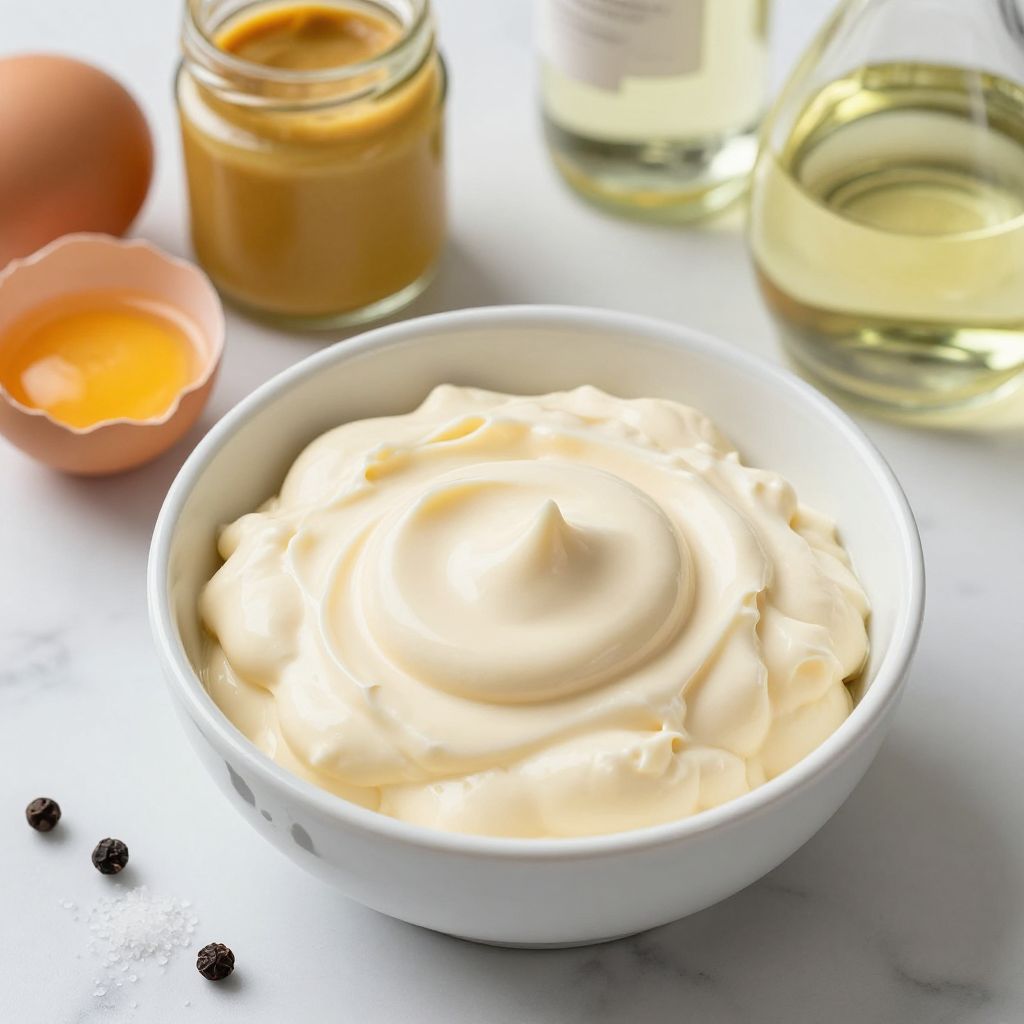
Recipe Mayonnaise
Ingredients
Equipment
Method
- Ensure all your ingredients are at room temperature, especially the egg.
- In a mixing bowl, add the egg, mustard, and vinegar.
- Use a whisk or hand blender to combine the ingredients until they are well blended, about 30 seconds.
- With your mixer running, slowly drizzle in the oil to create a stable emulsion.
- Continue to blend until the mixture begins to thicken, about 1-2 minutes.
- Add salt and pepper to taste.
- Transfer the mayonnaise to a clean storage container.