
There’s nothing quite like the aroma of a freshly baked Pound Cake wafting through your home. This classic recipe is a treasured family favorite, boasting a rich, buttery flavor and a delightful crumb that melts in your mouth. It’s perfect for any occasion, whether you’re enjoying a quiet afternoon with tea or celebrating a special gathering. What makes this cake truly special is its simplicity; with just a few ingredients, you can create a dessert that feels indulgent yet is easy to whip up. Let’s dive into the ingredients and steps to create this timeless treat!
Why You’ll Love This Recipe
This Pound Cake recipe brings together the best of both worlds: simplicity and deliciousness. You’ll appreciate its straightforward approach and incredible flavor.
- Rich and buttery flavor that’s irresistible.
- Dense, moist texture that holds up well for slicing.
- Easy to customize with various add-ins or glazes.
- Perfect for any occasion, from casual to elegant.
- Can be made ahead and freezes well.
My Experience Making This Recipe
When I first made this Pound Cake, I was amazed at how effortlessly it came together. The batter felt so luxurious as I mixed it, and the anticipation built as it baked in the oven.
Once it was out, I couldn’t resist the golden crust and delicate crumb. My family devoured it, and I knew I had struck gold with this recipe.
Recipe Overview
- Recipe Name: Pound Cake
- Servings: 10
- Prep Time: 15 minutes
- Cook Time: 1 hour
- Total Time: 1 hour 15 minutes
- Course: Dessert
- Cuisine: American
- Calories per Serving: 320
Equipment You Will Need
- Mixing bowl
- Electric mixer
- Measuring cups and spoons
- Rubber spatula
- Loaf pan (9×5 inches)
- Cooling rack
Ingredients for Pound Cake
- 1 cup unsalted butter, softened
- 2 cups granulated sugar
- 4 large eggs
- 3 cups all-purpose flour
- 1 cup milk
- 2 teaspoons baking powder
- 1 teaspoon vanilla extract
- 1/2 teaspoon salt
Ingredient Notes and Substitutions
- Unsalted butter: Adds richness and flavor; you can use salted butter, but reduce added salt.
- Granulated sugar: Provides sweetness and structure; brown sugar can add a different flavor.
- Large eggs: Bind the ingredients together; egg substitutes may work, but texture might change.
- All-purpose flour: Gives structure; cake flour can yield a lighter cake.
- Milk: Adds moisture; buttermilk can give a tangy flavor.
- Baking powder: Helps the cake rise; baking soda can be used with an acid like yogurt.
How to Make Pound Cake
Step 1: Preheat the Oven
Preheat your oven to 350°F (175°C). This ensures your cake bakes evenly and rises properly.
Step 2: Prepare the Loaf Pan
Grease and flour your loaf pan. This step prevents the cake from sticking and helps achieve a beautiful crust.
Step 3: Cream the Butter and Sugar
In a mixing bowl, beat the softened butter and granulated sugar until light and fluffy. This process incorporates air, giving the cake a tender crumb.
Step 4: Add the Eggs
Add the eggs one at a time, mixing well after each addition. This helps to create a smooth batter and ensures even incorporation.
Step 5: Mix the Dry Ingredients
In a separate bowl, whisk together the flour, baking powder, and salt. This step evenly distributes the leavening agent and prevents clumping.
Step 6: Combine Ingredients
Gradually add the dry mixture to the butter mixture, alternating with milk. Start and end with the dry ingredients; this helps prevent overmixing.
Step 7: Add Vanilla
Stir in the vanilla extract until just combined. This adds a lovely aroma and flavor to your cake.
Step 8: Bake the Cake
Pour the batter into the prepared loaf pan and smooth the top. Bake for 60 minutes or until a toothpick inserted comes out clean.
Pro Tip: Let the cake cool in the pan for 10 minutes before transferring to a cooling rack to prevent it from breaking apart.
Tips for the Best Pound Cake
- Use room temperature ingredients for better blending.
- Don’t overmix the batter; it can make the cake tough.
- Check for doneness a few minutes before the timer goes off.
- Let the cake cool completely before slicing for the best texture.
- Experiment with different extracts like almond or lemon for unique flavors.
Common Mistakes to Avoid
- Using cold butter or eggs can lead to a dense cake; always bring them to room temperature.
- Overmixing the batter can result in a tough texture; mix until just combined.
- Not measuring ingredients properly can throw off the cake; use a kitchen scale if possible.
- Skipping the greasing step may leave you with a cake stuck in the pan; always grease and flour.
Serving Suggestions
This Pound Cake is delightful on its own but can be elevated with a few simple pairings.
- Serve with fresh berries and whipped cream.
- Drizzle with a glaze or icing for added sweetness.
- Pair with a scoop of vanilla ice cream.
- Enjoy with your favorite coffee or tea.
Variations to Try
- Add lemon zest for a refreshing citrus twist.
- Incorporate chocolate chips for a sweet surprise.
- Swirl in fruit preserves before baking for a fruity flavor.
- Top with a caramel sauce for added richness.
Dietary Adaptations
- Gluten-free: Use a gluten-free flour blend, but the texture may vary.
- Dairy-free: Substitute with a plant-based butter and non-dairy milk.
- Vegan: Replace eggs with flax eggs or applesauce, and use vegan butter.
- Low-carb/keto: Use almond flour and sugar alternatives for a lower carb count.
Storage and Reheating
Refrigerator
Store leftover cake in an airtight container in the fridge for up to a week.
- Wrap slices in plastic wrap for freshness.
- Consider slicing before storing for easy access.
Freezer
Pound cake freezes well for up to three months.
- Wrap it tightly in plastic wrap and then foil.
- Label the package with the date for reference.
Reheating
Thaw frozen cake in the fridge overnight or at room temperature for a couple of hours.
- Reheat individual slices in the microwave for a few seconds.
- Warm slices in the oven for a few minutes to revive the crust.
Nutrition Information
| Nutrient | Amount |
|---|---|
| Calories | 320 |
| Total Fat | 16g |
| Saturated Fat | 10g |
| Carbohydrates | 43g |
| Fiber | 1g |
| Sugar | 25g |
| Protein | 4g |
| Sodium | 200mg |
| Cholesterol | 90mg |
Nutrition values are approximate and will vary based on specific ingredients used.
Frequently Asked Questions
Can I substitute other flours?
Yes, you can use cake flour for a lighter texture, but be aware it might affect the density.
How can I make this cake ahead of time?
You can bake it a day in advance; just store it properly to keep it fresh.
How should I store leftover pound cake?
Wrap it tightly in plastic wrap and keep it in the refrigerator for up to a week.
Why is my pound cake dense?
A dense cake may result from overmixing or using cold ingredients; ensure everything is at room temperature.
Can I add fruit to the batter?
Yes, adding fruits like blueberries or raspberries can enhance flavor, but reduce the amount of liquid accordingly.
Final Thoughts
This Pound Cake is not just a dessert; it’s a slice of nostalgia that brings warmth to any table. I encourage you to try making this cake, and savor every bite as you share it with loved ones.
For more delicious cake recipes, check out this Buttermilk Pound Cake Recipe or try out a Blueberry Pound Cake Recipe. Enjoy your baking adventure!
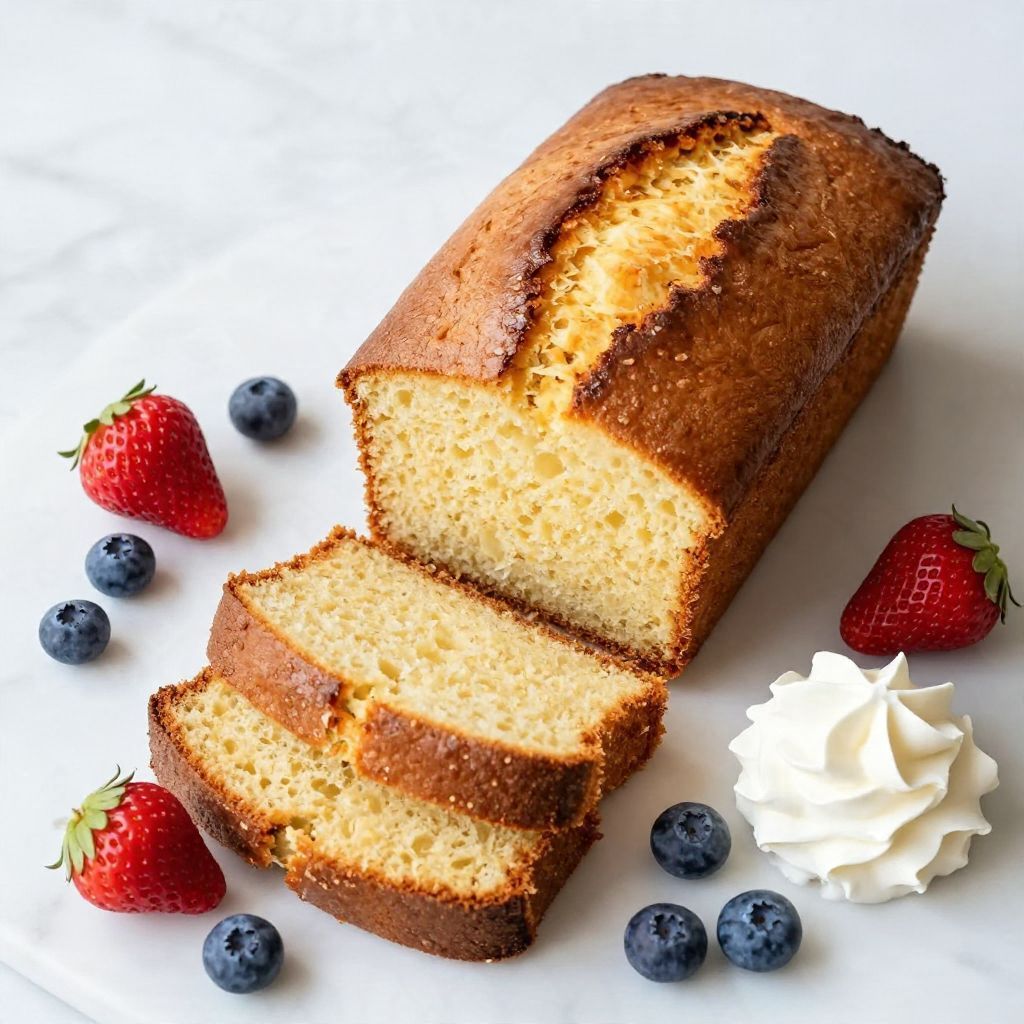
Pound Cake
Ingredients
Equipment
Method
- Preheat your oven to 350°F (175°C).
- Grease and flour your loaf pan.
- In a mixing bowl, beat the softened butter and granulated sugar until light and fluffy.
- Add the eggs one at a time, mixing well after each addition.
- In a separate bowl, whisk together the flour, baking powder, and salt.
- Gradually add the dry mixture to the butter mixture, alternating with milk.
- Stir in the vanilla extract until just combined.
- Pour the batter into the prepared loaf pan and smooth the top.
- Bake for 60 minutes or until a toothpick inserted comes out clean.
- Let the cake cool in the pan for 10 minutes before transferring to a cooling rack.