
As the sweet aroma of warm custard fills your kitchen, nostalgia wraps around you like a cozy blanket. This classic Custard recipe is a beloved staple that brings comfort and joy, whether you enjoy it on its own or as a silky layer in desserts.
Why You’ll Love This Recipe
This custard is a delightful treat that is both simple and versatile.
- Rich and creamy texture that melts in your mouth.
- Can be enjoyed warm or chilled, perfect for any occasion.
- Uses basic ingredients you likely already have at home.
- Great base for other desserts like tarts or trifles.
- Quick to make, so you won’t spend all day in the kitchen.
My Experience Making This Recipe
Making custard always feels like a warm hug from the past. The gentle simmering and stirring bring back memories of my grandmother teaching me the secrets of silky smooth custard.
When I served it for dessert, the first spoonful brought smiles all around. It’s amazing how something so simple can create such a joyful moment.
Recipe Overview
- Recipe Name: Custard
- Servings: 4
- Prep Time: 10 minutes
- Cook Time: 20 minutes
- Total Time: 30 minutes
- Course: Dessert
- Cuisine: French
- Calories per Serving: 200
Equipment You Will Need
- Medium saucepan
- Whisk
- Heatproof bowl
- Fine-mesh strainer
- Measuring cups and spoons
- Spatula
Ingredients for Custard
- 2 cups whole milk
- 1/2 cup granulated sugar
- 4 large egg yolks
- 1 teaspoon vanilla extract
- Pinch of salt
Ingredient Notes and Substitutions
- Whole milk: Provides creaminess; you can substitute with 2% milk for a lighter version.
- Granulated sugar: Sweetens the custard; brown sugar adds a deeper flavor if desired.
- Egg yolks: Create a rich texture; using egg substitutes can change consistency but works in a pinch.
- Vanilla extract: Adds depth; feel free to experiment with almond or hazelnut extracts.
- Salt: Enhances sweetness; skip it if you’re watching sodium intake.
How to Make Custard
Step 1: Heat the Milk
In a medium saucepan, heat the milk over medium heat until it begins to steam. This step is crucial as it helps to incorporate the flavors without boiling, which can curdle the mixture.
Step 2: Whisk Egg Yolks and Sugar
In a heatproof bowl, whisk together the egg yolks and granulated sugar until the mixture is pale and creamy. This helps to dissolve the sugar and create a smooth custard texture.
Step 3: Temper the Egg Mixture
Slowly pour the hot milk into the egg mixture, whisking constantly. This process gradually raises the temperature of the eggs, preventing them from scrambling.
Step 4: Strain the Mixture
Pour the custard mixture through a fine-mesh strainer into a clean bowl. Straining ensures a silky texture by removing any cooked egg bits.
Step 5: Cook the Custard
Return the strained custard to the saucepan and cook over low heat, stirring constantly with a spatula. This gentle cooking helps thicken the custard without burning it.
Step 6: Check for Doneness
Continue cooking until the custard coats the back of a spoon, about 10 minutes. This indicates that the custard is thickened and ready to cool.
Step 7: Add Vanilla and Salt
Remove the saucepan from heat and stir in the vanilla extract and a pinch of salt. These additions enhance the flavor and balance the sweetness.
Step 8: Chill the Custard
Transfer the custard to serving dishes and allow it to cool before refrigerating for at least 2 hours. Chilling helps the flavors meld and achieves the desired texture.
Pro Tip: For an extra smooth custard, always strain the mixture before cooking.
Tips for the Best Custard
- Use fresh eggs for the best flavor and texture.
- Stir constantly while cooking to prevent scorching.
- Keep the heat low; patience is crucial for a silky custard.
- Experiment with flavorings like citrus zest for a unique twist.
- Serve chilled or warm, but avoid letting it sit out too long to prevent spoilage.
Common Mistakes to Avoid
- Boiling the milk: This can lead to curdled custard.
- Not whisking enough: This can cause scrambled eggs in your custard.
- Using low-quality ingredients: Good ingredients yield better flavor.
- Skipping the straining step: Leaving in cooked egg bits ruins the texture.
Serving Suggestions
This custard shines on its own, but pairing it with other sweets elevates it even more. Here are some delightful pairing ideas:
- Fresh berries for a burst of flavor.
- Chocolate sauce drizzled on top.
- Crumbled cookies or graham crackers for texture.
- Whipped cream for added richness.
- Serve in a tart shell for a beautiful dessert.
Variations to Try
- Chocolate custard: Add melted chocolate to the mixture for a rich dessert.
- Coconut custard: Substitute half the milk with coconut milk for a tropical twist.
- Spiced custard: Incorporate cinnamon or nutmeg for a warm flavor profile.
- Fruit-flavored custard: Blend in pureed fruits like mango or raspberry.
Dietary Adaptations
- Gluten-free: This recipe is naturally gluten-free; enjoy without worry.
- Dairy-free: Use almond milk or oat milk instead of whole milk.
- Vegan: Substitute with silken tofu blended until smooth and a plant-based milk.
- Low-carb/Keto: Replace sugar with a low-carb sweetener for a keto-friendly version.
Storage and Reheating
Refrigerator
Store any leftover custard in an airtight container in the refrigerator for up to 3 days.
- Cover the surface with plastic wrap to prevent a skin from forming.
Freezer
Custard can be frozen for up to a month, but the texture may change.
- Thaw in the refrigerator overnight before serving.
Reheating
Reheat gently on the stovetop over low heat, stirring constantly.
- Microwaving is not recommended as it can cause uneven heating.
Nutrition Information
| Nutrient | Amount |
|---|---|
| Calories | 200 |
| Total Fat | 8g |
| Saturated Fat | 5g |
| Carbohydrates | 28g |
| Fiber | 0g |
| Sugar | 24g |
| Protein | 4g |
| Sodium | 80mg |
| Cholesterol | 210mg |
Nutrition values are approximations and may vary based on ingredients used.
Frequently Asked Questions
Can I use almond milk instead of whole milk?
Yes, almond milk works well but may alter the flavor slightly.
Can I make custard ahead of time?
Absolutely! Make it a day in advance and refrigerate for the best results.
How do I store leftover custard?
Keep it in an airtight container in the fridge and consume within three days.
Why did my custard curdle?
This usually happens if the mixture gets too hot too quickly; stir constantly and keep the heat low.
Can I flavor custard with other extracts?
Yes, feel free to experiment with almond, lemon, or even coffee extracts!
Final Thoughts
This Custard recipe is a timeless classic that deserves a spot in your kitchen routine. With its rich flavor and creamy texture, you’ll find yourself making it over and over again.
So grab your whisk and give this recipe a try; I promise it will be worth it. Don’t forget to check out other delightful recipes like Bavarian Cream and Cottage Cheese Mousse for more sweet inspiration!
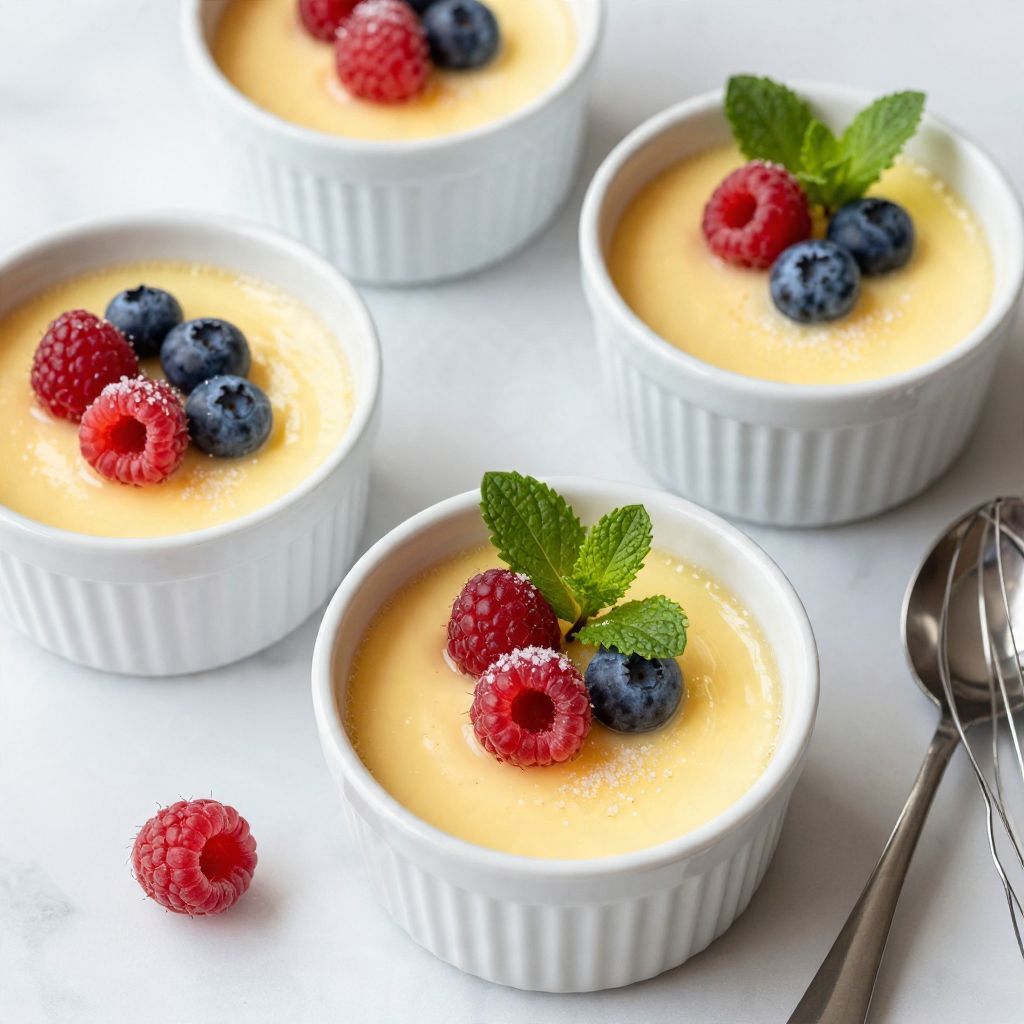
Custard
Ingredients
Equipment
Method
- In a medium saucepan, heat the milk over medium heat until it begins to steam.
- In a heatproof bowl, whisk together the egg yolks and granulated sugar until pale and creamy.
- Slowly pour the hot milk into the egg mixture, whisking constantly.
- Pour the custard mixture through a fine-mesh strainer into a clean bowl.
- Return the strained custard to the saucepan and cook over low heat, stirring constantly with a spatula.
- Continue cooking until the custard coats the back of a spoon, about 10 minutes.
- Remove from heat and stir in the vanilla extract and a pinch of salt.
- Transfer the custard to serving dishes and cool before refrigerating for at least 2 hours.