
Picture this: a warm, fragrant curry bubbling away on the stove, filling your kitchen with irresistible aromas. This Potato Curry Recipe is a delightful twist on comfort food, merging tender potatoes with a medley of spices that dance on your palate. It’s perfect for a cozy family dinner or a quick weeknight meal, effortlessly bringing a touch of culinary adventure to your table. With its creamy texture and vibrant flavors, this dish is a crowd-pleaser that never disappoints. Get ready to savor every bite!
Why You’ll Love This Recipe
This potato curry is not just delicious; it’s a breeze to make.
- Rich and comforting flavor profile.
- Simple ingredients, easy to find.
- Perfect for meal prep or leftovers.
- Can be customized with your favorite veggies.
- Vegan and gluten-free friendly.
My Experience Making This Recipe
When I first made this potato curry, I was amazed at how quickly the flavors melded together. The spices created a warm hug in a bowl, making it an instant favorite in my home.
My family couldn’t get enough, and the leftovers vanished faster than I could have imagined. The combination of creamy potatoes and aromatic spices is simply irresistible!
Recipe Overview
- Recipe Name: Potato Curry
- Servings: 4
- Prep Time: 10 minutes
- Cook Time: 30 minutes
- Total Time: 40 minutes
- Course: Main Dish
- Cuisine: Indian
- Calories per Serving: 250
Equipment You Will Need
- Large pot or Dutch oven
- Cutting board
- Sharp knife
- Wooden spoon or spatula
- Measuring cups and spoons
Ingredients for Potato Curry
- 4 medium potatoes, peeled and diced
- 1 onion, finely chopped
- 2 cloves garlic, minced
- 1 inch ginger, grated
- 2 tablespoons curry powder
- 1 teaspoon cumin
- 1 teaspoon turmeric
- 1 can (14 oz) coconut milk
- 2 cups vegetable broth
- Salt and pepper, to taste
- Fresh cilantro, for garnish
Ingredient Notes and Substitutions
- Potatoes: They add heartiness to the dish. You can substitute with sweet potatoes for a different flavor.
- Curry powder: This is key for flavor. Garam masala can be used for a more complex taste.
- Coconut milk: Provides creaminess. You can use almond milk for a lower-fat option.
- Vegetable broth: Enhances the flavor base. Water is an acceptable substitute, but may lack depth.
How to Make Potato Curry
Step 1: Prepare the Ingredients
Start by peeling and dicing the potatoes into small cubes. This allows them to cook evenly and absorb the curry flavors.
Step 2: Sauté the Aromatics
In a large pot, heat a splash of oil over medium heat. Add the chopped onion and sauté until translucent, about 5 minutes, which builds the flavor base for your curry.
Step 3: Add Garlic and Ginger
Stir in the minced garlic and grated ginger. Cooking these for an additional 1-2 minutes releases their aromatic oils, enhancing the dish.
Step 4: Introduce the Spices
Sprinkle in the curry powder, cumin, and turmeric. Toasting the spices for about 1 minute activates their flavors, making your curry more aromatic.
Step 5: Add Potatoes
Mix in the diced potatoes, ensuring they are well coated with the spices. This step allows the potatoes to absorb all the delicious flavors as they cook.
Step 6: Pour in Coconut Milk and Broth
Add the coconut milk and vegetable broth to the pot. This mixture creates a creamy sauce that will simmer with the potatoes.
Step 7: Simmer the Curry
Bring the mixture to a gentle boil, then reduce the heat to low. Cover and let it simmer for about 20 minutes, or until the potatoes are tender.
Step 8: Season and Serve
Once the potatoes are cooked, season with salt and pepper to taste. Serve hot, garnished with fresh cilantro for a burst of freshness.
Pro Tip: For an extra kick, add a pinch of red pepper flakes when cooking the spices!
Tips for the Best Potato Curry
- Use freshly ground spices for better flavor.
- Let the curry sit for a few minutes off the heat before serving; it enhances the taste.
- Experiment with additional vegetables like spinach or peas for variety.
- Pair with rice or naan for a complete meal.
- Adjust the spice level to your preference; it’s your curry after all!
Common Mistakes to Avoid
- Not salting the dish: Salt enhances flavors; skip it at your own risk!
- Overcooking the potatoes: They should be tender but not mushy; keep an eye on them.
- Skipping the aromatics: Garlic and ginger are essential for a flavorful base.
- Using low-quality spices: Fresh spices make a noticeable difference in taste.
Serving Suggestions
This potato curry is a star on its own, but it pairs wonderfully with a few simple sides.
- Steamed basmati rice
- Warm naan bread
- Cucumber raita for a cooling effect
- Simple green salad with lemon dressing
Variations to Try
- Add chickpeas for extra protein and a hearty bite.
- Incorporate spinach or kale for a nutritious boost.
- Switch up the coconut milk with heavy cream for a richer curry.
- Use different root vegetables like carrots or sweet potatoes for a twist.
Dietary Adaptations
- Gluten-free: This recipe is naturally gluten-free; no adjustments needed.
- Dairy-free: The coconut milk keeps it creamy without dairy.
- Vegan: All ingredients are plant-based, perfect for vegans.
- Low-carb/Keto: Swap potatoes with cauliflower for a lower-carb version.
Storage and Reheating
Refrigerator
Store leftover potato curry in an airtight container in the fridge for up to 4 days.
- Let it cool completely before sealing.
- Reheat in the microwave or on the stovetop until warmed through.
Freezer
This curry freezes beautifully for up to 3 months.
- Portion into freezer-safe containers.
- Thaw in the refrigerator before reheating.
Reheating
Reheat gently to avoid overcooking the potatoes.
- Stovetop is preferred for even heating.
- Add a splash of water or broth if it thickens too much.
Nutrition Information
| Nutrient | Amount |
|---|---|
| Calories | 250 |
| Total Fat | 12g |
| Saturated Fat | 10g |
| Carbohydrates | 35g |
| Fiber | 5g |
| Sugar | 2g |
| Protein | 4g |
| Sodium | 350mg |
| Cholesterol | 0mg |
This information is an estimate and may vary based on the specific ingredients used.
Frequently Asked Questions
Can I make this curry ahead of time?
Absolutely! It tastes even better the next day when the flavors have melded.
What can I substitute for coconut milk?
You can use almond milk or heavy cream, but this will change the flavor and texture slightly.
How do I store leftovers?
Store in an airtight container in the fridge for up to 4 days or freeze for up to 3 months.
Why did my potatoes turn mushy?
This often happens if they were overcooked; make sure to check for tenderness at the 20-minute mark.
Can I add meat to this recipe?
Yes! Chicken or lamb can be added for a heartier dish; just cook the meat through before adding the potatoes.
Final Thoughts
Making this Potato Curry Recipe can turn any ordinary day into something special. I encourage you to try this recipe and enjoy the warmth it brings to your kitchen.
For more delicious potato dishes, check out Potato Pave Recipe and Potato Balls Recipe. Happy cooking!
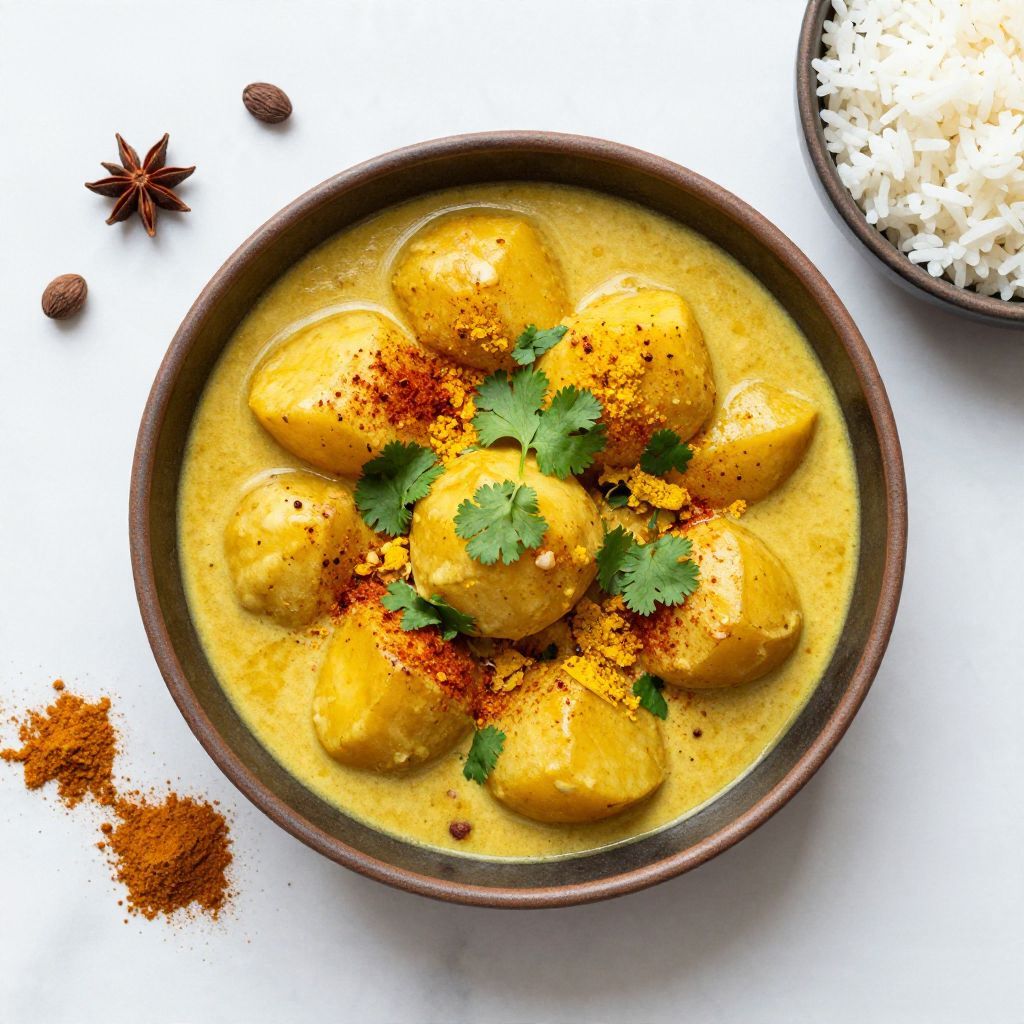
Potato Curry
Ingredients
Equipment
Method
- Prepare the ingredients by peeling and dicing the potatoes into small cubes.
- In a large pot, heat a splash of oil over medium heat. Add the chopped onion and sauté for about 5 minutes until translucent.
- Stir in the minced garlic and grated ginger, cooking for an additional 1-2 minutes.
- Sprinkle in the curry powder, cumin, and turmeric. Toast the spices for about 1 minute.
- Mix in the diced potatoes, ensuring they are well coated with the spices.
- Add the coconut milk and vegetable broth to the pot, stirring to combine.
- Bring the mixture to a gentle boil, then reduce heat to low. Cover and let it simmer for about 20 minutes, or until the potatoes are tender.
- Once the potatoes are cooked, season with salt and pepper to taste. Serve hot, garnished with fresh cilantro.