
There’s something magical about biting into a crispy, golden potato ball and discovering that perfectly creamy, cheesy center waiting inside.
Potato balls are the kind of comfort food that works equally well as a side dish, appetizer, or game-day snack that everyone devours within minutes. These little pockets of joy combine mashed potatoes with cheese and seasonings, then get coated and fried until they’re impossibly crunchy on the outside and soft within. They’re simple enough for weeknight dinners but impressive enough to serve at gatherings, and once you make them, you’ll understand why they deserve a permanent spot in your cooking rotation.
Why You’ll Love This Recipe
Potato balls hit that sweet spot between easy and elegant, requiring just a handful of ingredients and basic kitchen skills.
- Crispy exterior and creamy interior texture in every bite
- Customizable with different cheeses, herbs, and mix-ins to match your taste
- Make-ahead friendly since you can freeze them before frying
- Crowd-pleasing appetizer or side that pairs with almost any main course
- Budget-friendly and uses pantry staples most home cooks have on hand
My Experience Making This Recipe
I first made potato balls on a random Tuesday when I had leftover mashed potatoes and wanted something more interesting than reheating them plain. The result was so addictive that I ended up making a second batch before dinner even finished cooking.
My family gathered around the kitchen as these little golden spheres came out of the oil, and the kitchen filled with the most comforting aroma. Everyone grabbed one (carefully, since they were hot), and the feedback was immediate and enthusiastic, with requests to add them to the regular rotation.
What surprised me most was how forgiving the recipe turned out to be. Small variations in potato consistency or coating thickness didn’t matter much, and the end result stayed consistently delicious. Since then, I’ve made them dozens of times, sometimes with cheddar and bacon, sometimes with herb and garlic variations.
Recipe Overview
- Recipe Name: Crispy Cheese Potato Balls
- Servings: 12 to 16 balls (4 to 6 servings)
- Prep Time: 20 minutes
- Cook Time: 15 minutes
- Total Time: 35 minutes (plus chilling time)
- Course: Side Dish or Appetizer
- Cuisine: American
- Calories per Serving: 180 to 220
Equipment You Will Need
- Large mixing bowl
- Measuring cups and spoons
- Fork or potato masher
- Small bowl for coating setup
- Shallow bowls or plates for breadcrumbs and beaten egg
- Spoon or small cookie scoop for portioning
- Paper towels or clean kitchen towels
- Deep-sided pot or Dutch oven
- Candy or deep-fry thermometer (highly recommended)
- Slotted spoon or spider strainer
- Baking sheet lined with paper towels
Ingredients for Potato Balls
- 2 pounds russet or Yukon gold potatoes, peeled and cubed
- 1 teaspoon salt (for cooking water)
- 4 tablespoons unsalted butter
- 1/2 cup whole milk or heavy cream
- 3/4 cup sharp cheddar cheese, finely shredded
- 1/4 teaspoon black pepper
- 1/4 teaspoon garlic powder
- 1/4 teaspoon onion powder
- 2 large eggs, beaten
- 1 cup panko breadcrumbs
- 1/2 teaspoon salt (for coating mixture)
- Oil for frying (vegetable, canola, or peanut oil)
Ingredient Notes and Substitutions
- Russet Potatoes: These starchy potatoes create the fluffiest, most cohesive texture for potato balls. Waxy potatoes like red potatoes work but produce slightly denser results. You can also use half russet and half Yukon gold for a balanced texture.
- Sharp Cheddar Cheese: The bold flavor stands out in every bite, which is why sharp is preferred over mild. Gruyere, Gouda, or Manchego add sophisticated flavors if you want to experiment.
- Panko Breadcrumbs: Panko creates the crispiest, most textured coating compared to regular breadcrumbs. Regular breadcrumbs work in a pinch but yield a finer, less crunchy exterior.
- Butter and Cream: Both add richness to the mashed potato base. You can use all milk (producing slightly lighter balls) or all heavy cream (producing richer balls). Sour cream mixed in adds tangy flavor.
- Frying Oil: Vegetable, canola, and peanut oils all work well because they handle high heat without burning. Avoid olive oil, which has a lower smoke point and will turn bitter.
How to Make Potato Balls
Step 1: Boil the Potatoes Until Tender
Cut your peeled potatoes into roughly 1-inch cubes so they cook evenly and quickly. Place them in a large pot of cold water with 1 teaspoon of salt, then bring to a rolling boil and cook for 12 to 15 minutes until a fork easily pierces the largest pieces.
Step 2: Drain and Dry the Potatoes
Drain the potatoes thoroughly in a colander, shaking gently to remove excess water. Return them to the hot pot for about 30 seconds, then stir occasionally to let steam evaporate, which keeps your potato balls from becoming gluey.
Step 3: Mash the Potatoes with Butter and Cream
Add butter and milk to the warm potatoes, then mash until you reach a smooth, creamy consistency with no large lumps. Some small flecks of potato skin are fine, but aim for mostly uniform texture so the balls hold together well.
Step 4: Mix in Cheese and Seasonings
Fold in the shredded cheddar cheese, black pepper, garlic powder, and onion powder, stirring until everything is evenly distributed. Taste and adjust seasonings if needed, keeping in mind that the cheese already adds some salt.
Step 5: Cool the Mixture Until Handleable
Let the mashed potato mixture cool at room temperature for about 10 minutes, then transfer to the refrigerator for at least 30 minutes or up to 2 hours. Cold potatoes are much easier to shape and hold together during frying.
Step 6: Set Up Your Coating Station
Place beaten eggs in one shallow bowl and panko mixed with 1/2 teaspoon salt in another bowl right beside it. Having everything prepped and within reach makes the coating process fast and keeps you from getting frustrated midway.
Step 7: Shape and Coat the Potato Balls
Using a small cookie scoop or spoon, portion the cold potato mixture into 12 to 16 roughly equal balls. Roll each ball in your hands to smooth it, then dip into beaten egg, roll in panko until completely coated, then place on a parchment-lined plate.
Step 8: Chill the Coated Balls Before Frying
Refrigerate the coated potato balls for at least 15 minutes before frying, which helps the coating stick and prevents the balls from falling apart in the hot oil. You can prepare them up to this point earlier in the day or even freeze them for later cooking.
Step 9: Heat Oil to the Correct Temperature
Fill your pot with 3 to 4 inches of oil and heat to 350 degrees Fahrenheit, monitoring with a thermometer. Oil that’s too cool produces greasy, soggy balls, while oil that’s too hot burns the outside before the inside heats through.
Step 10: Fry in Batches Until Golden Brown
Carefully add 4 to 5 potato balls to the hot oil, avoiding overcrowding which lowers the temperature and causes uneven cooking. Fry for 2 to 3 minutes, turning occasionally with a slotted spoon, until the coating turns deep golden brown on all sides.
Step 11: Drain on Paper Towels
Use a slotted spoon to transfer the fried balls to a paper towel-lined plate, where they’ll drain and cool slightly. The paper towels absorb excess oil without making the outside soggy if you use them immediately while the balls are still hot.
Pro Tip: Keep finished potato balls warm in a 200-degree oven while you finish frying the remaining batches, so everything comes to the table at the same temperature and texture.
Tips for the Best Potato Balls
- Use a thermometer to monitor oil temperature constantly. It drops when you add potatoes, so adjust heat slightly upward to maintain 350 degrees throughout frying.
- Don’t skip the chilling step after shaping. Warm potato mixture makes flimsy balls that fall apart or leak filling into the oil.
- Double-coat for extra crispiness by dipping in egg and breadcrumbs a second time after the first coat sets slightly. This creates an extra-crunchy exterior.
- Work with one ball at a time during coating and avoid stacking coated balls on top of each other, which flattens them and creates uneven cooking.
- If using frozen potato balls, add an extra 1 to 2 minutes to frying time and raise the oil temperature slightly to 360 degrees so the inside heats through before the outside burns.
- Taste a finished ball before serving to confirm seasoning. You can sprinkle with fleur de sel or other finishing salts immediately after draining if you want extra flavor depth.
Common Mistakes to Avoid
- Overmixing the mashed potatoes, which develops gluten and creates gluey, dense balls instead of fluffy ones. Stir gently and stop as soon as everything combines.
- Skipping the drying step after boiling, which leaves excess water in your potatoes and causes balls to fall apart or turn mushy instead of creamy.
- Using warm or room-temperature potato mixture, which makes shaping nearly impossible and produces balls that lose their shape during frying.
- Frying at too low a temperature, which makes the coating absorb excessive oil and turn soggy and greasy rather than crispy and light.
- Frying too many balls at once, which significantly drops the oil temperature and causes uneven cooking with some balls raw inside while others burn.
Serving Suggestions
Potato balls work beautifully as an appetizer, side dish, or even the star of a casual meal. Serve them warm with your favorite dipping sauce for maximum enjoyment.
- Sour cream mixed with fresh chives and a pinch of paprika for a classic pairing
- Ketchup or barbecue sauce for a nostalgic, familiar flavor combination
- Ranch dressing or blue cheese dressing for a richer, more indulgent option
- Spicy sriracha mayo or a tangy hot sauce for those who like heat
- Melted cheese sauce or gravy for serving as a heartier side dish
Variations to Try
- Loaded Bacon and Cheese: Fold crispy bacon bits and extra sharp cheddar into the mashed potato base for a savory, smoky twist that tastes like loaded baked potatoes in ball form.
- Herb Garden Version: Mix in fresh parsley, dill, and chives along with the seasonings for a fresh, bright flavor that works especially well with seafood or light proteins.
- Jalapeno Popper Style: Add diced jalapenos and use pepper jack cheese instead of cheddar for a spicy kick that appeals to heat lovers.
- Truffle Parmesan: Substitute Parmesan for cheddar and add a drizzle of truffle oil to the mashed potato mixture for a luxe, fancy version perfect for entertaining.
- Vegetable Packed: Fold in finely diced cooked broccoli, carrots, or corn for added texture and nutrition while keeping the same delicious cheese and potato base.
Dietary Adaptations
- Gluten-Free: Substitute gluten-free panko breadcrumbs for regular panko in the coating. The texture remains nearly identical, though you may need to watch cooking time slightly since some brands brown faster.
- Dairy-Free: Replace butter with olive oil or dairy-free butter, use unsweetened oat milk instead of cream, and substitute nutritional yeast or dairy-free cheese for the cheddar. The texture stays similar though the flavor becomes less rich.
- Vegan: Use olive oil, oat milk, nutritional yeast, and a plant-based egg replacement mixed with water. The coating and cooking process remain the same, producing results that satisfy even non-vegans.
- Lower-Carb: Substitute cauliflower mash for half the potatoes to reduce carbs while maintaining similar texture and flavor. You may need slightly less liquid since cauliflower releases more water during cooking.
Storage and Reheating
Refrigerator
Store leftover cooked potato balls in an airtight container for up to 4 days. They taste best when reheated rather than eaten cold from the fridge.
- Reheat in a 350-degree oven for 8 to 10 minutes until warmed through and the outside crisps slightly
- Reheat in an air fryer at 350 degrees for 5 to 7 minutes for the crispiest results
- Avoid microwaving, which makes the coating soggy and rubbery
Freezer
Freeze coated (uncooked) potato balls on a baking sheet, then transfer to a freezer bag for up to 3 months. You can also freeze cooked balls, though they’re best consumed within 2 months.
- Frozen uncooked balls fry beautifully with no thawing needed and an extra 1 to 2 minutes cooking time
- Frozen cooked balls reheat best in a 350-degree oven for 12 to 15 minutes or an air fryer for 8 to 10 minutes
Reheating
Oven and air fryer methods restore crispiness best, while microwave speeds up the process at the cost of texture. For entertaining, reheat in a warm oven and serve immediately.
- Convection oven at 375 degrees for 7 to 9 minutes yields excellent results
- Stovetop pan-frying briefly in a little oil revives crispiness if you’re in a hurry
Nutrition Information
| Nutrient | Amount |
|---|---|
| Calories | 210 |
| Total Fat | 12g |
| Saturated Fat | 5g |
| Carbohydrates | 22g |
| Fiber | 2g |
| Sugar | 1g |
| Protein | 6g |
| Sodium | 380mg |
| Cholesterol | 45mg |
These values are approximate and based on serving 4 people from one batch. Values may vary depending on specific brands and exact portion sizes.
Frequently Asked Questions
Can I make potato balls ahead of time?
Absolutely, and this is one of their best features. Prepare them through step 8 (coated and chilled), then refrigerate for up to 24 hours or freeze for up to 3 months. Fry directly from frozen without thawing, adding 1 to 2 minutes to cooking time.
What type of potato works best?
Russet potatoes are ideal because their high starch content creates fluffy, cohesive balls. Yukon golds work well too and produce slightly creamier results, so feel free to use either or a combination of both.
Why are my potato balls falling apart in the oil?
This usually happens when the potato mixture is warm or the oil temperature drops too low. Always chill shaped balls before frying, maintain oil at exactly 350 degrees using a thermometer, and avoid overcrowding the pot.
Can I use instant mashed potatoes?
While possible, fresh mashed potatoes produce far superior texture and flavor. Instant potatoes often taste gummy and lack the light, fluffy quality that makes these balls special.
How do I know when the oil is hot enough?
Use a candy or deep-fry thermometer clipped to the side of your pot, targeting 350 degrees Fahrenheit. If you don’t have a thermometer, drop a small piece of breadcrumb into the oil; it should sizzle immediately and brown in about 15 seconds.
Can I bake instead of frying?
Baked potato balls won’t achieve the same golden, crispy exterior that makes them special. However, you can try air frying at 375 degrees for 10 to 12 minutes, which produces surprisingly crispy results that approach traditional fried versions.
Final Thoughts
Potato balls are one of those recipes that seems fancy but actually comes together quickly once you understand the basic technique. The combination of creamy interior and crispy exterior hits every comfort food craving at once, and the make-ahead option means you can impress guests without last-minute stress.
Make a batch this week and see why this recipe earns a permanent spot in your cooking rotation. You can serve them as a side, appetizer, or snack, and every single person at your table will be reaching for seconds.
If you enjoy potato balls, you might also love exploring other potato treats like potato candy, or try the classic potato salad for a lighter side dish option. Both recipes offer the same comforting potato-forward flavors in completely different ways, giving you plenty of reasons to keep potatoes as a kitchen staple.
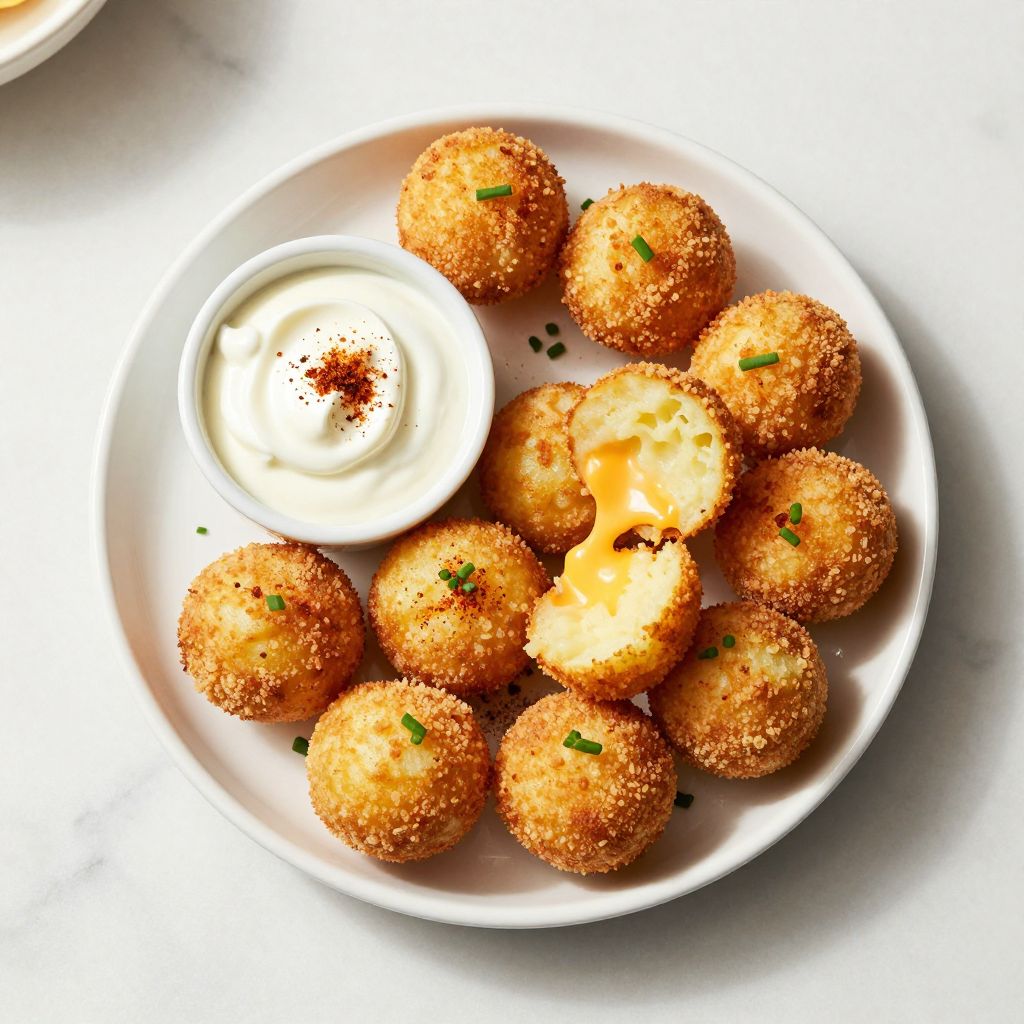
Crispy Cheese Potato Balls
Ingredients
Equipment
Method
- Cut peeled potatoes into 1-inch cubes, place in a pot with cold water and 1 teaspoon salt, bring to a rolling boil and cook 12 to 15 minutes until tender.
- Drain potatoes thoroughly, return to the pot for 30 seconds, stirring to evaporate excess moisture.
- Add butter and milk to warm potatoes and mash until smooth and creamy.
- Fold in cheddar cheese, black pepper, garlic powder, and onion powder until evenly distributed.
- Let mixture cool at room temperature 10 minutes, then refrigerate at least 30 minutes.
- Set up coating station with beaten eggs in one bowl and panko mixed with 1/2 teaspoon salt in another.
- Portion chilled potato mixture into 12 to 16 balls using a scoop, roll smooth, dip in egg, and coat with panko.
- Refrigerate coated balls at least 15 minutes before frying.
- Heat 3 to 4 inches of oil in a pot to 350°F (175°C).
- Fry 4 to 5 potato balls at a time for 2 to 3 minutes, turning occasionally, until golden brown.
- Transfer fried potato balls to paper towel–lined baking sheet to drain and serve warm.