
There’s something undeniably satisfying about cracking open a jar of homemade pickled eggs, the tangy aroma wafting through the air. This Pickled Egg Recipe is a delightful blend of hard-boiled eggs and a zesty brine that transforms a simple snack into a gourmet treat.
With their vibrant color and bold flavor, these eggs are perfect for picnics, parties, or just a tasty addition to your fridge. They are easy to make, versatile, and can elevate any cheese board or salad, so let’s dive into making this scrumptious staple!
Why You’ll Love This Recipe
This recipe is a must-try for anyone looking to add a zing to their meals.
- Simple ingredients make for a quick prep.
- Great for preserving eggs and reducing waste.
- Unique flavor that pairs well with many dishes.
- Customizable brine to suit your taste.
My Experience Making This Recipe
Making pickled eggs always brings back memories of family gatherings where jars filled with these colorful bites were the talk of the table. After my first batch, I was hooked — the rich, tangy flavor had me reaching for another egg before I even finished the first.
Friends and family were impressed when I brought my version to a potluck. The crunch of the spices against the creamy egg was a hit, and I had requests for the recipe before the night ended.
Recipe Overview
- Recipe Name: Pickled Eggs
- Servings: 6
- Prep Time: 15 minutes
- Cook Time: 10 minutes
- Total Time: 25 minutes
- Course: Snack
- Cuisine: American
- Calories per Serving: 70
Equipment You Will Need
- Medium pot
- Heatproof jar with lid
- Measuring cups and spoons
- Slotted spoon
- Whisk
Ingredients for Pickled Eggs
- 6 large eggs
- 1 cup white vinegar
- 1 cup water
- 1 tablespoon sugar
- 1 tablespoon salt
- 1 teaspoon black peppercorns
- 1 teaspoon mustard seeds
- 1 clove garlic, crushed
- 1 bay leaf
Ingredient Notes and Substitutions
- Eggs: They provide protein and a creamy texture. You can use medium or extra-large eggs if preferred.
- White vinegar: It gives the brine its sharp flavor. Apple cider vinegar can be used for a milder taste.
- Sugar: It balances the acidity of the vinegar. Feel free to omit it for a more tart flavor.
- Garlic: Adds depth to the flavor. Fresh herbs like dill can be used instead for a different profile.
How to Make Pickled Eggs
Step 1: Hard Boil the Eggs
Place the eggs in a pot and cover them with cold water. Bring to a boil, then cover and remove from heat, letting them sit for about 10-12 minutes.
Step 2: Prepare the Ice Bath
While the eggs are cooking, fill a bowl with ice and cold water. This will stop the cooking process and make peeling easier.
Step 3: Peel the Eggs
Once the eggs have cooled for a few minutes in the ice bath, gently tap them to crack the shell and peel under running water. This method helps remove the shells more cleanly.
Step 4: Make the Brine
In a saucepan, combine the vinegar, water, sugar, salt, peppercorns, mustard seeds, garlic, and bay leaf. Bring the mixture to a boil, stirring until the sugar and salt dissolve.
Step 5: Pack the Jar
Place the peeled eggs in a heatproof jar, packing them tightly but without breaking them. Pour the hot brine over the eggs, ensuring they are fully submerged.
Step 6: Seal and Cool
Seal the jar tightly with a lid and allow it to cool to room temperature. This helps the flavors develop even more.
Step 7: Refrigerate
Once cooled, place the jar in the refrigerator. Let the eggs pickle for at least 24 hours for the best flavor, though 3-5 days is ideal.
Step 8: Enjoy!
After the pickling period, your eggs are ready to be enjoyed! Serve them as a snack, in salads, or on charcuterie boards.
Pro Tip: For a colorful twist, add beet juice to the brine for vibrant pink eggs.
Tips for the Best Pickled Eggs
- Use fresh eggs for the best flavor and ease of peeling.
- Experiment with spices in the brine for a custom flavor profile.
- Store in a glass jar for better preservation and visibility.
- Allow more time for pickling if you prefer a stronger flavor.
- Label your jars with the date to keep track of freshness.
Common Mistakes to Avoid
- Not cooling the eggs properly can lead to overcooking and a greenish yolk.
- Skipping the ice bath makes peeling difficult and messy.
- Not fully submerging the eggs can result in uneven pickling.
- Using an unsterilized jar may lead to spoilage.
Serving Suggestions
Pickled eggs are versatile and can be served in various ways. Here are some delicious pairings to consider:
- Chopped into salads for an extra protein boost.
- As a garnish for Bloody Mary cocktails.
- On a charcuterie board with cheeses and meats.
- Alongside crackers and dips for a tasty snack.
Variations to Try
- Add jalapeños to the brine for a spicy kick.
- Include fresh herbs like dill or thyme for an aromatic twist.
- Substitute the white vinegar with apple cider vinegar for a milder flavor.
- Experiment with different spices, such as dill seeds or coriander.
Dietary Adaptations
- Gluten-free: This recipe is naturally gluten-free.
- Dairy-free: No dairy ingredients are used in this recipe.
- Vegan/Vegetarian: This recipe is not suitable for vegans as it uses eggs.
- Low-carb/Keto: Perfect for low-carb diets since eggs are low in carbs.
Storage and Reheating
Refrigerator
Store pickled eggs in the refrigerator for up to 3-4 weeks in their brine.
- Keep the jar tightly sealed to maintain freshness.
- Check for any changes in smell or appearance before consuming.
Freezer
Freezing is not recommended as it alters the texture of the eggs.
- Pickled eggs are best enjoyed fresh and refrigerated.
Reheating
There is no need to reheat pickled eggs; they are best enjoyed cold.
- Simply take them from the fridge and serve.
Nutrition Information
| Nutrient | Amount |
|---|---|
| Calories | 70 |
| Total Fat | 5g |
| Saturated Fat | 1.5g |
| Carbohydrates | 1g |
| Fiber | 0g |
| Sugar | 1g |
| Protein | 6g |
| Sodium | 210mg |
| Cholesterol | 185mg |
Nutrition values are approximate and may vary based on specific ingredients used.
Frequently Asked Questions
Can I use brown eggs for pickling?
Yes, brown eggs work just as well as white eggs; the color does not affect the flavor.
How long do pickled eggs last?
They can last for 3-4 weeks in the fridge if stored properly in their brine.
Can I make these ahead of time?
Absolutely! Making them a few days in advance allows the flavors to deepen.
What if the eggs turn green?
This usually occurs if they are overcooked; they are still safe to eat.
Can I add other flavors to the brine?
Definitely! Feel free to customize the brine with your favorite spices and herbs.
Final Thoughts
This Pickled Egg Recipe is a delightful way to enjoy a classic snack with a twist. With just a few ingredients and some patience, you can create a delicious treat that impresses everyone.
I encourage you to try making these at home, and don’t forget to check out my recipes for pickled okra and pickled shrimp for more tangy goodness!
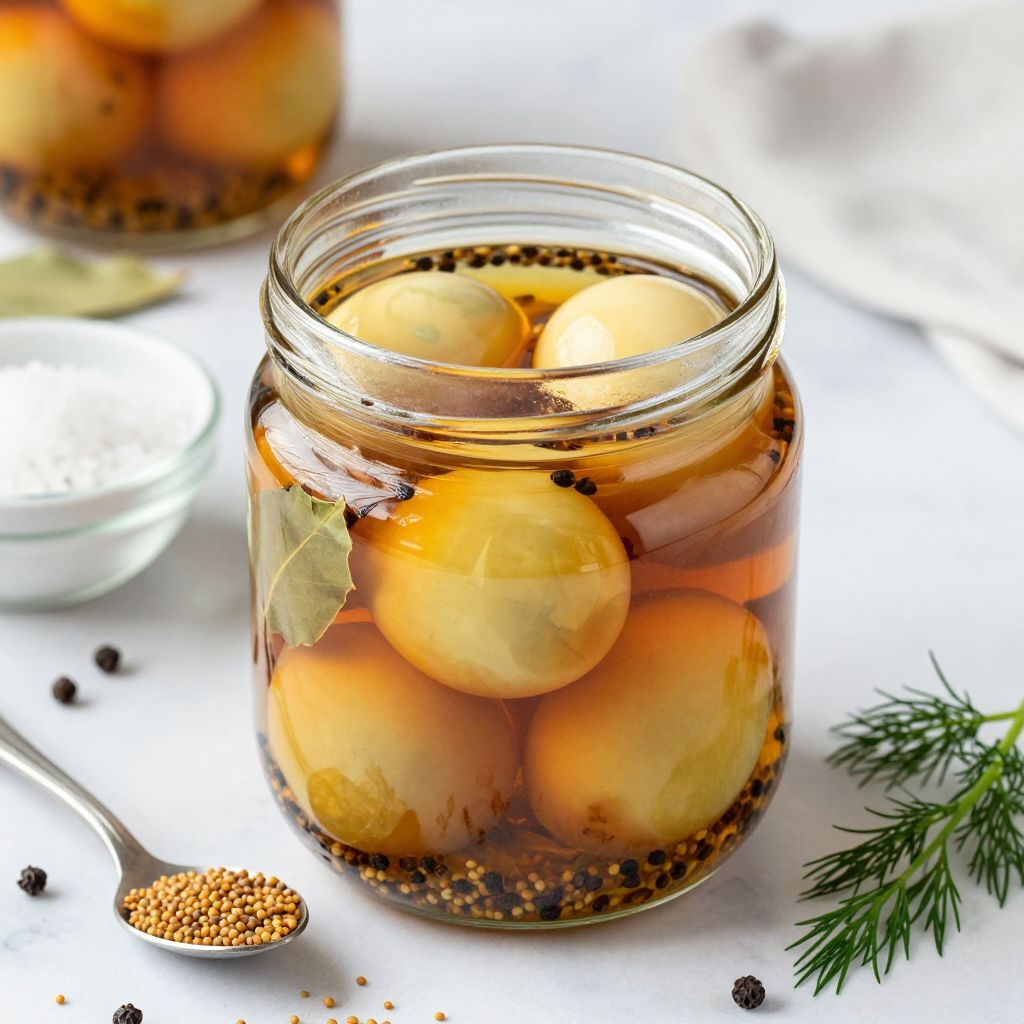
Pickled Eggs
Ingredients
Equipment
Method
- Place the eggs in a pot and cover with cold water. Bring to a boil, then cover and remove from heat, letting them sit for about 10-12 minutes.
- While the eggs are cooking, fill a bowl with ice and cold water to prepare an ice bath.
- Once the eggs have cooled for a few minutes in the ice bath, gently tap them to crack the shell and peel under running water.
- In a saucepan, combine vinegar, water, sugar, salt, peppercorns, mustard seeds, garlic, and bay leaf. Bring to a boil, stirring until the sugar and salt dissolve.
- Pack the peeled eggs tightly in a heatproof jar without breaking them. Pour the hot brine over the eggs, ensuring they are fully submerged.
- Seal the jar tightly with a lid and allow it to cool to room temperature.
- Once cooled, place the jar in the refrigerator and let the eggs pickle for at least 24 hours.
- After the pickling period, the eggs are ready to be enjoyed!