
As I stood in my kitchen, the aroma of simmering soy sauce and the vibrant colors of various ingredients reminded me of family gatherings during the New Year. Osechi is not just food; it’s a heartfelt tradition that brings together flavors and textures, each symbolizing good fortune and happiness for the year ahead. The beauty of this dish lies in its stunning presentation and the variety of tastes that dance on your palate, making it a delightful centerpiece for any festive table.
Why You’ll Love This Recipe
This Osechi recipe is a celebration of culture and flavor, combining tradition with a touch of creativity.
- Delivers a stunning visual feast that impresses guests.
- Each component carries a unique meaning for the new year.
- Allows for creativity and personalization with ingredients.
- Can be made ahead, giving you time to enjoy celebrations.
- Offers a variety of flavors and textures to satisfy every palate.
My Experience Making This Recipe
Creating Osechi was like embarking on a culinary adventure. I loved how each dish came together, filling my kitchen with enticing smells that hinted at the celebration ahead.
Upon serving, everyone was intrigued by the colorful array. The joy on their faces as they tasted each item made every minute spent preparing it worthwhile.
Recipe Overview
- Recipe Name: Osechi
- Servings: 8
- Prep Time: 2 hours
- Cook Time: 1 hour
- Total Time: 3 hours
- Course: Main Course
- Cuisine: Japanese
- Calories per Serving: 250
Equipment You Will Need
- Large mixing bowls
- Steamer or steamer basket
- Medium saucepan
- Knife and cutting board
- Storage containers for serving
Ingredients for Osechi
- Sweet soy sauce – 1 cup
- Carrots – 2, sliced into decorative shapes
- Daikon radish – 1, cut into thin strips
- Black soybeans – 1 cup, cooked
- Fish cakes – 1 cup, sliced
- Broccoli – 1 cup, blanched
- Eggs – 4, for making tamagoyaki
- Mirin – 1/4 cup
- Rice vinegar – 2 tablespoons
- Sesame seeds – 2 tablespoons, for garnish
Ingredient Notes and Substitutions
- Sweet soy sauce: Used for its rich flavor and sweetness. You can substitute with regular soy sauce mixed with a bit of sugar.
- Fish cakes: They add a delightful texture. If unavailable, use grilled tofu for a vegetarian option.
- Black soybeans: Traditionally used for good luck. You can replace them with chickpeas if necessary.
- Tamagoyaki: This sweet omelet adds a beautiful touch. If you prefer a simpler dish, scrambled eggs will work too.
- Mirin: Adds depth to the flavor. You can replace it with a mix of sugar and water if needed.
How to Make Osechi
Step 1: Prepare the Ingredients
Begin by washing and chopping all vegetables and proteins. This preparation makes the cooking process smoother and ensures even cooking.
Step 2: Make the Sweet Soy Sauce Mixture
In a small saucepan, combine the sweet soy sauce, mirin, and rice vinegar. Cooking this mixture briefly enhances the flavors, making it more aromatic.
Step 3: Cook the Black Soybeans
Simmer the black soybeans in the sweet soy sauce mixture for about 15 minutes. This process infuses them with rich flavor and highlights their sweetness.
Step 4: Prepare the Tamagoyaki
Whisk the eggs with a pinch of salt and a tablespoon of the sweet soy sauce mixture. This step creates a savory-sweet balance in the omelet.
Step 5: Cook the Tamagoyaki
Pour the egg mixture into a heated non-stick skillet, cooking it slowly to create layers. This technique ensures a fluffy texture that is delightful to eat.
Step 6: Blanch the Broccoli
Blanch the broccoli in boiling water for 2 minutes and then transfer it to ice water. This method keeps the broccoli vibrant and crisp.
Step 7: Assemble the Osechi
In a beautiful serving dish, arrange all the components aesthetically. The visual appeal plays a significant role in traditional Osechi presentations.
Step 8: Garnish and Serve
Sprinkle sesame seeds over the dish for added flavor and texture. Presenting it beautifully will surely impress your guests.
Pro Tip: Prepare the components a day ahead to save time and enhance flavors.
Tips for the Best Osechi
- Use fresh ingredients for the best flavor and texture.
- Vary the shapes of vegetables to make the dish visually appealing.
- Let the sweet soy sauce mixture cool before using it on the beans.
- Feel free to mix in seasonal ingredients for a personal touch.
- Take your time assembling the Osechi for a stunning presentation.
Common Mistakes to Avoid
- Not seasoning the eggs properly can lead to bland tamagoyaki.
- Overcooking the vegetables can result in mushiness, losing texture.
- Skipping the cooling step for the soy sauce mixture can affect the overall flavor.
- Rushing the assembly can compromise the dish’s visual impact.
Serving Suggestions
Osechi shines as a festive centerpiece at parties, but it can also be enjoyed on its own as a light meal. Pair it with these:
- Steamed rice for a classic combination.
- Pickled vegetables for a tangy contrast.
- Green tea to cleanse the palate.
- Miso soup for a comforting side.
Variations to Try
- Use seasonal vegetables to reflect local flavors.
- Incorporate seafood like shrimp for added richness.
- Add fruit for a touch of sweetness and color.
- Experiment with different types of beans for variety.
Dietary Adaptations
- Gluten-free: Use tamari instead of soy sauce.
- Dairy-free: The recipe is naturally dairy-free; no changes needed.
- Vegan: Replace eggs with tofu scramble for a plant-based option.
- Low-carb: Skip the beans and focus on vegetables and proteins.
Storage and Reheating
Refrigerator
Store leftovers in an airtight container in the refrigerator for up to 3 days.
- Refrigerate promptly after serving.
- Keep components separate to maintain freshness.
Freezer
This dish can be frozen, though the texture may change slightly.
- Freeze in individual portions for easy reheating.
- Thaw overnight in the refrigerator before serving.
Reheating
Reheat gently in a skillet over low heat to avoid overcooking.
- Microwave in short bursts if you’re short on time.
- Cover with a damp paper towel to retain moisture.
Nutrition Information
| Nutrient | Amount |
|---|---|
| Calories | 250 |
| Total Fat | 10g |
| Saturated Fat | 1g |
| Carbohydrates | 30g |
| Fiber | 5g |
| Sugar | 8g |
| Protein | 10g |
| Sodium | 500mg |
| Cholesterol | 200mg |
Nutrition values may vary based on specific ingredients used.
Frequently Asked Questions
Can I make Osechi ahead of time?
Yes, you can prepare most components a day in advance. This allows the flavors to meld beautifully.
What can I substitute for the fish cakes?
You can use grilled tofu or even seitan for a vegetarian option. Both will add a nice texture.
How should I store leftovers?
Store leftovers in an airtight container in the refrigerator for up to three days. For longer storage, freeze individual portions.
What if I don’t like black beans?
You can easily swap them for chickpeas or omit them entirely. Just ensure you have enough variety in other dishes.
Can I customize the ingredients?
Absolutely! Feel free to add seasonal vegetables or your favorite proteins. Osechi is all about personal touches.
Final Thoughts
Making Osechi is a rewarding experience that connects you to a beautiful cultural tradition. Embrace the process, enjoy the flavors, and share this delightful dish with loved ones.
If you found this recipe helpful, check out my other favorites like Oden Recipe and learn about good substitutes for rosemary. Happy cooking!
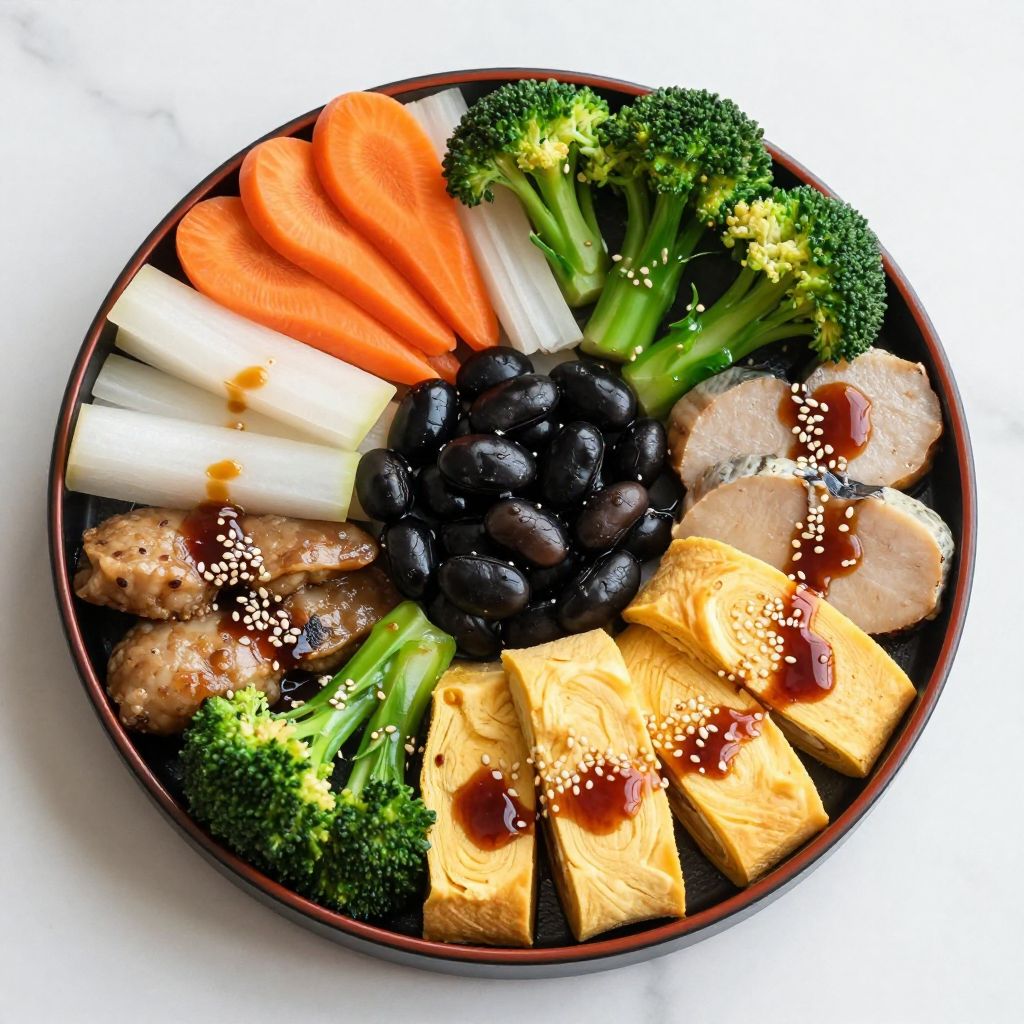
Osechi
Ingredients
Equipment
Method
- Begin by washing and chopping all vegetables and proteins.
- In a small saucepan, combine the sweet soy sauce, mirin, and rice vinegar.
- Simmer the black soybeans in the sweet soy sauce mixture for about 15 minutes.
- Whisk the eggs with a pinch of salt and a tablespoon of the sweet soy sauce mixture.
- Pour the egg mixture into a heated non-stick skillet, cooking it slowly.
- Blanch the broccoli in boiling water for 2 minutes and then transfer it to ice water.
- In a beautiful serving dish, arrange all the components aesthetically.
- Sprinkle sesame seeds over the dish for added flavor and texture.