
Picture a steaming pot of oden simmering on the stove, filling your kitchen with the aroma of savory broth and comfort oden is that Japanese hot pot dish that feels like a warm hug on a cold day. This oden recipe brings together soft-boiled eggs, tender daikon radish, fish cakes, and tofu in a subtly flavored broth that tastes like it took hours but comes together surprisingly fast.
What makes oden special is its versatility and the way each ingredient absorbs the broth’s gentle umami flavors. You can customize it with your favorite toppings, make it ahead, and reheat it easily, which makes it perfect for busy weeknights or casual dinner parties.
Why You’ll Love This Recipe
Oden hits that sweet spot between simple and impressive, and it’s genuinely comforting without being heavy. Here’s what you’ll appreciate about making it at home.
- One-pot meal that requires minimal hands-on time once ingredients go into the broth
- Highly customizable with vegetables, proteins, and toppings to suit your taste
- Reheats beautifully and tastes even better the next day as flavors deepen
- Budget-friendly, using affordable everyday ingredients
- Perfect for meal prep and feeding a crowd with minimal effort
My Experience Making This Recipe
The first time I made oden, I was skeptical about such a simple broth delivering real flavor. By the time those eggs absorbed the broth and the daikon turned silky, I was completely sold.
My partner actually requested it twice in one week, which rarely happens. We’ve now made it dozens of times, each batch slightly different depending on what we had in the fridge.
What surprised me most was how restaurant-quality this feels to guests, yet it’s something you can confidently make on a random Tuesday. The beauty is that oden doesn’t demand precision or fancy ingredients, just patience and decent broth.
Recipe Overview
- Recipe Name: Classic Japanese Oden
- Servings: 4 to 6 people
- Prep Time: 15 minutes
- Cook Time: 45 minutes
- Total Time: 60 minutes
- Course: Main Dish
- Cuisine: Japanese
- Calories per Serving: 220
Equipment You Will Need
- Large pot or Dutch oven with a lid
- Sharp knife for cutting vegetables
- Cutting board
- Wooden spoon or ladle
- Measuring cups and spoons
- Skewers or toothpicks optional for skewering ingredients
Ingredients for Oden Recipe
- 6 cups dashi broth or chicken broth
- 3 tablespoons soy sauce
- 1 tablespoon mirin or honey
- 1 tablespoon sake or dry white wine
- 1 medium daikon radish, peeled and cut into 1-inch thick rounds
- 6 boiled eggs, peeled and halved
- 8 ounces fish cakes or kamaboko, sliced into half-inch pieces
- 8 ounces tofu, cut into 2-inch cubes
- 4 shiitake mushrooms, stems removed
- 2 cups bok choy or napa cabbage, chopped
- 3 inches kombu seaweed, wiped clean optional
- 1 tablespoon salt to taste
- White pepper to taste
- Japanese mustard or karashi for serving
- Green onions, sliced, for garnish
Ingredient Notes and Substitutions
- Dashi broth is the soul of oden, made from kombu and bonito flakes for deep umami. If unavailable, use good quality chicken or vegetable broth, though the flavor will be milder.
- Mirin adds natural sweetness that balances the soy sauce. Substitute with honey or a small pinch of sugar, though mirin gives the best result.
- Daikon radish becomes silky when simmered and is essential for authentic oden. You can use regular turnips or potatoes if daikon is hard to find, but the flavor will shift.
- Fish cakes bring a subtle sweetness and interesting texture. Use tofu puffs, additional mushrooms, or even meatballs if fish cakes aren’t available.
- Sake removes rawness from the broth and adds depth. Dry white wine or even water works, though the final flavor loses a bit of complexity.
How to Make Oden Recipe
Step 1: Prepare Your Ingredients
Gather all ingredients and prep them before you start cooking, because oden comes together quickly once heat is applied. Peel and halve your boiled eggs, cut the daikon into thick coins, cube the tofu, and slice the fish cakes.
Step 2: Build the Broth Base
Pour the dashi broth into your large pot and bring it to a gentle simmer over medium heat. Add the soy sauce, mirin, and sake, stirring to combine and taste for balance between saltiness and sweetness.
Step 3: Add the Kombu
If using kombu, add it now and let it simmer for 2 to 3 minutes to infuse the broth with its umami notes. Kombu isn’t mandatory, but it genuinely elevates the final flavor.
Step 4: Cook the Daikon
Add the daikon slices to the simmering broth and cook for about 15 minutes until they soften slightly but still hold their shape. Daikon takes longer than other ingredients, which is why it goes in first.
Step 5: Add the Eggs and Tofu
Gently add the boiled eggs and tofu cubes to the pot after the daikon has been cooking for 10 minutes. These ingredients don’t need long cooking, just enough time to absorb the broth’s flavors, about 8 to 10 minutes.
Step 6: Introduce the Fish Cakes and Mushrooms
Add the fish cake slices and shiitake mushrooms to the pot. These cook quickly, so give them only 5 to 7 minutes to heat through and absorb the broth.
Step 7: Add Greens and Final Seasoning
Add the bok choy or cabbage and simmer for another 3 to 4 minutes until just tender. Taste the broth and adjust seasoning with additional salt and white pepper.
Step 8: Rest and Serve
Remove the pot from heat and let it rest for 2 minutes, which allows flavors to settle. Ladle the oden into bowls, making sure each bowl gets a good mix of vegetables, eggs, and broth.
Pro Tip: Make oden the day before and refrigerate it overnight. The flavors deepen significantly as ingredients continue absorbing the broth, and reheating takes only 10 minutes on the stovetop.
Tips for the Best Oden Recipe
- Don’t skip the kombu if you can find it, as it provides authentic umami depth that elevates the entire dish. A small piece makes a noticeable difference.
- Keep the broth at a gentle simmer rather than a rolling boil so delicate ingredients like tofu and fish cakes don’t fall apart. Patience here pays off.
- Use fresh daikon if possible, as older ones can turn bitter. Cut it into even-sized pieces so everything cooks at the same rate.
- Add fish cakes and mushrooms toward the end of cooking so they don’t absorb too much broth and become mushy. Their texture matters.
- Taste and adjust seasoning gradually throughout cooking rather than all at once. You can always add more soy sauce, but you can’t remove it.
- Serve with Japanese mustard on the side so each person can customize their bowl’s heat level and add complexity to the broth.
Common Mistakes to Avoid
- Boiling the broth aggressively causes ingredients to break down and become mushy, creating a cloudy, less appetizing pot. Simmer gently and watch the heat.
- Adding all ingredients at once means some cook too long while others stay raw. Stagger additions based on cooking times.
- Using low-quality broth as your base undermines the entire dish since there’s nowhere for mediocre flavors to hide. Start with good broth.
- Overseasoning early in the cooking process makes it impossible to correct later. Add seasonings in stages and taste as you go.
- Forgetting to peel your daikon or leaving the skin on makes for a less pleasant texture. Take the extra minute to peel properly.
Serving Suggestions
Oden works beautifully as a standalone meal, but pairing it with simple sides creates a more complete dinner. The broth is so flavorful that you really don’t need much else.
- Serve with steamed white or brown rice to soak up the delicious broth
- Pair with a simple cucumber salad dressed with rice vinegar for brightness and crunch
- Add grilled or pan-seared fish on the side for extra protein
- Offer fresh nori seaweed sheets for wrapping ingredients, adding a toasted flavor
- Serve alongside pickled vegetables like takuan for acidic contrast
Variations to Try
- Spicy Oden: Add a tablespoon of gochujang or sriracha to the broth for heat and complexity. This transforms the dish into something more modern while keeping its comfort food essence.
- Seafood Oden: Skip the fish cakes and add shrimp, clams, and scallops for a more luxurious version. Cook them separately and add at the very end to avoid overcooking.
- Vegetarian Oden: Replace fish cakes with pressed tofu puffs or fried tofu pockets and load up on mushrooms, root vegetables, and leafy greens. Use vegetable broth to keep it completely plant-based.
- Sukiyaki-Style Oden: Add thin slices of beef and reduce soy sauce slightly to incorporate this style. Finish with a raw egg yolk for dipping like traditional sukiyaki.
- Creamy Miso Oden: Stir in a tablespoon of miso paste into the broth near the end for added depth and richness. This creates a less delicate but more savory version.
Dietary Adaptations
- Gluten-Free: Use tamari instead of regular soy sauce and verify that your mirin and fish cakes contain no hidden gluten. Most other ingredients are naturally gluten-free.
- Dairy-Free: This recipe is naturally dairy-free as written. Just ensure your fish cakes don’t contain milk-based additives.
- Vegan: Replace eggs with extra tofu or mushrooms, skip fish cakes, and use vegetable broth with a bit of extra kombu. The result is lighter but still deeply satisfying.
- Low-Carb/Keto: Skip the daikon and noodles if using them, focus on eggs, fish cakes, tofu, and leafy greens. Use bone broth for extra collagen and fat content.
Storage and Reheating
Refrigerator
Store oden in an airtight container with the broth for up to 4 days. The flavors actually improve as ingredients continue absorbing the broth.
- Keep the container sealed to prevent the broth from evaporating
- Store daikon separately from other vegetables if they seem to soften too much
Freezer
Oden freezes well for up to 2 months, though the daikon becomes slightly softer when thawed. Freeze in portions for easy reheating.
- Use freezer-safe containers and leave some headspace for expansion
- Label with the date so you know how long it’s been frozen
Reheating
Reheat gently on the stovetop over medium-low heat for 10 to 15 minutes, stirring occasionally. Never microwave as it can cause uneven heating and make ingredients tough.
- Add a splash of water or broth if the liquid has reduced too much
- Taste and adjust seasonings as some flavors fade with storage
Nutrition Information
| Nutrient | Amount |
|---|---|
| Calories | 220 |
| Total Fat | 8 grams |
| Saturated Fat | 2 grams |
| Carbohydrates | 18 grams |
| Fiber | 3 grams |
| Sugar | 5 grams |
| Protein | 16 grams |
| Sodium | 780 milligrams |
| Cholesterol | 95 milligrams |
Nutrition values are approximate and based on standard ingredient amounts. Actual values will vary depending on your specific brand choices and preparation methods.
Frequently Asked Questions
Can I make oden without dashi broth?
You can use chicken or vegetable broth as a substitute, though the final flavor becomes less authentic and loses depth. If you have access to kombu, adding it to regular broth gets you closer to traditional oden.
How long can I keep oden in the refrigerator?
Store oden for up to 4 days in a sealed container with the broth covering all ingredients. Actually, many people find it tastes better after a day as flavors continue developing.
What if my daikon radish is too hard to cook?
Cut it into thinner pieces rather than thick rounds, or add it earlier in the cooking process. Older daikon radishes take longer to soften, so start checking at the 10-minute mark.
Can I prepare oden ahead of time?
Absolutely, and this is one of oden’s greatest strengths for meal prep. Make it up to 2 days ahead, refrigerate, and reheat gently on the stovetop before serving.
What’s the difference between oden and sukiyaki?
Oden simmers ingredients in a mild, savory broth, while sukiyaki uses a sweeter, richer sauce and often includes thinly sliced beef. Both are one-pot Japanese dishes, but oden is lighter and more everyday.
Can I use frozen vegetables in oden?
Frozen bok choy or other greens work fine and actually absorb broth flavors quickly. Just add them near the end since they cook faster than fresh versions.
Final Thoughts
Making oden at home teaches you that the best comfort food doesn’t require complexity or restaurant-level technique. This recipe proves that quality ingredients combined with patience and proper broth create something genuinely special.
Try this recipe this week and adjust it to your preferences. Once you taste homemade oden, you’ll understand why it’s a beloved cold-weather staple across Japan and increasingly popular everywhere else.
Explore More Comfort Food Recipes
If you loved making oden, you might also enjoy exploring other warming one-pot dishes that bring similar comfort and customization to your kitchen.
Check out our hot pot recipe for another interactive, build-your-own-bowl experience that’s perfect for sharing with family. You can also try our cholent recipe for a different slow-cooked broth-based dish that delivers similar warming comfort through a different culinary tradition.
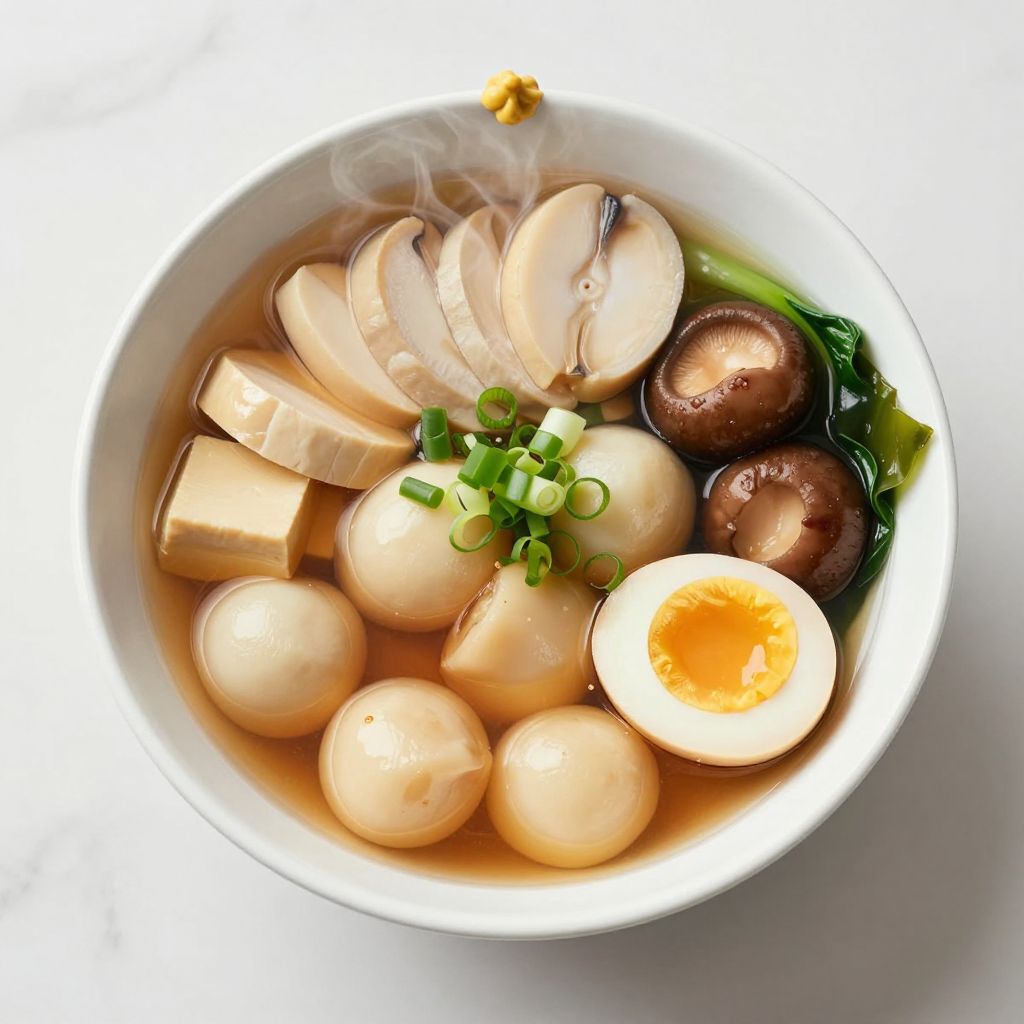
Classic Japanese Oden
Ingredients
Equipment
Method
- Prepare all ingredients by peeling and halving boiled eggs, cutting daikon into 1-inch rounds, cubing tofu, and slicing fish cakes.
- Pour dashi broth into a large pot and bring to a gentle simmer over medium heat. Add soy sauce, mirin, and sake and stir to combine, tasting for balance.
- Add kombu seaweed if using and simmer for 2 to 3 minutes to infuse the broth with umami.
- Add daikon rounds to the simmering broth and cook for 15 minutes until they are tender but still hold their shape.
- Gently add boiled eggs and tofu cubes to the pot and simmer for 8 to 10 minutes to allow flavors to absorb.
- Add fish cake slices and shiitake mushrooms and cook for 5 to 7 minutes until heated through.
- Add bok choy or napa cabbage and simmer for 3 to 4 minutes until just tender. Season with additional salt and white pepper to taste.
- Remove from heat and let the oden rest in the pot for 2 minutes. Ladle into bowls and serve with Japanese mustard and sliced green onions.