
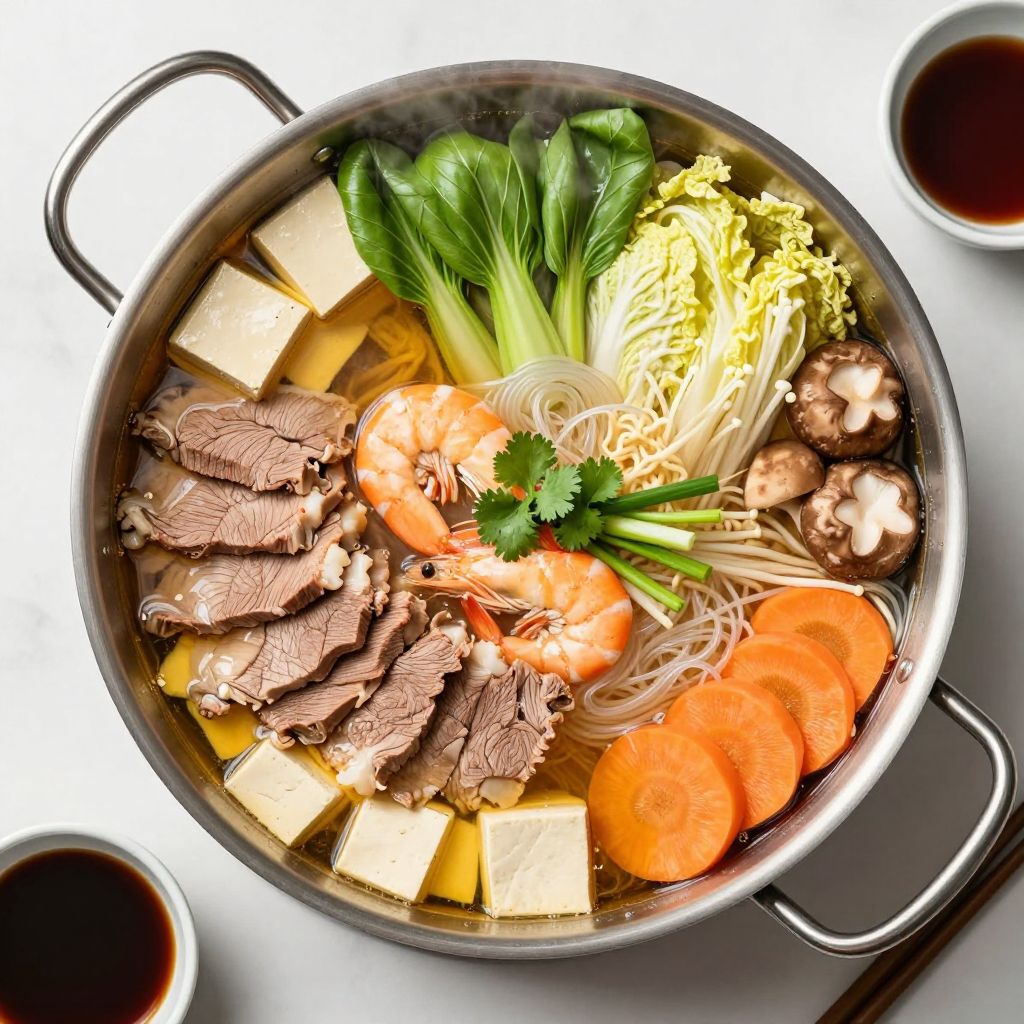
Picture this: a bubbling pot of fragrant broth sits at the center of your table, steam rising while you and your loved ones cook bite-sized ingredients right before eating them.
Hot pot is one of those dishes that transforms dinner into an interactive, joyful experience where everyone becomes the chef. This communal cooking method originated in East Asia and has captured hearts worldwide because it’s interactive, customizable, and naturally brings people together around a single pot.
What makes hot pot special is the simplicity paired with endless possibilities: you control exactly what goes into your bowl, the broth simmers gently so nothing burns, and cleanup happens as you eat. Whether you’re a first-timer or a seasoned hot pot enthusiast, this guide will walk you through creating an authentic experience at home.
Why You’ll Love This Recipe
Hot pot checks every box for a memorable meal: it’s interactive, healthy, and incredibly flexible for any diet or preference.
- Everyone customizes their own bowl, so picky eaters and adventurous cooks sit happily at the same table
- Cooking ingredients fresh in hot broth preserves nutrients and flavors that boiling or frying sometimes destroys
- Prep work is straightforward, and the cooking itself requires no special skills, just patience and a simmering pot
- Hot pot naturally scales from two people to a crowd without stress or complicated timing
- The experience creates conversation and connection in a way plated dinners rarely do
My Experience Making This Recipe
The first time I made hot pot at home, I was nervous about nailing the broth and worried I’d mess up the timing. Once I got the pot simmering and watched my guests’ faces light up as they discovered they could cook exactly what they wanted, I knew this was a keeper.
I’ve since made hot pot dozens of times, from casual weeknight versions with store-bought broth to elaborate setups with homemade bone broth simmering for hours. The sensory experience never gets old: the aroma of simmering spices filling your kitchen, the sizzle of mushrooms hitting hot broth, the satisfaction of dunking a noodle and pulling it out perfectly cooked.
What surprised me most was how even skeptical friends became enthusiastic participants, chatting and laughing while cooking their own bites. Hot pot strips away the pressure of “the perfect plate” and replaces it with shared joy.
Recipe Overview
- Recipe Name: Hot Pot
- Servings: 4
- Prep Time: 30 minutes
- Cook Time: 30 minutes
- Total Time: 60 minutes
- Course: Main Dish
- Cuisine: Asian (Chinese)
- Calories per Serving: 350
Equipment You Will Need
- Hot pot or large shallow cooking vessel with heating element
- Individual metal strainers or mesh baskets (one per person)
- Small bowls for dipping sauces (one per person)
- Medium saucepan for broth preparation
- Sharp knife for slicing ingredients
- Wooden spoon for stirring
- Cutting board
- Measuring cups and spoons
- Large platters for arranging ingredients
- Chopsticks or small fondue forks
Ingredients for Hot Pot
For the Broth
- 8 cups beef or vegetable stock
- 3 slices fresh ginger
- 4 dried shiitake mushrooms
- 2 star anise pods
- 1 cinnamon stick
- 3 Sichuan peppercorns
- 2 bay leaves
- 1 teaspoon salt
- 1/2 teaspoon white pepper
For the Proteins
- 1 pound thinly sliced beef sirloin (partially frozen for easier slicing)
- 1 pound shrimp, peeled and deveined
- 8 ounces firm tofu, cubed
- 1 pound chicken breast, thinly sliced
For the Vegetables
- 2 cups baby bok choy, halved lengthwise
- 1 cup napa cabbage, cut into bite-sized pieces
- 8 ounces mushrooms (oyster, button, or shiitake), sliced
- 1 carrot, thinly sliced on the bias
- 1 cup enoki mushrooms
- 1 bunch green onions, cut into 2-inch pieces
- 1 daikon radish, thinly sliced
For Noodles and Starches
- 8 ounces glass noodles or rice noodles
- 8 ounces fresh ramen noodles or egg noodles
For Dipping Sauces
- 1/2 cup soy sauce
- 1/4 cup sesame oil
- 3 cloves garlic, minced
- 1 tablespoon rice vinegar
- 1 tablespoon chili oil
- 1 teaspoon white pepper
- Fresh cilantro and scallions for garnish
Ingredient Notes and Substitutions
- Beef sirloin: This cut cooks quickly in hot broth and stays tender. If unavailable, use ribeye or flank steak, though flank requires slightly thinner slicing.
- Sichuan peppercorns: These add a distinctive numbing tingle that defines authentic hot pot broth. Omit them for a milder version, or substitute black peppercorns if Sichuan peppercorns aren’t accessible.
- Shiitake mushrooms: Their umami depth enriches the broth significantly. Button mushrooms work but lack the same complexity and richness.
- Glass noodles: These absorb broth beautifully and have a pleasant chewy texture. Rice noodles or ramen are equally valid and cook at similar speeds.
- Sesame oil: This aromatic oil is essential for authentic dipping sauce. It cannot be replaced without losing the signature flavor profile.
- Tofu: Firm tofu holds its shape in simmering broth better than silken varieties, which will crumble and cloud your broth.
How to Make Hot Pot
Step 1: Prepare Your Broth Base
Pour your stock into a medium saucepan and bring it to a gentle boil over medium heat. Add ginger slices, dried shiitake mushrooms, star anise, cinnamon stick, Sichuan peppercorns, and bay leaves, then reduce heat to low and simmer for 15 minutes, allowing the spices to infuse the broth with deep, layered flavors.
Simmering low and slow extracts the aromatic oils from these spices without boiling them into bitterness. Strain out the solids if you prefer a cleaner broth, or leave them in for added visual interest and continued flavor development.
Step 2: Slice Your Proteins
While the broth simmers, partially freeze your beef sirloin for about 20 minutes until it’s firm but not rock-solid, then slice it against the grain into paper-thin pieces roughly 2 inches long. Partially freezing meat makes it far easier to slice uniformly without a meat slicer.
Pat the shrimp dry with paper towels and leave them whole or halve them lengthwise if you prefer smaller pieces. Arrange all proteins on separate platters for easy access during cooking.
Step 3: Prepare Your Vegetables
Wash and prepare all vegetables: halve bok choy lengthwise, cut napa cabbage into bite-sized pieces, slice mushrooms about 1/4 inch thick, bias-cut carrot into thin ovals, and cut green onions into 2-inch segments. Organize each vegetable type on its own platter to make selection intuitive for your guests.
Bite-sized pieces cook faster and are easier to fish out of hot broth with chopsticks or strainers. Uniform sizing helps everything cook at roughly the same pace.
Step 4: Cook Your Noodles Separately
Bring a separate pot of salted water to a boil and cook your glass noodles and fresh ramen noodles according to package directions until just al dente. Drain them well and spread them on a plate, drizzling lightly with sesame oil to prevent sticking.
Cooking noodles separately prevents them from clouding your broth and gives you control over texture. You can add them to the hot pot near the end, or guests can add them directly to their bowls.
Step 5: Build Your Dipping Sauce Station
Pour soy sauce, sesame oil, rice vinegar, and chili oil into small dishes at the center of your table alongside minced garlic. Mix these components in different ratios to create a personalized sauce: the sesame oil and garlic combination is classic, while chili oil adds heat.
Setting up a sauce station gives guests agency to match the sauce to their protein and vegetable choices. Some prefer light and garlicky, others bold and spicy.
Step 6: Arrange Your Hot Pot Station
Place your hot pot or large shallow cooking vessel in the center of the table and fill it with your prepared broth, then set the heating element to medium-high so the broth comes to a gentle simmer. Arrange all protein and vegetable platters in a circle around the pot within easy reach, along with your noodle plate.
Everything should be within arm’s reach to encourage smooth cooking flow. A cluttered table makes hot pot frustrating instead of fun.
Step 7: Season the Broth to Taste
Once the broth is simmering in the hot pot, taste it and adjust seasoning with additional salt and white pepper as needed. Remember that as ingredients cook, they release their own flavors, so slightly underseasoning initially allows room for flavor development.
Hot broth should taste good enough to sip on its own. Your guests may also appreciate a small cup of plain broth for sipping between bites.
Step 8: Begin Cooking and Eating
Invite your guests to begin adding ingredients to the hot pot in whatever order appeals to them, starting with items that take longest to cook like carrots and mushrooms, then adding quicker-cooking proteins like shrimp and beef just moments before eating. Each person fishes out their bite with chopsticks or a small strainer, dips it in sauce, and eats immediately.
The beauty of hot pot is that cooking and eating happen simultaneously, so there’s no “waiting for food” moment. Keep the broth at a steady, gentle simmer throughout the meal.
Step 9: Add Noodles Toward the End
When you sense everyone’s appetite is winding down and space opens in the pot, add your pre-cooked noodles directly to the simmering broth for a minute or two to warm them and let them absorb the flavors. This final touch transforms hot pot into a complete meal.
Noodles added at the end prevent them from becoming mushy and ensure they soak up the most concentrated, flavorful broth.
Pro Tip: Keep your broth at a gentle, rolling simmer, never a hard boil. A wild boil toughens proteins, clouds the broth, and causes ingredients to fall apart before you can retrieve them.
Tips for the Best Hot Pot
- Slice meat paper-thin by partially freezing it first. Thicker slices cook unevenly and stay tough in the center while overcooking at the edges.
- Prep everything before guests arrive. Hot pot is about interaction and flow, not scrambling in the kitchen mid-meal.
- Maintain steady temperature by adjusting your heating element as needed. The broth should bubble gently, not violently.
- Encourage guests to try new combinations. The dipping sauce transforms with each protein and vegetable pairing, revealing new flavor dimensions.
- Keep plain broth available for guests who want to taste the broth itself between food bites.
- Use individual small strainers or mesh baskets so guests easily retrieve their cooked ingredients without fishing or losing pieces in the communal pot.
Common Mistakes to Avoid
- Boiling the broth too aggressively: High heat causes broth to reduce too quickly, concentrates salt unevenly, and makes delicate proteins like fish and shrimp fall apart before you can eat them.
- Overcrowding the pot: Adding too many ingredients at once cools the broth below cooking temperature and causes everything to steam instead of sear. Add ingredients in waves instead.
- Forgetting to cook noodles separately: Adding raw noodles to hot pot clouds the broth with starch and leaves them gummy.
- Slicing meat too thick: Thick cuts require longer cooking and won’t absorb sauce flavors efficiently. Thickness should be about 1/8 inch or less.
- Neglecting your broth seasonings: Hot pot broth is the star, not the side dish. Taste and adjust salt and pepper to make it genuinely delicious, not boring or medicinal.
Serving Suggestions
Hot pot shines as a centerpiece meal where the cooking and eating happen together, making it perfect for casual dinners with family or friends. Serve it with steamed jasmine rice on the side for guests who want to build rice bowls with broth and cooked vegetables.
- Pair with a crisp white wine like Sauvignon Blanc or a light lager beer that complements the savory, spiced broth
- Serve jasmine or white rice on the side for guests who want carbs beyond noodles
- Include a simple cucumber salad or pickled vegetables for brightness and acidity that cuts through the richness
- Offer fresh lime wedges or lemon for guests who want to add citrus to their sauce
- End the meal with sorbet or a light fruit dessert after the savory, warming hot pot experience
Variations to Try
- Spicy Sichuan Hot Pot: Add 2 tablespoons of chili bean paste and double the Sichuan peppercorns for a fiery version that numbs the mouth in the best way. The numbing sensation makes each bite feel more intense and exciting.
- Coconut Broth Hot Pot: Replace half the stock with coconut milk and add lemongrass, lime leaf, and Thai chili for a Southeast Asian twist. This version is creamier and more aromatic than traditional versions.
- Seafood Hot Pot: Skip beef and chicken, then load up with shrimp, fish fillets, scallops, squid, and clams. The broth becomes light and delicate, letting seafood flavors shine.
- Vegetarian Hot Pot: Use vegetable stock and increase vegetables: add mushroom varieties, leafy greens, tofu, seaweed, and wild mushrooms. Add cashew cream to the sauce for richness that compensates for missing meat.
- Fusion Hot Pot: Add unconventional proteins like thinly sliced duck, wagyu beef, or lobster tail for a luxe version. Include unexpected vegetables like corn, broccoli, or baby potatoes to blur culinary lines.
Dietary Adaptations
- Gluten-Free: Replace soy sauce with tamari and verify that all broths and sauces contain no wheat. Most hot pot components are naturally gluten-free, so this adaptation is straightforward.
- Dairy-Free: Standard hot pot is naturally dairy-free, but ensure any purchased broths don’t contain dairy-based additives. All components already align with dairy-free eating.
- Vegan/Vegetarian: Use vegetable stock instead of beef stock, omit all meat proteins, and load up with extra tofu, mushrooms, and leafy greens. Ensure soy sauce is vegan if using store-bought brands.
- Low-Carb/Keto: Skip noodles, use vegetable and protein-heavy ingredients instead, and ensure your broth contains no added sugars. Focus on fattier proteins like beef short ribs or add extra sesame oil to sauces for fat content.
Storage and Reheating
Refrigerator
Store leftover broth in an airtight container for up to 4 days. Keep cooked proteins and vegetables in separate containers to prevent mushiness and flavor bleeding.
- Strain broth to remove solids before storing for cleaner appearance and longer shelf life
- Store hot pot ingredients separately so you can reheat only what you’ll eat
- Cooked proteins stored with broth will continue softening as they sit
Freezer
Freeze broth in ice cube trays for portion control, then transfer cubes to freezer bags for storage up to 3 months. Freeze cooked proteins and vegetables together up to 1 month, though texture changes slightly.
- Frozen broth cubes thaw quickly and are perfect for building quick stir-fries or soups
- Protein and vegetable texture won’t be quite as fresh after freezing, so eat frozen components within a month
- Label containers with dates so you remember what’s what
Reheating
Thaw broth in the refrigerator overnight and reheat gently on the stovetop over medium-low heat, stirring occasionally. Reheat proteins and vegetables similarly on low heat or in the microwave until warmed through.
- Never boil thawed broth aggressively, as this concentrates flavors unevenly and damages delicate ingredients
- If broth has cooled and congealed from fat, warm it gently until fat melts back into the liquid
- Reheated hot pot works best as a soup or braise rather than recreating the fresh hot pot experience
Nutrition Information
| Nutrient | Amount |
|---|---|
| Calories | 350 |
| Total Fat | 18g |
| Saturated Fat | 5g |
| Carbohydrates | 22g |
| Fiber | 4g |
| Sugar | 3g |
| Protein | 32g |
| Sodium | 890mg |
| Cholesterol | 75mg |
Nutritional values are estimates based on standard ingredients and assume equal distribution among four servings. Actual nutrition varies depending on portion sizes, specific brands used, and how much broth each person consumes.
Frequently Asked Questions
Can I make hot pot ahead of time?
You can prepare your broth up to 2 days ahead and refrigerate it, then reheat gently before serving. All prep work on vegetables and proteins should happen the day of or the morning of your meal to preserve freshness and texture.
What’s the difference between hot pot and fondue?
Hot pot cooks ingredients in flavorful broth that you drink at the end, while fondue uses hot oil or melted cheese. Hot pot is lighter and more savory, fondue heavier and richer.
Can I use a regular pot instead of a hot pot vessel?
Yes, you can use a large shallow cooking pot or even a wide Dutch oven placed on a portable burner in the center of the table. A traditional hot pot vessel with its own heating element simply keeps the broth at consistent temperature throughout the meal.
How do I prevent the broth from tasting bland?
Build flavor in your broth from the start with aromatic spices, mushrooms, and quality stock, then taste and adjust seasonings before guests arrive. Remember that as proteins and vegetables cook, they release flavors into the broth, so start slightly underseasoned.
What should I do if my broth gets too salty?
Add more unsalted stock to dilute the salt, or add a peeled potato which absorbs salt as it cooks, then remove it before continuing. Prevention is easier than correction, so taste before guests arrive and adjust down rather than up.
Can I use store-bought broth instead of homemade?
Absolutely. Quality store-bought broths infused with aromatics like ginger, star anise, and mushroom save time without sacrificing much flavor. Look for low-sodium versions so you control the final salt level.
How long should each ingredient cook?
Leafy greens cook in 10-15 seconds, mushrooms and softer vegetables in 30-45 seconds, proteins like shrimp and beef in 15-30 seconds depending on thickness, and firm vegetables like carrot in 1-2 minutes. Each person controls their own cooking time by leaving items in the broth as long as they prefer.
Final Thoughts
Hot pot transforms cooking from a solitary kitchen activity into shared joy around a single table. There’s magic in the simplicity: a simmering pot, fresh ingredients, and people choosing exactly what they want to eat.
Make this recipe soon and watch how it brings your table to life. The conversation flows naturally, laughter comes easily, and everyone leaves satisfied. Hot pot isn’t just dinner; it’s an experience worth repeating again and again.
If you loved this hot pot experience, explore more interactive cooking methods that bring people together. Try making Pepper Lunch recipe for another tabletop cooking adventure, or venture into heat and flavor with Buldak Ramen recipe for a spicy noodle experience that rivals any restaurant.
Hot Pot
Ingredients
Equipment
Method
- Step 1: Prepare the broth by pouring 8 cups of stock into a medium saucepan and bringing to a gentle boil over medium heat.
- Step 2: Add 3 slices of fresh ginger, 4 dried shiitake mushrooms, 2 star anise pods, 1 cinnamon stick, 3 Sichuan peppercorns, 2 bay leaves, 1 teaspoon salt, and 1/2 teaspoon white pepper; reduce heat to low and simmer for 15 minutes.
- Step 3: While broth simmers, partially freeze 1 pound of beef sirloin for 20 minutes, then slice thinly against the grain; prepare shrimp, tofu, and chicken breast and arrange all proteins on platters.
- Step 4: Wash and prep vegetables: halve baby bok choy, cut napa cabbage into pieces, slice mushrooms, bias-cut carrot, trim enoki mushrooms, cut green onions, and thinly slice daikon; arrange on platters.
- Step 5: Cook glass noodles and ramen noodles separately in boiling salted water until al dente, about 3–5 minutes; drain and toss with a drizzle of sesame oil to prevent sticking.
- Step 6: Set up a dipping sauce station by combining soy sauce, sesame oil, minced garlic, rice vinegar, chili oil, and white pepper in small bowls; garnish with cilantro and scallions.
- Step 7: Place the hot pot vessel in the center of the table, pour in the strained or unstrained broth, and heat to a gentle simmer over medium-high heat.
- Step 8: Guests add ingredients in batches starting with firm vegetables and mushrooms, then proteins and greens, cooking each item to taste (typically 10–45 seconds for vegetables and 15–30 seconds for proteins).
- Step 9: Once most ingredients have been enjoyed, add noodles to the simmering broth for 1–2 minutes to warm through, then serve directly from the pot.