
There’s something incredibly satisfying about the crunch of fresh vegetables layered with a tangy, spicy punch. My journey into making Mild Kimchi began on a chilly evening, craving that lively flavor that dances on the tongue. This recipe is perfect for those who want to enjoy kimchi without the intense heat while still embracing the rich umami flavors. With its crunchy texture and versatility, this mild version can be a delightful side dish or a flavorful addition to various meals. Let’s gather our ingredients and get started on this delicious adventure!
Why You’ll Love This Recipe
This Mild Kimchi Recipe is a fantastic introduction to the world of kimchi.
- Perfect balance of flavors without overwhelming heat.
- Easy to make with just a few ingredients.
- Versatile enough to complement various dishes.
- Great for meal prep and long-lasting in the fridge.
- A fun way to incorporate probiotics into your diet.
My Experience Making This Recipe
When I made this kimchi for the first time, the aroma filled my kitchen with a delightful fragrance that reminded me of my favorite Korean restaurant. The vibrant colors of the vegetables and the rich red of the seasoning made it hard to resist a little taste before it was even ready.
Once it fermented, the flavors melded beautifully, creating a perfect balance of tangy and savory. I served it alongside rice and grilled meats, and it was a hit! Friends and family loved the mildness, making it an instant favorite.
Recipe Overview
- Recipe Name: Mild Kimchi
- Servings: 4
- Prep Time: 30 minutes
- Cook Time: 0 minutes
- Total Time: 30 minutes + fermentation
- Course: Side Dish
- Cuisine: Korean
- Calories per Serving: 30
Equipment You Will Need
- Large mixing bowl
- Glass jar or airtight container for storage
- Cutting board
- Sharp knife
- Measuring cups and spoons
Ingredients for Mild Kimchi
- 1 medium Napa cabbage, cut into quarters and chopped
- 1 cup carrots, julienned
- 1 cup daikon radish, julienned
- 1/4 cup sea salt
- 1 tablespoon ginger, grated
- 3-4 tablespoons sugar, to taste
- 1/4 cup fish sauce (or soy sauce for vegetarian option)
- 1 teaspoon red pepper flakes, adjust for spice level
- 2-3 green onions, chopped
Ingredient Notes and Substitutions
- Napa cabbage: Used for its tender leaves that soften during fermentation. Substitute with savoy cabbage if needed.
- Daikon radish: Adds crunch and a mild flavor. You can swap it with regular radish or turnip.
- Fish sauce: Provides depth and umami. Use soy sauce or miso paste for a vegetarian option.
- Red pepper flakes: Offers the signature kimchi flavor with some heat. Adjust or omit for a milder taste.
How to Make Mild Kimchi
Step 1: Prepare the Cabbage
Start by cutting the Napa cabbage into quarters and chopping them into bite-sized pieces. This ensures even fermentation and easy serving later on.
Step 2: Salt the Cabbage
Place the chopped cabbage in a large mixing bowl and sprinkle with sea salt. The salt draws out moisture and softens the cabbage, making it more palatable.
Step 3: Let it Sit
Allow the salted cabbage to sit for about 30 minutes, tossing it occasionally. This step is crucial for achieving that desired tenderness and crunch.
Step 4: Rinse and Drain
After 30 minutes, rinse the cabbage under cold water to remove excess salt, then drain well. This helps balance the flavor, ensuring the kimchi is not too salty.
Step 5: Mix the Seasoning
In a separate bowl, combine the grated ginger, sugar, fish sauce, and red pepper flakes. This mixture is the flavor powerhouse of your kimchi.
Step 6: Combine the Vegetables
Add the rinsed cabbage, julienned carrots, daikon radish, and chopped green onions to the seasoning mix. Toss everything together until all the vegetables are well-coated.
Step 7: Pack into the Jar
Transfer the mixture into a clean glass jar or airtight container, pressing it down to remove air pockets. This helps in fermentation by keeping the vegetables submerged.
Step 8: Ferment
Leave the jar at room temperature for 1-2 days to ferment, depending on your taste preference. Check it daily; once it reaches your desired tanginess, store it in the fridge.
Pro Tip: Taste your kimchi daily during fermentation to find the sweet spot for your palate!
Tips for the Best Mild Kimchi
- Use fresh vegetables for optimal crunch and flavor.
- Experiment with the fermentation time to find your perfect tanginess.
- Always use clean utensils to prevent unwanted bacteria.
- Store in the fridge to slow down fermentation once it reaches your liking.
- Adjust sugar and spice levels based on personal preference.
Common Mistakes to Avoid
- Not salting the cabbage enough can lead to overly crunchy kimchi.
- Skipping the rinsing step may result in overly salty flavors.
- Packing the jar too tightly can cause overflow during fermentation.
- Ignoring the fermentation time can lead to overly sour kimchi.
Serving Suggestions
This mild kimchi pairs beautifully with a variety of dishes, enhancing your meals with its unique flavor.
- Serve as a side dish alongside rice and grilled meats.
- Add to tacos or salads for an exciting crunch.
- Mix into fried rice for a flavor boost.
- Top on sandwiches for an added zing.
Variations to Try
- Add chopped apples or pears for a hint of sweetness.
- Incorporate other vegetables like cucumbers or bell peppers.
- Use different spices like garlic or sesame oil for added flavor.
- Try a vegan version by using kelp powder instead of fish sauce.
Dietary Adaptations
- Gluten-free: Use gluten-free soy sauce or tamari in place of fish sauce.
- Dairy-free: This recipe is naturally dairy-free.
- Vegan/Vegetarian: Substitute fish sauce with soy sauce or miso paste.
- Low-carb/Keto: Reduce the sugar or use a low-carb sweetener.
Storage and Reheating
Refrigerator
Mild kimchi can be stored in the fridge for up to 2-3 weeks. Make sure the jar is sealed tightly to maintain freshness.
- Store in an airtight container.
- Keep it submerged in its brine for maximum flavor.
Freezer
For longer storage, kimchi can be frozen for up to 3 months. However, the texture may change upon thawing.
- Use freezer-safe containers or bags for storage.
- Leave some space in the container for expansion.
Reheating
Kimchi is best enjoyed cold or at room temperature. However, you can gently heat it in a pan if desired.
- Heat on low to avoid cooking it.
- Add to stir-fries or soups for a warm dish.
Nutrition Information
| Nutrient | Amount |
|---|---|
| Calories | 30 |
| Total Fat | 0g |
| Saturated Fat | 0g |
| Carbohydrates | 7g |
| Fiber | 2g |
| Sugar | 3g |
| Protein | 1g |
| Sodium | 300mg |
| Cholesterol | 0mg |
This information is an estimate and may vary based on specific ingredients used.
Frequently Asked Questions
Can I make kimchi ahead of time?
Yes, kimchi can be prepared ahead and stored in the fridge for up to three weeks.
What can I substitute for fish sauce?
You can use soy sauce or miso paste for a vegetarian option.
How do I store kimchi?
Store it in an airtight container in the refrigerator to keep it fresh.
What if my kimchi is too salty?
If it’s too salty, rinse it under cold water before serving to balance the flavor.
How can I tell when my kimchi is fermented?
It will have a tangy smell and taste, and the vegetables will soften slightly.
Final Thoughts
Making Mild Kimchi can be a fun and rewarding experience, adding a homemade touch to your meals. With its balanced flavors and simple ingredients, I encourage you to give it a try!
If you enjoyed this recipe, explore more delicious dishes like Napa Cabbage Recipe or check out another favorite, Kimchi Recipe.
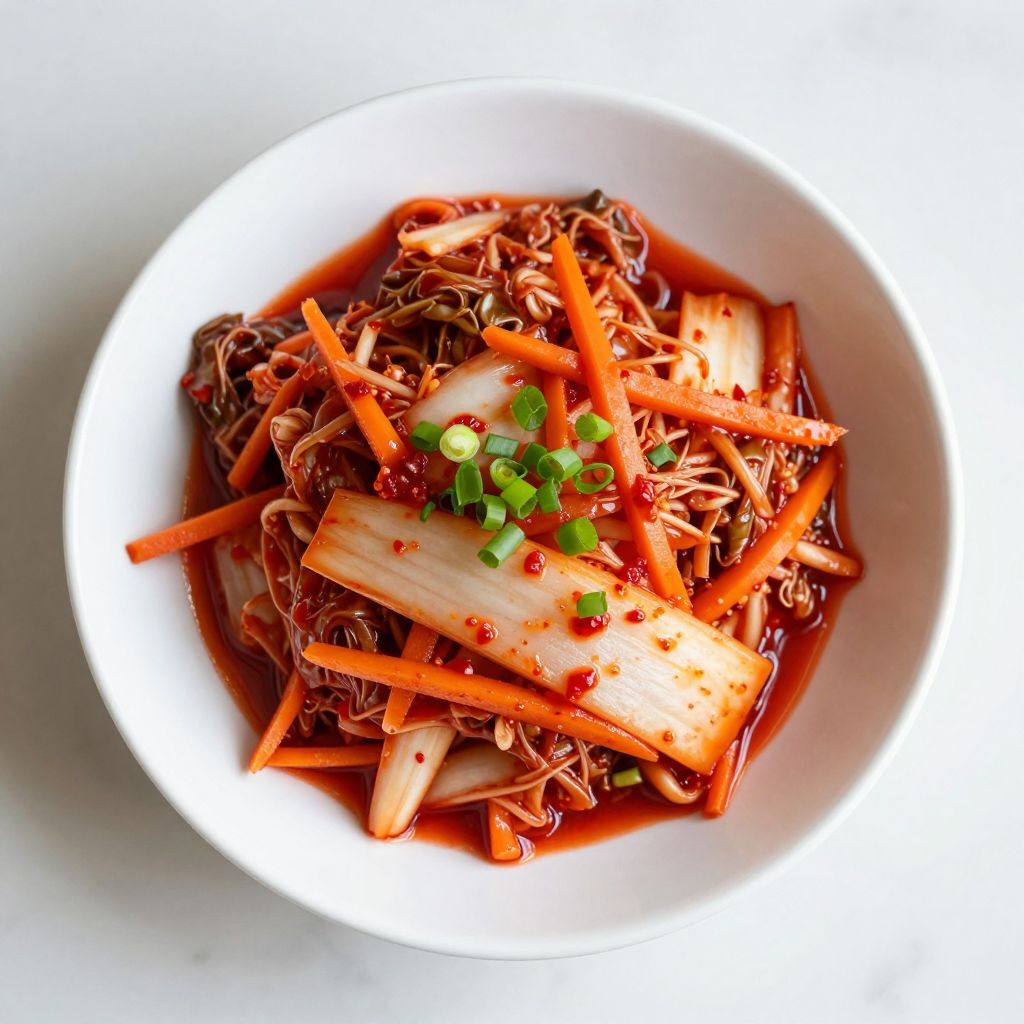
Mild Kimchi
Ingredients
Equipment
Method
- Start by cutting the Napa cabbage into quarters and chopping them into bite-sized pieces.
- Place the chopped cabbage in a large mixing bowl and sprinkle with sea salt.
- Allow the salted cabbage to sit for about 30 minutes, tossing it occasionally.
- After 30 minutes, rinse the cabbage under cold water to remove excess salt, then drain well.
- In a separate bowl, combine the grated ginger, sugar, fish sauce, and red pepper flakes.
- Add the rinsed cabbage, julienned carrots, daikon radish, and chopped green onions to the seasoning mix. Toss everything together until all the vegetables are well-coated.
- Transfer the mixture into a clean glass jar or airtight container, pressing it down to remove air pockets.
- Leave the jar at room temperature for 1-2 days to ferment, depending on your taste preference.
- Check it daily; once it reaches your desired tanginess, store it in the fridge.