
There’s something primal about gnawing meat off bone, and lamb ribs deliver that satisfaction in spades. The meat cooks down to buttery tenderness while the bones create natural handles for your fingers, making this a recipe that feels both fancy and utterly casual at the same time.
Lamb ribs are special because they cook faster than beef ribs, the meat has a richer flavor than chicken, and the fat renders into silky goodness that coats your palate. Whether you grill them, braise them, or slow-roast them, they become tender enough to pull from the bone with your teeth, and that’s when you know you’ve nailed it.
Why You’ll Love This Recipe
This recipe transforms tough-looking lamb ribs into fall-off-the-bone tenderness through low-and-slow cooking that develops deep flavor without fussing.
- Meat pulls clean from the bone with minimal effort, zero knife work needed
- Mop sauce caramelizes and sticks to every surface, delivering sweet and savory notes with each bite
- Minimal active prep time means you can set it and forget it while handling other tasks
- Impresses dinner guests without requiring restaurant-quality skill or expensive ingredients
- Leftovers shred easily for sandwiches or grain bowls if you somehow have any left
My Experience Making This Recipe
The first time I made lamb ribs, I was skeptical about the cooking time, thinking surely something that small would dry out. When I pulled the pan from the oven three hours later and nudged a rib with a fork, it literally slid off the bone, and I became a believer on the spot.
My dinner guests went quiet for a moment when they bit into one, then immediately asked for the recipe. That silent moment of pure enjoyment told me everything, and I’ve made them dozens of times since.
The aroma filling your kitchen during the final thirty minutes of cooking is genuinely intoxicating. Your family will gather around the oven without being asked, and somehow everyone already has a napkin ready.
Recipe Overview
- Recipe Name: Herb and Garlic Roasted Lamb Ribs
- Servings: 4
- Prep Time: 15 minutes
- Cook Time: 180 minutes
- Total Time: 195 minutes
- Course: Main
- Cuisine: Mediterranean
- Calories per Serving: 520
Equipment You Will Need
- Large roasting pan with raised sides
- Sharp knife for trimming excess membrane
- Meat thermometer for doneness confirmation
- Small bowl for dry rub mixing
- Brush for applying mop sauce
- Paper towels for patting meat dry
- Tongs for flipping ribs
- Cutting board for prep work
Ingredients for Herb and Garlic Roasted Lamb Ribs
- 3 pounds lamb rib racks, trimmed of excess membrane
- 2 tablespoons kosher salt
- 1 tablespoon black pepper
- 2 tablespoons garlic powder
- 1 tablespoon dried oregano
- 1 tablespoon dried rosemary
- 2 teaspoons paprika
- 1 teaspoon ground cumin
- 4 tablespoons olive oil, divided
- 6 cloves fresh garlic, minced
- 2 tablespoons Dijon mustard
- 3 tablespoons honey
- 2 tablespoons balsamic vinegar
- 1 cup beef or lamb stock
- 2 sprigs fresh rosemary
- 1 lemon, halved
Ingredient Notes and Substitutions
- Lamb rib racks: Lamb ribs have thinner bones and less meat than beef, cooking faster and delivering richer flavor; substitute with beef short ribs if needed, but add 90 minutes to cooking time.
- Dried oregano and rosemary: These Mediterranean herbs build the backbone of the flavor profile; fresh herbs work but use triple the amount since they’re milder than dried.
- Dijon mustard: The mustard acts as a binder for the mop sauce and adds subtle acidity; yellow mustard works but tastes less sophisticated.
- Honey: Honey caramelizes during cooking and creates a glossy finish; maple syrup substitutes one-to-one with no texture change.
- Balsamic vinegar: Balsamic adds depth and slight sweetness; red wine vinegar works but use only 1 tablespoon since it’s more acidic.
How to Make Herb and Garlic Roasted Lamb Ribs
Step 1: Remove the Membrane and Pat the Ribs Dry
Flip each lamb rib rack bone-side up and locate the thin silvery membrane covering the ribs. Slide your knife under this membrane at one end, then use paper towels to grip it while pulling it away from the bones. The membrane prevents seasonings from penetrating the meat and can feel chewy when you eat it, so removing it is non-negotiable.
Once the membrane is off, pat both sides of the ribs completely dry with fresh paper towels. Dry meat browns better and absorbs the dry rub more effectively than damp meat.
Step 2: Prepare the Dry Rub
Combine kosher salt, black pepper, garlic powder, oregano, rosemary, paprika, and cumin in a small bowl and stir well. Making the dry rub separately ensures the herbs and spices distribute evenly instead of clumping together.
Smell the mixture and adjust if needed. You want to catch any stale spices at this stage before they touch your meat.
Step 3: Apply the Dry Rub Generously
Place the lamb ribs on a large cutting board and rub 2 tablespoons of olive oil onto both sides of each rack. The oil helps the dry rub stick rather than sliding off during cooking.
Sprinkle the dry rub mixture over both sides of the ribs and massage it in firmly with your fingers. Don’t be shy; every inch of meat needs seasoning, and your hands are the best tools for getting into crevices.
Step 4: Sear the Ribs for Crust Development
Heat the remaining 2 tablespoons of olive oil in your roasting pan over medium-high heat until it shimmers. Working in batches if needed, place the seasoned ribs in the hot pan, bone-side down, and sear for 3 to 4 minutes until golden brown.
Searing creates a brown crust that traps moisture and develops flavor through the Maillard reaction. Once both sides are seared, arrange the ribs meat-side up in the pan.
Step 5: Prepare the Mop Sauce Base
In a small bowl, whisk together minced garlic, Dijon mustard, honey, and balsamic vinegar until combined. The mustard and honey work as emulsifiers, helping the vinegar blend smoothly with the other ingredients.
This mixture will be brushed onto the ribs multiple times during cooking, building layers of flavor and creating that signature glossy finish.
Step 6: Add Stock and Aromatics
Pour the beef or lamb stock around the ribs without covering the meat surface. Place the fresh rosemary sprigs and lemon halves in the liquid around the pan edges.
The stock creates steam that helps the ribs cook gently while the rosemary and lemon infuse the cooking environment with aromatic oils that will be absorbed by the meat.
Step 7: Roast and Mop the Ribs
Cover the roasting pan tightly with foil and place it in a preheated 325-degree Fahrenheit oven. Roast for 90 minutes without opening the oven door.
After 90 minutes, remove the foil and brush the mop sauce generously over the top of each rib rack. Return to the oven uncovered and roast for another 45 minutes, basting with mop sauce every 15 minutes.
Step 8: Final Roast and Caramelization
After the second round of cooking, brush the ribs one final time with any remaining mop sauce. Return to the oven for the final 45 minutes without basting, allowing the top to caramelize and darken.
The meat should be so tender that a fork sinks through without resistance. If it’s still slightly firm, roast for another 15 minutes and check again.
Step 9: Rest Before Serving
Remove the roasting pan from the oven and let the ribs rest for 10 minutes before cutting. Resting allows the juices to redistribute throughout the meat, preventing dryness when you bite into it.
Pour the pan drippings into a small bowl for serving alongside the ribs. These drippings contain pure lamb and herb flavor perfect for spooning over any accompanying sides.
Pro Tip: Start checking the ribs at the 2.5-hour mark by piercing the thickest part with a fork; if it slides through like butter, your ribs are done, and pulling them out early preserves juiciness better than cooking an extra 30 minutes.
Tips for the Best Herb and Garlic Roasted Lamb Ribs
- Buy lamb ribs from a butcher counter rather than pre-packaged if possible, since you can ask the butcher to trim the membrane for you and select thicker, meatier racks.
- Don’t skip the searing step even though it feels like an extra task; that golden crust locks in moisture and tastes exponentially better than ribs that go straight into the oven.
- Use fresh rosemary sprigs in the cooking liquid rather than dried; fresh rosemary releases oils that infuse the steam rising around the meat.
- Baste every 15 minutes during the final 90 minutes of cooking, not out of obsession but because each basting layer builds flavor and encourages caramelization.
- Invest in a good meat thermometer; lamb ribs are done at 190 to 200 degrees Fahrenheit in the thickest part, and knowing the exact temperature removes all guesswork.
- Let the ribs rest for exactly 10 minutes after pulling from the oven; this seems quick but is the sweet spot for juice retention without letting the meat get cold.
Common Mistakes to Avoid
- Skipping the membrane removal because “it’s just a thin layer” leads to chewy texture and prevents seasoning penetration in those spots.
- Cooking at too high a temperature because you want faster results dries out the meat before it gets tender; 325 degrees is low enough for gentle cooking but high enough for proper browning.
- Overcrowding the roasting pan so ribs overlap prevents even heat circulation and creates steam pockets that prevent proper caramelization on top.
- Using dried minced garlic instead of fresh garlic cloves creates an off-putting metallic flavor that overpowers the delicate lamb meat.
- Basting only once or twice instead of every 15 minutes wastes the opportunity to build caramelized layers and leaves the meat surface dry.
Serving Suggestions
Lamb ribs are rich and full-bodied, so they pair beautifully with bright, acidic, or starchy sides that balance the richness. Serve them as the centerpiece of an elegant dinner or pile them on a platter for casual entertaining.
- Roasted root vegetables like carrots, parsnips, and beets tossed with olive oil and thyme soak up the pan drippings.
- Creamy feta and herb salad with crisp greens, cucumber, and lemon vinaigrette cuts through the richness with fresh acidity.
- Fluffy couscous pilaf mixed with pistachios, dried apricots, and fresh mint complements the Mediterranean flavors.
- Smashed cauliflower with garlic and rosemary provides a lighter starch that lets the lamb flavor take center stage.
- Crusty bread for soaking up every drop of the pan drippings is honestly essential, not optional.
Variations to Try
- Harissa-Spiced Version: Replace the dry rub with 3 tablespoons of harissa paste mixed with 2 tablespoons of honey for a North African profile with more heat and complex spice.
- Asian-Inspired Glaze: Swap the balsamic vinegar for rice vinegar, add 2 tablespoons of soy sauce and 1 tablespoon of sesame oil to the mop sauce, then garnish with sesame seeds and scallions.
- Red Wine Reduction: Replace the stock with full-bodied red wine like Cabernet, and reduce the mop sauce by simmering it separately until syrupy for a more luxurious, restaurant-style finish.
- Coffee and Cocoa Rub: Add 1 tablespoon of instant coffee powder and 1 teaspoon of cocoa powder to the dry rub for subtle depth that enhances without tasting like coffee or chocolate.
- Citrus and Pomegranate: Use lemon and orange zest in the dry rub, then glaze with pomegranate molasses in the final 30 minutes for bright acidity and visual appeal with pomegranate seeds as garnish.
Dietary Adaptations
- Gluten-Free: This recipe is naturally gluten-free if you use certified gluten-free Dijon mustard and verify all spice blends are clean; no substitutions needed.
- Dairy-Free: The recipe contains no dairy, so it’s already dairy-free; skip any creamy side dishes if serving alongside.
- Vegan or Vegetarian: This recipe requires lamb and isn’t adaptable to plant-based diets; consider mushroom ribs or tempeh steaks as a completely different direction.
- Low-Carb or Keto: Reduce honey from 3 tablespoons to 1 tablespoon and skip honey-forward sides like couscous in favor of roasted vegetables or cauliflower.
Storage and Reheating
Refrigerator
Let the cooked lamb ribs cool completely, then transfer them to an airtight container with the pan drippings. They’ll keep for up to 4 days, and the drippings help prevent drying during storage.
- Store the ribs with bones intact unless you prefer to shred the meat first for easier portioning.
- Keep the pan drippings in a separate container if you prefer to control moisture when reheating.
Freezer
Lamb ribs freeze beautifully for up to 3 months when wrapped carefully. Let them cool completely, wrap individual racks tightly in plastic wrap, then place in a freezer bag to prevent freezer burn.
- Include some pan drippings in the freezer bag by pouring them into a small container alongside the wrapped ribs.
- Label the bag with the date so you know exactly how long they’ve been frozen.
Reheating
Thaw frozen ribs in the refrigerator overnight, then reheat in a 325-degree oven for 15 to 20 minutes covered with foil. This gentle approach warms the meat without drying it out further.
- Pour reserved pan drippings over the ribs before reheating to restore moisture and flavor.
- Alternatively, reheat in a covered skillet over low heat with a splash of stock, which takes 10 minutes and uses less energy.
Nutrition Information
| Nutrient | Amount |
|---|---|
| Calories | 520 |
| Total Fat | 28g |
| Saturated Fat | 11g |
| Carbohydrates | 12g |
| Fiber | 0g |
| Sugar | 10g |
| Protein | 52g |
| Sodium | 680mg |
| Cholesterol | 165mg |
Nutrition information is an estimate based on 4 servings with 3 pounds of lamb ribs and assumes the pan drippings are consumed. Actual values vary based on specific ingredient brands and cooking method variations.
Frequently Asked Questions
Can I cook lamb ribs on a grill instead of in the oven?
Yes, you can grill them over indirect medium heat for approximately 90 minutes, misting with mop sauce every 15 minutes. Grilling adds a subtle smokiness but requires more attention to prevent flare-ups, so the oven method is more forgiving for beginners.
How do I know when the lamb ribs are actually done?
Use a meat thermometer to check the thickest part of the meat; it should register 190 to 200 degrees Fahrenheit for perfect tenderness. Fork-tender meat that slides off the bone is the visual cue, but the thermometer removes all guesswork.
Can I make this recipe in a slow cooker?
Absolutely, you can sear the ribs first, then cook on low for 6 to 8 hours with the mop sauce ingredients mixed into the liquid. The result will be equally tender but without the caramelized surface, so broiling the ribs for 5 minutes at the end restores the finish.
What’s the difference between lamb ribs and lamb chops?
Lamb ribs are racks of multiple bones with meat between them, while lamb chops are individual bones with attached meat, similar to pork chops. Ribs require longer cooking to get tender, while chops are done in 10 to 15 minutes at high heat.
Can I prepare the dry rub the night before?
Yes, you can apply the dry rub to the ribs and refrigerate overnight, which actually deepens the seasoning penetration. Just let the ribs sit at room temperature for 30 minutes before cooking so the interior warms up slightly.
Is there a shortcut to reduce the cooking time?
You can increase the oven temperature to 350 degrees, which reduces cooking time by about 45 minutes, but you risk losing some tenderness if you’re not careful. The low-and-slow method at 325 degrees is the foolproof approach, so I’d recommend sticking with it.
Final Thoughts
Making lamb ribs at home proves that restaurant-quality meals don’t require fancy techniques or obscure ingredients. This recipe delivers impressive results from simple, accessible components and minimal hands-on time.
Your kitchen will smell absolutely incredible, your guests will think you spent all day cooking when you barely spent 30 minutes prepping, and the meat will be so tender that bones become irrelevant. Make these ribs this weekend and prove to yourself that you’re a better cook than you realized.
Explore More Delicious Recipes
If you enjoyed this lamb ribs recipe, you’ll love exploring other rib variations that deliver that same satisfying, fall-off-the-bone tenderness.
Check out my easy slow cooker ribs recipe for a hands-off approach using your slow cooker, or try the party ribs recipe for feeding a crowd with minimal effort. Both recipes use similar flavoring principles but different cooking methods, so you can choose based on your schedule and available equipment.
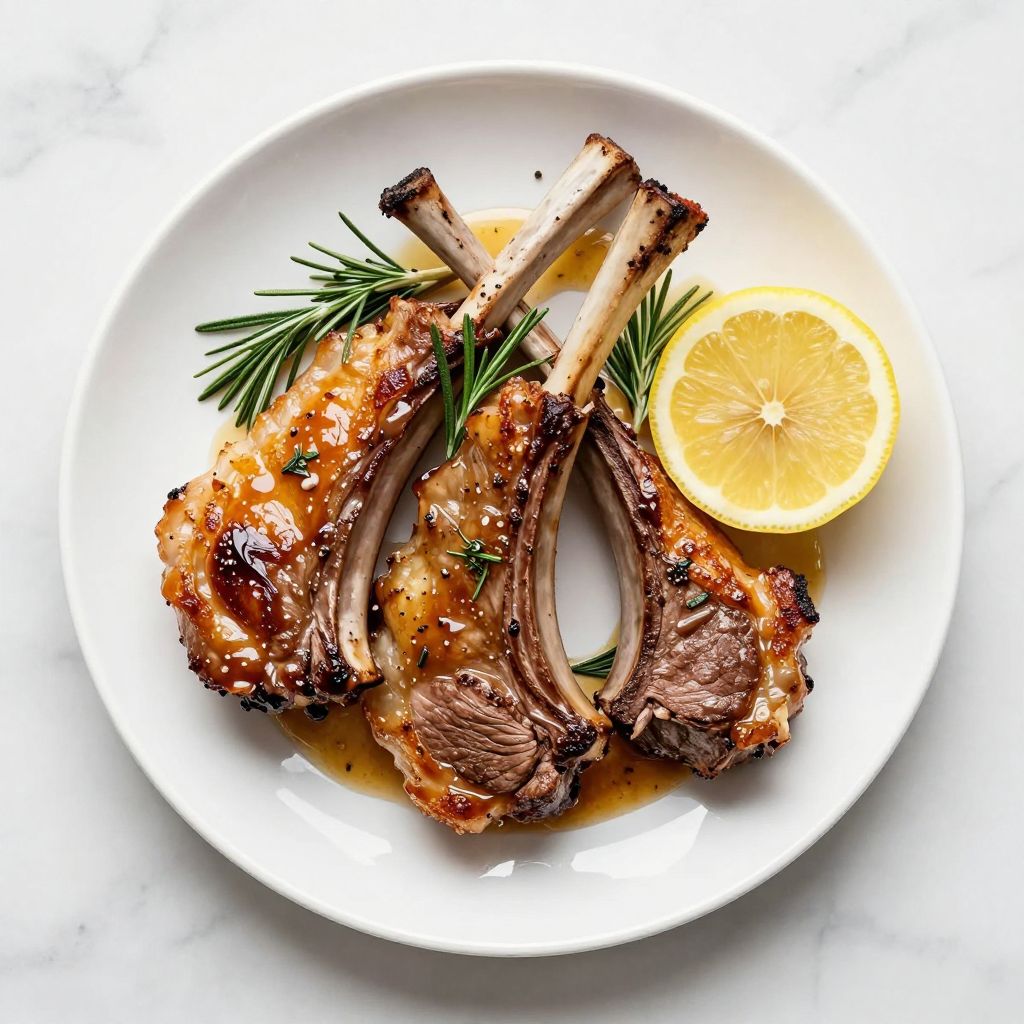
Herb and Garlic Roasted Lamb Ribs
Ingredients
Equipment
Method
- Preheat oven to 325°F (163°C). Flip lamb racks bone-side up and remove the membrane using a sharp knife and paper towels, then pat ribs dry.
- In a small bowl, combine kosher salt, black pepper, garlic powder, dried oregano, dried rosemary, paprika, and ground cumin to make the dry rub.
- Rub 2 tablespoons of olive oil onto both sides of the ribs, then sprinkle the dry rub mixture evenly and massage it into the meat.
- Heat remaining 2 tablespoons of olive oil in the roasting pan over medium-high heat, sear ribs bone-side down for 3–4 minutes per side until golden, then arrange meat-side up.
- In a small bowl, whisk together minced garlic, Dijon mustard, honey, and balsamic vinegar to form the mop sauce.
- Pour beef or lamb stock into the pan around the ribs, add fresh rosemary sprigs and lemon halves to the liquid without submerging the meat.
- Cover pan tightly with foil and roast in the preheated oven for 90 minutes without opening.
- Remove foil, brush ribs with mop sauce, then roast uncovered for 45 minutes, basting with mop sauce every 15 minutes.
- Brush ribs one final time with remaining mop sauce and roast uncovered for another 45 minutes until caramelized and meat thermometer reads 190–200°F.
- Remove ribs from oven and let rest for 10 minutes. Pour pan drippings into a small bowl and serve alongside ribs.