
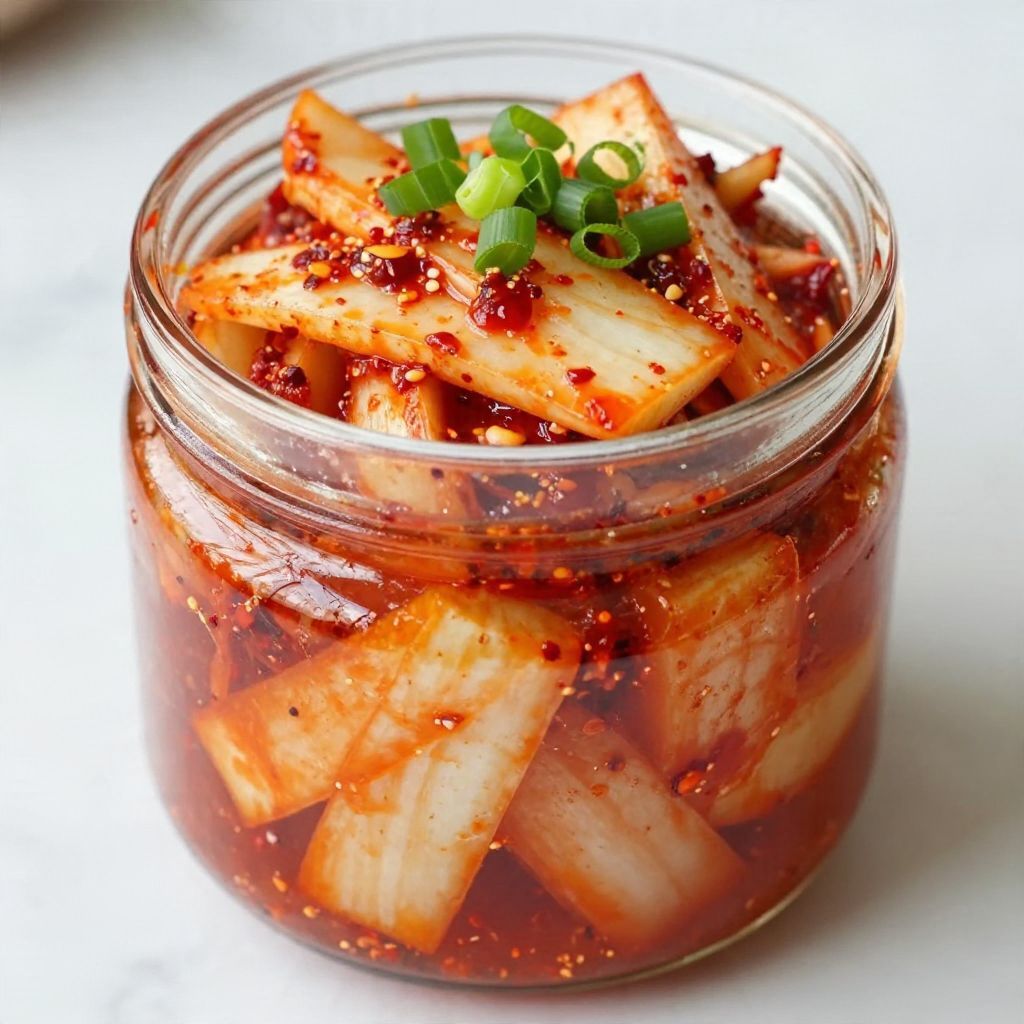
There’s something incredibly satisfying about crunching into a piece of homemade kimchi radish. This recipe is a delightful twist on traditional kimchi, offering a spicy, tangy flavor profile that’s downright addictive. It’s quick to prepare and brings a vibrant crunch to any meal, making it a versatile side dish for everything from rice bowls to tacos. Plus, the fermentation process adds a depth of flavor that store-bought varieties just can’t match. Let’s dive into making your very own kimchi radish!
Why You’ll Love This Recipe
Kimchi radish is a standout for many reasons. Here are just a few:
- Quick and easy to prepare.
- Packed with probiotics for gut health.
- Crunchy texture adds excitement to dishes.
- Versatile and pairs well with many cuisines.
- Can be made spicy or mild to suit your taste.
My Experience Making This Recipe
When I first tried making kimchi radish, I was amazed at how simple it was. The smell of the garlic and ginger as I mixed the ingredients was intoxicating, and I couldn’t wait to taste the final product.
After just a day of fermentation, I opened the jar, and the bright colors and tangy aroma hit me. The first bite was a crunchy explosion of flavor, and I was hooked!
Recipe Overview
- Recipe Name: Kimchi Radish
- Servings: 4
- Prep Time: 15 minutes
- Cook Time: 0 minutes (fermentation time varies)
- Total Time: 1-3 days (including fermentation)
- Course: Side Dish
- Cuisine: Korean
- Calories per Serving: 35
Equipment You Will Need
- Mixing bowl
- Glass jar with a lid
- Measuring cups and spoons
- Knife and cutting board
- Whisk or spoon for mixing
Ingredients for Kimchi Radish
- 1 pound daikon radish, peeled and cut into thin strips
- 1 tablespoon salt
- 1 tablespoon sugar
- 2 tablespoons Korean red pepper flakes (gochugaru), adjust to taste
- 1 tablespoon fish sauce or soy sauce for a vegetarian option
- 2 cloves garlic, minced
- 1 teaspoon ginger, grated
- 1 tablespoon green onions, chopped (optional)
Ingredient Notes and Substitutions
- Daikon radish: This is crucial for the crunch and flavor. You can substitute with regular radishes if needed.
- Korean red pepper flakes: This gives the dish its signature heat and color. Regular chili powder can be used, but the flavor may differ.
- Fish sauce: Adds umami depth. You can use soy sauce for a vegetarian option.
- Sugar: Balances the heat and acidity. You can use honey or agave syrup if you prefer.
How to Make Kimchi Radish
Step 1: Prepare the Radish
Start by peeling the daikon radish and slicing it into thin strips. Cutting it thin ensures even fermentation and a delightful crunch.
Step 2: Salt the Radish
In a mixing bowl, combine the radish strips with salt. This helps to draw out moisture, making the radish crispier and allowing the flavors to penetrate better.
Step 3: Let it Rest
Allow the salted radish to rest for about 30 minutes. This step is crucial as it softens the radish and enhances its flavor.
Step 4: Make the Kimchi Paste
In a separate bowl, mix the sugar, Korean red pepper flakes, fish sauce, minced garlic, and grated ginger. This mixture will be the flavorful base that coats the radish.
Step 5: Combine Radish and Paste
Add the kimchi paste to the radish and mix well. Make sure every piece of radish is coated with the paste for maximum flavor.
Step 6: Pack into Jar
Transfer the mixture into a clean glass jar, pressing down to eliminate any air pockets. This helps with fermentation and ensures the radish stays submerged.
Step 7: Ferment
Seal the jar loosely to allow gases to escape and leave it at room temperature for 1-3 days. Taste it daily for the desired tanginess; longer fermentation yields stronger flavors.
Step 8: Store in Refrigerator
Once fermented to your liking, refrigerate the kimchi radish to halt the fermentation. It will keep for several weeks, but it will taste best within the first week.
Pro Tip: For extra zing, add a splash of rice vinegar before serving to brighten the flavors.
Tips for the Best Kimchi Radish
- Use freshly grated ginger and minced garlic for the best flavor.
- Adjust the amount of gochugaru based on your spice tolerance.
- Make sure the jar is sterilized to prevent unwanted bacteria.
- Press the radish mixture down firmly when packing the jar.
- Experiment with adding other vegetables like carrots or cucumbers for variety.
Common Mistakes to Avoid
- Not salting the radish enough can lead to a bland kimchi.
- Skipping the rest time can result in a rubbery texture.
- Overpacking the jar might cause the kimchi to overflow as it ferments.
- Using old or stale gochugaru can dull the flavor.
Serving Suggestions
This kimchi radish makes a delightful addition to countless meals. Here are some pairing ideas:
- Serve alongside grilled meats for a refreshing contrast.
- Add to rice bowls for an extra crunch.
- Use as a topping for tacos or burritos.
- Pair with fried rice or noodle dishes for added zing.
Variations to Try
- Add sliced carrots for a pop of color and sweetness.
- Incorporate daikon leaves for added nutrition and flavor.
- Mix in other spices like sesame seeds for extra crunch.
- Add a splash of lime juice for a citrusy twist.
Dietary Adaptations
- Gluten-free: Ensure the fish sauce is gluten-free or use soy sauce.
- Dairy-free: This recipe is naturally dairy-free.
- Vegan/Vegetarian: Substitute fish sauce with soy sauce.
- Low-carb/Keto: This dish is low in carbs, perfect for keto diets.
Storage and Reheating
Refrigerator
Store kimchi radish in the fridge in an airtight container. It can last several weeks, but will taste best within the first week.
- Keep it sealed to maintain flavor.
- Check periodically for any signs of spoilage.
Freezer
While not ideal for texture, you can freeze it if necessary. The crunch will be lost, but the flavor remains.
- Use an airtight container or freezer bag.
- Consume within three months for best quality.
Reheating
Reheating is unnecessary, as kimchi radish is best enjoyed cold or at room temperature. However, you can warm it slightly if desired.
- Heat just enough to take the chill off without cooking it.
Nutrition Information
| Nutrient | Amount |
|---|---|
| Calories | 35 |
| Total Fat | 0g |
| Saturated Fat | 0g |
| Carbohydrates | 8g |
| Fiber | 2g |
| Sugar | 3g |
| Protein | 1g |
| Sodium | 700mg |
| Cholesterol | 0mg |
Nutrition values may vary based on ingredient brands and preparation methods.
Frequently Asked Questions
Can I make kimchi radish ahead of time?
Absolutely! It stores well in the refrigerator for several weeks after fermentation.
What can I substitute for Korean red pepper flakes?
You can use regular chili powder, but the flavor won’t be the same. Adjust the quantity to your spice preference.
How long does it take to ferment?
Fermentation can take anywhere from 1 to 3 days, depending on the temperature and your taste preference. Taste it daily to find your ideal flavor.
Why is my kimchi radish mushy?
This can happen if the radish was not salted enough or if it fermented for too long. Make sure to follow the steps closely for the best results.
Is kimchi radish spicy?
The spice level depends on how much gochugaru you use. Start with less if you prefer a milder flavor.
Final Thoughts
Trying your hand at making kimchi radish is an adventure worth taking. With just a few ingredients and some patience, you’ll create a vibrant dish that packs a punch.
So go ahead, gather your ingredients and get started! For more delicious side dish ideas, check out my Napa Cabbage Recipe and learn how to make a flavorful Gochujang Sauce.