
There’s something magical about the aroma of tomatoes simmering on the stove, isn’t there? This Italian Marinara Sauce recipe is a classic that brings a taste of Italy right into your kitchen, and it’s perfect for busy weeknights or special gatherings.
With its rich flavor, versatility, and simplicity, this sauce can elevate any dish, from pasta to pizza. Let’s dive into the ingredients and steps that will make your homemade marinara unforgettable.
Why You’ll Love This Recipe
This marinara sauce stands out for its authentic flavor and ease of preparation.
- Quick cooking time, ready in under 30 minutes.
- Uses fresh ingredients for a vibrant taste.
- Perfect base for various dishes.
- Customizable with herbs and spices.
- Freeze leftovers for quick meals later.
My Experience Making This Recipe
Every time I make this marinara sauce, my kitchen fills with a comforting aroma that instantly brings me back to my grandmother’s kitchen. The sauce is always a hit, and I often find myself doubling the recipe to share with friends and family.
It’s surprisingly satisfying to watch the ingredients transform into something so flavorful. This recipe is truly a staple in my home, and I bet it will become one in yours as well.
Recipe Overview
- Recipe Name: Italian Marinara Sauce
- Servings: 4
- Prep Time: 10 minutes
- Cook Time: 20 minutes
- Total Time: 30 minutes
- Course: Sauce
- Cuisine: Italian
- Calories per Serving: 150
Equipment You Will Need
- Large saucepan
- Wooden spoon
- Measuring cups and spoons
- Knife and cutting board
Ingredients for Italian Marinara Sauce
For the Sauce
- 2 tablespoons olive oil
- 1 medium onion, finely chopped
- 4 cloves garlic, minced
- 1 can (28 ounces) crushed tomatoes
- 1 teaspoon sugar
- 1 teaspoon dried oregano
- 1 teaspoon dried basil
- Salt and pepper to taste
- Fresh basil leaves for garnish (optional)
Ingredient Notes and Substitutions
- Olive oil: Adds richness and depth. You can substitute with vegetable oil if needed.
- Onion: Gives sweetness and flavor. Shallots can be used for a milder taste.
- Garlic: Enhances the sauce with a robust flavor. Garlic powder can be a substitute in a pinch.
- Crushed tomatoes: Forms the base of the sauce. Whole peeled tomatoes can be mashed as an alternative.
- Dried herbs: Provide classic Italian flavor. Fresh herbs can be used, but adjust the quantity as they are more potent.
How to Make Italian Marinara Sauce
Step 1: Heat the Olive Oil
In a large saucepan, heat the olive oil over medium heat. This helps the oil infuse its flavor into the sauce.
Step 2: Sauté the Onion
Add the chopped onion and sauté until it becomes translucent, about 5 minutes. This step builds a flavorful base for your sauce.
Step 3: Add the Garlic
Stir in the minced garlic and cook for an additional 1-2 minutes. Garlic can burn quickly, so keep an eye on it for a fragrant aroma.
Step 4: Introduce the Tomatoes
Pour in the crushed tomatoes and stir well to combine. This forms the heart of your marinara sauce.
Step 5: Season the Sauce
Add sugar, oregano, and basil, stirring to incorporate. Sugar balances the acidity of the tomatoes, enhancing the overall flavor.
Step 6: Simmer the Sauce
Bring the sauce to a gentle simmer and let it cook for 15-20 minutes. This allows the flavors to meld beautifully.
Step 7: Adjust Seasoning
Taste the sauce and add salt and pepper as needed. Adjusting seasoning is key to achieving the perfect flavor.
Step 8: Serve and Garnish
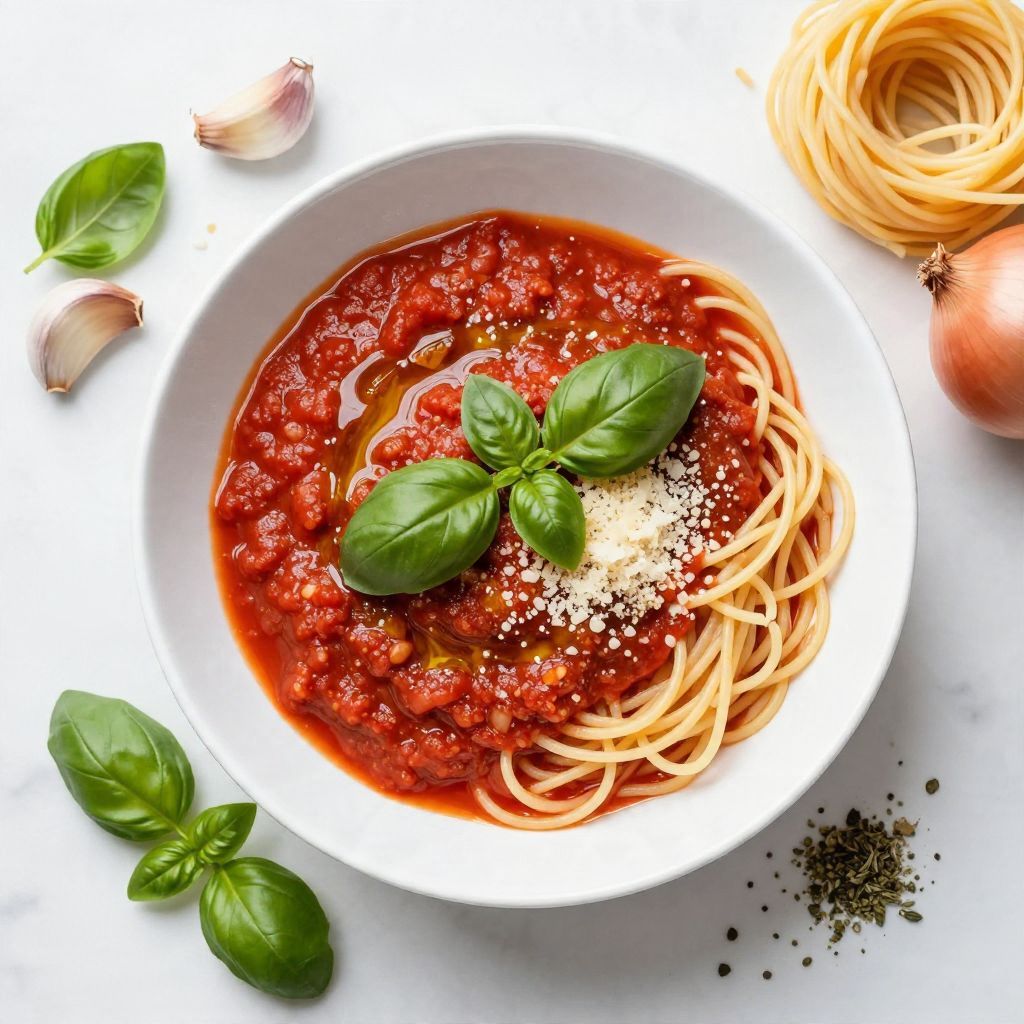
Remove from heat and garnish with fresh basil leaves if desired. This adds a pop of color and freshness to your dish.
Pro Tip: Let the sauce cool completely before storing; this helps retain its flavor and texture.
Tips for the Best Italian Marinara Sauce
- Use high-quality canned tomatoes for richer flavor.
- Don’t rush the sautéing process; it builds a flavor foundation.
- Consider adding a splash of red wine for depth.
- Experiment with fresh herbs for a vibrant twist.
- Blend the sauce for a smoother texture if desired.
Common Mistakes to Avoid
- Skipping the sautéing step; it can lead to a bland sauce.
- Using low-quality tomatoes; they can affect the taste negatively.
- Not adjusting seasoning; this is vital for flavor balance.
- Overcooking garlic; burnt garlic can ruin the dish.
Serving Suggestions
This marinara sauce pairs wonderfully with a variety of dishes.
- Serve over spaghetti for a classic meal.
- Use as a pizza sauce for a homemade favorite.
- Pair with meatballs for a hearty dish.
- Use in lasagna for added flavor.
Variations to Try
- Add red pepper flakes for a spicy kick.
- Incorporate olives for a Mediterranean twist.
- Mix in roasted red peppers for sweetness.
- Stir in spinach for a nutrient boost.
Dietary Adaptations
- Gluten-free: Serve with gluten-free pasta or zucchini noodles.
- Dairy-free: This recipe is already dairy-free; enjoy as is.
- Vegetarian: Naturally vegetarian; great for any diet.
- Low-carb/keto: Pair with low-carb alternatives like spaghetti squash.
Storage and Reheating
Refrigerator
Cool the sauce completely before storing it in an airtight container.
- Lasts up to 5 days in the fridge.
- Reheat on the stove over low heat.
Freezer
Freeze marinara sauce in freezer-safe bags or containers.
- It can last up to 3 months in the freezer.
- Thaw overnight in the fridge before reheating.
Reheating
Reheat gently on the stove, adding a splash of water if it thickens too much.
- Microwave in short bursts if preferred, stirring in between.
Nutrition Information
| Nutrient | Amount |
|---|---|
| Calories | 150 |
| Total Fat | 7g |
| Saturated Fat | 1g |
| Carbohydrates | 20g |
| Fiber | 4g |
| Sugar | 6g |
| Protein | 4g |
| Sodium | 300mg |
| Cholesterol | 0mg |
This nutritional information is an estimate and may vary based on specific ingredients used.
Frequently Asked Questions
Can I use fresh tomatoes instead of canned?
Yes, but you’ll need to peel and cook them longer to achieve a similar texture.
Can I make this sauce ahead of time?
Absolutely! It tastes even better after sitting for a day as flavors develop.
How should I store leftovers?
Store in an airtight container in the fridge for up to 5 days.
What can I do if my sauce is too acidic?
Adding a bit of sugar can help balance the acidity.
Can I add meat to this sauce?
Yes, ground beef or sausage can be added for a meaty marinara.
Final Thoughts
This Italian Marinara Sauce is a wonderful addition to your recipe repertoire. Whether you use it for pasta, pizza, or a comforting lasagna, its robust flavor is sure to impress.
So grab your ingredients, and bring a taste of Italy to your table! If you’re looking for more delicious sauce options, check out this Pomodoro Sauce Recipe or try a Spaghetti Sauce Recipe Without Meat.
Italian Marinara Sauce
Ingredients
Equipment
Method
- In a large saucepan, heat the olive oil over medium heat.
- Add the chopped onion and sauté until it becomes translucent, about 5 minutes.
- Stir in the minced garlic and cook for an additional 1-2 minutes.
- Pour in the crushed tomatoes and stir well to combine.
- Add sugar, oregano, and basil, stirring to incorporate.
- Bring the sauce to a gentle simmer and let it cook for 15-20 minutes.
- Taste the sauce and add salt and pepper as needed.
- Remove from heat and garnish with fresh basil leaves if desired.