
There’s nothing quite like the smell of freshly baked bread wafting through your home, especially when it’s Irish Bread. This recipe is a family favorite, bringing warmth and comfort with every slice. Its hearty texture and slight sweetness make it perfect for breakfast or as a side with dinner. Plus, you can whip it up in no time, making it a go-to for busy weeknights or cozy weekends. Let’s dive into how to create this delightful loaf.
Why You’ll Love This Recipe
Simply put, this bread is a winner in every way.
- Quick and easy to make, perfect for beginners.
- Hearty and satisfying, great for any meal.
- Versatile enough to enjoy with sweet or savory toppings.
- Made with simple ingredients you likely already have.
My Experience Making This Recipe
When I first tried making Irish Bread, I was amazed at how effortlessly it came together. The dough was so forgiving, and it rose beautifully, filling my kitchen with an inviting aroma.
Each time I bake this bread, it disappears within hours. My family loves it slathered with butter and homemade jam, and I can’t help but feel a sense of pride every time I serve it.
Recipe Overview
- Recipe Name: Irish Bread
- Servings: 8
- Prep Time: 15 minutes
- Cook Time: 30 minutes
- Total Time: 45 minutes
- Course: Bread
- Cuisine: Irish
- Calories per Serving: 150
Equipment You Will Need
- Large mixing bowl
- Wooden spoon or spatula
- Measuring cups and spoons
- Baking sheet
- Parchment paper (optional)
Ingredients for Irish Bread
- 4 cups all-purpose flour
- 1 teaspoon baking soda
- 1 teaspoon salt
- 1 ¾ cups buttermilk
- 2 tablespoons sugar (optional)
Ingredient Notes and Substitutions
- All-purpose flour: Gives the bread its structure. You can use whole wheat flour for a denser loaf.
- Baking soda: This is the leavening agent. Make sure it’s fresh for the best rise.
- Salt: Enhances flavor. You can reduce the amount if you are watching your sodium intake.
- Buttermilk: Adds moisture and tang. Substitute with milk mixed with a splash of vinegar if needed.
- Sugar: Optional for a hint of sweetness. You can skip it for a more traditional taste.
How to Make Irish Bread
Step 1: Preheat the Oven
Start by preheating your oven to 425°F (220°C). This ensures your bread bakes evenly and achieves that beautiful golden crust.
Step 2: Prepare Your Baking Sheet
Line a baking sheet with parchment paper or lightly grease it. This prevents sticking and makes cleanup easier.
Step 3: Mix Dry Ingredients
In a large mixing bowl, combine the flour, baking soda, salt, and sugar if using. Stir together to ensure even distribution of the dry ingredients.
Step 4: Add the Buttermilk
Create a well in the center of your dry mixture and pour in the buttermilk. This helps hydrate the flour evenly as you mix.
Step 5: Combine the Mixtures
Using a wooden spoon or spatula, mix until a shaggy dough forms. Be careful not to overmix; this keeps your bread tender.
Step 6: Knead the Dough
Turn the dough onto a floured surface and gently knead for about 1-2 minutes. This develops the gluten slightly, giving the bread structure.
Step 7: Shape the Loaf
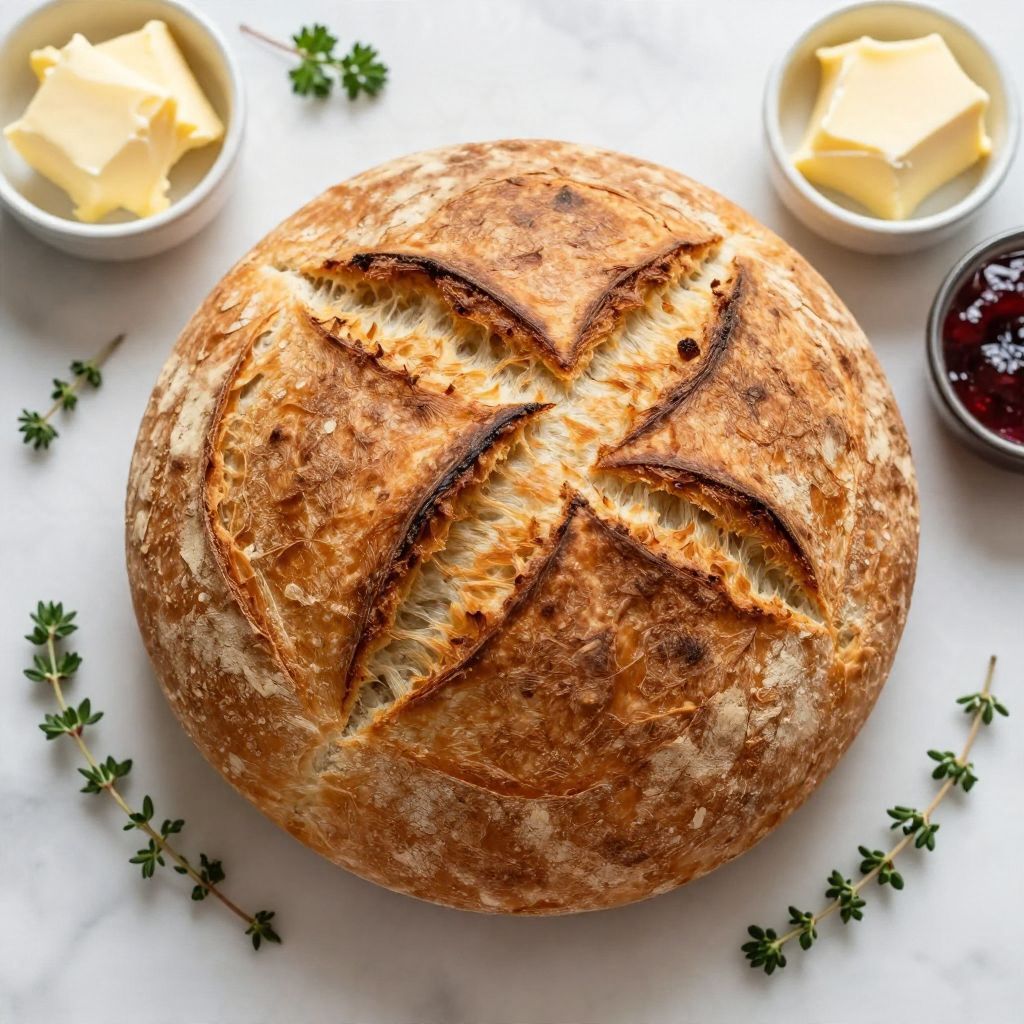
Form the dough into a round shape and place it on the prepared baking sheet. Score a deep cross on top with a knife to allow it to expand while baking.
Step 8: Bake the Bread
Bake in the preheated oven for 25-30 minutes. The bread should be golden brown and sound hollow when tapped on the bottom.
Pro Tip: For a crustier loaf, place a pan of water in the oven while baking. This creates steam and enhances the crust.
Tips for the Best Irish Bread
- Use fresh ingredients for the best flavor and texture.
- Don’t skip the scoring; it helps control how the bread rises.
- Let the bread cool completely before slicing for cleaner cuts.
- Experiment with adding herbs or cheese for a flavor twist.
- Enjoy it warm with butter and jam for a delightful treat.
Common Mistakes to Avoid
- Overmixing the dough can lead to dense bread. Mix just until combined.
- Not scoring the dough means it could crack unpredictably while baking.
- Underbaking can result in a gummy texture. Make sure it’s golden brown.
- Using expired baking soda will prevent the bread from rising.
Serving Suggestions
This Irish Bread is delightful on its own or paired with various toppings. Enjoy it warm with a pat of butter, or toast it for breakfast with your favorite jam.
- Serve with a side of soup or stew for a comforting meal.
- Add slices to a cheese platter for a rustic touch.
- Pair with honey or a fruit compote for a sweet treat.
- Use it for sandwiches with your favorite deli meats.
Variations to Try
- Add raisins for a sweet twist that complements the bread’s texture.
- Incorporate caraway seeds for a traditional flavor profile.
- Swirl in cheese for a savory version that’s perfect with soups.
- Use whole wheat flour for a healthier option with a nuttier flavor.
Dietary Adaptations
- Gluten-free: Use a gluten-free flour blend for an alternative.
- Dairy-free: Replace buttermilk with almond or oat milk mixed with vinegar.
- Vegan: Follow the dairy-free substitution and omit the sugar.
- Low-carb/keto: Use almond flour for a low-carb version.
Storage and Reheating
Refrigerator
Store leftover bread in an airtight container in the fridge for up to a week.
- Wrap it in foil to maintain moisture.
- Slice it before storing for easy access.
Freezer
This bread freezes well for up to three months.
- Slice before freezing for convenience.
- Wrap tightly in plastic wrap and then foil to prevent freezer burn.
Reheating
Reheat in the oven at 350°F (175°C) for about 10 minutes to restore the crust.
- You can also toast slices in a toaster for a quick warm-up.
Nutrition Information
| Nutrient | Amount |
|---|---|
| Calories | 150 |
| Total Fat | 1g |
| Saturated Fat | 0.5g |
| Carbohydrates | 29g |
| Fiber | 1g |
| Sugar | 1g |
| Protein | 4g |
| Sodium | 200mg |
| Cholesterol | 0mg |
This information is approximate and will vary based on specific ingredients used.
Frequently Asked Questions
Can I use regular milk instead of buttermilk?
Yes, mix regular milk with a splash of vinegar or lemon juice to mimic buttermilk.
Can I make this bread ahead of time?
Absolutely! Bake it a day in advance and store it properly to maintain freshness.
How should I store the bread?
Keep it in an airtight container at room temperature or refrigerate for extended freshness.
Why is my bread dense?
This could be due to overmixing or not using fresh baking soda, which affects the rise.
Can I make this recipe gluten-free?
Yes, substitute all-purpose flour with a gluten-free flour blend for a gluten-free version.
Final Thoughts
There you have it—homemade Irish Bread that’s sure to bring smiles to your table. It’s a simple recipe that yields fantastic results, and I encourage you to give it a try.
Once you experience the joy of baking it yourself, you might never go back to store-bought. For more delicious bread ideas, check out my easy sourdough bread recipe or try making Irish potatoes for a delightful twist!
Irish Bread
Ingredients
Equipment
Method
- Preheat the oven to 425°F (220°C).
- Line a baking sheet with parchment paper or lightly grease it.
- In a large mixing bowl, combine the flour, baking soda, salt, and sugar if using.
- Create a well in the center of the dry mixture and pour in the buttermilk.
- Using a wooden spoon or spatula, mix until a shaggy dough forms.
- Turn the dough onto a floured surface and gently knead for about 1-2 minutes.
- Form the dough into a round shape and place it on the prepared baking sheet.
- Score a deep cross on top with a knife to allow it to expand while baking.
- Bake in the preheated oven for 25-30 minutes until golden brown and hollow when tapped on the bottom.