
There’s something about the smell of potatoes boiling in salted water that instantly transports you to a cozy kitchen, steam rising from a pot while golden butter melts into fluffy flesh. Irish potatoes are a celebration of simplicity, proof that sometimes the best dishes need nothing more than quality ingredients and respect for tradition.
This recipe captures the heart of Irish cooking: humble ingredients transformed into pure comfort food that tastes like home. Whether you’re serving this at a weeknight dinner or a festive gathering, these potatoes deliver the creamy texture and subtle flavor that makes them impossible to stop eating.
Why You’ll Love This Recipe
Irish potatoes work because they skip the fuss and focus on what matters: the potato itself. You get a dish that’s ready in under an hour, requires minimal ingredients, and somehow tastes better than anything you could order at a restaurant.
- Creamy, buttery texture with perfectly tender flesh
- Simple ingredient list that lets the potatoes shine
- Naturally gluten-free and naturally vegetarian
- Works as a side dish or the main event
- Stores beautifully and reheats without losing quality
My Experience Making This Recipe
I first made this recipe on a cold autumn evening when I wanted something warm but not heavy. The moment those potatoes hit the boiling water, the kitchen filled with an earthy, inviting aroma that made me excited for dinner.
What surprised me most was how the butter and cream melted into the hot potatoes, creating this glossy, luxurious coating without any fussing. The texture stayed creamy throughout the meal, and even my kids, who normally push vegetables around the plate, asked for seconds.
The leftovers were just as good the next day, which meant I could make a larger batch without worry. This recipe taught me that sometimes the simplest approach yields the most satisfying results.
Recipe Overview
- Recipe Name: Irish Potatoes
- Servings: 4 to 6 servings
- Prep Time: 15 minutes
- Cook Time: 20 minutes
- Total Time: 35 minutes
- Course: Side Dish
- Cuisine: Irish
- Calories per Serving: 245
Equipment You Will Need
- Large pot (at least 4 quarts)
- Colander or strainer
- Cutting board
- Sharp chef’s knife
- Wooden spoon or silicone spatula
- Measuring cups and spoons
- Potato peeler (optional)
Ingredients for Irish Potatoes
- 2 pounds russet potatoes (about 6 medium potatoes)
- 4 tablespoons unsalted butter
- 1/2 cup heavy cream or whole milk
- 4 green onions or scallions
- Salt and white pepper to taste
- 1/2 teaspoon garlic powder (optional)
Ingredient Notes and Substitutions
- Russet potatoes: Their high starch content creates that fluffy, creamy texture. Yukon golds work too but yield a slightly denser result.
- Unsalted butter: It lets you control the salt level perfectly. Salted butter works if you reduce the added salt by half.
- Heavy cream: It creates richness and smooth texture. You can use whole milk for a lighter version, though the result will be less velvety.
- Green onions: They add a fresh, mild onion bite without overwhelming the dish. Regular onions or chives work but use them sparingly so they don’t dominate.
- White pepper: It blends invisibly into the potatoes instead of leaving black specks. Black pepper works fine if that’s what you have on hand.
How to Make Irish Potatoes
Step 1: Prepare and Cut the Potatoes
Scrub your potatoes under cold running water to remove any dirt, then peel them with a vegetable peeler. Cut each potato into quarters or chunks about 2 inches in size, keeping them roughly uniform so they cook evenly.
Uniform sizing matters because smaller pieces cook faster than larger ones. If you have pieces that vary wildly in size, some will turn to mush while others stay firm.
Step 2: Bring Water to a Boil
Fill a large pot with cold water and add a generous pinch of salt. Place it over high heat and bring to a rolling boil, which typically takes about 8 to 10 minutes depending on your stove.
Starting with cold water helps the potatoes cook evenly throughout. Salting the water flavors the potatoes from the inside out rather than just the surface.
Step 3: Add Potatoes to Boiling Water
Once the water boils actively, carefully add your potato chunks and stir them gently with a wooden spoon. The water should come back to a boil within a minute or two.
Adding potatoes to already boiling water ensures they cook at the same rate and develop a creamy interior. Stir gently at the start to prevent them from sticking to the bottom of the pot.
Step 4: Simmer Until Tender
Reduce the heat to medium and let the potatoes simmer gently for 15 to 18 minutes. You’ll know they’re done when a fork slides through the flesh with almost no resistance.
Gentle simmering keeps the potatoes from breaking apart or becoming waterlogged. A rolling boil can damage the surface and make them absorb too much water.
Step 5: Drain the Potatoes Thoroughly
Place your colander over the sink and carefully pour the potatoes into it, draining off all the water. Let them sit in the colander for a minute or two to release any excess moisture.
Draining well prevents watery, soggy potatoes later. Any excess water left behind will dilute the butter and cream, making the texture less creamy.
Step 6: Heat Butter and Cream Together
Return the pot to the stove over low heat and add the butter and cream. Stir gently until the butter melts completely and the mixture becomes warm, which takes about 2 to 3 minutes.
Heating these ingredients together makes them combine smoothly when you add them to the potatoes. Combining them at room temperature can create an uneven, slightly grainy texture.
Step 7: Add Potatoes Back to the Pot
Once the butter and cream are warm and combined, add the drained potatoes back to the pot. Gently fold them into the butter and cream mixture using a wooden spoon or silicone spatula, being careful not to break them apart.
Gentle folding preserves the texture and prevents the potatoes from turning into mush. You want visible chunks of potato, not a completely smooth puree.
Step 8: Season and Add Green Onions
Chop your green onions into thin rings, keeping the white and light green parts separate from the darker green tops. Taste the potatoes and add salt and white pepper to your preference, then fold in most of the white and light green parts.
Tasting before seasoning lets you adjust to your preference and your specific salt level. Keeping some green onion tops for garnish adds color and a fresh bite at the end.
Step 9: Final Touch and Serve
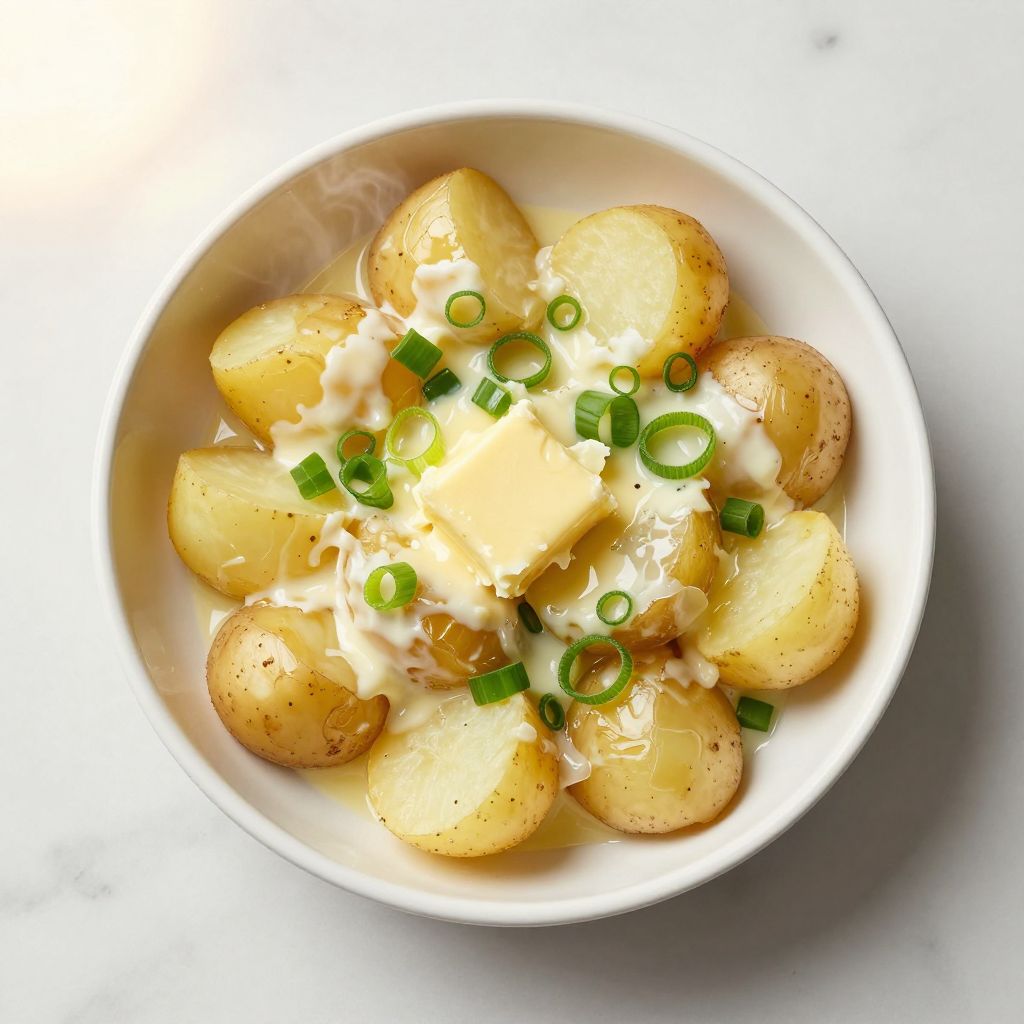
Transfer the potatoes to a warm serving bowl and top with the reserved green onion tops and a small pat of butter if desired. Serve immediately while everything is still steaming.
Serving hot ensures you get the full creamy texture and buttery flavor. The green onion garnish adds color and keeps the dish looking fresh rather than pale and plain.
Pro Tip: The secret to creamy Irish potatoes is using hot butter and cream and keeping your folding gentle. Any rough handling turns fluffy potatoes into a gluey mess.
Tips for the Best Irish Potatoes
- Use russet potatoes specifically. Their starch content is higher than other varieties, creating that signature fluffy texture that makes Irish potatoes special.
- Don’t peel the potatoes until just before cooking. Exposed flesh starts oxidizing and can turn slightly gray if left sitting too long.
- Keep your chunks evenly sized. One potato cut into quarters and another into eighths will cook at different rates, leaving you with mushy and firm pieces.
- Fold rather than mash. Even if you want creamy potatoes, vigorous mashing releases too much starch and creates a gluey, unpleasant texture.
- Add the butter and cream warm rather than cold. Cold dairy cools down the hot potatoes and makes them less creamy.
- Taste and season at the very end. This lets you match the seasoning to your preference rather than guessing and oversalting.
Common Mistakes to Avoid
- Overcooking the potatoes: Mushy potatoes that fall apart cannot be salvaged. Remove them from the heat the moment a fork slides through easily, not a second longer.
- Skipping the salt in the cooking water: You cannot season potatoes evenly after cooking. The salt must go into the boiling water to flavor them thoroughly.
- Using cold butter and cream: This cools down the hot potatoes and prevents them from becoming creamy. Always warm your dairy before mixing it in.
- Cutting potatoes into wildly different sizes: Uneven sizes cook at different rates, leaving some mushy and others firm. Keep your chunks consistent.
- Mashing instead of folding: Vigorous mashing breaks down the cells and releases starch, creating a glue-like texture instead of a creamy one.
Serving Suggestions
Irish potatoes shine beside grilled meat, roasted chicken, or baked fish, but they’re hearty enough to stand alone as a light meal with a salad. Their mild flavor complements bold sauces and rich meats without competing for attention.
- Serve alongside grilled steak with a rich pan sauce
- Pair with baked salmon and fresh lemon
- Accompany roasted chicken thighs with garlic and herbs
- Offer as a side to corned beef and cabbage
- Enjoy with roasted vegetables and a simple green salad for a vegetarian meal
Variations to Try
- Garlic Irish Potatoes: Mince 3 to 4 garlic cloves and simmer them with the butter before adding potatoes. Roasted garlic brings sweetness and depth without harshness.
- Herb Potatoes: Stir in fresh thyme, rosemary, or dill just before serving. Fresh herbs add brightness and make the dish feel more elegant without extra work.
- Cheesy Version: Fold in 1/2 cup grated sharp cheddar or Irish cheddar after mixing in the butter and cream. Cheese adds richness and a subtle tangy flavor.
- Loaded Irish Potatoes: Top with crispy bacon, sharp cheddar, and additional green onions before serving. This creates a heartier version that works as a main course.
- Celery Root Addition: Replace 1/2 pound of potatoes with celery root for added earthiness. This creates a more sophisticated flavor without changing the creamy texture.
Dietary Adaptations
- Gluten-free: This recipe is naturally gluten-free with no modifications needed. All ingredients are inherently free of wheat or gluten.
- Dairy-free: Substitute butter with olive oil or dairy-free butter, and use unsweetened oat or almond milk instead of cream. The texture will be lighter but still delicious.
- Vegan: Use dairy-free butter and plant-based cream, then season generously since dairy-free products often taste less rich. Nutritional yeast adds umami depth if you want it.
- Low-carb or keto: Substitute cauliflower for half the potatoes to cut carbs significantly. The mild flavor blends seamlessly and creates a similar creamy texture.
Storage and Reheating
Refrigerator
Transfer any leftovers to an airtight container and refrigerate for up to 3 days. The potatoes will firm up slightly as they cool but remain creamy.
- Keep in the coldest part of your refrigerator, away from the door
- Store in an airtight container to prevent them from drying out
- Don’t let them sit at room temperature for more than 2 hours
Freezer
Irish potatoes freeze reasonably well for up to 2 months, though the texture becomes slightly grainy compared to fresh. Freezing works better if you plan to reheat gently rather than eating them cold.
- Cool completely before freezing
- Use freezer-safe containers to prevent freezer burn
- Thaw overnight in the refrigerator before reheating
Reheating
Reheat gently on the stovetop over low heat with a splash of milk or cream to restore creaminess. Avoid the microwave when possible, as it can make the texture grainy.
- Add a splash of cream or milk to restore moisture
- Stir frequently to heat evenly without scorching
- Heat just until steaming, not boiling
Nutrition Information
| Nutrient | Amount |
|---|---|
| Calories | 245 |
| Total Fat | 12g |
| Saturated Fat | 7g |
| Carbohydrates | 32g |
| Fiber | 3g |
| Sugar | 1g |
| Protein | 4g |
| Sodium | 185mg |
| Cholesterol | 35mg |
These values are approximations based on standard ingredient measurements and nutritional databases. Actual values may vary depending on specific brands and preparation methods.
Frequently Asked Questions
Can I make Irish potatoes ahead of time?
Yes, you can prepare them up to 3 days ahead and reheat gently on the stovetop with a splash of milk. Avoid reheating in the microwave, which can make the texture grainy.
What’s the difference between Irish potatoes and mashed potatoes?
Irish potatoes have a chunky texture with whole pieces visible, while mashed potatoes are completely smooth. This recipe celebrates the potato texture rather than breaking it down entirely.
Can I use red potatoes instead of russet?
Red potatoes work but create a denser, waxier result because they have less starch. Russets are worth seeking out if you want that authentic fluffy Irish texture.
How do I prevent the potatoes from becoming gluey?
Avoid overmixing and mashing, use warm butter and cream, and don’t overcook the potatoes. Gentle folding and minimal stirring are key to keeping the texture light.
Can I add cheese to this recipe?
Absolutely. Fold in 1/2 cup grated cheddar or Irish cheese after mixing in the butter and cream for added richness and flavor.
What type of potatoes should I buy?
Look for russet potatoes labeled as baking potatoes at your grocery store. They’re usually larger and have a higher starch content than waxy potatoes.
Final Thoughts
Irish potatoes remind us that great food doesn’t need to be complicated. This dish proves that quality ingredients treated with respect and simple technique create something genuinely special.
Make these potatoes tonight and taste why they’ve been a staple in Irish kitchens for generations. You’ll find yourself making them regularly because they’re easy, satisfying, and honestly just taste like comfort.
If you enjoyed this recipe, explore more delicious sides that pair beautifully with Irish potatoes. Try our loaded mashed potatoes recipe for a heartier variation or check out our Hellmann’s potato salad recipe for a refreshing cold option that works year-round.
Irish Potatoes
Ingredients
Equipment
Method
- Scrub potatoes under cold running water, peel and cut into roughly 2-inch chunks.
- Place potatoes in a large pot and cover with cold water, add a generous pinch of salt.
- Bring water to a rolling boil over high heat (about 8 to 10 minutes).
- Add potato chunks to boiling water, stir gently and return to a boil.
- Reduce heat to medium and simmer gently until potatoes are tender, about 15 to 18 minutes.
- Drain potatoes thoroughly in a colander and let sit for 1 to 2 minutes to release excess moisture.
- Return the empty pot to low heat, add butter and cream, stirring until butter melts, about 2 to 3 minutes.
- Add drained potatoes back to the pot and fold gently to coat with the butter and cream mixture.
- Chop green onions into rings, reserving some tops for garnish; fold most into potatoes.
- Season to taste with salt, white pepper, and optional garlic powder, then transfer to a serving bowl.
- Garnish with reserved green onion tops and serve immediately while hot.