
Nothing quite compares to the tangy, spicy aroma of freshly made kimchi wafting through the kitchen. This Easy Kimchi Recipe for Beginners is your ticket to creating this beloved Korean staple at home, packed with flavor and probiotic goodness.
Making kimchi may seem daunting, but it’s surprisingly straightforward and rewarding. With its crunchy texture and bold flavors, this dish is incredibly versatile, perfect as a side or a main ingredient in various meals.
Why You’ll Love This Recipe
This kimchi recipe is not only delicious but also simple to prepare. You’ll enjoy the following:
- Quick and easy to make.
- Great way to use up leftover vegetables.
- Customizable to suit your taste.
- Packed with probiotics for gut health.
- Perfect for meal prep or as a flavorful condiment.
My Experience Making This Recipe
The first time I made kimchi, I was amazed at how the flavors developed over just a few days. My friends were blown away when I served it at dinner, insisting it was the best they had ever tasted.
There’s something truly satisfying about taking a few humble ingredients and transforming them into a complex, vibrant dish. It’s become a staple in my kitchen, and I bet it will in yours, too!
Recipe Overview
- Recipe Name: Easy Kimchi Recipe for Beginners
- Servings: 4-6
- Prep Time: 30 minutes
- Cook Time: 0 minutes
- Total Time: 30 minutes plus fermentation
- Course: Side Dish
- Cuisine: Korean
- Calories per Serving: 50
Equipment You Will Need
- Large mixing bowl
- Cutting board
- Knife
- Gloves (optional, but recommended)
- Jar or airtight container for fermentation
- Measuring cups and spoons
Ingredients for Easy Kimchi Recipe for Beginners
- 1 medium napa cabbage
- 1/4 cup sea salt
- 4 cups water
- 1 tablespoon grated ginger
- 1 tablespoon minced garlic
- 2 tablespoons fish sauce
- 2-3 tablespoons Korean red pepper flakes (gochugaru)
- 1 carrot, julienned
- 4 green onions, chopped
Ingredient Notes and Substitutions
- Napa cabbage: This is the traditional base for kimchi, offering a sweet flavor and crisp texture. You can substitute with green cabbage, but the flavor will differ.
- Sea salt: It helps draw out moisture and enhances flavor. Kosher salt can be used, but avoid table salt due to additives.
- Korean red pepper flakes (gochugaru): This gives kimchi its signature heat and color. You can substitute with crushed red pepper, but the flavor will be less authentic.
- Fish sauce: It adds depth and umami flavor. For a vegetarian option, use soy sauce or a plant-based fish sauce.
How to Make Easy Kimchi Recipe for Beginners
Step 1: Prepare the Cabbage
Cut the napa cabbage into quarters lengthwise and remove the core. This helps the kimchi to ferment evenly.
Step 2: Salt the Cabbage
In a large mixing bowl, dissolve the sea salt in water. Submerge the cabbage quarters in the salted water, ensuring they are fully covered.
Step 3: Soak the Cabbage
Let the cabbage soak for 2 hours, turning occasionally. This process draws out moisture, making the cabbage tender and flavorful.
Step 4: Make the Kimchi Paste
In a separate bowl, combine grated ginger, minced garlic, fish sauce, and Korean red pepper flakes. This paste will give your kimchi its bold flavor.
Step 5: Rinse the Cabbage
After 2 hours, rinse the cabbage under cold water to remove excess salt. This step prevents your kimchi from becoming overly salty.
Step 6: Mix the Vegetables
In a large bowl, combine the rinsed cabbage, julienned carrot, chopped green onions, and kimchi paste. Use your hands (gloves recommended) to mix everything well.
Step 7: Pack the Kimchi
Transfer the mixture into a clean jar or airtight container, pressing it down to remove air pockets. This ensures better fermentation and flavor development.
Step 8: Ferment the Kimchi
Leave the jar at room temperature for 1-2 days until it ferments to your liking. Taste it daily to check the flavor; once it reaches the desired tanginess, move it to the refrigerator.
Pro Tip: For an extra kick, feel free to add a splash of apple cider vinegar to the kimchi paste!
Tips for the Best Easy Kimchi
- Use fresh, high-quality ingredients for the best flavor.
- Don’t skip the resting time; it’s essential for flavor development.
- Adjust the spice level according to your taste; add more gochugaru for extra heat.
- Make sure to pack the kimchi tightly in the jar to avoid air pockets.
- Store in a cool, dark place for optimal fermentation.
Common Mistakes to Avoid
- Not rinsing the cabbage after salting can result in overly salty kimchi.
- Using too much water in the paste can make the kimchi soggy.
- Forgetting to press out air when packing can lead to spoilage.
- Not tasting during fermentation may lead to an undesired flavor.
Serving Suggestions
Kimchi is a versatile side dish that pairs beautifully with many meals. Consider these serving ideas:
- As a side dish with rice and grilled meats.
- In a kimchi fried rice for a comforting meal.
- On top of tacos for a spicy twist.
- In a savory pancake for breakfast or brunch.
Variations to Try
- Add diced radish for an extra crunch and a peppery flavor.
- Incorporate other vegetables like cucumbers or green beans for variety.
- Experiment with different spices like turmeric for a unique taste.
- Make it sweeter by adding a touch of sugar or fruit like pear.
Dietary Adaptations
- Gluten-free: Ensure your fish sauce is gluten-free or use a substitute.
- Dairy-free: This recipe is naturally dairy-free.
- Vegan/Vegetarian: Replace fish sauce with soy sauce or a plant-based alternative.
- Low-carb/Keto: This recipe is low in carbs, making it suitable for keto diets.
Storage and Reheating
Refrigerator
Store your kimchi in the refrigerator for up to 2 months. The flavors will continue to develop over time.
- Use a clean utensil to scoop out portions.
- Avoid letting it sit out for long periods to maintain freshness.
Freezer
Kimchi can be frozen, although the texture may change. Portion it into smaller containers for easy use.
- Defrost in the refrigerator before using.
- Use within 3 months for the best flavor.
Reheating
Reheat kimchi in a pan or microwave if desired. However, many enjoy it cold as a side dish.
- Heat it gently to avoid losing its crunch.
- Pair with warm rice for a comforting meal.
Nutrition Information
| Nutrient | Amount |
|---|---|
| Calories | 50 |
| Total Fat | 1g |
| Saturated Fat | 0g |
| Carbohydrates | 10g |
| Fiber | 2g |
| Sugar | 1g |
| Protein | 2g |
| Sodium | 500mg |
| Cholesterol | 0mg |
This nutritional information is an estimate and may vary based on specific ingredients used.
Frequently Asked Questions
Can I use regular cabbage instead of napa cabbage?
Yes, while napa cabbage is traditional, green cabbage can be used, although the flavor will differ.
Can I make kimchi ahead of time?
Absolutely! Kimchi can be made several days in advance and stored in the refrigerator.
How should I store leftover kimchi?
Store leftovers in an airtight container in the refrigerator for up to 2 months.
What if my kimchi is too salty?
If it’s too salty, you can rinse it lightly under cold water before serving.
How long does homemade kimchi last?
Properly stored kimchi can last for up to 2 months in the refrigerator, with flavors improving over time.
Final Thoughts
Making your own kimchi is a delightful experience that opens up a world of flavors and possibilities. Once you try this recipe, I bet you’ll want to experiment with different ingredients and variations!
If you enjoyed this recipe, be sure to check out more delicious ideas like Napa Cabbage Recipe and Gochujang Sauce Recipe for your next culinary adventure.
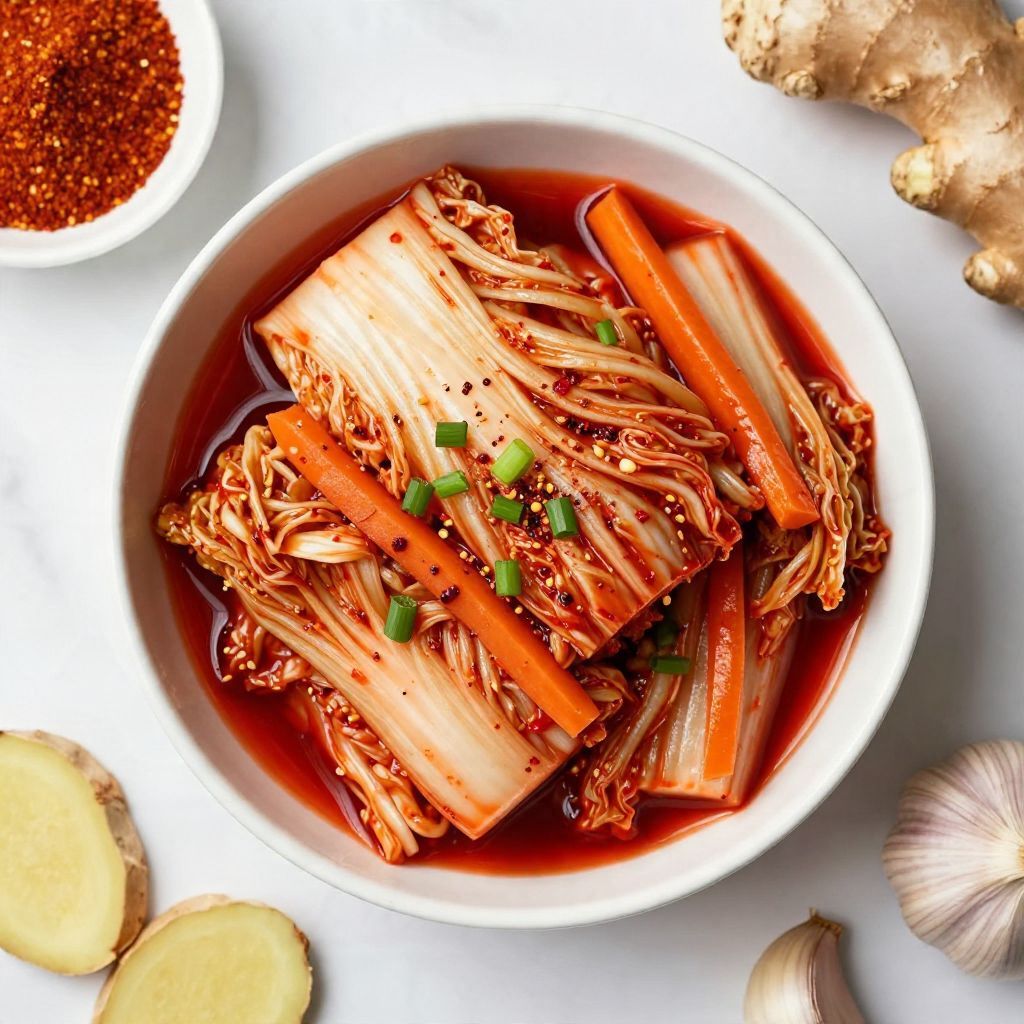
Easy Kimchi Recipe for Beginners
Ingredients
Equipment
Method
- Cut the napa cabbage into quarters lengthwise and remove the core.
- In a large mixing bowl, dissolve the sea salt in water.
- Submerge the cabbage quarters in the salted water, ensuring they are fully covered.
- Let the cabbage soak for 2 hours, turning occasionally.
- In a separate bowl, combine grated ginger, minced garlic, fish sauce, and Korean red pepper flakes.
- After 2 hours, rinse the cabbage under cold water to remove excess salt.
- In a large bowl, combine the rinsed cabbage, julienned carrot, chopped green onions, and kimchi paste.
- Use your hands (gloves recommended) to mix everything well.
- Transfer the mixture into a clean jar or airtight container, pressing it down to remove air pockets.
- Leave the jar at room temperature for 1-2 days until it ferments to your liking.
- Taste daily to check the flavor; once it reaches the desired tanginess, move it to the refrigerator.