
There’s something magical about the first bite of dehydrated pineapple; the chewy sweetness instantly transports you to a tropical paradise. Making your own dehydrated pineapple is not just a fun kitchen project; it’s a fantastic way to preserve that juicy flavor while creating a healthy snack that’s perfect for on-the-go munching.
Why You’ll Love This Recipe
This recipe is a delight for both the palate and the pantry.
- Deliciously sweet and chewy texture.
- Perfect for snacking, baking, or adding to trail mixes.
- Simple process that requires minimal ingredients.
- Great way to use up ripe pineapples.
- Long shelf life when stored correctly.
My Experience Making This Recipe
When I first tried making dehydrated pineapple, I was surprised by how straightforward it was. The aroma of the pineapple as it dried filled my kitchen with a warm, inviting scent.
My family couldn’t get enough of these sweet treats. They disappeared faster than I could store them!
Recipe Overview
- Recipe Name: Dehydrated Pineapple
- Servings: 4-6
- Prep Time: 15 minutes
- Cook Time: 6-8 hours
- Total Time: 6-8 hours 15 minutes
- Course: Snack
- Cuisine: Tropical
- Calories per Serving: Approximately 60
Equipment You Will Need
- Dehydrator or oven
- Sharp knife
- Cutting board
- Peeler
- Storage container (airtight)
Ingredients for Dehydrated Pineapple
- 1 ripe pineapple
- Optional: lemon juice (to prevent browning)
Ingredient Notes and Substitutions
- Pineapple: Fresh pineapple is ideal for this recipe, providing the best flavor. Canned pineapple can be used but may not yield the same texture.
- Lemon juice: This is optional but helps keep the pineapple looking fresh and vibrant. You can substitute with lime juice if preferred.
How to Make Dehydrated Pineapple
Step 1: Prepare the Pineapple
Start by peeling the pineapple. Removing the tough outer skin is essential for the best taste.
Step 2: Cut into Rings
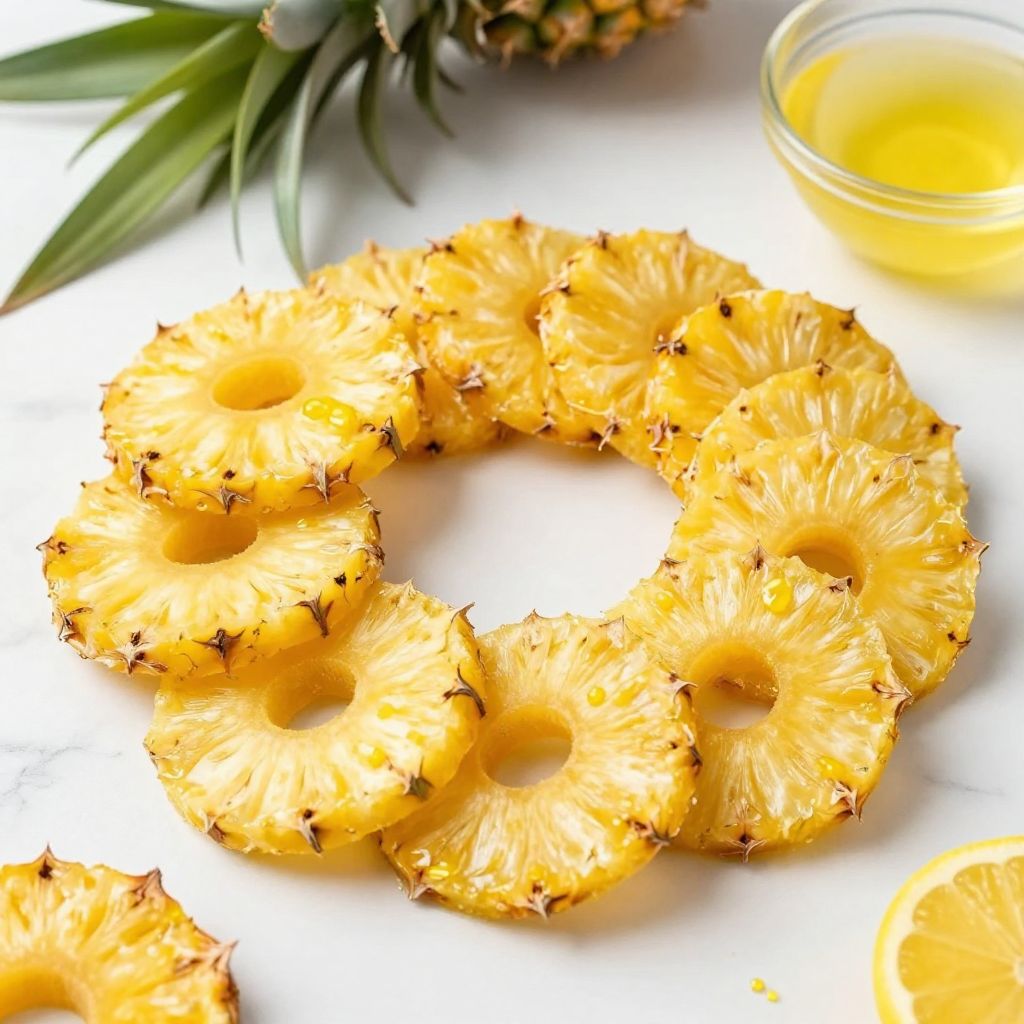
Slice the pineapple into even rings about 1/4 inch thick. Consistent thickness ensures even drying.
Step 3: Remove the Core
Use a small round cutter or knife to remove the tough core from each ring. This will improve the texture of the final product.
Step 4: Optional Lemon Juice
If using, dip the pineapple rings in lemon juice. This step can prevent browning and enhance flavor.
Step 5: Arrange on Dehydrator Trays
Place the pineapple rings on the dehydrator trays in a single layer. Avoid overlapping to allow proper air circulation.
Step 6: Set the Dehydrator
Set your dehydrator to 135°F (57°C). This temperature helps to retain flavor while effectively drying the fruit.
Step 7: Dry the Pineapple
Let the pineapple dry for 6-8 hours, checking occasionally for doneness. The pineapple should be leathery but not sticky.
Step 8: Cool and Store
Once dried, allow the pineapple to cool completely before storing. This prevents moisture buildup in your storage container.
Pro Tip: Ensure your pineapple is fully dried for the best shelf life; otherwise, it may spoil.
Tips for the Best Dehydrated Pineapple
- Choose a ripe pineapple for the sweetest results.
- Cut evenly to ensure uniform drying.
- Experiment with different spices like cinnamon for added flavor.
- Store in an airtight container in a cool, dark place for longevity.
- Consider vacuum sealing for extended freshness.
Common Mistakes to Avoid
- Not removing the core can lead to a tough texture. Make sure to cut it out for a better bite.
- Overlapping pineapple rings can prevent proper drying. Always lay them flat without overlap.
- Skipping the lemon juice can lead to browning. Use it for a fresher appearance.
- Not drying long enough may result in spoilage. Check for dryness to avoid this issue.
Serving Suggestions
Dehydrated pineapple is delicious on its own but can also be paired with various dishes.
- Mix into trail mix for a sweet crunch.
- Add to oatmeal or yogurt for a tropical twist.
- Incorporate into baked goods like muffins or bread.
- Use as a topping for salads for a burst of flavor.
Variations to Try
- Try marinating in coconut water before drying for a unique flavor.
- Add a sprinkle of cayenne pepper for a sweet and spicy kick.
- Combine with other fruits like mango for a mixed dried fruit snack.
- Experiment with herbs like mint for an unexpected twist.
Dietary Adaptations
- Gluten-free: Naturally gluten-free, making it safe for all diets.
- Dairy-free: This recipe contains no dairy products, suitable for dairy-free diets.
- Vegan/Vegetarian: Made solely from fruit, it’s perfect for all plant-based eaters.
- Low-carb/Keto: While fruit does contain some sugar, it can fit into a low-carb diet in moderation.
Storage and Reheating
Refrigerator
Store in an airtight container at room temperature. Refrigeration is usually not necessary.
- Keep in a cool, dry place.
- Use within 6-12 months for the best flavor.
Freezer
For longer storage, you can freeze dehydrated pineapple. Proper sealing is key.
- Use vacuum-sealed bags for optimum freshness.
- Can last up to 2 years in the freezer.
Reheating
No reheating is necessary, but you can soak in water to rehydrate if desired. This is useful for adding to recipes.
- Soak in warm water for 10-15 minutes to restore some moisture.
- Use in recipes that require a moist texture.
Nutrition Information
| Nutrient | Amount |
|---|---|
| Calories | 60 |
| Total Fat | 0g |
| Saturated Fat | 0g |
| Carbohydrates | 16g |
| Fiber | 2g |
| Sugar | 12g |
| Protein | 1g |
| Sodium | 1mg |
| Cholesterol | 0mg |
This information is approximate and can vary based on the pineapple used and preparation method.
Frequently Asked Questions
Can I use canned pineapple for this recipe?
Canned pineapple can be used, but fresh pineapple yields the best flavor and texture.
How far in advance can I make dehydrated pineapple?
You can make it weeks ahead and store it in an airtight container for freshness.
How should I store dehydrated pineapple?
Store in a cool, dry place in an airtight container to maintain quality.
Why is my dehydrated pineapple chewy instead of crispy?
If it is not dried long enough, it will retain moisture and be chewy. Ensure it is thoroughly dried.
Can I add spices to the dehydrated pineapple?
Absolutely! Spices like cinnamon or cayenne can add a delicious twist.
Final Thoughts
Making dehydrated pineapple at home is not only rewarding but also a delightful way to savor the essence of summer all year round. Give it a try, and you might find yourself snacking on it more than you planned.
If you enjoyed this recipe, explore more delicious pineapple ideas like pineapple bread or a refreshing pineapple smoothie.
Dehydrated Pineapple
Ingredients
Equipment
Method
- Peel the pineapple, removing the tough outer skin.
- Slice the pineapple into even rings about 1/4 inch thick.
- Use a small round cutter or knife to remove the tough core from each ring.
- If using, dip the pineapple rings in lemon juice.
- Place the pineapple rings on the dehydrator trays in a single layer.
- Set your dehydrator to 135°F (57°C).
- Let the pineapple dry for 6-8 hours, checking occasionally for doneness.
- Once dried, allow the pineapple to cool completely before storing.