
Picture this: the warm aroma of spices wafting through your kitchen, instantly transporting you to your favorite Thai or Indian restaurant. Making your own Curry Paste at home is not just a recipe; it’s a culinary adventure that brings vibrant flavors right to your table. This paste is special because it allows you to customize heat levels and ingredients, giving your dishes a fresh, homemade taste. Plus, it’s a fantastic way to use up spices you might have lying around. Ready to transform your cooking? Let’s dive into the ingredients and instructions!
Why You’ll Love This Recipe
This Curry Paste is a must-have in your kitchen for countless reasons.
- Quick to make and can be stored for later use.
- Versatile and can elevate a variety of dishes.
- Customizable to suit your spice tolerance.
- Fresh flavors that surpass store-bought options.
- Perfect for meal prepping!
My Experience Making This Recipe
The first time I made this Curry Paste, my kitchen felt like a spice market. The vibrant colors and enticing scents of fresh ingredients made the process exciting.
When I used it in a stir-fry, the flavors were so rich and complex that my family asked for seconds. It quickly became a staple in our cooking routine!
Recipe Overview
- Recipe Name: Curry Paste
- Servings: About 1 cup
- Prep Time: 10 minutes
- Cook Time: 0 minutes
- Total Time: 10 minutes
- Course: Condiment
- Cuisine: Asian
- Calories per Serving: 50
Equipment You Will Need
- Food processor or blender
- Measuring spoons
- Measuring cups
- Spatula
- Glass jar for storage
Ingredients for Curry Paste
- 3 tablespoons of coriander seeds
- 1 tablespoon of cumin seeds
- 1 teaspoon of black peppercorns
- 1 teaspoon of turmeric powder
- 3 to 4 fresh red chilies, chopped (adjust to taste)
- 1 stalk of lemongrass, chopped (white part only)
- 4 cloves of garlic, peeled
- 1 inch piece of ginger, peeled and chopped
- 1 tablespoon of fish sauce
- 1 tablespoon of lime juice
- 1 tablespoon of brown sugar
Ingredient Notes and Substitutions
- Coriander seeds: These add a nutty flavor; you can substitute with ground coriander.
- Cumin seeds: Essential for warmth; ground cumin works if needed.
- Black peppercorns: Adds heat; use ground black pepper as a last resort.
- Fresh red chilies: For heat; consider using dried chilies for a different flavor.
- Lemongrass: Gives a citrusy note; lime zest can be used in a pinch.
How to Make Curry Paste
Step 1: Toast the Seeds
In a dry skillet, toast the coriander seeds, cumin seeds, and black peppercorns over medium heat for about 2-3 minutes. This brings out their essential oils and enhances their flavors.
Step 2: Cool the Seeds
Remove the toasted seeds from the heat and let them cool for a few minutes. Cooling prevents them from cooking the other ingredients when blended.
Step 3: Blend the Seeds
Once cooled, add the seeds to your food processor or blender. Pulse them until they are finely ground.
Step 4: Add the Remaining Ingredients
Now, add the chopped red chilies, lemongrass, garlic, ginger, fish sauce, lime juice, and brown sugar into the processor. These ingredients will create the paste’s vibrant flavor profile.
Step 5: Blend Until Smooth
Blend everything together until you have a smooth paste. If it’s too thick, add a small amount of water to help it blend more easily.
Step 6: Taste and Adjust
After blending, taste your Curry Paste and adjust the seasoning as necessary. More lime juice can add acidity, while additional chilies can increase heat.
Step 7: Store the Paste
Transfer the paste to a glass jar. Make sure to press it down to remove air pockets, which helps with preservation.
Step 8: Refrigerate or Freeze
Store the jar in the refrigerator for up to two weeks, or freeze portions for longer storage. This makes it easy to grab and use in your future cooking adventures!
Pro Tip: For a richer flavor, let the paste sit for a few hours or overnight in the fridge before using.
Tips for the Best Curry Paste
- Toast the seeds carefully; burnt seeds will ruin the flavor.
- Use fresh ingredients for a vibrant taste.
- Adjust the spice level to suit your palate.
- Make a larger batch and freeze in ice cube trays for easy access.
- Experiment with different herbs like cilantro for a unique twist.
Common Mistakes to Avoid
- Not toasting the seeds: This can lead to a flat flavor.
- Over-blending: A paste should be thick, not watery.
- Using old spices: Fresh spices make a significant difference.
- Skipping the taste test: Always adjust flavors to your liking.
Serving Suggestions
This Curry Paste can be used in countless ways to enhance your meals.
- Mix into coconut milk for a quick curry sauce.
- Stir into soups for an added kick.
- Use as a marinade for meats or tofu.
- Add to stir-fries for depth of flavor.
- Combine with vegetables for a flavorful side dish.
Variations to Try
- Green Curry Paste: Substitute green chilies for red for a different heat level.
- Thai Curry Paste: Add Thai basil for a fresh twist.
- Massaman Curry Paste: Incorporate spices like cardamom for a unique flavor.
- Vegetarian Option: Omit fish sauce and use soy sauce instead.
Dietary Adaptations
- Gluten-Free: Ensure your fish sauce is gluten-free.
- Dairy-Free: This recipe is naturally dairy-free.
- Vegan/Vegetarian: Substitute fish sauce with soy sauce or a vegan alternative.
- Low-Carb/Keto: This paste is low-carb; just watch the sugar content.
Storage and Reheating
Refrigerator
Store your Curry Paste in an airtight container in the fridge.
- Lasts up to two weeks.
- Press down to minimize air exposure.
Freezer
For longer storage, freeze the paste in ice cube trays.
- Transfer to a freezer-safe bag once frozen.
- Lasts up to six months in the freezer.
Reheating
Reheat the paste gently in a pan before using.
- Add a splash of water if it has thickened.
- Stir into dishes directly for best results.
Nutrition Information
| Nutrient | Amount |
|---|---|
| Calories | 50 |
| Total Fat | 2g |
| Saturated Fat | 0g |
| Carbohydrates | 10g |
| Fiber | 2g |
| Sugar | 3g |
| Protein | 1g |
| Sodium | 300mg |
| Cholesterol | 0mg |
This information is approximate and can vary based on specific ingredients used.
Frequently Asked Questions
Can I substitute fresh ingredients for dried ones?
Fresh ingredients provide the best flavor, but you can use dried in a pinch. Just adjust the amounts since dried herbs are more concentrated.
Can I make this ahead of time?
Yes, this paste stores well, making it perfect for meal prep. Just keep it in the refrigerator or freeze it for later use.
How should I store leftover curry paste?
Store in an airtight container in the refrigerator for up to two weeks. For longer storage, freeze it in ice cube trays.
What if my paste is too watery?
Too much liquid can make it hard to use; try blending in more solid ingredients. You can also simmer it in a pan to reduce the moisture.
What can I use this curry paste in?
This paste is versatile and pairs well with coconut milk for curries, in soups, and as a marinade. Get creative and add it to your favorite dishes!
Final Thoughts
Making your own Curry Paste opens up a world of flavor possibilities. It’s a simple process that pays off with every meal.
So grab those spices and get blending; your taste buds will thank you! And while you are exploring, check out my delicious shrimp curry recipe or whip up some gochujang sauce to complement your dishes.
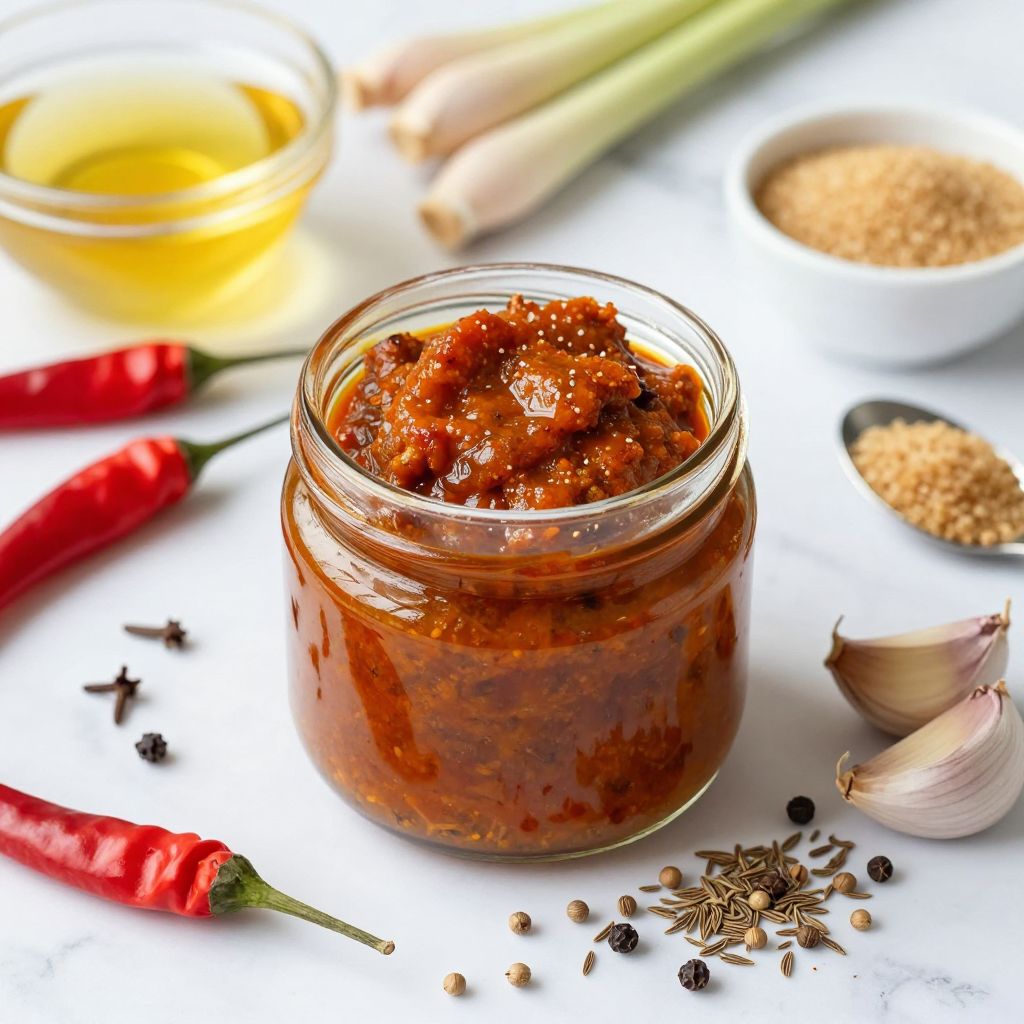
Curry Paste
Ingredients
Equipment
Method
- In a dry skillet, toast the coriander seeds, cumin seeds, and black peppercorns over medium heat for about 2-3 minutes.
- Remove the toasted seeds from the heat and let them cool for a few minutes.
- Once cooled, add the seeds to your food processor or blender and pulse them until finely ground.
- Add the chopped red chilies, lemongrass, garlic, ginger, fish sauce, lime juice, and brown sugar into the processor.
- Blend everything together until you have a smooth paste.
- Taste your Curry Paste and adjust the seasoning as necessary.
- Transfer the paste to a glass jar, ensuring to press it down to remove air pockets.
- Store the jar in the refrigerator for up to two weeks, or freeze portions for longer storage.