
There’s something deeply satisfying about a pot of boiled dinner simmering on the stove, filling your kitchen with the aroma of tender vegetables and savory broth.
Boiled dinner is a timeless comfort meal that brings together meat, potatoes, and vegetables in one pot, creating a dish that feels both humble and nourishing. This one-pot wonder requires minimal hands-on work, rewards patience with incredible flavor, and delivers leftovers that taste even better the next day.
Why You’ll Love This Recipe
This recipe combines simplicity with soul, making it perfect for weeknight dinners and weekend gatherings alike.
- One-pot cooking means less cleanup and minimal stress in the kitchen.
- All the flavors meld together beautifully, creating a deeply satisfying broth that begs for crusty bread.
- Incredibly forgiving and adaptable to whatever vegetables and proteins you have on hand.
- Budget-friendly using affordable cuts of meat and seasonal vegetables.
- Perfect for meal prep since it tastes even better after a day or two in the refrigerator.
My Experience Making This Recipe
The first time I made boiled dinner was on a cold December evening when my grandmother walked me through her version over the phone. She emphasized low heat and patience, never rushing the process, and I remember thinking how counter-intuitive that advice felt.
Once I lifted that lid after two hours, the transformation was undeniable. The tough corned beef had become impossibly tender, the potatoes had absorbed all the salty broth, and the carrots tasted like pure comfort.
My kids, usually skeptical about “old-fashioned” food, actually asked for seconds. That’s when I knew this recipe deserved a permanent spot in our weekly rotation.
Recipe Overview
- Recipe Name: Classic Boiled Dinner
- Servings: 6 to 8 people
- Prep Time: 15 minutes
- Cook Time: 2 hours 30 minutes
- Total Time: 2 hours 45 minutes
- Course: Main Course
- Cuisine: Irish-American
- Calories per Serving: 420
Equipment You Will Need
- Large heavy-bottomed pot with a lid (at least 8-quart capacity)
- Sharp chef’s knife for cutting vegetables
- Cutting board
- Wooden spoon or slotted spoon for stirring
- Meat thermometer (optional but helpful)
- Kitchen tongs for removing meat
- Colander or strainer
Ingredients for Boiled Dinner
- Corned beef brisket: 3 to 4 pounds, including the spice packet if included
- Water: 4 quarts, enough to cover the meat by 2 inches
- Bay leaves: 3 whole
- Whole black peppercorns: 1 tablespoon
- Garlic cloves: 4, smashed
- Red potatoes: 2 pounds, halved or quartered if large
- Carrots: 1.5 pounds, cut into 2-inch pieces
- Cabbage: 1 small head, cut into wedges (about 1.5 pounds)
- Pearl onions: 1 pound, peeled (or regular onions quartered)
- Fresh parsley: 2 tablespoons, chopped, for garnish
- Sea salt and black pepper: to taste for final seasoning
Ingredient Notes and Substitutions
- Corned beef brisket: Cured and brined brisket that becomes incredibly tender with moist heat cooking. If unavailable, use beef chuck roast or beef stew meat, though the flavor profile will differ slightly.
- Red potatoes: Waxy potatoes hold their shape during long cooking without turning to mush. You can substitute Yukon Gold potatoes, which offer similar creamy texture.
- Cabbage: Adds a subtle sweetness and tender bite after simmering in the broth. Green or purple cabbage works equally well.
- Pearl onions: Their small size allows them to cook evenly and stay intact in the broth. Yellow or white onions cut into quarters work fine if pearl onions are hard to find.
- Bay leaves: Contribute subtle herbal notes to the broth. If you dislike bay leaves, substitute with a fresh thyme sprig instead.
How to Make Boiled Dinner
Step 1: Prepare Your Corned Beef
Rinse the corned beef brisket under cold water to remove excess salt from the curing process. Pat it dry with paper towels, which helps prevent the meat from splashing when it hits the pot.
Step 2: Bring Water to a Boil
Fill your large pot with 4 quarts of water and bring it to a rolling boil over high heat. This takes about 8 to 10 minutes and ensures the meat cooks evenly from the moment it enters the pot.
Step 3: Add the Beef and Aromatics
Carefully lower the corned beef into the boiling water, then add the bay leaves, peppercorns, and smashed garlic cloves. The initial boil helps render fat from the meat and infuses the broth with flavor.
Step 4: Reduce Heat and Simmer
Once the water returns to a boil, reduce the heat to low and maintain a gentle simmer. Cover the pot with a lid, leaving it slightly ajar to allow steam to escape and prevent boiling over.
Simmering slowly for about 2 hours makes the meat incredibly tender without becoming stringy or dry. Rushing this step by cooking at high heat results in tough, unpleasant texture.
Step 5: Add Potatoes and Carrots
After the beef has simmered for 1 hour 45 minutes, add the halved red potatoes and carrot pieces to the pot. These vegetables need about 30 minutes to become fork-tender without falling apart.
Step 6: Add Onions and Cabbage
After the potatoes and carrots have cooked for 15 minutes, add the peeled pearl onions and cabbage wedges. These vegetables only need 15 to 20 minutes to cook through, which prevents them from becoming mushy or overcooked.
Step 7: Test for Doneness
Pierce the beef with a fork or knife to check tenderness. It should shred slightly if you apply gentle pressure. The potatoes should break easily when pierced with a fork, and the cabbage leaves should be soft but still hold their shape.
Step 8: Remove and Rest the Meat
Using tongs, carefully lift the corned beef from the pot and transfer it to a cutting board. Let it rest for 5 to 10 minutes, which redistributes the juices throughout the meat and makes slicing easier.
Step 9: Slice and Plate
Slice the corned beef against the grain into quarter-inch thick slices. Arrange the slices on a serving platter and surround them with the cooked vegetables, pouring some of the hot broth over everything.
Pro Tip: Always slice corned beef against the grain rather than parallel to the fibers. This breaks up the muscle structure and creates tender, easy-to-chew pieces instead of tough, stringy bites.
Tips for the Best Boiled Dinner
- Keep the heat low and steady throughout cooking. A gentle simmer creates fork-tender meat, while a rolling boil makes it tough and dry.
- Don’t skip rinsing the corned beef beforehand. This removes excess salt and prevents the broth from becoming inedible.
- Taste the broth before serving and adjust seasoning with sea salt and pepper. The vegetables and meat release their own salts, so you’ll likely need less than you expect.
- For a richer broth, skip removing the fat cap from the beef beforehand. This fat renders into the liquid and creates incredible depth of flavor.
- If your potatoes or carrots are large, cut them smaller than you think necessary. They shrink slightly during cooking and larger pieces won’t cook through in time.
- Save the broth after dinner and freeze it for soups and stews. It has incredible umami depth and makes a fantastic base for vegetable soups.
Common Mistakes to Avoid
- Cooking at too high a temperature causes the meat to seize up and become tough rather than tender. Low, gentle heat is non-negotiable for this recipe.
- Skipping the rinsing step leaves the beef too salty and makes the entire dish unpalatable. This only takes 30 seconds and makes a huge difference.
- Adding all vegetables at once results in some pieces being mushy while others remain hard. Stagger the additions based on cooking time needed.
- Overcooking the cabbage transforms it into a mushy, sulfurous mess that smells unpleasant. Add it in the final 15 to 20 minutes of cooking.
- Slicing the beef parallel to the grain creates chewy, stringy pieces that are difficult to eat. Always slice against the grain for maximum tenderness.
Serving Suggestions
Boiled dinner shines alongside simple, classic sides that complement rather than compete with the main event. The tender meat and flavorful broth are the stars, so keep accompaniments straightforward and traditional.
- Crusty bread or soda bread for soaking up the flavorful broth.
- Whole grain or spicy brown mustard served on the side for dipping.
- Horseradish sauce for those who enjoy sharp, tangy heat with their meat.
- Simple green salad with a vinegar-based dressing to cut through the richness.
- Boiled potatoes with melted butter and fresh chives for extra comfort factor.
Variations to Try
- Spiced Boiled Dinner: Add 1 tablespoon of pickling spice, 1 teaspoon of coriander seeds, and 2 cinnamon sticks to the broth for warmth and complexity. This creates a deeply aromatic version that feels almost Middle Eastern.
- Beer-Braised Version: Replace 1 quart of water with Irish stout beer for a richer, more complex flavor. The beer adds slight sweetness and deepens the savory notes of the meat.
- Vegetable-Heavy Version: Add parsnips, rutabaga, and celery root for earthier flavors and interesting texture variation. This version feels more like a root vegetable showcase.
- Lighter Broth Option: Drain and discard the initial cooking liquid after 30 minutes, then cover the beef with fresh broth and vegetables. This removes excess salt and creates a cleaner, lighter final dish.
- Smoked Paprika Boiled Dinner: Stir 2 teaspoons of smoked paprika into the broth midway through cooking for subtle smokiness. This creates an entirely different flavor profile while maintaining the classic structure.
Dietary Adaptations
- Gluten-Free: This recipe is naturally gluten-free as written since corned beef, vegetables, and broth contain no gluten. Simply verify that your corned beef spice packet contains no hidden gluten additives.
- Dairy-Free: The base recipe contains no dairy, so it’s already dairy-free as written. Skip any butter or cream on the side dishes if concerned.
- Vegetarian: Substitute the corned beef with extra hearty vegetables like cauliflower steaks, portobello mushrooms, or marinated tofu. The flavor will be completely different but equally satisfying with the right broth and seasonings.
- Low-Carb or Keto: Skip the potatoes and replace them with cauliflower florets, zucchini chunks, or radishes that become potato-like when cooked long and slow.
Storage and Reheating
Refrigerator
Store leftovers in an airtight container with the meat and vegetables separated from the broth, or keep them together for maximum flavor absorption. Boiled dinner keeps for 3 to 4 days in the refrigerator.
- The broth will gel slightly as it cools from the natural gelatin in the beef.
- The fat will solidify on top, which you can skim off if desired or leave for extra richness.
- Vegetables keep texture better when stored separately from the broth.
Freezer
Boiled dinner freezes beautifully for up to 3 months when stored in freezer-safe containers. Keep the broth and solids together for best results.
- Thaw overnight in the refrigerator before reheating.
- The vegetables may become slightly softer after freezing, so plan accordingly.
- Freeze the broth separately if you want to use it for soups or other recipes.
Reheating
Reheat gently on the stovetop over low heat to restore the meat’s tenderness and keep vegetables from falling apart. Microwaving works in a pinch but can create hot spots and uneven texture.
- Simmer gently for 10 to 15 minutes until heated through completely.
- Add fresh broth or water if the liquid has reduced too much.
- Taste and adjust seasoning as reheating can concentrate salt flavors.
Nutrition Information
| Nutrient | Amount |
|---|---|
| Calories | 420 |
| Total Fat | 18g |
| Saturated Fat | 7g |
| Carbohydrates | 28g |
| Fiber | 5g |
| Sugar | 6g |
| Protein | 42g |
| Sodium | 1,050mg |
| Cholesterol | 85mg |
These values are estimates based on standard USDA ingredient data and may vary depending on specific brands and preparation methods used. Nutritional information includes all vegetables and broth consumed with the serving.
Frequently Asked Questions
Can I make boiled dinner in a slow cooker?
Yes, absolutely. Cook on the low setting for 6 to 8 hours, adding the vegetables in stages based on their cooking time. The slow cooker creates incredibly tender meat, though you lose the option to control the broth concentration.
What’s the difference between corned beef and regular beef brisket?
Corned beef is beef brisket that has been cured and brined with salt and spices, creating its distinctive pink color and salty flavor. Regular brisket is uncured and requires different cooking methods to achieve tenderness.
How do I know when the beef is done cooking?
Pierce it with a fork and the meat should shred slightly under gentle pressure. A meat thermometer should read 190 degrees Fahrenheit for maximum tenderness.
Why is my cabbage falling apart?
Cabbage cooks quickly and becomes mushy if simmered too long. Add it in the final 15 to 20 minutes of cooking only, and avoid stirring it too much once in the pot.
Can I use a different cut of beef?
Yes, but the flavor will differ significantly. Beef chuck roast or stew meat work, though they lack the distinctive cured flavor of corned beef. Any tough, fatty cut becomes tender with long, slow, moist heat cooking.
What do I do with the cooking liquid after dinner?
Save it and freeze it for soups, stews, or future boiled dinners. The broth contains incredible depth and umami from the meat and vegetables.
Final Thoughts
Boiled dinner might seem old-fashioned at first glance, but this recipe has endured for generations because it simply works. The technique is straightforward, the ingredients are affordable, and the results are profoundly comforting.
Make this dish and watch how it brings people to the table and encourages seconds and thirds. There’s something timeless about sitting down to a bowl of tender meat, soft vegetables, and savory broth that fills you with warmth from the inside out.
Looking for more classic comfort cooking? Explore our collection of tried-and-true family recipes, including a fantastic cabbage boil recipe and perfectly seasoned boiled peanuts recipe for your next gathering.
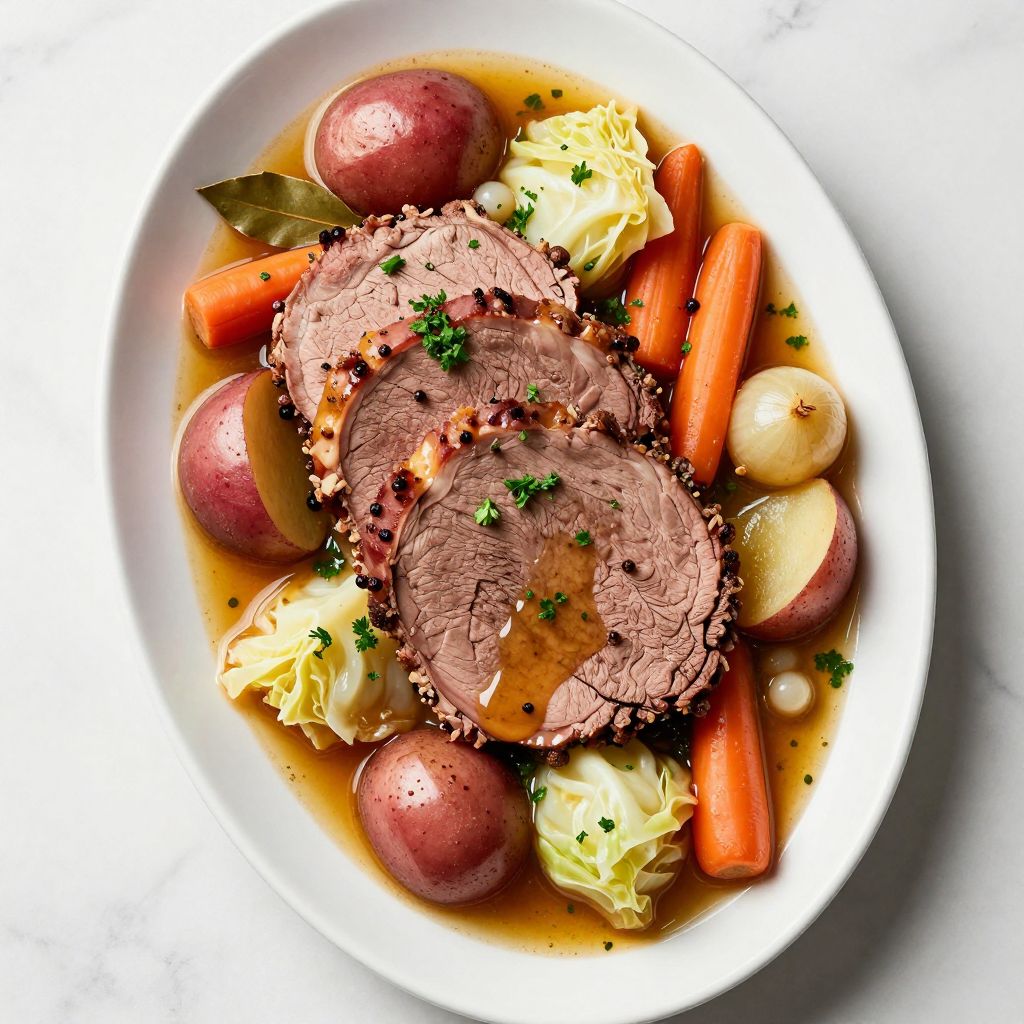
Classic Boiled Dinner
Ingredients
Equipment
Method
- Rinse the corned beef brisket under cold water to remove excess salt and pat dry with paper towels.
- Fill a large heavy-bottomed pot with 4 quarts of water and bring to a rolling boil over high heat, about 8 to 10 minutes.
- Carefully lower the corned beef into the boiling water, add the bay leaves, peppercorns, and smashed garlic cloves, and return to a boil.
- Reduce heat to low, cover the pot slightly ajar, and simmer gently for 1 hour and 45 minutes.
- Add the red potatoes and carrots to the pot and continue simmering for 30 minutes.
- After 15 minutes, add the pearl onions and cabbage wedges and simmer for an additional 15 to 20 minutes.
- Pierce the beef with a fork to check tenderness—it should shred slightly under gentle pressure—and ensure the vegetables are fork-tender.
- Use tongs to remove the corned beef from the pot and let it rest on a cutting board for 5 to 10 minutes.
- Slice the beef against the grain into quarter-inch thick slices, arrange on a platter with the vegetables, and ladle hot broth over everything.