
There’s something magical about the smell of fresh bread wafting through your home, isn’t there? The Amish Bread Starter Recipe is not just a way to bake bread; it’s a beloved tradition that brings warmth and comfort to the table, making it a perfect choice for both experienced bakers and those just starting out. This starter is versatile, easy to use, and perfect for sharing with friends, creating a delightful cycle of baking that can last for weeks. Let’s dive into this delightful recipe that promises delicious homemade bread!
Why You’ll Love This Recipe
This recipe is a treasure in any kitchen. It offers an easy path to delicious homemade bread.
- Simple ingredients you likely already have.
- Creates a warm, inviting aroma in your home.
- Versatile for various bread types.
- A chance to share and connect with others.
- Perfect for beginners and seasoned bakers alike.
My Experience Making This Recipe
When I first tried the Amish Bread Starter, I was amazed at how simple it was to create such a delightful base for bread. The first time I baked with it, my kitchen turned into a cozy haven of warmth and freshly baked goodness.
Sharing some of the starter with friends led to a fun baking exchange, where we compared our creations. Each loaf carried a hint of our unique touches, making every bite a special experience.
Recipe Overview
- Recipe Name: Amish Bread Starter
- Servings: Makes about 4 cups
- Prep Time: 10 minutes
- Cook Time: 24 hours (for fermentation)
- Total Time: 24 hours 10 minutes
- Course: Bread
- Cuisine: American
- Calories per Serving: Approximately 150
Equipment You Will Need
- Large mixing bowl
- Wooden spoon or spatula
- Measuring cups and spoons
- Clean glass jar with a lid
- Plastic wrap
Ingredients for Amish Bread Starter
- 1 cup all-purpose flour
- 1 cup warm water (about 110°F)
- 1 teaspoon sugar
- 1 teaspoon active dry yeast
Ingredient Notes and Substitutions
- All-purpose flour: This is used for a balanced texture. You can substitute with whole wheat flour for a heartier starter.
- Warm water: Warm water activates the yeast. Cold water will slow down fermentation.
- Sugar: This helps feed the yeast. You may use honey or maple syrup as a natural alternative.
- Active dry yeast: Essential for fermentation. Instant yeast can be a direct substitute without proofing.
How to Make Amish Bread Starter
Step 1: Prepare the Yeast Mixture
In a large mixing bowl, combine the warm water, sugar, and yeast. Let it sit for about 5 minutes until it becomes frothy, indicating that the yeast is active.
Step 2: Add Flour
Once the yeast mixture is frothy, gradually add in the all-purpose flour. Stir with a wooden spoon until fully combined; this creates the base for your starter.
Step 3: Let It Rise
Cover the bowl with plastic wrap or a clean kitchen towel. Place it in a warm area for about 24 hours, allowing it to rise and ferment.
Step 4: Check for Bubbles
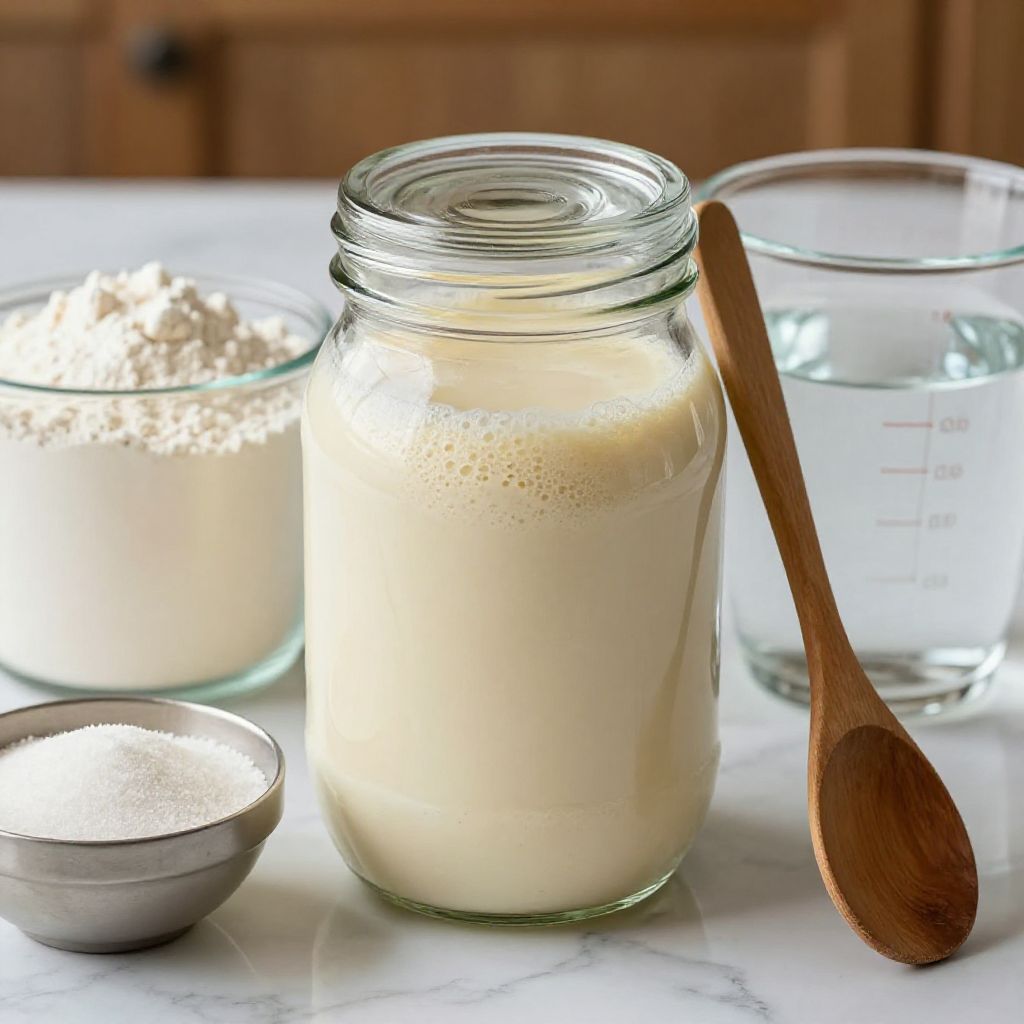
After 24 hours, check your starter for bubbles and a pleasant sour smell. This means fermentation is successful!
Step 5: Store the Starter
Transfer the starter into a clean glass jar with a lid. This makes it easy to store and use later.
Step 6: Feed the Starter
To maintain your starter, feed it every 5 days with 1 cup of all-purpose flour, 1 cup of warm water, and 1 teaspoon of sugar. This keeps it active and ready for baking.
Step 7: Use in Recipes
When ready to bake, use the starter as directed in your bread recipes. Remember to reserve a cup to continue the cycle!
Step 8: Share with Friends
Encourage friends to start their own bread-making journey by sharing some of your starter. It’s a fantastic way to spread the joy of baking!
Pro Tip: Always keep a cup of starter reserved for future baking, ensuring you never run out!
Tips for the Best Amish Bread Starter
- Use warm, not hot, water to avoid killing the yeast.
- Keep the starter in a warm spot for optimal fermentation.
- Regularly feed the starter to maintain its activity.
- Use a clean jar to prevent contamination.
- Label your jar with the date for easy tracking.
Common Mistakes to Avoid
- Not using warm water: This can slow down or stop yeast activation.
- Using cold flour: Cold ingredients can hinder fermentation.
- Neglecting to feed the starter: An unfed starter becomes inactive.
- Covering too tightly: Starters need air for fermentation.
Serving Suggestions
The Amish Bread Starter is great for creating various breads. Here are a few pairing ideas.
- Serve with homemade jams and butter.
- Pair with soups for a comforting meal.
- Use for making delicious cinnamon rolls.
- Top with garlic and herbs for a savory twist.
Variations to Try
- Add herbs to the dough for a flavorful twist.
- Use whole wheat flour for a denser bread.
- Incorporate dried fruits or nuts for added texture.
- Experiment with different types of sweeteners for unique flavors.
Dietary Adaptations
- Gluten-free: Substitute all-purpose flour with a gluten-free blend.
- Dairy-free: This recipe is naturally dairy-free.
- Vegan: All ingredients are vegan-friendly.
- Low-carb/keto: Use almond or coconut flour as a low-carb alternative.
Storage and Reheating
Refrigerator
Store the starter in the fridge if you’re not using it frequently.
- Keep in a sealed jar.
- Feed every 5 days to keep it alive.
Freezer
You can freeze the starter if you need a longer break from baking.
- Portion into small containers.
- Thaw in the fridge before use.
Reheating
When ready to use, bring the starter to room temperature.
- Feed it a day before using in recipes.
- Mix well to revive its texture.
Nutrition Information
| Nutrient | Amount |
|---|---|
| Calories | 150 |
| Total Fat | 0.5g |
| Saturated Fat | 0g |
| Carbohydrates | 31g |
| Fiber | 1g |
| Sugar | 1g |
| Protein | 4g |
| Sodium | 1mg |
| Cholesterol | 0mg |
This information is an estimate and can vary based on specific ingredients used.
Frequently Asked Questions
Can I use whole wheat flour instead of all-purpose flour?
Yes, whole wheat flour can be used for a heartier flavor, but it may affect the texture.
How do I store the starter if I’m not using it?
Store the starter in the refrigerator in a sealed jar, feeding it every 5 days.
Can I freeze the starter?
Yes, you can freeze it in small portions. Just thaw and feed before using.
What if my starter doesn’t bubble?
If there are no bubbles, it may need more warmth or time. Check the yeast’s expiration date.
How do I make sure my starter is active?
Feed it regularly and look for bubbles and a pleasant sour smell.
Final Thoughts
The Amish Bread Starter Recipe is a wonderful way to connect with baking traditions and share deliciousness with others. Give it a try, and you might find yourself addicted to the joy of homemade bread.
For more delicious recipes, check out my Amish Cinnamon Bread Recipe or learn how to make banana bread for a delightful twist!
Amish Bread Starter
Ingredients
Equipment
Method
- In a large mixing bowl, combine the warm water, sugar, and yeast. Let it sit for about 5 minutes until it becomes frothy.
- Gradually add the all-purpose flour to the yeast mixture and stir with a wooden spoon until fully combined.
- Cover the bowl with plastic wrap and place it in a warm area for about 24 hours, allowing it to rise and ferment.
- After 24 hours, check the starter for bubbles and a pleasant sour smell.
- Transfer the starter into a clean glass jar with a lid for storage.
- To maintain your starter, feed it every 5 days with 1 cup of all-purpose flour, 1 cup of warm water, and 1 teaspoon of sugar.
- When ready to bake, use the starter as directed in your bread recipes.
- Share some of your starter with friends to spread the joy of baking.